Share This Article
No items found.

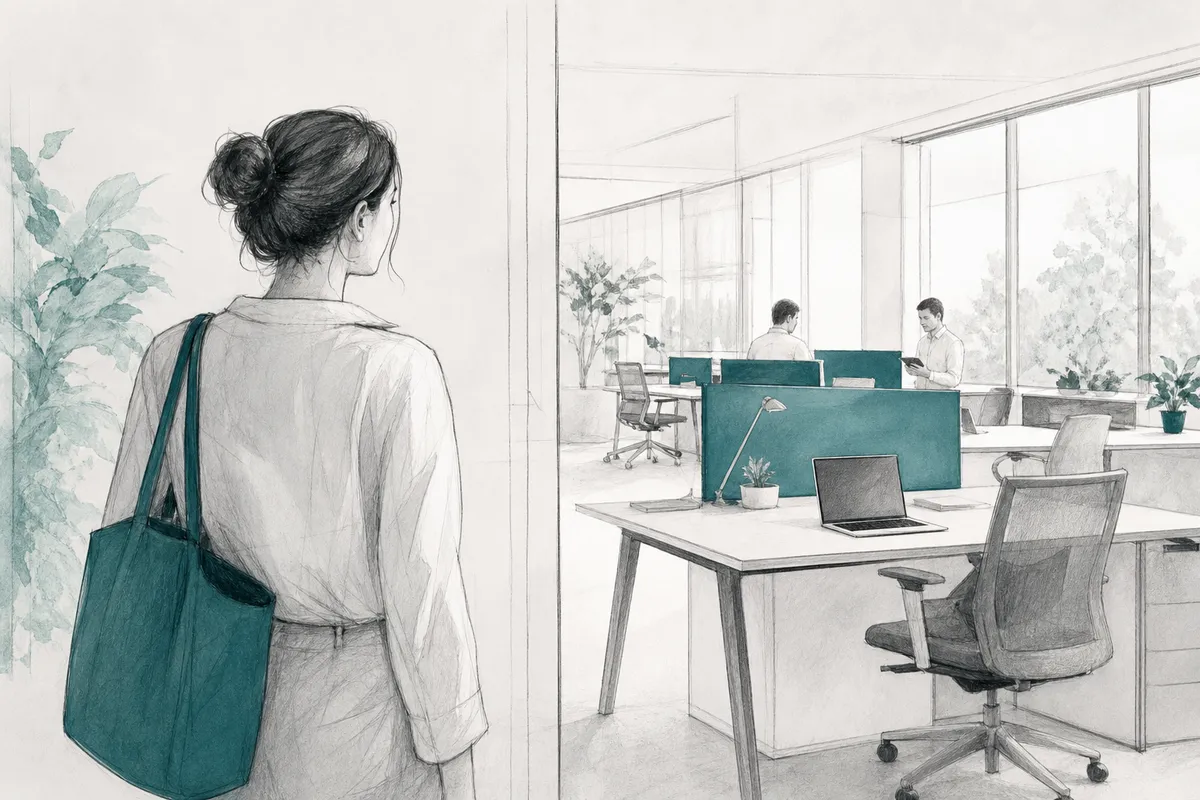
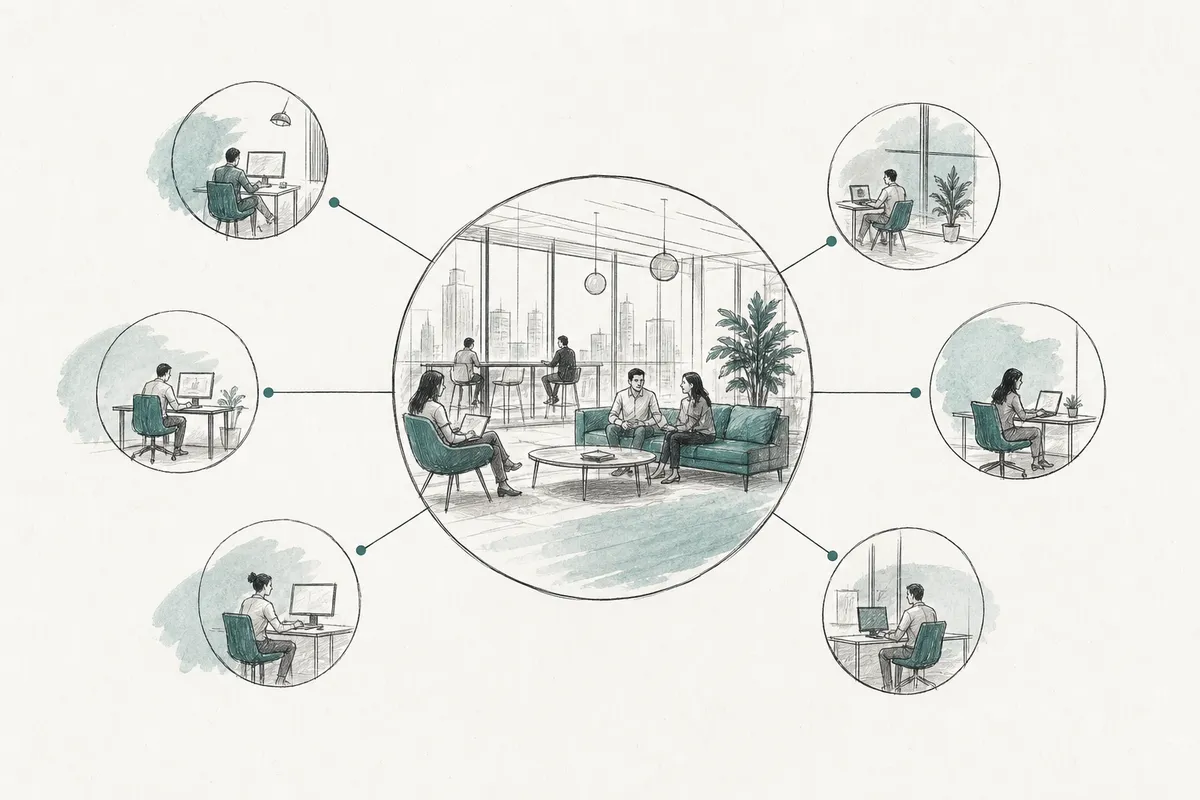
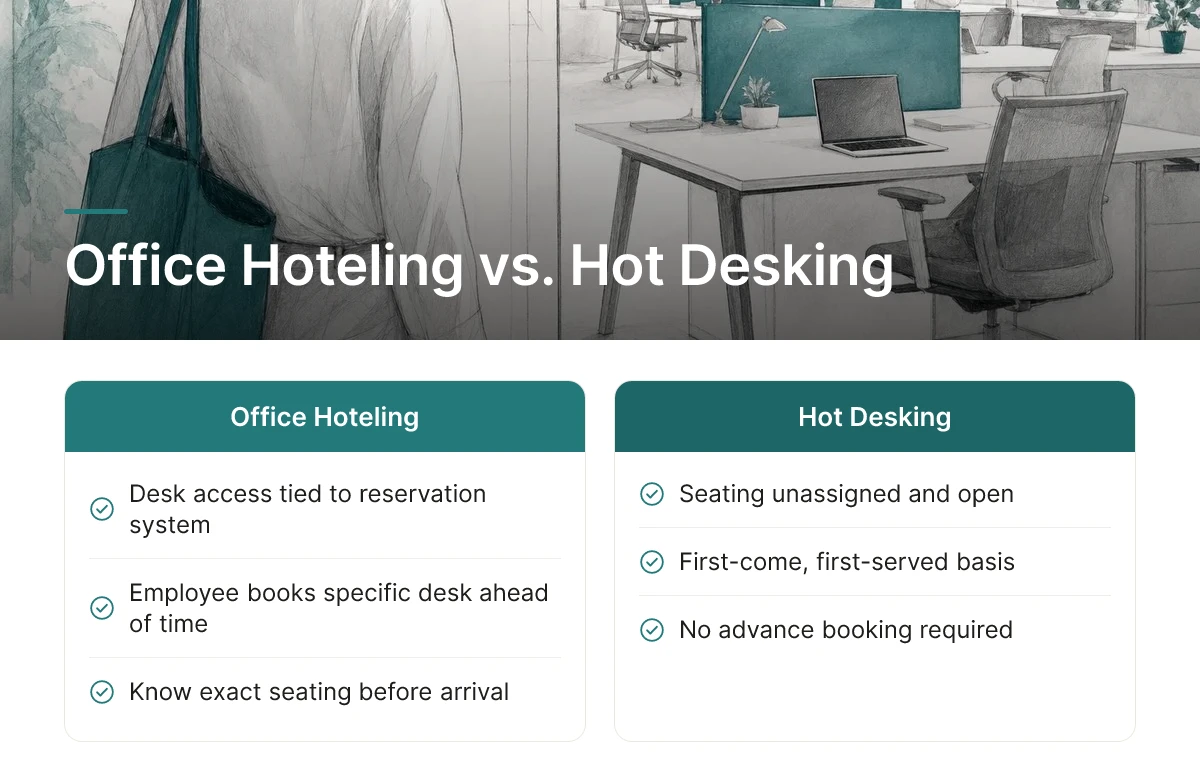
Office hoteling is a flexible desk-sharing model where employees reserve a workspace in advance for a specific day or block of time, rather than owning a permanently assigned desk. Unlike hot desking, where seating is unassigned and first-come-first-served, hoteling uses a booking system so people know exactly where they'll sit before they arrive. Companies adopt it to shrink underused real estate footprints while still giving hybrid teams predictable access to desks, rooms, and amenities.
Office hoteling ties desk access to a reservation system, while hot desking and free addressing leave seating unassigned and open to whoever arrives first. That distinction, booked versus first-come, is the difference that matters most to corporate real estate leaders deciding which model actually reduces cost without creating chaos on the floor.
Under office hoteling, an employee books a specific desk, office, or meeting room ahead of time through a scheduling platform, the same way they'd reserve a hotel room. They know exactly where they're sitting before they walk in. Hot desking skips the reservation step entirely: workers grab any open seat on arrival, which works fine when attendance is low but breaks down fast once several teams try to come in on the same Tuesday.
Free addressing is the broader category both models sit inside. It's a workplace philosophy, originally popularized in Japanese offices, built on the idea that no one, not even senior staff, owns a fixed desk. Office hoteling is best understood as the structured, reservation-based subset of free addressing: it keeps the no-fixed-seating principle but adds a booking layer so space allocation stays predictable rather than a daily scramble.
Hybrid schedules create semi-predictable attendance patterns, teams know their in-office days but not exact headcounts, and office hoteling fits that rhythm better than either extreme. Fixed assigned seating wastes space on the days people work remotely. Pure hot desking offers flexibility but no way to plan around a specific project team or client visit. CBRE's 2026 Global Workplace & Occupancy Insights found that 69% of organizations now have more than 40% of staff sharing desks, and no respondents still target a one-to-one seating ratio [3]. Reservation-based hoteling gives HR and workplace teams a middle path: employees get certainty about where they'll sit, and facilities teams get usable booking data instead of guesswork.
Hoteling lets a company provision desks for peak concurrent attendance rather than total headcount, so fewer desks serve more employees. When in-office days are staggered across a hybrid workforce, an organization rarely needs one desk per person, it needs enough desks for whoever's actually in the building on the busiest day. That's a materially smaller number, which is why real estate leaders use hoteling data to justify consolidating floors or exiting leases rather than renewing them at full size.
The trade-off pure hot desking doesn't solve is predictability. Hoteling preserves the ability to plan a desk, a room, or a neighborhood near a specific team in advance, something spontaneous, unassigned seating can't guarantee once occupancy climbs.
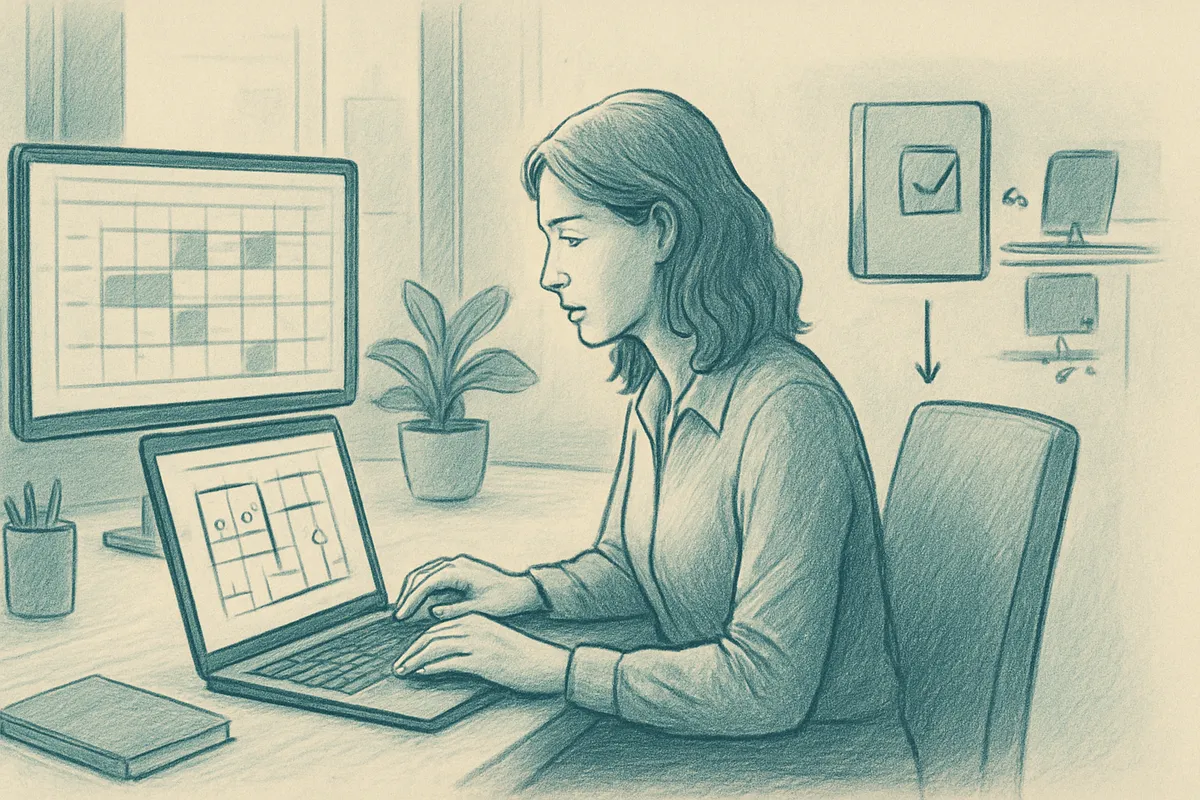
Office hoteling software runs on a simple loop: an employee browses available desks by location and date, books one, checks in on arrival, and the system releases the seat automatically if it goes unused. That loop only creates value when it's backed by the right feature set and real-time data, not just a digital sign-up sheet.
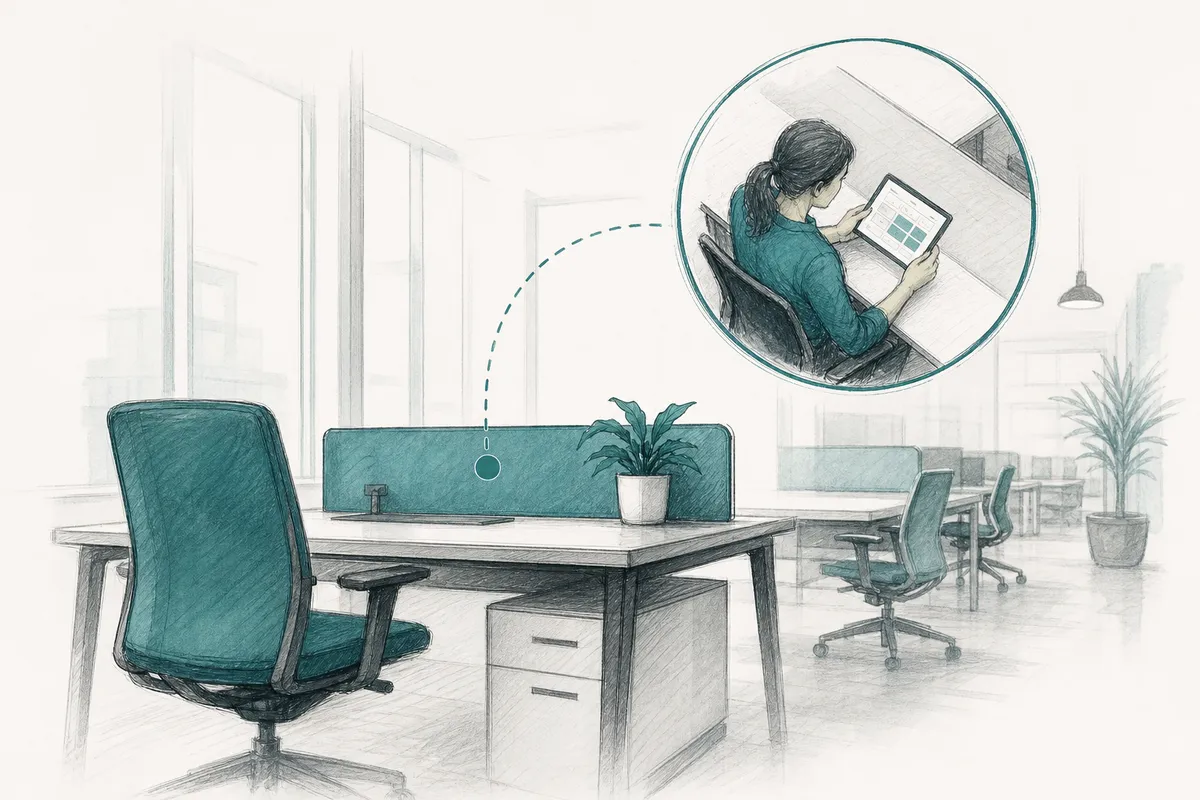
A typical session starts with an employee selecting an office, a floor, and a date range. The system shows which desks or rooms are open, the employee reserves one, and a confirmation lands in their inbox or app. On the day of the visit, check-in happens through a badge tap, a mobile app scan, or a QR code posted at the desk.
If nobody checks in within a set window, often 15 to 30 minutes after the reservation start time, the desk auto-releases back into the pool. This no-show protection is what keeps a hoteling program from quietly reverting to the reserved-but-empty-desk problem it was built to solve.
Office hoteling software syncs desk reservations directly into Outlook, Teams, and Slack so a booking shows up alongside an employee's meetings, not in a separate app nobody checks.
In practice, this means a desk reservation appears as a calendar event, and a Teams or Slack integration lets a colleague see where a teammate will sit before they even arrive. That visibility matters more than it sounds: coordinating in-person days is the entire point of office hoteling, and it fails quietly if people can't see who else is booked in.
Behind the booking interface sits a layer of sensor or badge-based occupancy data that feeds a central system, so availability reflects actual usage rather than just calendar intent. Without that layer, a platform can only report what was booked, not what was used, which is a meaningfully different number for space-planning decisions.
This is also the line that separates a basic reservation tool from a full space-orchestration platform. A booking tool tells employees what's free right now. A platform like Upflex goes further, applying attendance forecasting to predict who's coming in and when, then auto-suggesting seating that groups teams together and flags underused zones before a lease renewal decision is even on the table.
Office hoteling cuts real estate costs by shrinking the ratio of desks to employees, and it improves collaboration by putting the right people in the office on the same days. Both effects come from the same underlying shift: seats are assigned to moments, not people.
The cost mechanism is straightforward. When fewer desks are needed to cover actual daily attendance, a company needs less square footage, and less square footage means lower lease payments, lower utilities, and lower janitorial and maintenance overhead. A floor built for one desk per employee at a 40% average attendance rate is carrying idle square footage on every line of the facilities budget.
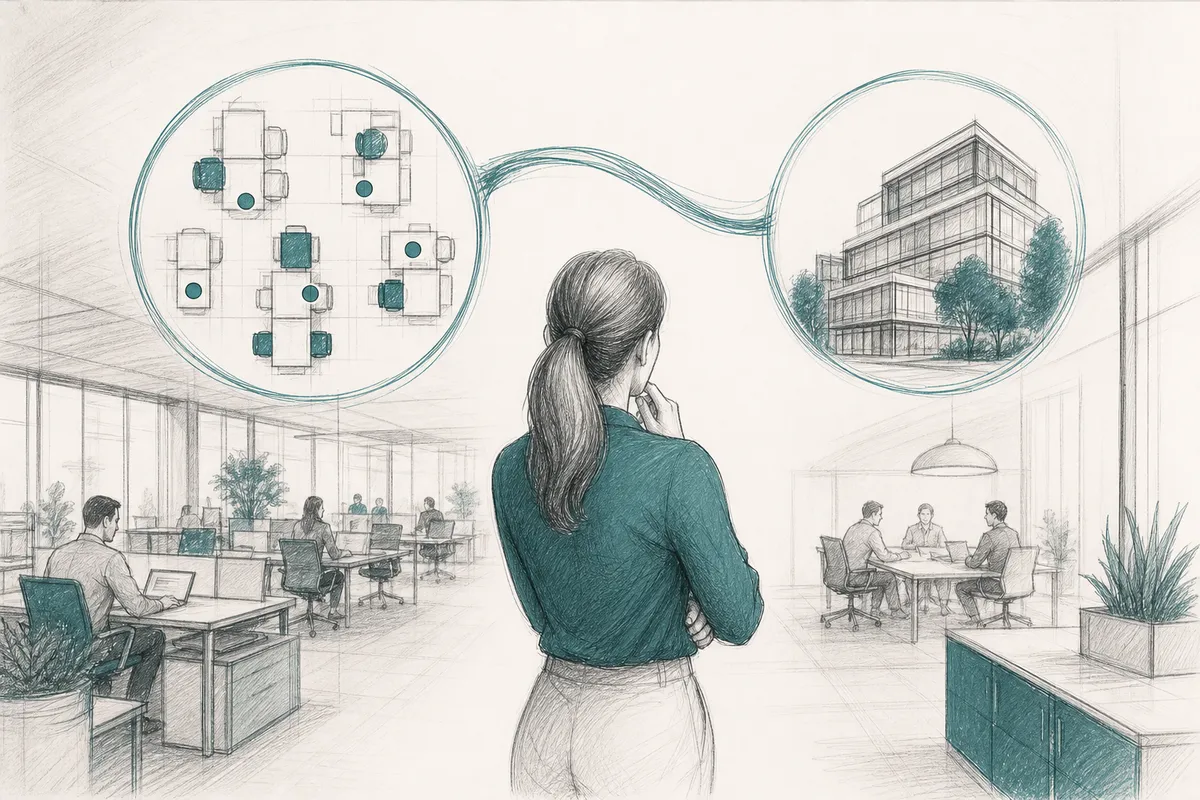
Portfolio flexibility is the second lever, and arguably the more strategic one. Once seating is reservation-based rather than permanently assigned, a company can consolidate two half-empty floors into one, exit a satellite office at lease renewal, or downsize a regional hub, all without displacing a single employee from "their" desk, because no one had one to begin with. That flexibility is what lets corporate real estate leaders bring a data-backed downsizing plan to the CFO instead of a defensive one.
The actual ROI depends heavily on which tier of consolidation a company is pursuing. A budget-conscious downsizing of a single underused floor produces modest, predictable savings. A premium play, consolidating several regional offices into one flagship location with a hoteling model layered on top, produces a much larger structural reduction in fixed real estate cost, but requires more upfront investment in space redesign and change management. Neither scenario is served by a single universal savings figure; the honest framing is that hoteling's payoff scales with how aggressively a company is willing to consolidate.
Done well, office hoteling increases planned collaboration because employees can book seats near the teammates they're actually working with that day, rather than being stuck in a fixed seat chart drawn up years earlier. That's a meaningfully different experience from random assigned seating, where someone might sit next to a different department every day with no coordination at all.
The risk is real, though: hoteling run purely as a booking transaction, grab any open desk, no context, no neighbors you recognize, can feel impersonal and erode the sense of belonging that makes coming into an office worthwhile. The mitigation is structural, not cultural sloganeering: pair hoteling with team-day scheduling so departments overlap on the same in-office days, and organize the floor into neighborhood zones so people land near familiar faces even without a fixed desk.
This is where forecasting matters as much as booking. Upflex's UnifyAI engine predicts attendance with 97% accuracy, which lets teams coordinate in-office days deliberately rather than leaving co-attendance to chance, and organizations using that kind of coordination report an 88% co-attendance achievement rate against their own targets, turning office hoteling from a cost-cutting mechanic into a working collaboration tool.
Roll out office hoteling in phases, starting with a single floor or team, and pair every policy change with communication that addresses what employees actually fear losing, not just the budget line the change is meant to fix.
The single biggest source of pushback is not the booking software. It's the loss of a dependable, personal workspace an employee has occupied for years. Skip that reality and even the most polished the practice rollout will stall in week one.
Start with a pilot, not a company-wide switch. Pick one floor, one department, or one business unit, run this practice there for four to six weeks, and collect feedback before expanding. This gives your team a working case study, real usage data, and a chance to fix booking friction before it reaches the whole company.
How you explain the change matters as much as the rollout sequence. Employees don't rally around "we're cutting real estate spend by 40%", that's a finance department win, not theirs. They respond to "you'll always have a desk near your team when you're in," or "you can book a spot next to your manager before a big project review." Lead with the guarantee, not the savings, and save the cost conversation for your CFO briefing.
Personalization workarounds close the gap between a fixed desk and a booked one. Assign lockers for personal items so nothing has to go home in a bag every night. Let employees rebook a favorite desk when it's available. Keep adjustable monitor arms, chairs, and sit-stand setups at every station so ergonomic comfort isn't tied to one specific seat.
Manager behavior determines whether this method feels like flexibility or isolation. Teams that set informal anchor days, say, Tuesday through Thursday, end up sitting near colleagues instead of scattered across an empty floor. Managers who skip this step often see employees come in, find no one they know nearby, and stop coming in altogether.
Expect a few predictable friction points. Employees get confused by a new booking tool in the first few weeks. Some managers enforce in-office expectations more loosely than others, creating uneven attendance across teams. Early adopters often voice the loudest complaints, but that dissatisfaction typically fades as booking becomes routine and desk availability proves reliable. Platforms like Upflex reduce this friction by pairing desk booking with attendance forecasting, so teams can see who's coming in before they book, rather than guessing.
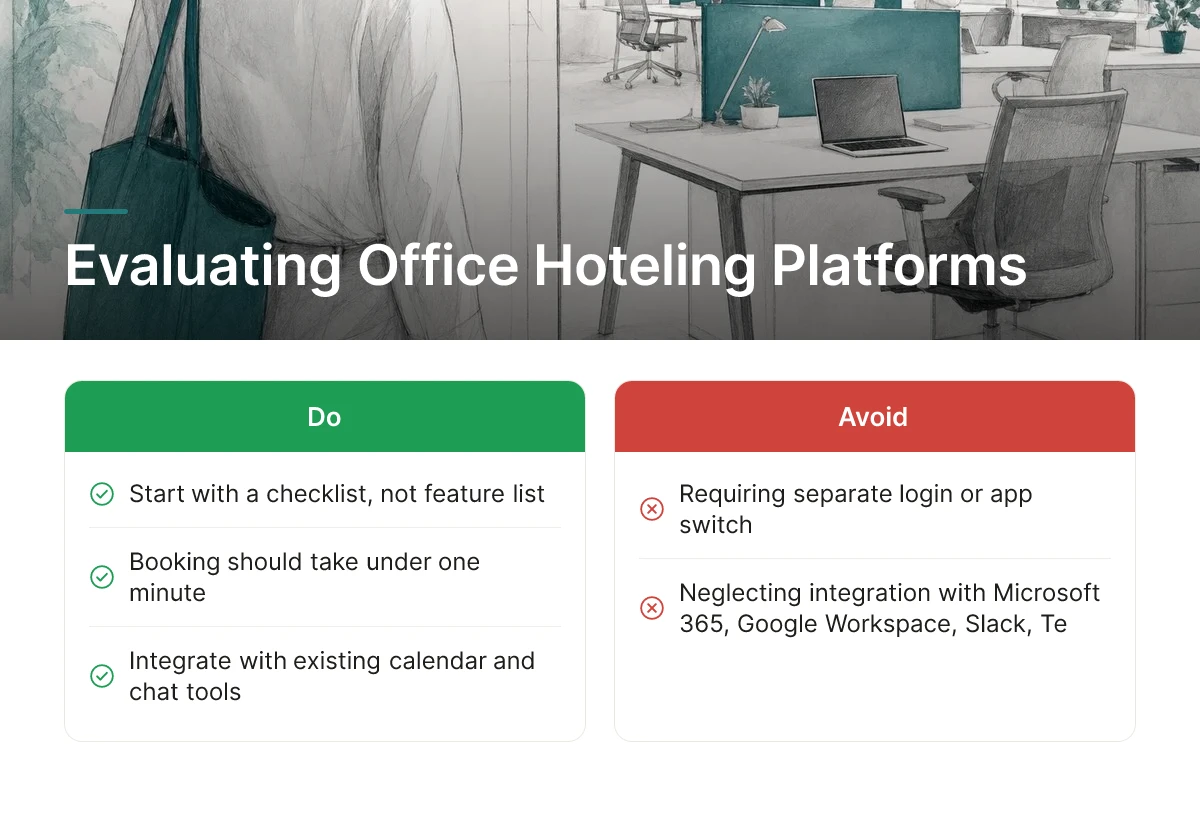
The right this strategy platform matches four capabilities to your footprint: booking ease, integration depth, utilization analytics, and multi-location scalability.
Start with a checklist rather than a feature list. Booking should take an employee under a minute from a phone or laptop, with no separate login or app switch required. Integration with the calendar and chat tools your teams already use, Microsoft 365, Google Workspace, Slack, Teams, determines whether people actually adopt the system or route around it with side-channel messages.
Utilization analytics matter as much as the booking function itself. You need data on which desks, floors, and days get used, not just confirmation that a reservation was made. Without that data, you're back to guessing which square footage to cut at your next lease renewal.
Scalability is where many single-office tools fall apart. A platform built for one location often lacks the multi-site reporting, role-based permissions, and cross-office booking rules a distributed company needs. Company size should drive the decision directly: a 200-person single office needs a straightforward booking and check-in tool, while a 5,000-person company spread across a dozen cities needs consolidated reporting, standardized space categories, and the ability to compare utilization across locations side by side.
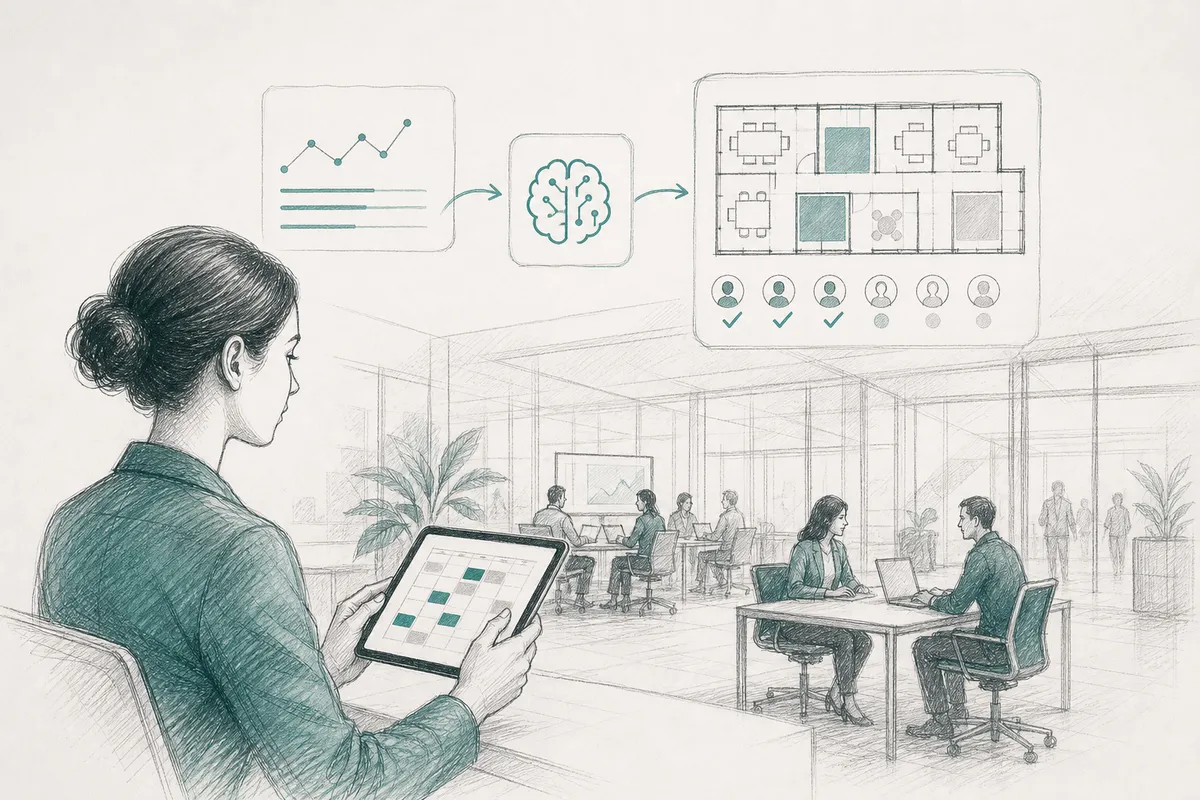
AI-powered orchestration forecasts who's actually coming in, and when, by analyzing booking patterns and historical attendance, then recommends desk allocation before the week starts. Instead of reacting to a full floor on Tuesday and an empty one on Thursday, the system predicts both and adjusts space assignments to smooth out the swings. This is the mechanism behind Upflex's UnifyAI engine, which forecasts attendance with 97% accuracy and has helped organizations hit 88% co-attendance achievement, meaning teams that intend to be in the office together actually end up in the office together, rather than missing each other by a day.
Orchestration also flags mismatches early: a floor booked at 30% capacity every Monday is a signal to consolidate, not just a data point to file away.
Vendors generally fall into three categories: dedicated workplace platforms focused on booking and forecasting, all-in-one facilities suites that bundle hoteling into broader maintenance and lease management, and network-based offerings that extend booking beyond owned offices into third-party workspaces for traveling or distributed employees. Upflex fits this last category while also covering forecasting and booking internally, giving companies a single view across owned space and on-demand access.
On pricing, weigh single-feature, budget-friendly tools against premium platforms that bundle analytics, integrations, and multi-site support, the cheaper option often costs more later in manual reporting and duplicate tools.
No, hoteling requires a reservation before arrival, while hot desking is first-come, first-served with no advance booking [1]. Hoteling gives facilities teams predictable occupancy data and lets employees confirm a desk before they commute. Hot desking is looser and better suited to offices with heavy walk-in traffic rather than scheduled hybrid attendance.
Yes, hoteling cuts real estate costs by letting multiple employees share the same desk inventory across the week instead of assigning one desk per person. With CBRE reporting that 69% of organizations now share desks among more than 40% of staff [3], companies are actively shrinking square footage. Upflex customers have documented reductions in real estate spend of 40% or more by pairing utilization data with attendance forecasting.
Employees reserve a desk in advance through a booking app, similar to reserving a hotel room [1]. They typically select a date, location, and sometimes a specific desk or neighborhood, often from a mobile app or calendar integration. Platforms like Upflex layer attendance forecasting on top, so booking recommendations reflect who else is coming in that day.
Larger enterprises with distributed or hybrid teams across multiple offices see the biggest returns. Companies managing several locations, fluctuating attendance, and significant square footage costs gain the most from reservation data that supports portfolio consolidation decisions, though mid-size hybrid organizations also benefit from reduced desk waste.
It can, but the savings are smaller since daily attendance is more predictable and less desk sharing is possible. Hoteling still helps in-office teams that rotate between departments, projects, or locations, but the cost-reduction case is strongest where attendance varies day to day, as it does under hybrid schedules.
this approach only pays off when reservation data turns into real estate decisions, not just fewer empty desks, but fewer leased square feet. The organizations getting the most out of it combine booking systems with attendance forecasting, so they know not just who reserved a desk but who will actually show up. That's the gap tools like Upflex's UnifyAI engine close, turning scattered booking data into portfolio-level consolidation calls. Start by auditing your current desk-to-employee ratio against actual badge-in data for the last quarter, that gap is where your hoteling program should begin.
Explore more from our content library: