Share This Article
No items found.


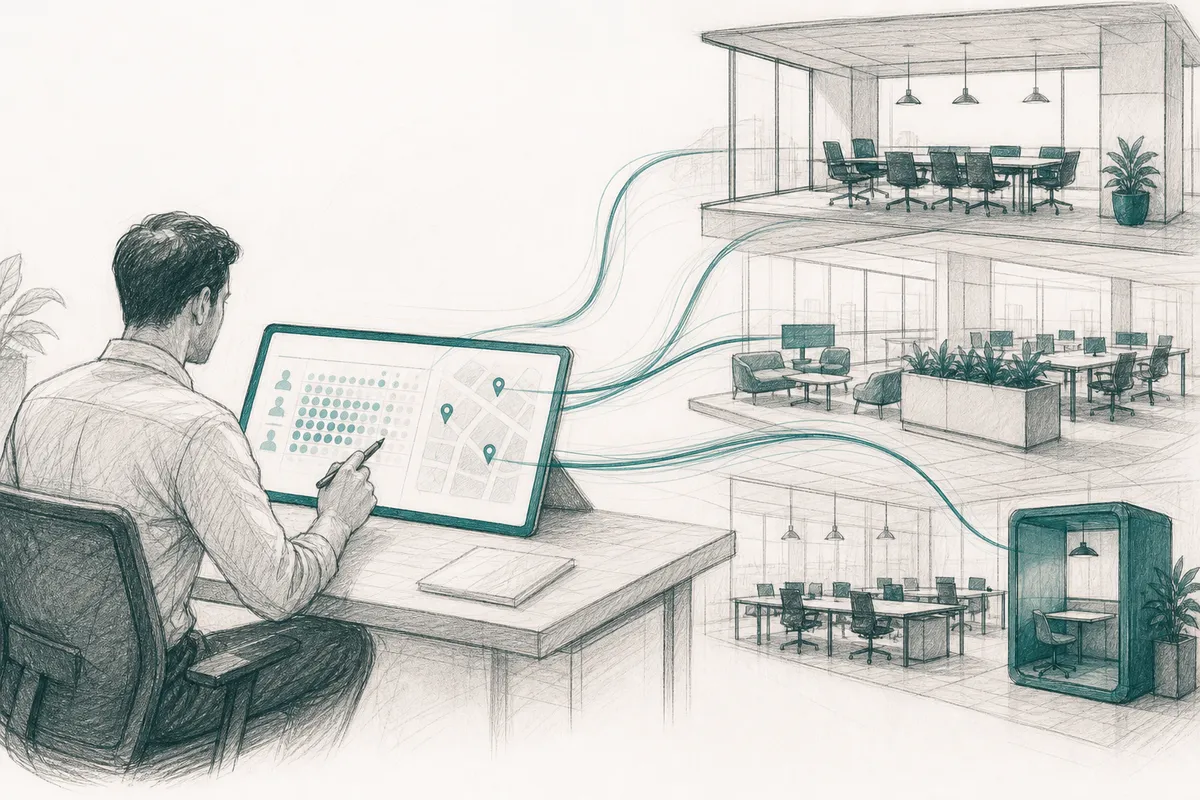
The hub and spoke office model splits a company's real estate into one or a few smaller central hubs (flagship offices for collaboration and culture) surrounded by a network of smaller satellite spaces or on-demand workspaces closer to where employees actually live. Instead of leasing one large headquarters, you shrink the core footprint and add flexible, distributed access points. This cuts commute times, reduces underused square footage, and gives distributed or hybrid teams a workspace option without forcing everyone into one building.
A hub is the flagship office where leadership sits, new hires onboard, and teams gather for work that genuinely benefits from being in the same room. Spokes are the smaller satellite offices, coworking memberships, or on-demand workspace nodes scattered near wherever your employees actually live. Together they form the hub and spoke office model: a deliberate split between one concentrated center of gravity and a distributed layer of lighter-weight access points.
The hub carries the functions that lose value when done remotely, client presentations, cross-functional planning sessions, culture-building events, executive face time. Spokes exist for everything else: heads-down work, small-team syncs, or a professional space for someone who lives ninety minutes from headquarters. Placement isn't arbitrary. Real estate leaders typically map spoke locations against three variables: where clusters of employees live, how often those employees actually need to meet in person, and what commute radius is reasonable to ask of them. A cluster of 40 employees living near a secondary city might justify a small leased spoke; a handful of remote hires scattered across other metros are better served by on-demand workspace access than a fixed lease.
Hybrid schedules and distributed hiring have made it inefficient to keep funding one massive building that assumes everyone commutes in five days a week. Remote work roughly doubled during the pandemic, with a substantial share of the workforce operating entirely from home [1], and most companies never fully reversed that shift. At the same time, a majority of businesses reported that lost social contact was hurting employee wellness [1], which ruled out full decentralization as a clean answer. The hub and spoke structure sits between those two extremes: it preserves a real center for collaboration while acknowledging that headcount is no longer geographically concentrated the way it was a decade ago.
The traditional centralized model leases one large office sized for peak headcount, regardless of where employees actually live or how often they need to be there. That single building absorbs every function, meetings, focus work, onboarding, storage, whether or not it's the right setting for the job. Hub and spoke unbundles those functions across multiple, right-sized locations, which is exactly why real estate leaders managing multi-city portfolios are revisiting it now.
Upflex supports this shift directly: its UnifyAI engine forecasts attendance with 97% accuracy so you know how much hub space you actually need, while its on-demand workspace network gives spoke-based employees flexible access without a new lease.
Hub and spoke sits between fully remote and full-time office work by changing where employees go, not just whether or how often they show up at all.
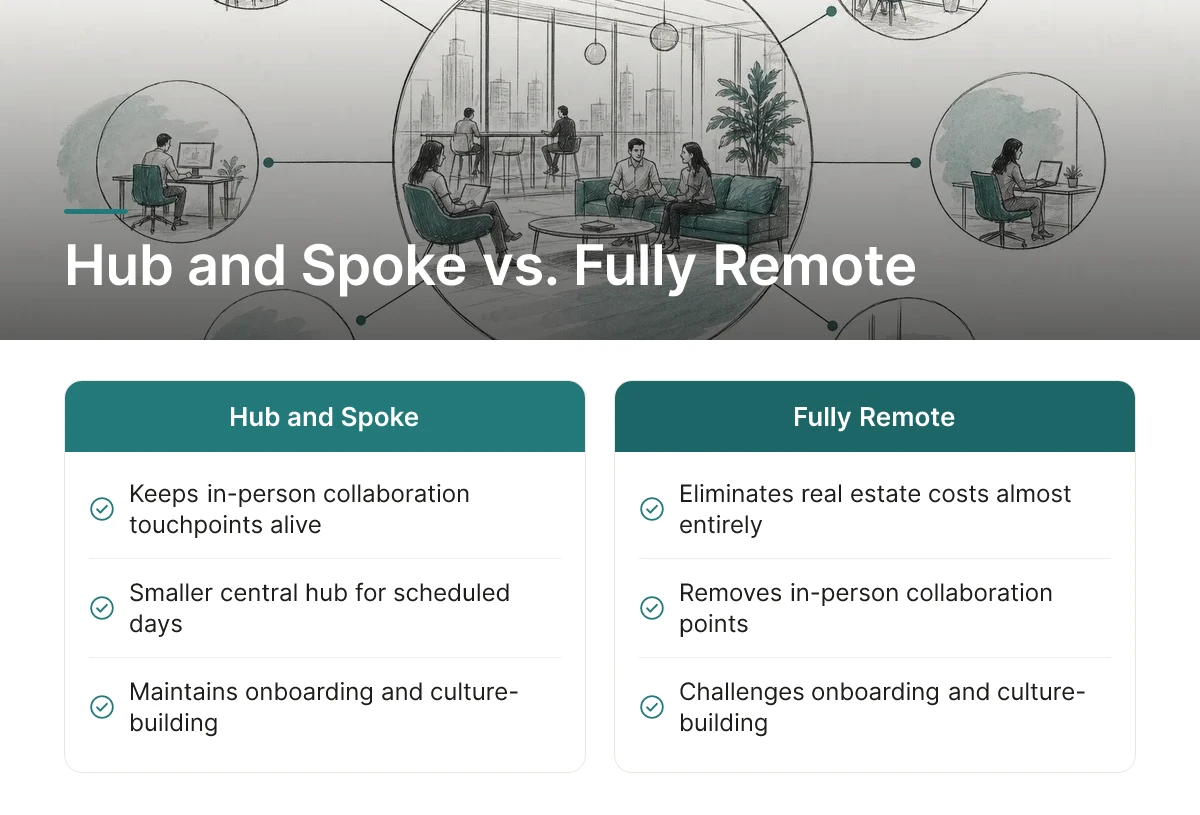
Fully remote work eliminates real estate costs almost entirely, but it also eliminates the in-person collaboration points that many leadership teams still consider necessary for onboarding, culture-building, and complex problem-solving. A hub and spoke office model keeps those touchpoints alive by giving teams a smaller central hub for scheduled collaboration days, while still cutting the square footage tied to any single headquarters.
A fixed four-day office week is a different lever entirely. It changes attendance frequency but keeps everyone commuting to the same building, which does nothing for employees who live far from headquarters or for a company trying to shrink its footprint in a specific city. Hub and spoke instead changes the map: it distributes smaller spoke locations closer to where employees actually live, then reserves the hub for moments that benefit from full-team presence.
Pure hot-desking, meanwhile, operates entirely within one building. It reassigns desks day to day but doesn't touch the number or location of offices a company operates. Hub and spoke works at the portfolio level, deciding how many buildings to keep and where, while hot-desking and desk booking tools operate inside whichever buildings that portfolio decision leaves standing. In practice, the two are complementary: once a company settles on its hub and spoke footprint, it still needs desk booking and attendance data to run each location efficiently.
Multiple locations mean multiple sets of coordination problems. Scheduling a team across a hub and two spokes takes more planning than scheduling that same team into one building four days a week, and without shared visibility into who's working where, meetings and mentorship moments quietly fall apart.
Culture fragmentation is a related risk, spoke employees can start to feel like second-tier staff if the hub always gets the leadership visits and the marquee events. Consistent tooling across sites matters too: booking systems, attendance forecasting, and space standards need to work the same way whether someone is in the hub or a spoke fifty miles away, or the model collapses into a patchwork of local workarounds.
The simplest fit test: hub and spoke works best when a workforce clusters in a handful of metro areas rather than scattering evenly across dozens of cities or working from home full time [2]. If most employees already live within reach of two or three regional clusters, a hub and spoke office model gives a company a real estate footprint to redesign around. If the workforce is scattered nationally with no natural clusters, remote-first with occasional coworking access is usually the simpler fit.
Savings come from converting one fixed, oversized lease into a smaller fixed hub plus variable, usage-based spoke costs, not simply from shrinking square footage on paper.
The mechanism is straightforward. A single headquarters lease locks a company into paying for the same square footage every day of the year, regardless of whether 90% or 20% of desks are occupied. A hub and spoke office model breaks that fixed cost into two pieces: a smaller anchor hub sized for actual peak collaboration days, and spoke locations billed on usage, by the day, the desk, or the month.
Most of the real savings hide in the gap between leased capacity and actual attendance. A headquarters built for 1,000 people that averages 400 people in the building on a typical Tuesday is paying for 600 empty desks, that unused capacity, not the building's total size, is what drains the budget. Shrinking the hub to match realistic peak-day demand, then routing overflow and distributed employees to on-demand spokes, eliminates that structural waste instead of just trimming a lease by a fixed percentage.
Build the payback case by comparing what you pay today against what you'd pay under a hub-plus-spoke structure across the same lease horizon. Line up current fixed lease cost, utilities, and facilities overhead for the existing footprint against a projected model: a downsized hub lease plus variable spoke spend scaled to expected usage. Run that comparison across a multi-year lease cycle, since spoke costs flex with headcount and attendance patterns while hub costs stay fixed once the lease is signed.
Before hard dollar savings show up on a balance sheet, three leading indicators tell you whether the model is working: utilization rate (occupied desks versus available desks on a given day), cost per occupied seat (a more honest metric than cost per square foot, since it accounts for actual use), and commute-time reduction for employees now working from a nearer spoke instead of a distant headquarters. Upflex's UnifyAI engine forecasts attendance with 97% accuracy, which lets real estate and finance leaders model utilization and cost-per-seat scenarios before committing to a smaller hub lease, rather than guessing and correcting after the fact.
When budgeting for spoke locations, resist the urge to price them precisely before contracts are negotiated. Think in tiers instead, budget-friendly coworking desks for occasional use, mid-range private offices for small regional teams, and premium flex space for client-facing or executive functions, and let actual usage data refine the mix over time.
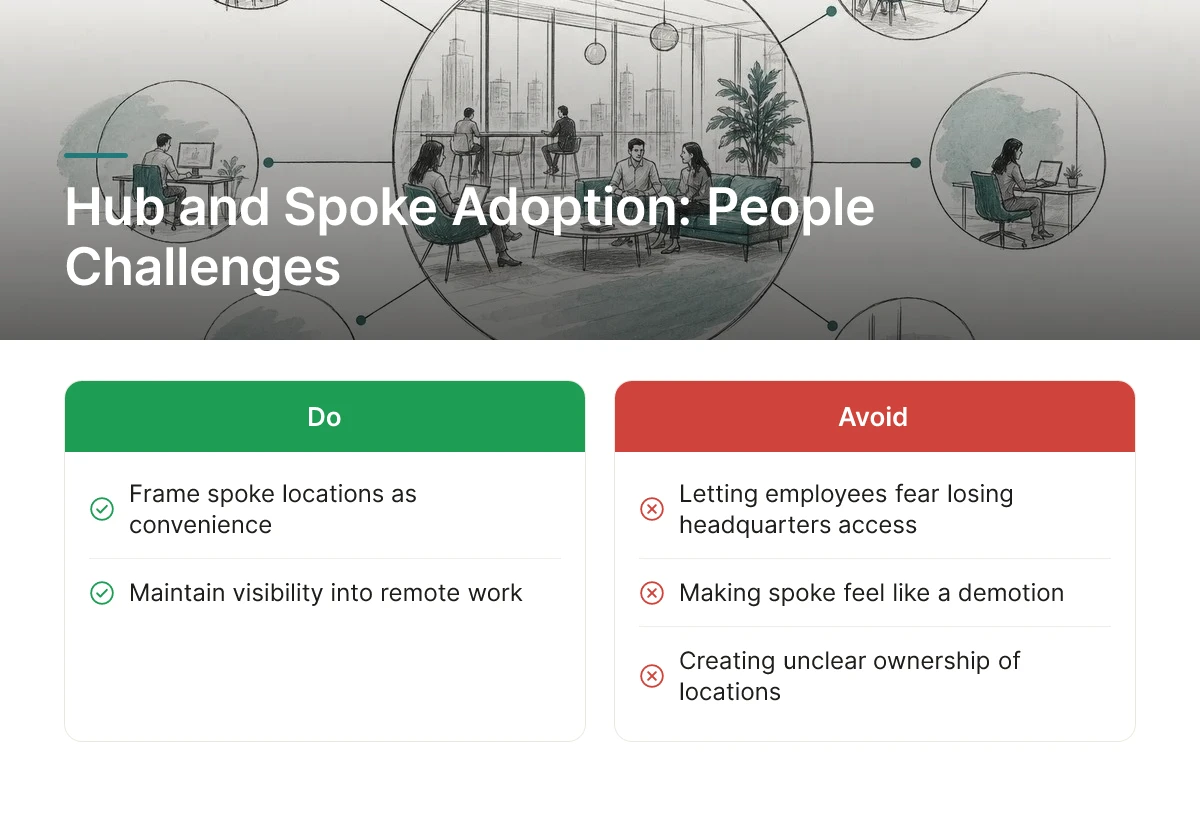
Most hub and spoke office model rollouts stall on people problems, not real estate math, resistance, unclear ownership, and mismatched expectations between locations.
Resistance usually shows up in two distinct forms. Employees worry they'll lose access to the headquarters they've built routines and relationships around, especially if a spoke location feels like a demotion rather than a convenience. Managers, meanwhile, worry about losing visibility, if a direct report works from a spoke three days a week, how does that manager know the work is getting done and the team is staying connected?
Both fears are legitimate, and dictating spoke locations from a corporate real estate committee tends to make them worse. A better approach involves department leads directly in spoke-location selection. A sales team with concentrated headcount in Austin and Denver should have input on whether the company opens spokes there or leans on an on-demand network instead. When managers help choose the locations, they're more invested in making the coordination model work, and employees see the change as responsive to where people actually live rather than an abstract cost-cutting exercise.
Data and policy gaps compound the problem if they're not settled before rollout. Organizations need clear answers on who approves spoke usage, how expense policies apply across a coworking network versus a leased hub, and whether security standards, device management, guest network access, visitor protocols, are consistent across every location an employee might use. Leaving these questions open until after launch creates exactly the kind of confusion that fuels resistance.
A single company-wide switch is the riskiest way to adopt a hub and spoke office model. A phased rollout, pilot one spoke cluster, measure utilization and co-attendance for a full quarter, then expand, gives the organization real data before committing to a second or third region.
Platforms like Upflex support this sequencing by tracking co-attendance achievement and utilization patterns from the pilot cluster, so expansion decisions are based on measured behavior rather than guesswork.
Uneven adoption is a lasting risk even after a successful pilot. Hub-based employees can develop an "insider" culture while spoke-based employees feel peripheral, particularly around meetings, promotions, and informal decision-making. Clear coordination cadences, scheduled cross-location syncs, published co-attendance targets, and rotating meeting ownership, prevent the hub and spoke model from hardening into a two-tier culture where geography determines influence.
Running a this strategy at scale requires three connected software layers: booking, forecasting, and access management, without them, coordination collapses into spreadsheets.
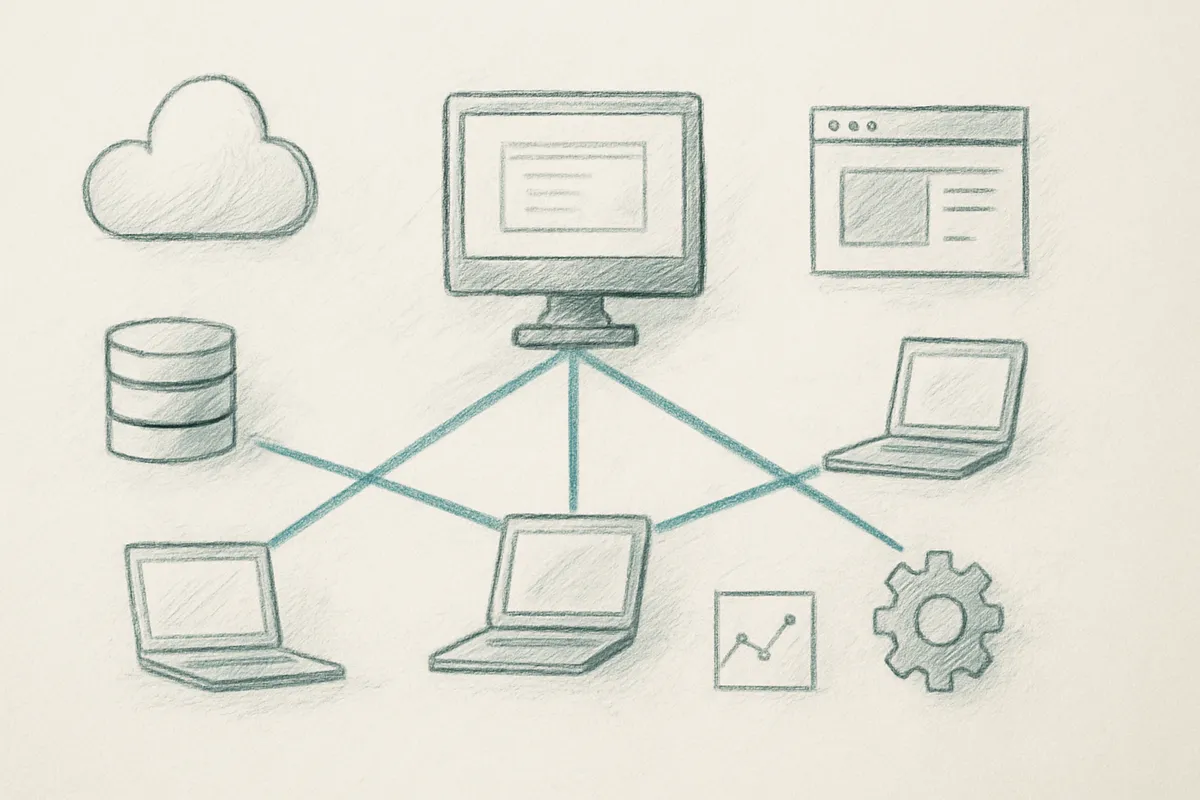
Three categories do the heavy lifting. Desk and room booking handles reservations inside owned hub offices. Attendance and utilization forecasting predicts who's showing up where and when. Workspace access management extends that same visibility to third-party spoke locations, coworking spaces, satellite offices, or on-demand desks near where employees actually live.
The category that gets overlooked is the coordination layer sitting on top of all three. Without one system tying booking, forecasting, and access together, teams end up reserving hub desks in one tool, spoke access in another, and tracking attendance in a spreadsheet nobody trusts. That fragmentation is exactly what produces the "who's actually in the office today" problem that undermines the this approach in the first place. Upflex addresses this by combining desk booking, its UnifyAI forecasting engine, and access to a global on-demand workspace network in a single platform, so real estate and workplace leaders see one consolidated picture of usage across every hub and every spoke.
Collaboration tools, video conferencing, chat, shared calendars, need to plug into that same booking data. A hybrid meeting that spans a hub office and three spokes only works well if the system knows who's dialing in from where; otherwise meeting rooms get booked for headcounts that never show up, and remote participants get treated as an afterthought instead of a planned part of the meeting.
Technology priorities shift sharply by industry, even though the underlying stack categories stay the same. Technology companies typically prioritize flexible, on-demand spoke access and the ability to scale locations up or down quickly as teams grow or contract. Financial services firms weight access control and compliance logging more heavily, since regulated data and client information require an auditable record of who accessed which space and when. Manufacturing and other fixed-site operations care less about flexible spoke access and more about scheduling tied to shift patterns at specific facilities.
Forecasting matters across all three. Predicting attendance by location, rather than guessing at a company-wide average, is what lets a real estate leader right-size each spoke instead of overprovisioning every satellite office for a peak day that rarely happens.
No, mid-market companies with two or more offices can apply the same logic, though the return scales with headcount and lease size. A company with 300 employees across three cities can still designate one hub and treat the rest as spokes; the math just involves smaller numbers. The model becomes most valuable once real estate is a top-three cost line item, which typically happens above a few hundred employees.
There's no fixed ratio, spoke count should match where employees actually live, not an arbitrary formula. Most enterprises start with one hub per region and add spokes based on employee density clusters, often beginning with two or three and expanding only after attendance data confirms demand. Adding spokes without utilization data risks recreating the same underused-space problem the model is meant to solve.
Yes, but it requires redefining "hub" as a rotating or purpose-built collaboration space rather than a permanent headquarters. Some distributed companies designate a temporary hub for quarterly all-hands or team offsites, booked on demand rather than leased long-term. The spokes then handle everyday local work, often through on-demand workspace networks rather than owned offices, keeping fixed costs near zero.
Place spokes where employee address data shows the highest concentration of unmet commuting need, not where leadership assumes people live. Pull home-zip-code data from HR systems, overlay it against current office locations, and look for clusters 30+ minutes from any company site. Attendance forecasting tools can validate demand before signing any new lease, avoiding a repeat of the original overcapacity problem.
A hub and spoke model only works if the spoke decisions are backed by real attendance data, not guesswork about where teams "probably" want to work. Start by auditing where your employees actually live and how often they currently show up to your existing offices. Then test spoke locations through on-demand workspace access before committing to any new lease.
Upflex supports this exact sequence, UnifyAI forecasts attendance with 97% accuracy, and the on-demand network lets you pilot spoke coverage without signing a long-term contract. The concrete next step: pull your last two quarters of badge or booking data and map it against employee home addresses before your next lease renewal conversation.
Explore more from our content library: