Share This Article
No items found.

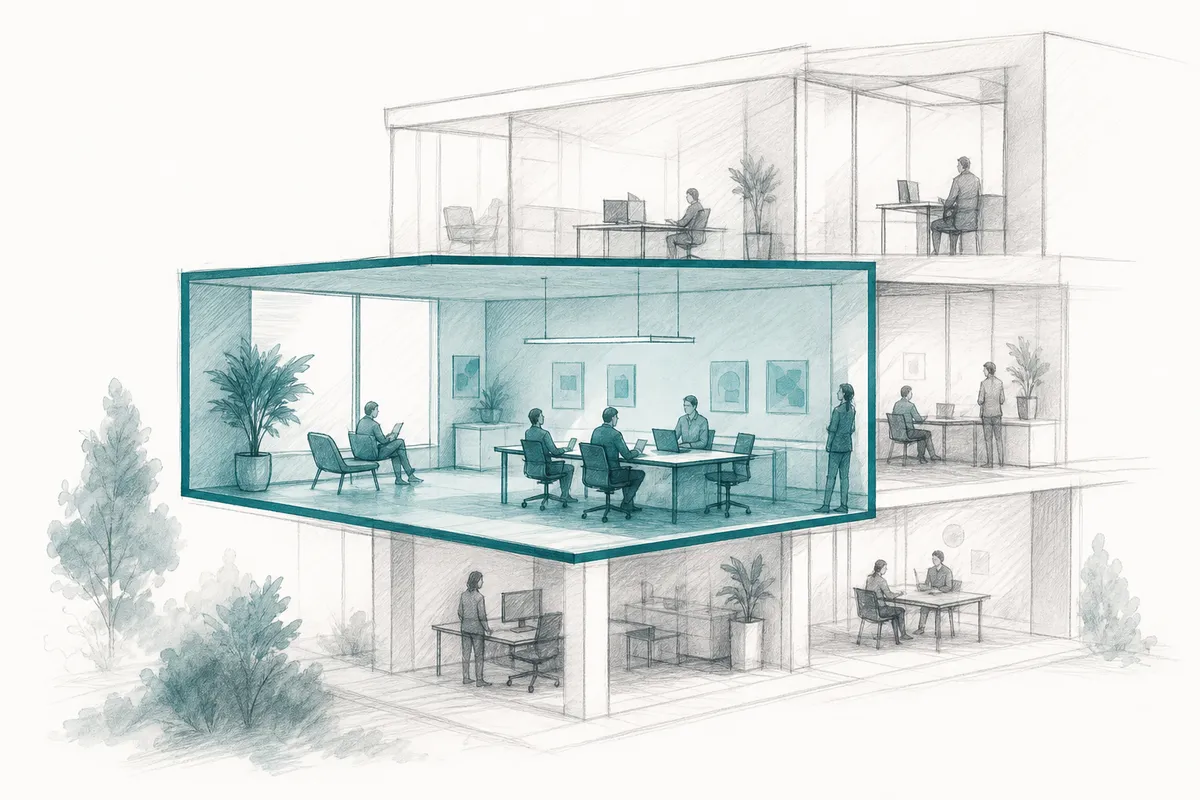
Understanding flex space management is essential. Enterprises manage flex space by matching real-time attendance patterns to flexible capacity across every location, cutting the fixed real estate they carry while keeping seats available where and when teams actually show up. Instead of leasing for peak headcount at every site, teams size each location to typical demand and use on-demand desks and short-term space to absorb the rest. Done well, this shifts real estate from a fixed cost to a variable one that tracks how people actually work, the core lever behind most hybrid real estate savings.
Enterprises treat flex space management as a portfolio decision, not a per-building one, reallocating flexible capacity across cities each quarter based on where teams actually show up, rather than locking every site to a fixed headcount lease.
That's a break from how corporate real estate has traditionally worked. For decades, the standard approach was to lease square footage sized to peak headcount at each location and hold that footprint for the life of the lease, regardless of how often desks were actually filled. Hybrid work broke that model: attendance now varies by team, by week, and by location, so a footprint sized for a Monday all-hands sits mostly empty the rest of the week.
Flexible space fills four specific gaps that a fixed lease can't cover efficiently. It absorbs overflow when in-office attendance spikes above what the core office holds; it creates satellite hubs near suburban or secondary clusters where employees have moved but the company has no lease; it supports project-based teams that need dedicated space for a few months rather than a permanent floor; and it gives the company a presence in cities where headcount doesn't justify a full lease at all.
None of these needs are well served by a 5- or 10-year lease commitment. They're better matched to on-demand or short-term inventory that can scale up or down as team composition shifts.
Traditional planning treats real estate as one annual decision, sign the lease, set the floor plan, revisit in a few years. Strategic allocation treats it as an ongoing process, reviewed as often as quarterly, that shifts capacity toward wherever employees currently are.
Consider a company with a downtown headquarters running well below capacity most days, and a growing cluster of employees who've relocated to a suburb 40 minutes away with no company presence there. Under fixed planning, the downtown lease stays as-is and those suburban employees either commute long distances or skip the office entirely. Under an allocation approach, the company scales back its downtown footprint and redirects that budget into flexible space near the suburban cluster, matching capacity to where the people actually are instead of where the lease happens to sit.
This is the mechanism Upflex is built around: UnifyAI forecasts attendance by location with 97% accuracy, then the platform connects that forecast to both a company's own office and its on-demand workspace network, so capacity moves with the workforce instead of staying locked to a floor plan signed years earlier.
Flexible capacity converts fixed, worst-case-sized office costs into variable spend that tracks actual attendance, cutting the bill for space nobody uses.
Most corporate leases are sized for peak attendance, the busiest Tuesday of the quarter, not the average day. That means an office built for 1,000 people on a busy day sits mostly empty the other four days a week, and the company pays full rent regardless. Flexible capacity breaks that link. Instead of committing every seat to a single fixed lease, an enterprise reserves a smaller owned footprint and fills the gap with on-demand workspace only when and where demand shows up. This is the core mechanic behind flex space management: matching paid capacity to real occupancy instead of theoretical peak occupancy.
Three numbers matter more than any single savings percentage: cost per occupied seat, utilization rate against leased capacity, and avoided renewal or expansion costs.
Platforms built for office orchestration, including Upflex's UnifyAI forecasting engine, generate these figures automatically by pairing attendance predictions with real booking data, giving real estate and finance leaders a shared, current view instead of a quarterly estimate.
Flexible workspace carries lower risk than a long-term lease because it scales down with headcount as readily as it scales up, but it isn't cheaper per square foot.
A traditional lease locks in cost for five to ten years regardless of what happens to headcount, hybrid policy, or business conditions. If a division shrinks or a return-to-office mandate fails to bring people back, the rent obligation doesn't move. Flexible arrangements avoid that lock-in: capacity contracts when demand drops and expands when it doesn't, without a renegotiation cycle.
The tradeoff is per-day cost. On-demand workspace typically costs more per square foot than a fully amortized long-term lease. The savings in flex space management don't come from a cheaper rate, they come from eliminating the idle capacity a company would otherwise carry year-round on a fixed lease it can't downsize.

Reliable flex space management depends on four data points tracked consistently: occupancy versus capacity, peak-day versus average attendance, location-level badge or booking data, and no-show rates on reserved desks. Without this discipline, footprint decisions turn into guesswork dressed up as strategy.
Start with occupancy rate against leased capacity, the single most cited number in any real estate review, and the one CFOs ask for first. But a raw occupancy percentage hides more than it reveals unless it's split into peak-day and average-day figures, since a location that looks half-empty on average might still hit capacity every Tuesday and Wednesday.
Badge-in or booking data broken out by location tells you where people actually show up, not where they were scheduled to. No-show rate on reserved desks matters just as much: a location with high booking volume but frequent no-shows is over-provisioned in practice, even though the calendar suggests otherwise.
Upflex's UnifyAI engine pulls these signals together into a single forecast, predicting attendance with 97% accuracy so real estate and workplace teams work from the same numbers instead of reconciling spreadsheets from three different systems.
A single slow week doesn't make a space underutilized, sustained low occupancy against leased capacity across a full reporting cycle, typically a quarter, is the threshold that justifies action. Holiday weeks, weather events, and one-off offsites all distort short-term averages.
Once a location is flagged, the reallocation workflow follows a clear sequence: confirm the pattern holds across multiple cycles, test a reduced footprint or a downgraded space class before committing to a full exit, then redirect the freed budget toward locations already running at or near capacity. This is where portfolio consolidation decisions get made, not on a hunch, but on a documented trend.
One caution: don't manage to the average alone. A location averaging 40% occupancy can still spike to 90% on peak collaboration days, and cutting capacity to match the average will leave teams without desks exactly when co-attendance matters most. Peak-day headroom, not average-day comfort, is what protects the in-office experience while the portfolio shrinks.
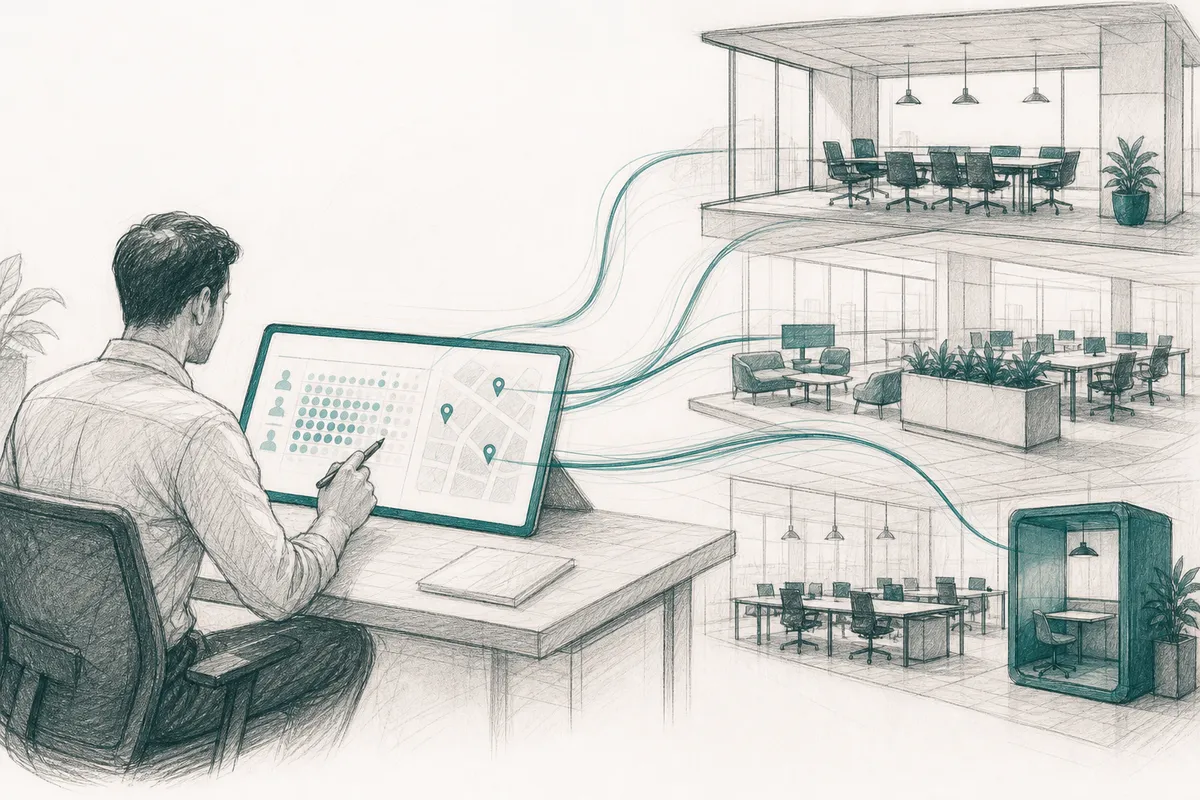
Enterprises need three layers of technology working together: forecasting that predicts attendance, booking systems that act on it, and a dashboard that gives real estate leaders one view across every location. Without that stack, flex space management defaults to guesswork dressed up in spreadsheets.
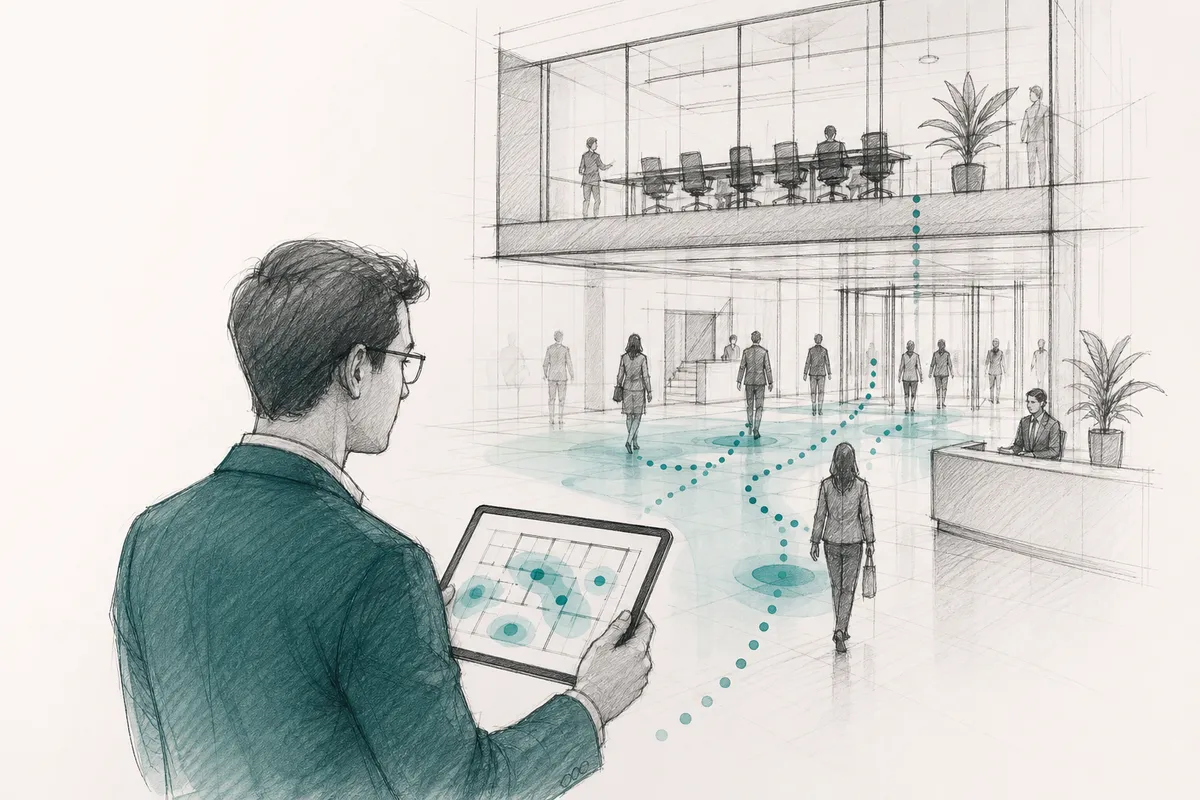
Manual space management breaks down once a company operates more than a handful of offices, because spreadsheets and quarterly badge-swipe reports can't keep pace with how quickly hybrid attendance actually shifts. A facilities team pulling last month's utilization report is making this month's consolidation decision on stale data, attendance patterns change week to week as teams renegotiate in-office days, and a static report can't catch that.
AI-powered forecasting works differently. It pulls signals from booking activity, calendar entries, and historical attendance patterns to predict who's coming in, when, and to which location, before the week starts, not after. That shift from reactive to proactive is the core difference: instead of reviewing what happened last quarter, a real estate leader sees what's likely to happen next Tuesday and can adjust desk allocation, staffing, or workspace access accordingly.
Upflex's UnifyAI engine is built around this mechanism, forecasting attendance with 97% accuracy so workplace teams can coordinate desk assignments and access to on-demand space before demand spikes rather than scrambling once employees show up.
At enterprise scale, four capabilities separate a working system from a patchwork of tools:
The comparison isn't between named products; it's between categories. A standalone booking platform handles reservations but can't forecast demand. An analytics dashboard shows what happened but doesn't act on it. An integrated orchestration system, combining forecasting, booking, and network access to external workspace in one layer, is what closes the loop between prediction and action, which is the gap most enterprise flex space management stacks still have.
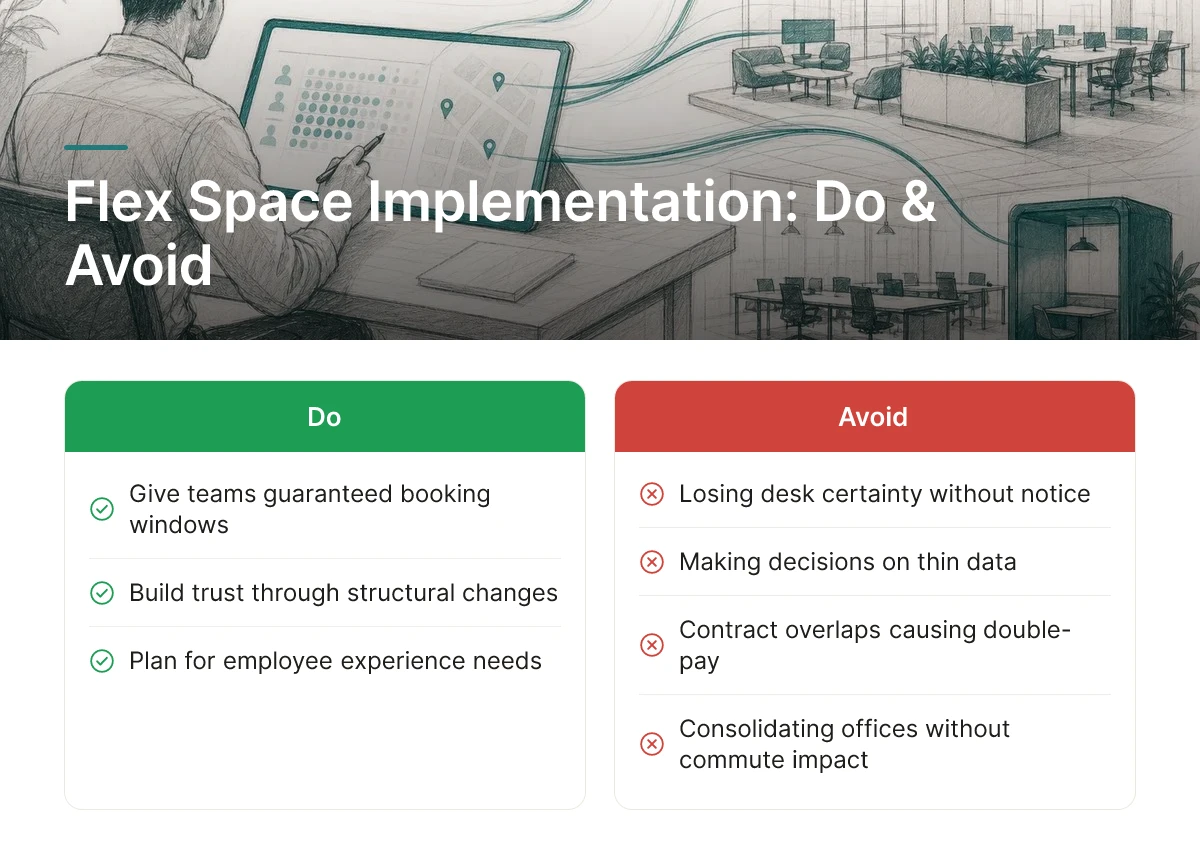
The biggest risks in flex space management are employee pushback on lost desk certainty, decisions made on thin attendance data, and contract overlaps that cause double-paying during transition.
Cutting square footage often means fewer guaranteed desks or consolidating satellite offices into fewer, larger hubs, which can turn a five-minute commute into forty-five. That tradeoff is where cost-driven flex space management programs lose employee trust fastest.
The fix is structural, not cultural. Give teams guaranteed booking windows for the days they're expected in-office, rather than a free-for-all where showing up doesn't guarantee a seat. Where consolidation lengthens commutes, proximity-based flex access, letting employees book a nearby workspace instead of trekking to a distant hub, keeps the experience intact. Upflex's on-demand workspace network exists for exactly this scenario: employees get a professional space close to home while the company still shrinks its owned footprint.
Three risks show up repeatedly once real estate and workplace teams start executing.
None of these risks are reasons to avoid flexible strategies, they're reasons to sequence the work: measure first, communicate early, and align contracts before signing anything new.
Yes, the core problem of matching space to actual attendance exists at two offices just as it does at twenty. A smaller footprint still carries fixed lease costs, and even a single underused floor can justify attendance forecasting and on-demand access for travel or overflow days without a large real estate team behind it.
Review allocation quarterly, with a lighter monthly check on utilization trends. Lease events, team reorganizations, and seasonal attendance shifts change the picture fast, so quarterly reviews catch drift before it turns into a costly renewal decision.
No, most enterprises keep a core anchor office and use flexible capacity around it, not instead of it. The goal is right-sizing the permanent footprint to match real attendance, then covering overflow, travel, and satellite team needs through on-demand workspace access rather than new long-term leases.
Corporate real estate typically owns the decision, but it can't work in isolation from HR and finance. Real estate controls the lease and cost data, HR owns attendance policy and employee experience, and finance signs off on the savings case, so the strongest programs run through a shared forecast both teams trust.
Flex space decisions only hold up when they're built on real attendance data, not lease renewal deadlines or gut instinct. Start by measuring actual utilization across your portfolio, then match your permanent footprint to what teams need on their busiest days, filling the gaps with on-demand workspace instead of new long-term commitments. Platforms like Upflex make this practical by pairing 97%-accurate attendance forecasting with a global on-demand workspace network, so consolidation decisions come with data the CFO can trust and an experience the CHRO can defend. Your next step: pull three months of badge or booking data and compare it against your current square footage before your next lease conversation.
Explore more from our content library: