Share This Article
No items found.

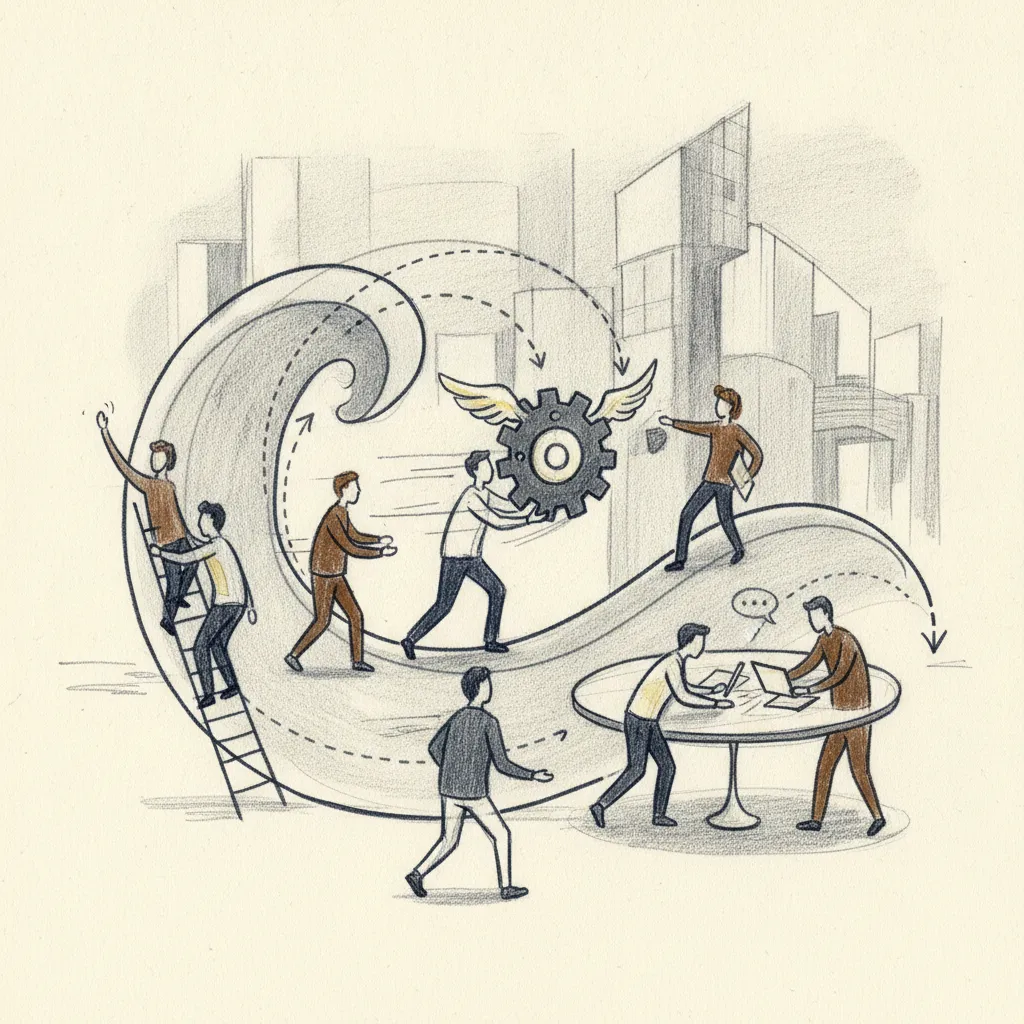
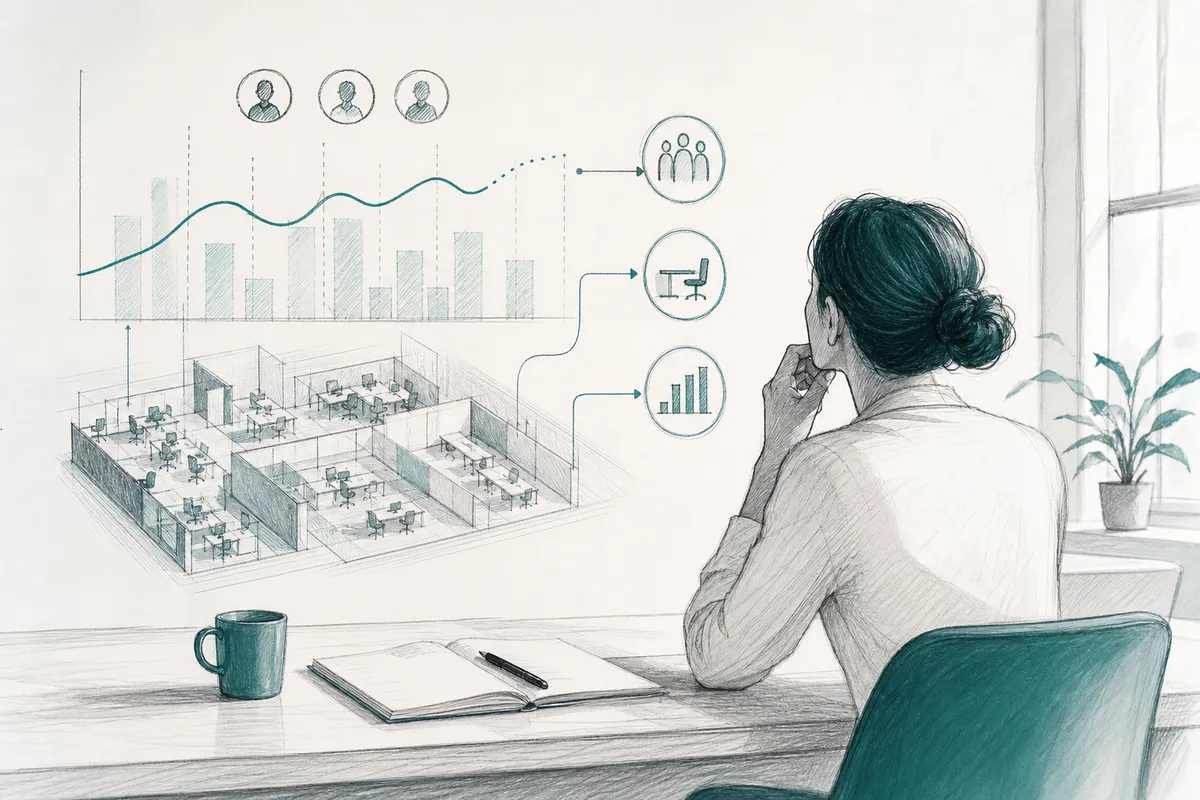
Workplace agility is an organization's ability to sense change and respond to it quickly, restructuring teams, workflows, and physical space without losing momentum. Unlike software-specific 'agile' methodology, workplace agility is a broader operating philosophy that applies across every function and industry. Organizations with high workplace agility consistently outperform peers on cost efficiency, talent retention, and speed to market, making it a measurable competitive advantage, not a management trend.
Workplace agility is an organization's capacity to detect disruption and reallocate people, space, and resources faster than competitors can respond.
That definition does real work. It names three concrete assets, people, space, resources, and sets a competitive benchmark rather than describing a feeling or a philosophy. The rest of this article unpacks each dimension of that capacity.
Agile (capital-A) is a software delivery framework built around sprints, backlogs, and iterative releases. It originated in the 2001 Agile Manifesto and was designed for software development teams. Workplace agility is something different: a company-wide operating posture that determines how fast any function, finance, HR, operations, real estate, can shift direction when conditions change.
Conflating the two leads to a common mistake: organizations run Agile ceremonies in their engineering teams and assume the broader business is agile. It isn't, unless the structural, spatial, and cultural conditions support it.
Those three dimensions give workplace agility its shape:
McKinsey research found that agile organizations complete major transformations 30% faster than traditionally structured ones, a gap that compounds over time as markets accelerate.
"Agility is not just about speed — it's about building organizations that can sense shifts in their environment and reconfigure themselves before those shifts become crises." — Aaron De Smet, Senior Partner at McKinsey & Company
Workplace agility looks different depending on the operational constraints of each sector [2].
In technology, agility shows up in team structure and release cadence, cross-functional squads that ship, learn, and adjust in two-week cycles. In manufacturing, it means supply-chain pivots and workers cross-trained across multiple production lines, so a single supplier failure doesn't halt output. In healthcare, it appears as staffing redeployment during demand spikes, moving nurses between units or standing up telehealth capacity within days during a surge.
According to research published in PMC on organizational adaptability, healthcare systems that embedded agile workforce practices were significantly better positioned to respond to sudden demand surges without compromising care quality.
The mechanism differs, but the underlying logic is identical: reduce the lag between signal and response. That lag is exactly what workplace agility is designed to compress.
Genuine workplace agility rests on five structural and cultural traits, decentralized decisions, cross-functional teams, flexible workspaces, learning loops, and data-driven resourcing.
Each component is auditable. If you can't point to a concrete example of it operating in your organization, you don't have it, you have a policy document that says you do.
Cross-functional design alone produces measurable returns. Deloitte's Global Human Capital Trends research found that organizations with cross-functional teams report 25% higher employee productivity than their siloed counterparts [2].
Spotify's "squad" model is the most studied example of this structure in practice. Each squad owns a product area end-to-end, with its own roadmap and release authority. The documented wins include faster shipping cycles and higher ownership. The common failure mode, widely reported when other companies copied the model, is grafting the structure onto a command-and-control culture, where squads exist on paper but still wait for executive sign-off on every meaningful decision.
The organizations that sustain agility share three auditable characteristics: flat hierarchies with clear accountability at each level, psychological safety scores above their industry average, and real-time visibility into space and headcount utilization [2].
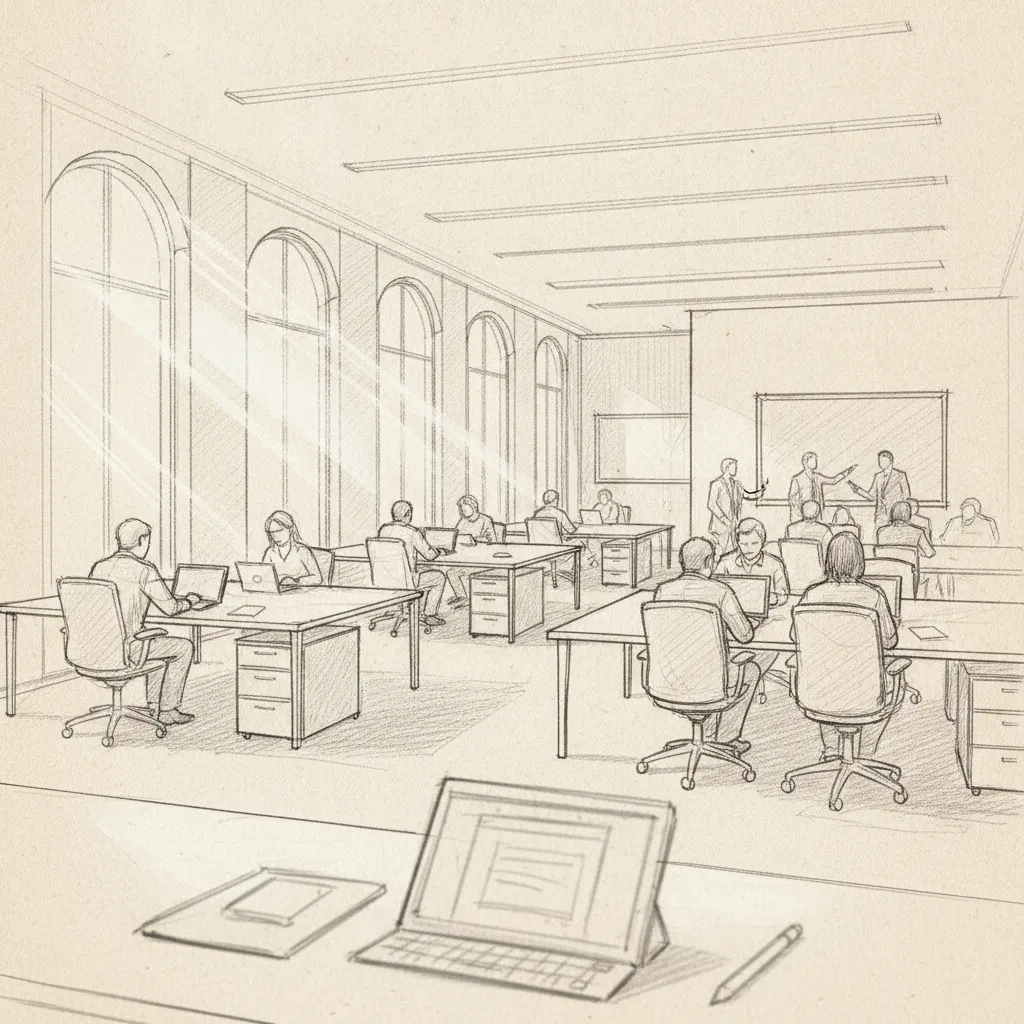
That last point connects directly to physical workspace. Organizations using on-demand workspace networks can scale their footprint up or down in days, adding capacity in a new city for a project team, then releasing it when the project closes. A traditional long-lease portfolio takes quarters to adjust and carries the cost regardless. Platforms like Upflex give corporate real estate teams exactly this flexibility, pairing on-demand workspace access with attendance forecasting so space decisions follow actual demand rather than lease expiry dates.
According to Gloat's analysis of why workplace agility is essential, organizations that invest in talent mobility and cross-functional structures are far better equipped to weather economic volatility and competitive disruption.
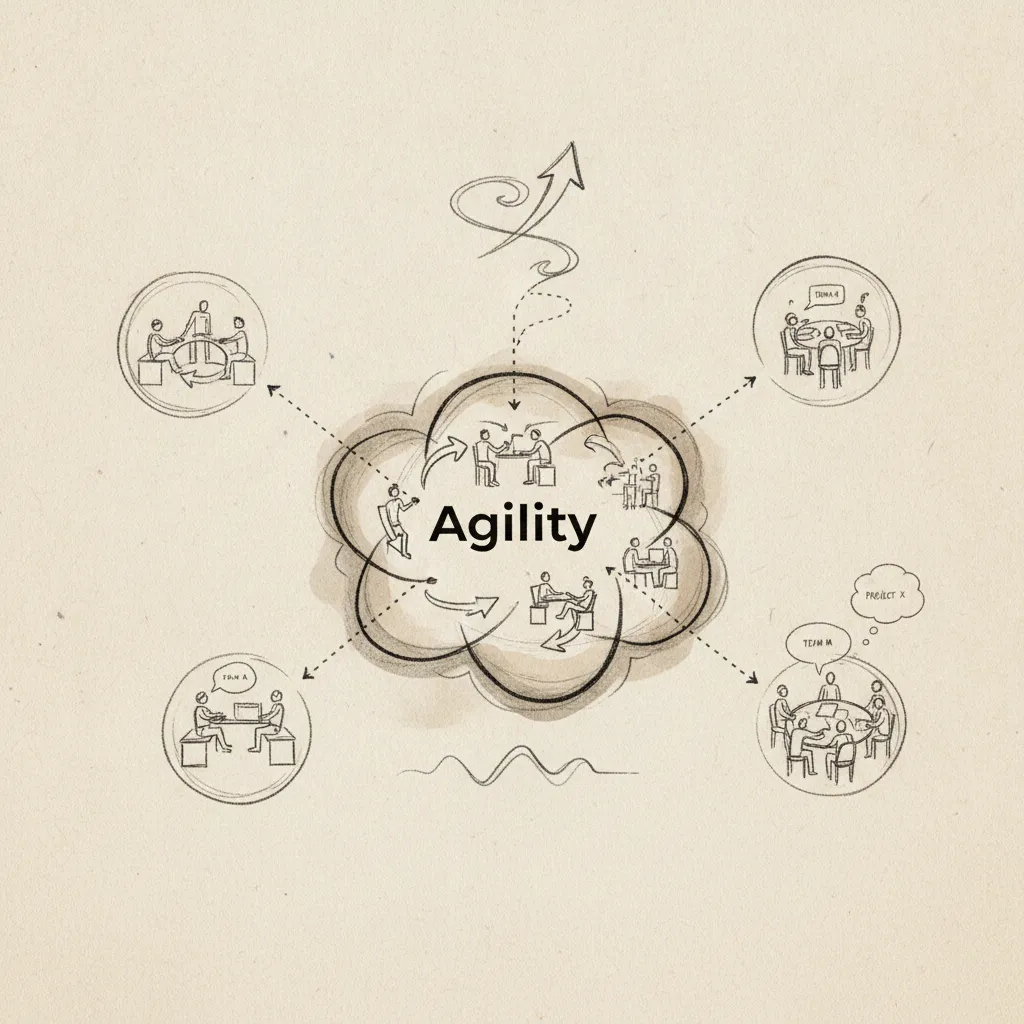
Workplace agility delivers measurable gains in speed, cost, and retention, but the transition exposes structural and cultural friction that derails most programs before they scale.
McKinsey research shows that agile business units launch products 40% faster than their traditionally structured counterparts. That speed advantage compounds: faster iteration cycles mean earlier customer feedback and fewer costly late-stage pivots.
On the real estate side, flexible workspace strategies, combining right-sized owned offices with on-demand space access, cut portfolio spend by 30–40%. Upflex clients, for example, achieve this through AI-driven attendance forecasting that identifies exactly how much space is needed on any given day, rather than maintaining excess capacity "just in case."
Retention improves too. Gallup links autonomy and flexible work arrangements to 23% lower employee turnover, a material saving when replacing a mid-level employee typically costs 50–200% of their annual salary.
"The organizations winning on talent are those that treat workforce agility as a strategic capability, not an HR initiative. When people can move fluidly to where they're needed most, the whole organization accelerates." — Josh Bersin, Global Industry Analyst and Founder of The Josh Bersin Company
Legacy org-chart inertia is the first obstacle: reporting lines and approval hierarchies built for stability actively resist the cross-functional movement agility requires. Middle managers face role ambiguity next, their traditional function of information relay and task oversight loses relevance when teams self-organize.
Tool adoption fractures along team lines. One department runs sprints in a project management platform; another still routes decisions through email chains. Physical office design compounds the problem when private offices and assigned seating signal hierarchy rather than collaboration.
Prosci's change management research finds that 70% of change initiatives fail due to people-side factors, not flawed strategy. The specific resistance patterns leaders should anticipate are loss of status among senior individual contributors, fear of performance visibility when output becomes measurable in new ways, and distrust of metrics that replace tenure-based recognition with contribution-based data.
ING Bank's 2015 agile transformation illustrates the human cost clearly. The bank restructured 3,500 employees into squads and tribes, cutting time-to-market by 30%, but 40% of managers had to reapply for entirely new roles. The business results were real; so was the organizational disruption.
Phased rollouts starting with volunteer pilot teams reduce risk and generate internal proof points before organization-wide adoption. Volunteers self-select for openness, which produces better early results and credible internal advocates.
Transparent communication about what specifically changes, and what does not, reduces the anxiety that fuels resistance. Employees need to know whether their role, their team, or only their process is shifting.
Manager enablement must precede employee rollout. When managers receive training, clarity on their redefined role, and visible leadership support before their teams do, resistance drops and adoption accelerates.
Track workplace agility with three metric tiers, operational, financial, and people, plus a 90-day sprint to establish your baseline fast.
Organize your metrics into three tiers so you can distinguish short-term operational signals from longer-term structural change.
Operational metrics include time-to-decision, team redeployment speed, and space utilization rate. These move quickly and tell you whether agility is improving week over week.
Financial metrics, cost-per-seat and real estate spend as a percentage of revenue, connect agility gains to the numbers your CFO cares about. A drop in cost-per-seat after a space consolidation is direct evidence that operational flexibility is translating into portfolio savings.
People metrics round out the picture: employee autonomy scores (typically captured via pulse surveys), cross-functional collaboration frequency, and internal mobility rate. High internal mobility, employees moving across teams or roles, is one of the clearest signs that an organization can redeploy talent without friction [2].
Gartner recommends tracking decision velocity, the average time from problem identification to implemented solution, as a leading indicator of agility maturity. It cuts through lagging indicators and shows whether your decision-making architecture is actually getting faster.
For a practical entry point, run a 90-day measurement sprint: baseline three metrics in week one, run a pilot team change in weeks 2–8, then measure the delta in weeks 9–12. Three metrics is enough to show movement without overwhelming the team running the exercise.
Space utilization data is an underused agility signal. Organizations that track occupancy rates, desk booking patterns, and peak versus off-peak attendance in real time make portfolio decisions 60% faster than those relying on annual space surveys. Upflex's UnifyAI engine forecasts office attendance with 97% accuracy, giving corporate real estate leaders the utilization data they need to act on space decisions in days, not quarters.
Two frameworks dominate how Fortune 500 companies benchmark organizational agility.
McKinsey's Organizational Health Index (OHI) measures nine dimensions of organizational health, including direction, accountability, and innovation, across a standardized survey of employees. It lets you compare your scores against a database of over 2,000 organizations. Access is through McKinsey's consulting engagements or licensed assessments.
Deloitte's Agility Quotient focuses specifically on how quickly an organization senses change and reconfigures its resources in response. It scores teams on sensing capability, decision speed, and execution flexibility. Deloitte administers it as part of its Human Capital practice and publishes benchmark data annually in its Global Human Capital Trends report [2].
Both tools work best when run annually and paired with your internal operational metrics, the OHI tells you why agility is stalling; your time-to-decision data tells you where.
For additional context on how agility intersects with workforce wellbeing and organizational resilience, see TalentGuard's overview of why workplace agility is essential in today's workforce.
Agile organizations rely on four distinct technology layers, collaboration, workflow, workspace management, and people analytics, each serving a different coordination need.
The first layer covers communication and collaboration: platforms like Slack and Microsoft Teams give distributed teams a shared operational space. The second handles project and workflow management, Jira, Asana, and Monday.com let teams track work, shift priorities, and reassign tasks without waiting for a weekly meeting.
The third layer, workspace and real estate management, is where most organizations fall furthest behind. Desk booking tools, occupancy analytics, and on-demand workspace networks give employees the physical flexibility that workplace agility demands. Companies with real-time occupancy data and on-demand booking reduce unused space costs by up to 40% while preserving the flexibility employees need to do their best work. Upflex addresses this gap directly: its UnifyAI engine forecasts office attendance with 97% accuracy, while its on-demand workspace network lets employees book third-party workspaces globally, turning underused real estate into a managed, data-driven asset.
The fourth layer is people analytics: skills mapping and workforce planning platforms that help leaders see where capability gaps exist before they become delivery problems.
Siemens' "New Normal Working Model," deployed across 140,000 employees, uses digital booking and activity-based working zones, reducing dedicated desk requirements by 30% while giving workers genuine location flexibility.
The integration problem, though, is real. Tools that don't share data create agility bottlenecks: a workforce planning platform that can't see real estate utilization data forces manual reconciliation and slows decisions that should take hours, not weeks.
Technology enables workplace agility but doesn't create it. The organizations that extract the most from their stack defined their agility goals first, then selected tools to serve those goals, not the reverse.

Workplace agility applies to organizations of any size, small businesses often build it faster because they have fewer structural layers to work through. A 20-person company that can reassign roles, shift priorities, and reconfigure its workspace within days has a genuine competitive edge over slower-moving rivals. The principles are the same regardless of headcount: reduce decision latency, cross-train staff, and align your physical or hybrid workspace with how your team actually works rather than how it worked three years ago.
Most organizations see early indicators, faster decision cycles, improved attendance predictability, or reduced space conflicts, within 60 to 90 days of deploying structured changes. Meaningful cost outcomes, such as real estate consolidation decisions backed by utilization data, typically take six to twelve months to materialize. The timeline depends heavily on whether you have reliable attendance and occupancy data from day one; organizations that start with accurate forecasting tools compress that window significantly.
Workplace flexibility describes the options available to employees, remote work, flexible hours, desk choice, while workplace agility describes the organization's capacity to adapt its structure, processes, and resources in response to change [2]. Flexibility is a feature; agility is a capability. A company can offer flexible schedules and still be organizationally rigid if its teams can't rapidly reallocate talent, reconfigure space, or shift strategic direction when conditions shift.
Yes, agility and structure are not opposites [1]. Regulated industries such as financial services and healthcare routinely build agile operating models within strict compliance frameworks by separating the processes that must stay fixed from those that can remain adaptive. The goal is to identify where rigidity is legally or operationally required and protect those boundaries, while removing unnecessary friction everywhere else. Agile organizations in regulated sectors often outperform peers precisely because they optimize the space they do control.
When implemented thoughtfully, workplace agility can improve employee wellbeing by increasing autonomy, reducing unnecessary bureaucracy, and giving people more control over how and where they work. However, poorly managed agile transitions, particularly those that create role ambiguity or constant restructuring, can increase stress and burnout. Research published in PMC on organizational adaptability and worker health highlights that psychological safety and clear communication are essential buffers against the anxiety that rapid change can trigger.
Workplace agility is not a single initiative, it is the accumulated result of better data, faster decisions, and physical environments that match how your teams actually work. Three things move the needle most: replacing attendance guesswork with accurate forecasting, giving employees workspace options that match their daily context, and tying real estate decisions to utilization evidence rather than historical habit.
If you manage a hybrid portfolio and haven't yet audited which office days are genuinely productive versus which are simply scheduled, that audit is the concrete first step. Upflex's UnifyAI engine forecasts attendance with 97% accuracy, run a pilot on one team or one location, measure co-attendance outcomes against your targets, and let the data drive the next portfolio decision.
Explore more from our content library: