Share This Article
No items found.

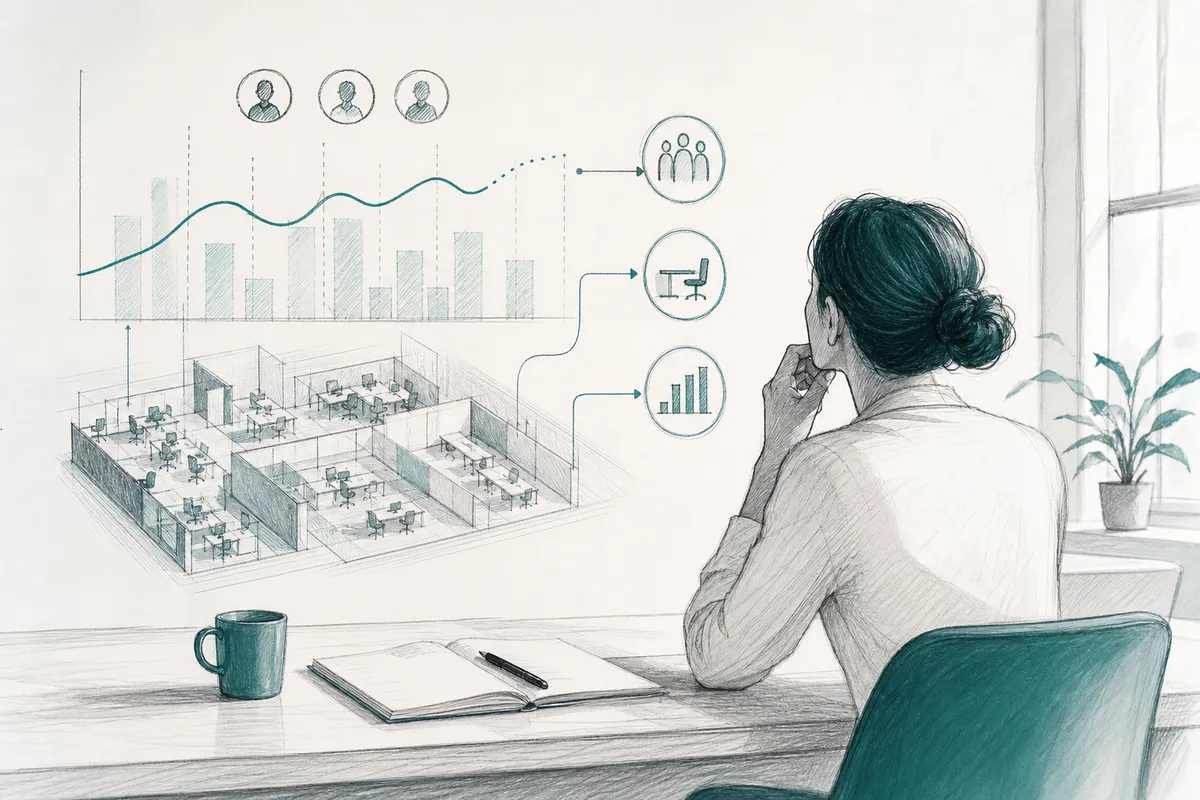
Workspace flexibility means giving employees control over where, when, and how they work, whether that's a mix of home, office, and on-demand coworking spaces, or flexible scheduling that fits around personal commitments. Companies that implement it well report 40%+ reductions in real estate spend and measurable gains in employee retention and engagement. The model works best when it's backed by data on actual space utilization, not assumptions about who shows up and when.
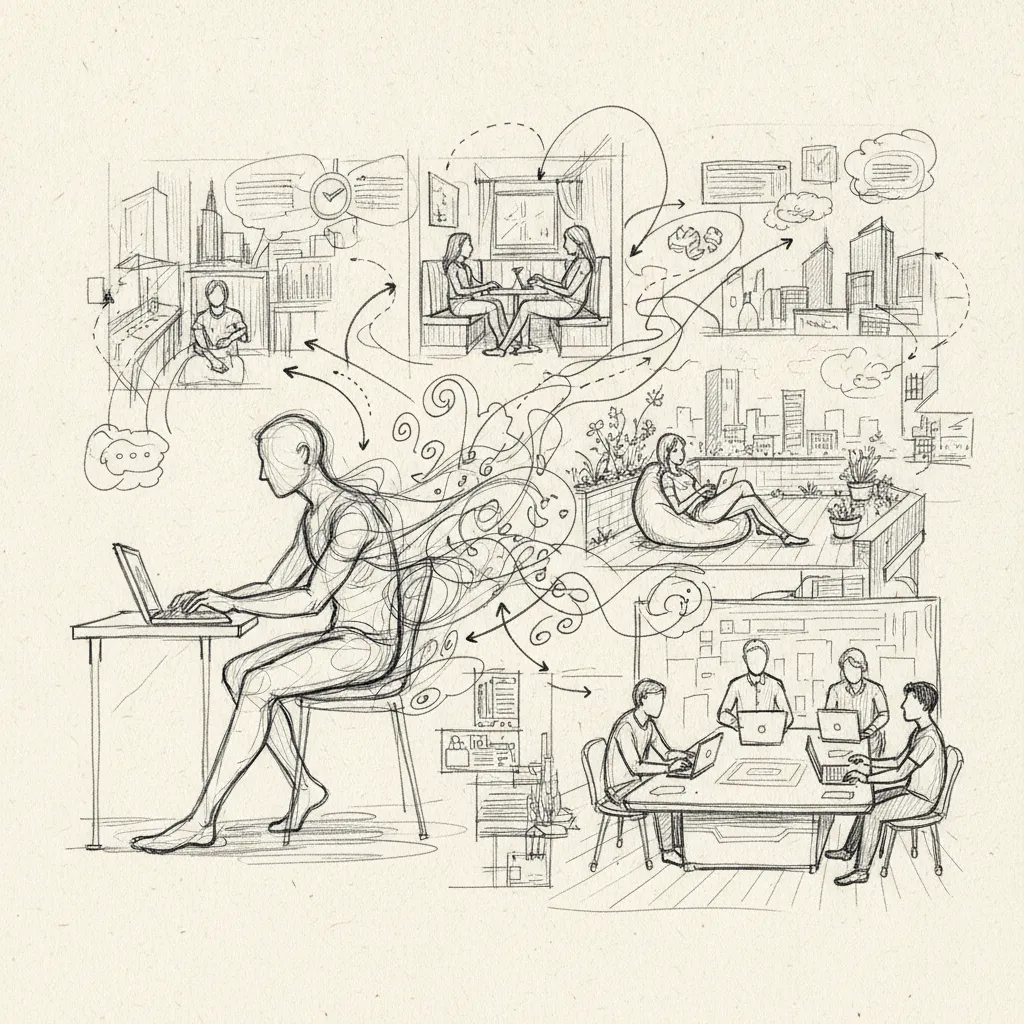
Workspace flexibility is a spectrum of choices, covering when people work, where they work, and what kind of environment they work in, not a single policy or binary option.
Most organizations treat it as one thing when it is actually three overlapping dimensions. Schedule flexibility lets employees shift their hours around personal commitments. Location flexibility determines whether someone works from home, an office, or a third space. Space-type flexibility governs what kind of physical environment is available, open floor, focus room, coworking hub, based on the task at hand.
According to AskEARN's workplace flexibility resources, structured flexibility programs also play a meaningful role in supporting employees with disabilities and other diverse workforce needs, making them a key component of inclusive employment strategy.
"Flexibility is no longer a perk — it's a baseline expectation for the modern workforce. Organizations that fail to offer genuine flexibility will find themselves at a structural disadvantage in recruiting and retaining top talent." — Johnny C. Taylor Jr., President and CEO at SHRM
These two terms are frequently conflated, but they describe different things. Flexible working is primarily about when, adjusted hours, compressed weeks, asynchronous schedules [2]. Hybrid working is primarily about where, splitting time between a home setting and a company office [3].
An employee can have a hybrid arrangement with completely fixed hours, or a flexible schedule while working on-site five days a week. The concepts overlap, but treating them as synonyms creates policy gaps that leave both space utilization and employee expectations unmanaged.
In practice, adaptable work arrangements look like hot-desking policies that replace assigned seating, neighborhood zones where teams cluster without permanent ownership, and on-demand coworking access for employees working near a client site or away from their home city.
Companies that formalize these arrangements, rather than leaving them ad hoc, report real estate savings exceeding 40% compared to traditional fixed-desk models. Platforms like Upflex combine desk booking with access to a global on-demand workspace network, so employees always have a professional environment regardless of location, while corporate real estate teams capture the utilization data needed to make portfolio decisions with confidence.
Post-2020, workspace flexibility shifted from a recruitment perk to a business continuity requirement. Workforce expectations changed permanently, and real estate portfolios built for 100% occupancy became a liability almost overnight. The organizations managing this best treat flexibility as a strategic asset, one that controls costs, attracts talent, and keeps operations running when circumstances change.
Four core models define how companies structure adaptable work environments today: fully remote, hybrid, activity-based working, and on-demand network access.
No single model works across every sector. Tech companies can run high-flexibility ABW models because most roles are location-independent and output-measurable. Healthcare organizations must keep clinical staff on-site but can apply remote or hybrid policies to billing, HR, and administrative functions. Manufacturing is constrained by production floor requirements, but shift scheduling and back-office roles, procurement, finance, legal, can absorb significant flexibility without affecting output.
The practical answer inside any one company is a tiered policy that assigns flexibility levels by role type, not by seniority. A VP of Finance sitting at headquarters does not automatically need more flexibility than a junior field engineer; the role's physical requirements determine the tier.
Salesforce's "Work From Anywhere" policy, announced in February 2021, gave employees three work-mode options: fully remote, flex (one to three days per week in-office), and office-based. The company subsequently reduced its real estate footprint, subleasing significant portions of its San Francisco headquarters as utilization data confirmed lower average daily attendance. The outcome demonstrated that a tiered, role-based approach to workspace flexibility can directly translate into measurable portfolio reduction, without a company-wide mandate that ignores role-specific requirements.
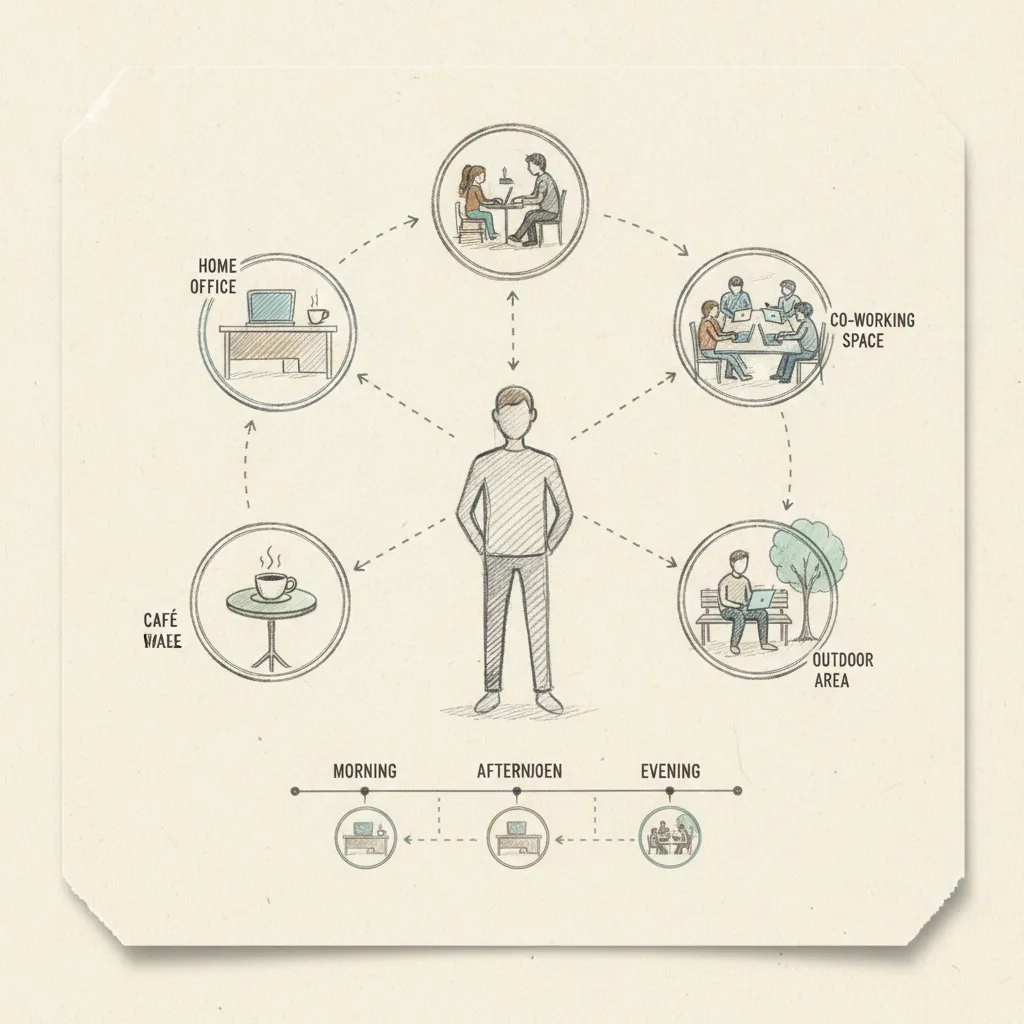
Flexible work arrangements raise engagement, but only when they're structured around clear norms, equitable access, and intentional in-person coordination.
Gallup's research consistently ranks flexibility among the top three factors employees cite when deciding whether to stay in a role. According to Indeed's analysis of workplace flexibility, workers with genuine schedule and location control report measurably higher job satisfaction scores than those without. The engagement lift is real, but it doesn't happen automatically.
"The data is clear: employees who have flexibility over where and when they work are significantly more engaged and far less likely to leave their organization within the next year." — Jim Harter, Chief Scientist of Workplace Management and Well-Being at Gallup
Three failure modes account for most flexibility-related culture problems. For more information, see Caries Defence Toothpaste.
Proximity bias is the most common. Employees who come into the office more often get more face time with managers, more informal project visibility, and, statistically, more promotions. Remote or distributed staff do the same work and receive less credit for it [3].
Async communication gaps erode team cohesion over time. When teams never establish documented norms for response times, meeting cadences, or decision-making channels, misalignment compounds. Collaboration degrades not because people are remote, but because no one agreed on how remote communication should work [3].
Onboarding failure is the third. New hires who join a flexible workplace and never build informal relationships, no hallway conversations, no spontaneous lunch, often disengage within the first 90 days. Structured culture doesn't replace accidental connection; it has to be designed in.
There's also an equity problem that compounds all three. When adaptable work arrangements only benefit senior staff or employees near a headquarters, the result is a two-tier workforce. Distributed employees see fewer growth opportunities and leave at higher rates, a direct attrition cost that offsets any engagement gain at the top of the org chart.
As noted by GoBright's research on workspace flexibility and culture, three structural elements separate flexible workplaces that hold together from those that fragment [3].
Intentional anchor days, scheduled days when specific teams are in the office together, preserve the collaboration that flexibility can erode. This is co-attendance scheduling: rather than mandating that all employees show up on the same days, teams coordinate which days they overlap. Upflex's UnifyAI engine automates exactly this, forecasting attendance with 97% accuracy and helping teams hit co-attendance targets without rigid top-down mandates.
Documented communication norms define how async and sync work coexist. Teams that write down their protocols, when to use Slack versus email, how long decisions can wait, when a meeting replaces a thread, report stronger cohesion than those that leave it implicit.
Equitable workspace access means every employee, regardless of location, can access a professional workspace when needed. Providing distributed staff with on-demand workspace options, rather than leaving them to work from home by default, closes the visibility gap that drives proximity bias in the first place.
"Equitable access to flexible work options isn't just good for employees — it's a measurable driver of organizational performance. When flexibility is distributed fairly across roles and levels, companies see stronger retention, higher productivity, and better diversity outcomes." — Kathleen Christensen, Program Director, Alfred P. Sloan Foundation Work and Careers Program
Running workspace flexibility at scale requires four tool categories: booking software, utilization analytics, collaboration platforms, and co-attendance coordination tools.
Desk and room booking software lets employees reserve a specific desk, neighborhood, or coworking location before they arrive. That advance reservation eliminates ghost desks, spaces that show as occupied in the lease but sit empty on any given Tuesday, and gives real estate teams accurate demand signals instead of guesses.
Space utilization sensors and badge data analytics form the second layer. They confirm whether booked spaces were actually used, closing the gap between reservation data and physical occupancy.
Collaboration platforms, both asynchronous tools like Slack or Teams and synchronous video conferencing, round out the stack by keeping distributed employees connected regardless of which location they choose on a given day.
AI-driven attendance forecasting is where reactive space management becomes proactive. Upflex's UnifyAI engine, for example, predicts office attendance with 97% accuracy, giving corporate real estate teams a reliable picture of who will be in, when, and where, weeks before a lease renewal decision lands on the CFO's desk. That forecast accuracy is the difference between right-sizing a portfolio with confidence and guessing your way through a 10-year lease commitment.
The most common implementation mistake is deploying booking software without utilization data. Companies can track who reserved a desk but can't confirm whether the workspace flexibility program is actually reducing costs or just redistributing where people sit.
The second failure is siloed reporting. Booking systems, HR platforms, and real estate dashboards that don't share data produce contradictory numbers, and contradictory numbers stall the portfolio consolidation decisions that justify the investment in the first place.
Three metrics determine whether a workspace flexibility program is delivering: space utilization rate, employee satisfaction tied to flexibility, and cost per seat per month against your pre-program baseline.
A right-sized portfolio runs at 60–80% peak occupancy. Below 60%, you're carrying excess space; above 80%, employees can't reliably find a desk, and both erode the case for flexibility. Track this monthly from booking data and badge records.
Employee satisfaction tied specifically to flexibility is best captured through quarterly pulse surveys. Ask directly: does the current arrangement give you enough control over where and when you work? Generic engagement scores won't surface this, the question has to be explicit.
Co-attendance achievement rate is the culture metric most programs overlook. It measures whether teams that are scheduled to be in together actually show up on the same days. An 88% co-attendance achievement rate is a realistic benchmark for a well-run program, Upflex's UnifyAI engine tracks this automatically, forecasting attendance with 97% accuracy so coordination isn't left to chance.
The measurement gap most companies fall into: tracking badge swipes or booking volume without connecting that data to lease decisions or headcount planning. Utilization data only creates value when it informs real estate strategy, otherwise it's reporting, not management.
The ROI formula is straightforward: (pre-program real estate cost − post-program real estate cost) ÷ program implementation cost. Companies that consolidate from fixed assigned desks to a flexible model typically see payback within 12–18 months, with documented outcomes reaching 40%+ reduction in real estate spend.
Set a review cadence that matches the decision cycle: utilization data monthly, employee satisfaction quarterly, portfolio decisions annually. Adjust flexibility policy based on what the data shows, not on executive intuition or anecdotal complaints about empty offices.
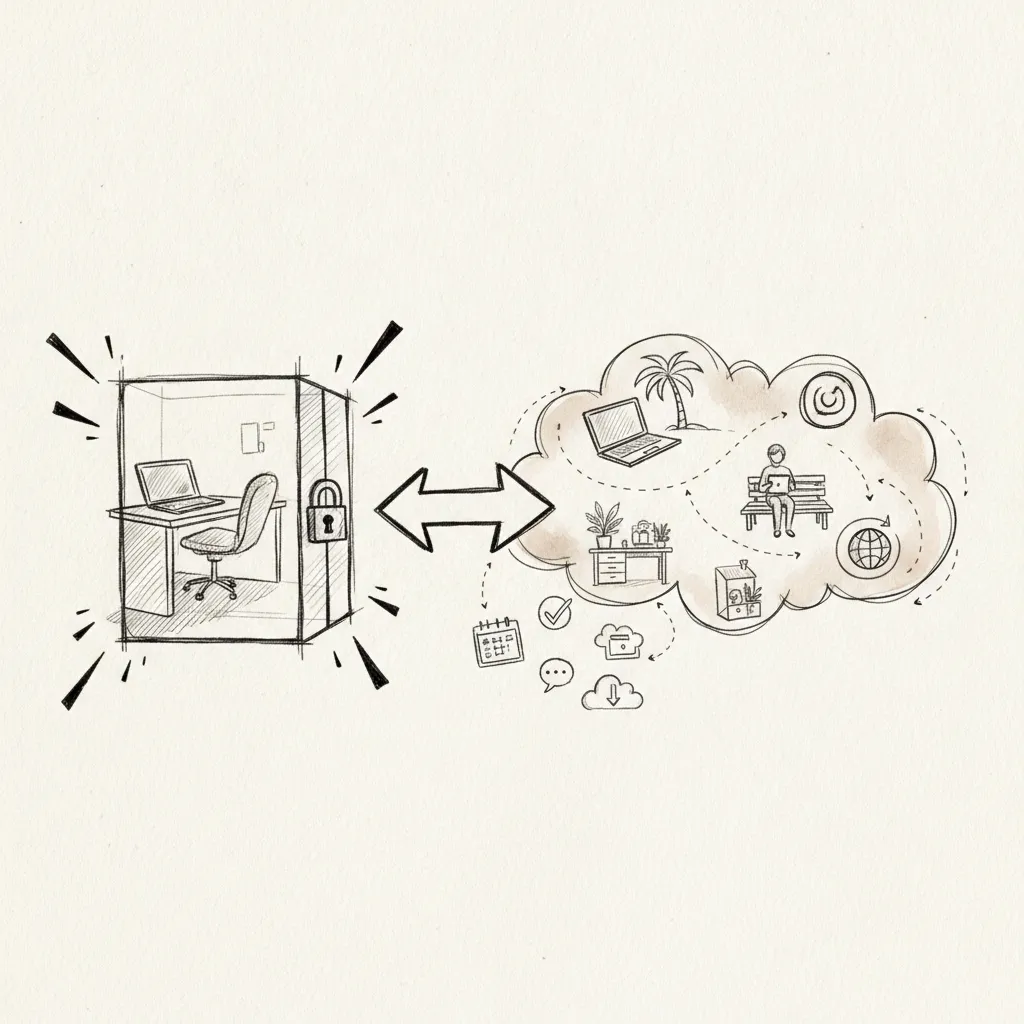
Workspace flexibility is the broader concept; hybrid work is one model within it. Hybrid work specifically describes splitting time between a company office and a remote location, typically home. Workspace flexibility also covers flexible hours, compressed schedules, activity-based seating, and access to third-party workspaces. A company can offer workspace flexibility without running a formal hybrid program, but most hybrid programs depend on workspace flexibility to function.
Equity problems arise when flexibility is informal and unevenly distributed, so the fix is policy, not presence. Set written norms that apply to every role: which meetings require in-person attendance, how desk booking works, and how performance is measured by output rather than hours observed. Provide remote employees with equivalent access to tools and career opportunities. Audit promotion rates and compensation annually across location types to catch drift before it compounds.
Most corporate real estate teams target 70–80% peak utilization, not 100%. Running at full capacity leaves no buffer for collaboration spikes and degrades the employee experience. Below 60% sustained utilization is a signal that your footprint is oversized. AI-powered forecasting tools can help you identify which days and floors consistently underperform, giving you the data to consolidate space rather than guess.
Yes, workspace flexibility applies to the portions of those workforces that aren't tied to a physical process or patient. Administrative staff, finance teams, HR, and IT in healthcare or manufacturing organizations can all operate on flexible schedules or locations [2]. The flexibility model is scoped to role, not applied uniformly. Many large manufacturers already run hybrid arrangements for corporate functions while maintaining full on-site requirements for production floor roles.
Research consistently shows that employees with genuine control over where and when they work are significantly less likely to leave their organization. Flexible arrangements reduce burnout, improve work-life balance, and signal organizational trust — all of which are strong predictors of long-term retention. Companies that roll back flexibility without clear justification often see immediate spikes in voluntary turnover, particularly among high performers who have the most options in the job market.
Workspace flexibility is not a single policy, it's a set of decisions about where, when, and how work gets done, each with measurable consequences for real estate cost, team cohesion, and talent retention. The organizations getting the most from it share three habits: they measure actual space utilization rather than assuming it, they set explicit co-attendance targets so flexibility doesn't erode collaboration, and they match their physical footprint to real demand rather than historical habit.
If your lease renewal is approaching and you're still relying on badge swipes and spreadsheets to forecast attendance, run a utilization audit first. Upflex's UnifyAI engine forecasts office attendance with 97% accuracy, request a demo and bring the output to your next real estate planning meeting with numbers, not estimates.
Explore more from our content library: