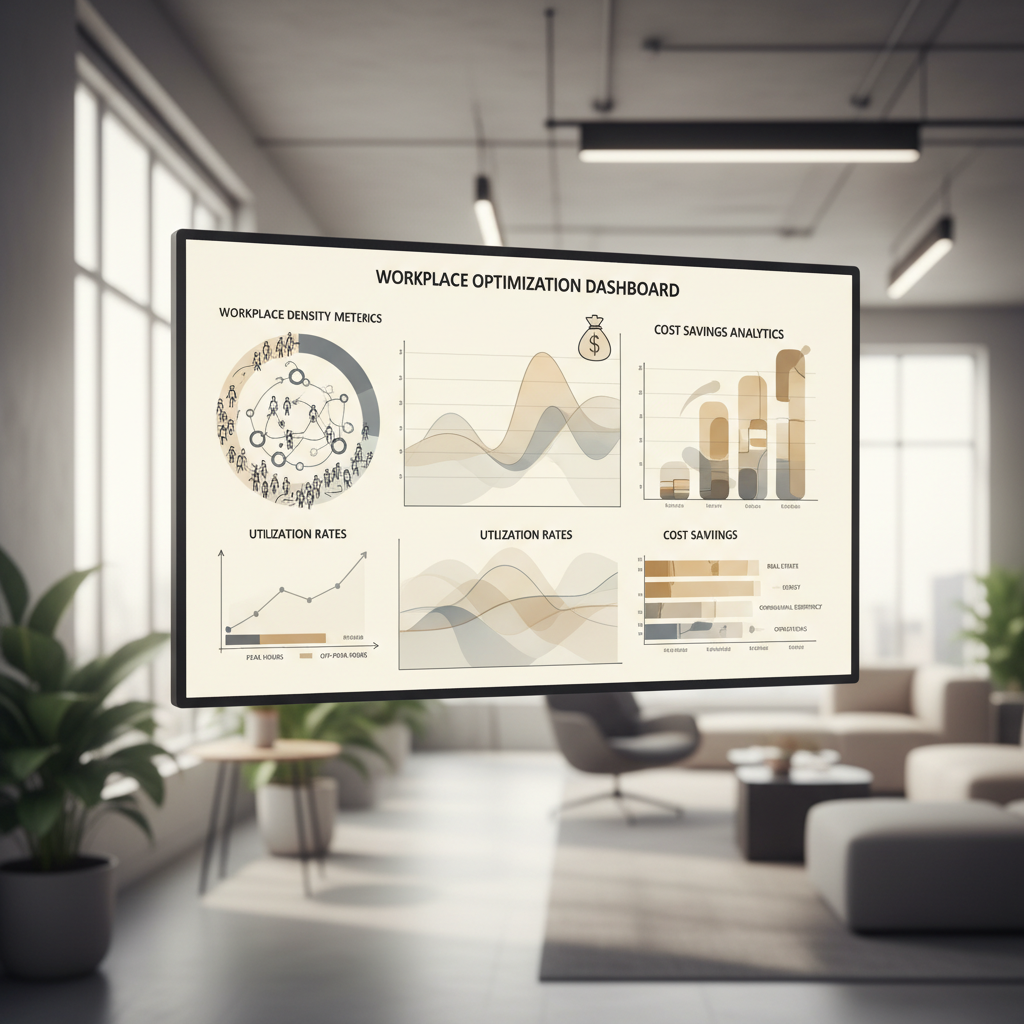
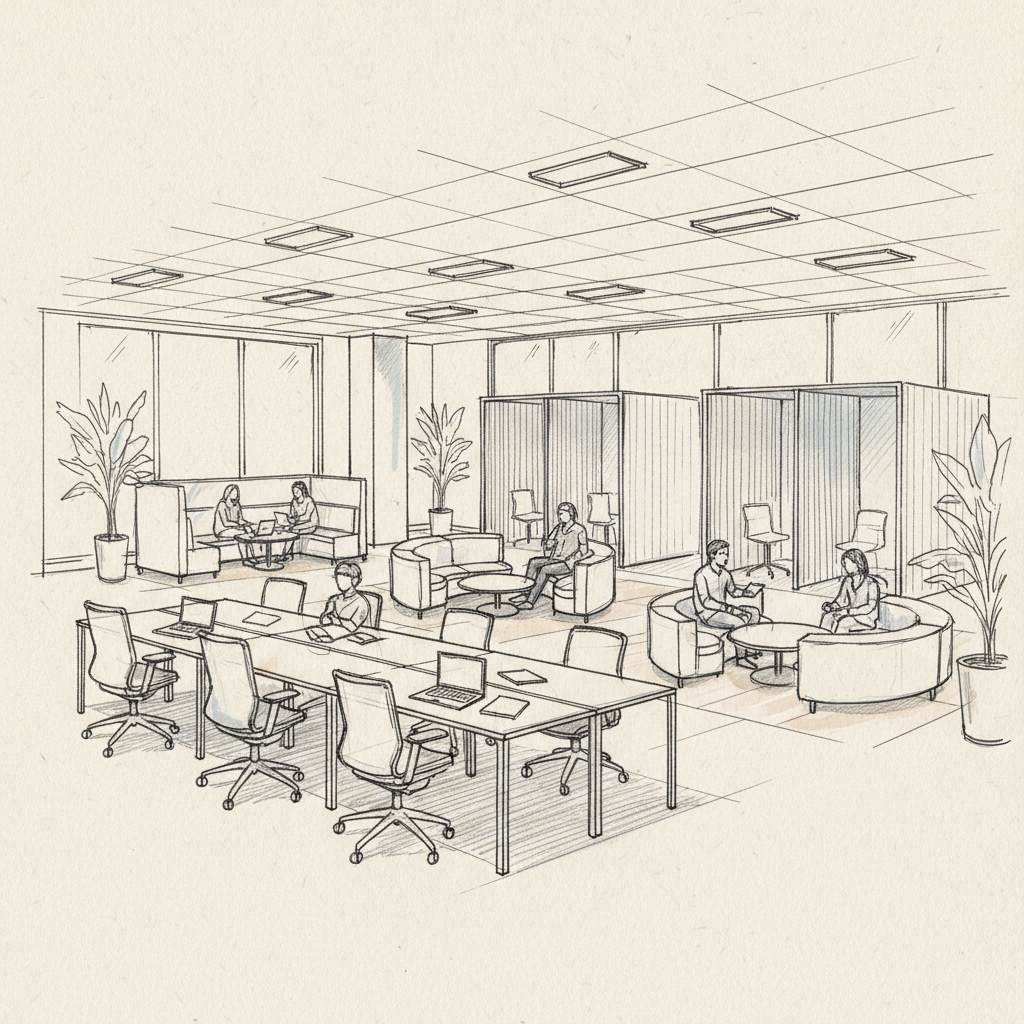
As hybrid work continues reshaping the corporate landscape in 2026, organizations face mounting pressure to optimize their office footprints while maintaining employee satisfaction. Workplace density optimization has emerged as a critical strategy for balancing efficiency with experience, helping companies maximize space utilization while ensuring employee comfort.
Smart space management is the strategic management of office space allocation to maximize utilization while ensuring employee comfort and productivity. This data-driven approach combines space planning metrics, occupancy analytics, and behavioral insights to create efficient work environments. For organizations grappling with hybrid work models, it's become essential for reducing real estate costs while supporting diverse work styles.
This comprehensive guide explores the mechanics of optimized space planning, from foundational metrics to advanced AI-powered solutions. You'll discover proven strategies that leading organizations use to achieve 40% reductions in real estate spend while maintaining high employee satisfaction scores.
What Is Workplace Density Optimization?
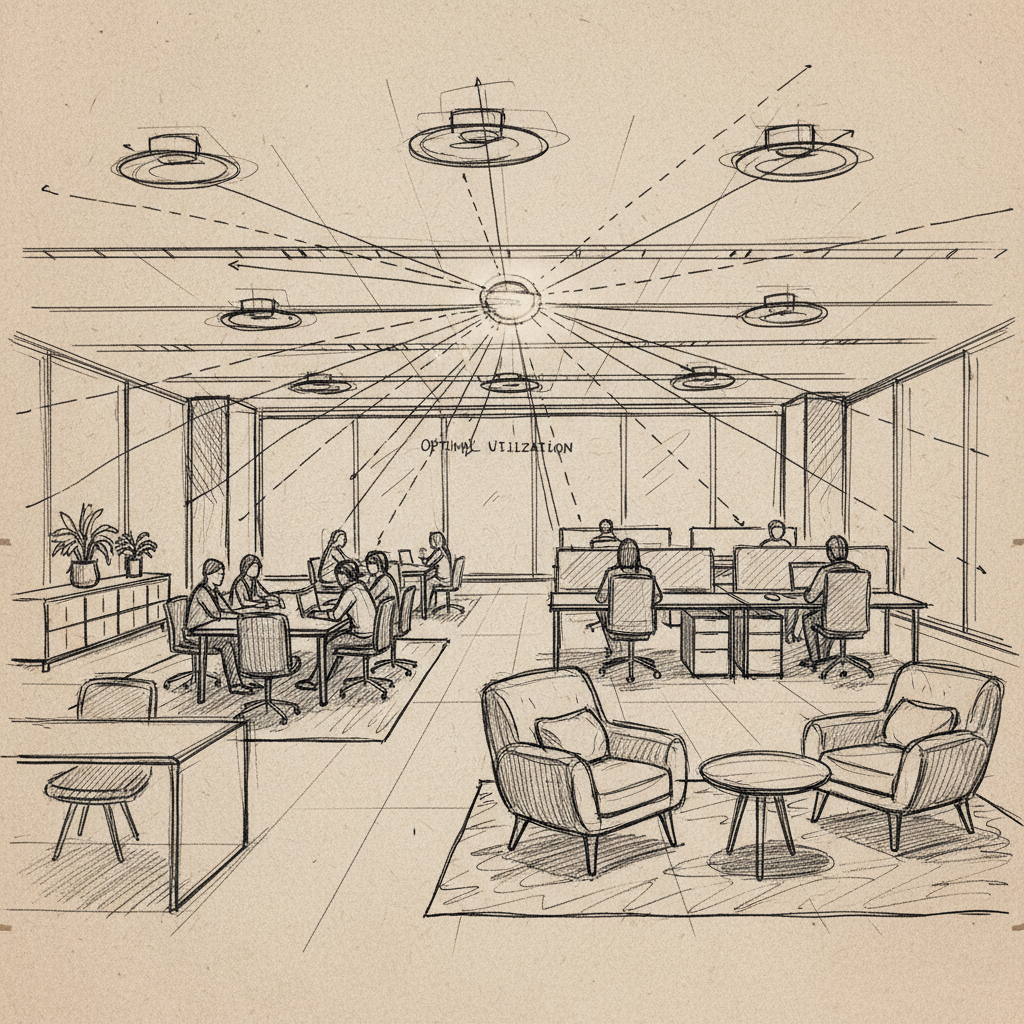
Workplace density optimization is a systematic approach to managing office space that balances occupancy levels with employee experience and operational efficiency. Unlike traditional space planning that focused solely on square footage per person, modern density optimization considers utilization patterns, work styles, and real-time occupancy data to create flexible, efficient environments.
Core Components of Density Optimization
The foundation of effective space optimization rests on three key pillars:
- Space utilization measurement: Real-time tracking of how spaces are actually used versus their intended capacity
- Occupancy forecasting: Predictive analytics that anticipate space demand based on hybrid work patterns
- Dynamic space allocation: Flexible assignment of spaces based on actual needs rather than static assignments
Research from Harvard Business School indicates that optimized space planning can increase individual productivity by up to 15% when properly implemented [1]. The key lies in finding the sweet spot between efficiency and comfort.
Evolution from Traditional Space Planning
Traditional office planning typically allocated 150-250 square feet per employee, often resulting in underutilized spaces. Modern space optimization takes a more nuanced approach, considering factors like:
- Hybrid work schedules and attendance patterns
- Different space needs for various work activities
- Peak and off-peak usage periods
- Employee preferences and comfort requirements
Pro Tip: Start with baseline measurements before implementing changes. Many organizations discover their actual space utilization is 40-60% lower than assumed, revealing immediate optimization opportunities.
Industry data from CoreNet Global shows that leading organizations now achieve optimal density at 12 square meters per workpoint, significantly lower than traditional standards while maintaining employee satisfaction [2].
How Workplace Density Optimization Works
Smart space management operates through a systematic process of measurement, analysis, and continuous adjustment. The methodology combines quantitative space metrics with qualitative employee feedback to create data-driven optimization strategies.
The Optimization Process
Effective density optimization follows a structured approach:
- Baseline Assessment: Measure current space utilization using sensors, badge data, and occupancy surveys
- Pattern Analysis: Identify usage patterns, peak periods, and underutilized areas
- Scenario Modeling: Test different density configurations using predictive analytics
- Implementation: Roll out optimized space configurations with change management support
- Continuous Monitoring: Track performance and adjust based on real-world usage data
Technology Infrastructure
Modern space optimization relies heavily on integrated technology platforms. Key components include:
- Occupancy sensors: Anonymous people-counting devices that track space usage in real-time
- Desk booking systems: Software that manages space reservations and tracks utilization patterns
- Analytics platforms: AI-powered tools that process occupancy data and generate optimization recommendations
- Environmental monitoring: Sensors that track air quality, temperature, and noise levels to ensure comfort
At Upflex, we've found that organizations using integrated optimization platforms achieve 97% accuracy in attendance forecasting, enabling precise space planning decisions.
Data Collection and Analysis
The optimization process generates multiple data streams that inform decision-making:
| Metric Type |
Data Source |
Optimization Insight |
| Occupancy Rate |
Sensors, Badge Data |
Peak usage periods and capacity needs |
| Space Utilization |
Booking Systems |
Underutilized areas for repurposing |
| Dwell Time |
Movement Tracking |
Space efficiency and flow patterns |
| Employee Satisfaction |
Surveys, Feedback |
Comfort and productivity impact |
Machine learning algorithms analyze these data streams to identify optimization opportunities that might not be apparent through manual analysis [3]. The most effective platforms can predict space needs with accuracy rates exceeding 95%.
Key Benefits of Workplace Density Optimization
Smart space management delivers measurable benefits across financial, operational, and employee experience dimensions. Organizations implementing comprehensive optimization strategies report significant improvements in both cost efficiency and workplace satisfaction.
Financial Impact and Cost Reduction
The financial benefits of optimized space planning are substantial and measurable:
- Real estate cost reduction: Organizations typically achieve 30-50% reductions in space requirements through optimized density
- Operational efficiency gains: Reduced facilities management costs through more efficient space utilization
- Energy savings: Lower utility costs from optimized space usage and improved environmental controls
- Furniture and equipment optimization: Reduced capital expenditure through shared resource strategies
Research from the International Facility Management Association shows that optimized workplaces reduce total occupancy costs by an average of 35% while maintaining or improving employee satisfaction scores [4].
Enhanced Employee Experience
Contrary to concerns about overcrowding, properly implemented space optimization often improves the employee experience:
- Variety of work settings: Optimized spaces provide diverse environments for different work activities
- Reduced commute stress: Better space allocation means employees can find appropriate spaces more easily
- Improved collaboration: Strategic density planning enhances spontaneous interactions and teamwork
- Technology integration: Modern optimization includes advanced booking and wayfinding systems
Operational Efficiency Gains
Smart space management streamlines operations across multiple dimensions:
- Space planning accuracy: Data-driven decisions replace guesswork in space allocation
- Maintenance optimization: Better utilization data enables predictive maintenance scheduling
- Security and safety: Real-time occupancy data supports emergency planning and compliance
- Vendor management: Accurate space usage data improves contract negotiations with service providers
Pro Tip: Track both quantitative metrics (cost per square foot, utilization rates) and qualitative indicators (employee satisfaction, collaboration frequency) to measure optimization success comprehensively.
Organizations using advanced space management platforms report achieving 88% co-attendance rates when teams need to collaborate, significantly improving both productivity and employee satisfaction.
Common Challenges and Implementation Pitfalls
Smart space management implementation faces several recurring challenges that can derail even well-intentioned initiatives. Understanding these pitfalls helps organizations navigate the optimization process more effectively.
Employee Resistance and Change Management
The most significant barrier to successful space optimization is often employee resistance to change:
- Territorial behavior: Employees may resist giving up assigned desks or traditional workspace arrangements
- Privacy concerns: Increased density can trigger worries about reduced privacy and increased distractions
- Status symbol attachment: Corner offices and private spaces often carry cultural significance beyond functionality
- Technology adoption barriers: New booking systems and space management tools require training and adjustment
Data Quality and Measurement Issues
Accurate space optimization depends on reliable data, but many organizations struggle with:
- Inconsistent measurement methods: Different departments using varying metrics makes optimization difficult
- Incomplete data collection: Missing information about informal spaces, storage areas, or circulation zones
- Sensor placement errors: Poorly positioned occupancy sensors can provide misleading utilization data
- Historical bias: Relying on pre-pandemic usage patterns that no longer reflect current work behaviors
Over-Optimization Risks
A common mistake in space planning is pursuing efficiency at the expense of employee well-being:
- Excessive density: Cramming too many people into spaces creates stress and reduces productivity
- Insufficient variety: Optimizing only for desk space while neglecting collaboration and quiet zones
- Ignoring peak demands: Planning for average occupancy without considering busy periods or special events
- Cultural misalignment: Implementing density standards that conflict with organizational culture or work styles
Technology Integration Challenges
Modern space optimization relies heavily on technology, creating potential integration issues:
| Challenge |
Impact |
Mitigation Strategy |
| System Compatibility |
Data silos, incomplete insights |
Choose integrated platforms with open APIs |
| User Adoption |
Low utilization, inaccurate data |
Comprehensive training and change management |
| Privacy Concerns |
Employee resistance, compliance issues |
Anonymous sensors, transparent data policies |
| Maintenance Complexity |
System downtime, data gaps |
Robust support contracts, redundant systems |
Pro Tip: Start with pilot programs in smaller areas before rolling out organization-wide optimization. This approach allows you to identify and resolve issues while building employee confidence in the process.
Many organizations underestimate the time required for successful space optimization implementation. A realistic timeline typically spans 6-12 months for full deployment, including change management and system integration phases.
Best Practices for Workplace Density Optimization in 2026
Successful space management in 2026 requires a strategic approach that balances data-driven insights with human-centered design principles. Leading organizations have developed proven methodologies that maximize both efficiency and employee satisfaction.
Strategic Planning Framework
Effective space optimization begins with comprehensive strategic planning:
- Establish clear objectives: Define specific goals for cost reduction, space efficiency, and employee experience
- Conduct thorough baseline assessment: Measure current utilization across all space types and time periods
- Develop optimization scenarios: Model different density configurations to identify optimal arrangements
- Create implementation roadmap: Plan phased rollout with clear milestones and success metrics
- Design feedback mechanisms: Establish systems for ongoing employee input and continuous improvement
Technology Selection and Integration
Choosing the right technology stack is crucial for successful space optimization:
- Unified platforms: Select solutions that integrate occupancy sensing, booking systems, and analytics in one platform
- Scalable architecture: Ensure systems can grow with your organization and adapt to changing needs
- Real-time capabilities: Prioritize systems that provide immediate insights and dynamic space allocation
- Mobile-first design: Choose platforms with intuitive mobile interfaces for easy employee adoption
Companies utilizing platforms like
senejac.com for comprehensive workplace analytics report significantly improved optimization outcomes through integrated data collection and analysis capabilities.
Employee-Centric Implementation
The most successful space optimization initiatives prioritize employee experience:
- Transparent communication: Clearly explain optimization goals and benefits to build employee buy-in
- Gradual transition: Implement changes incrementally to allow adaptation and feedback incorporation
- Choice and flexibility: Provide multiple workspace options to accommodate different work styles and preferences
- Training and support: Offer comprehensive education on new systems and space usage guidelines
Measurement and Continuous Improvement
Ongoing optimization requires robust measurement and adjustment processes:
| Metric Category |
Key Indicators |
Review Frequency |
| Space Utilization |
Occupancy rates, booking patterns, peak usage |
Weekly |
| Employee Experience |
Satisfaction scores, space availability, comfort ratings |
Monthly |
| Financial Performance |
Cost per square foot, space efficiency, ROI |
Quarterly |
| Operational Efficiency |
Maintenance costs, energy usage, space turnover |
Monthly |
Research indicates that organizations implementing comprehensive measurement frameworks achieve 25% better optimization outcomes compared to those relying on periodic assessments [5].
Pro Tip: Establish optimization committees with representatives from facilities, HR, IT, and employee resource groups. This cross-functional approach ensures all stakeholder perspectives are considered in optimization decisions.
Our team at Upflex recommends starting with density ratios between 0.6-0.8 (6-8 desks per 10 employees) for most hybrid work environments, then adjusting based on actual utilization data and employee feedback.
Sources & References
- Harvard Business School, "Workplace Design: The Good, the Bad, and the Productive", 2024
- CoreNet Global, "Space Utilization & Metrics Team", 2026
- PMC Research, "Future workspace needs flexibility and diversity: A machine learning approach", 2026
- IFMA, "Measuring What Matters", 2026
- Density, "Workplace Utilization: Balancing Efficiency and Experience", 2026
- Office Space Software, "Maximize Office Space: Data-Driven Tips for Optimal Density", 2026
- Gable, "Office Space Optimization: Ways To Reduce Costs & Improve", 2026
- Tango Analytics, "10 Workspace Optimization Metrics for the Post-COVID Office", 2026
Frequently Asked Questions
1. What is the ideal workplace density ratio for hybrid work environments?
Understanding workplace density optimization is essential. Understanding this strategy is essential. The optimal density ratio for hybrid work typically ranges from 0.6-0.8 (6-8 desks per 10 employees), depending on your organization's attendance patterns and work culture. This ratio accounts for varying in-office schedules while ensuring adequate space availability during peak periods.
2. How do you measure workplace density optimization success?
Success is measured through multiple metrics including space utilization rates (target 70-85%), employee satisfaction scores, cost per square foot reductions, and booking success rates. Leading organizations track these metrics weekly and adjust strategies based on real-time data.
3. What technology is essential for workplace density optimization?
Essential technologies include occupancy sensors for real-time space monitoring, desk booking systems for reservation management, analytics platforms for data processing, and mobile apps for employee space discovery. Integration between these systems is crucial for comprehensive optimization.
4. How long does workplace density optimization implementation take?
Full implementation typically requires 6-12 months, including planning, technology deployment, change management, and optimization refinement phases. Pilot programs can show initial results within 2-3 months, providing valuable insights for broader rollout.
5. Can workplace density optimization work in traditional office cultures?
Yes, but it requires careful change management and gradual implementation. Traditional cultures often benefit from starting with underutilized areas and demonstrating success before expanding. Providing choice and maintaining some traditional elements helps ease the transition.
6. What are the common mistakes in workplace density optimization?
Common mistakes include over-optimizing for efficiency at the expense of comfort, insufficient change management, relying on outdated usage data, and implementing technology without proper training. Successful optimization balances multiple factors rather than focusing solely on space reduction.
7. How does workplace density optimization impact employee productivity?
When properly implemented, this approach can increase productivity by 10-15% through improved space variety, reduced time finding appropriate work areas, and enhanced collaboration opportunities. The key is maintaining comfort while increasing efficiency.
8. What's the ROI timeline for workplace density optimization investments?
Most organizations see positive ROI within 12-18 months through reduced real estate costs, improved space efficiency, and operational savings. Initial technology investments typically pay for themselves within 2-3 years through ongoing cost reductions and productivity gains.
Conclusion
Workplace density optimization represents a fundamental shift in how organizations approach office space management in 2026. By combining data-driven insights with employee-centric design, companies can achieve significant cost reductions while enhancing the work experience.
The most successful implementations balance efficiency gains with human needs, using advanced technology to create flexible, responsive work environments. Organizations that embrace comprehensive space optimization strategies position themselves for sustained competitive advantage in an evolving work landscape.
As hybrid work continues to mature, smart space management will become increasingly sophisticated, leveraging AI and machine learning to predict and respond to changing space needs in real-time. The organizations that master these capabilities today will be best positioned for future workplace challenges.
About the Author
Written by the SaaS experts at Upflex. Our team brings years of hands-on experience helping businesses with SaaS, delivering practical guidance grounded in real-world results.
Recommended Articles
Explore more from our content library: