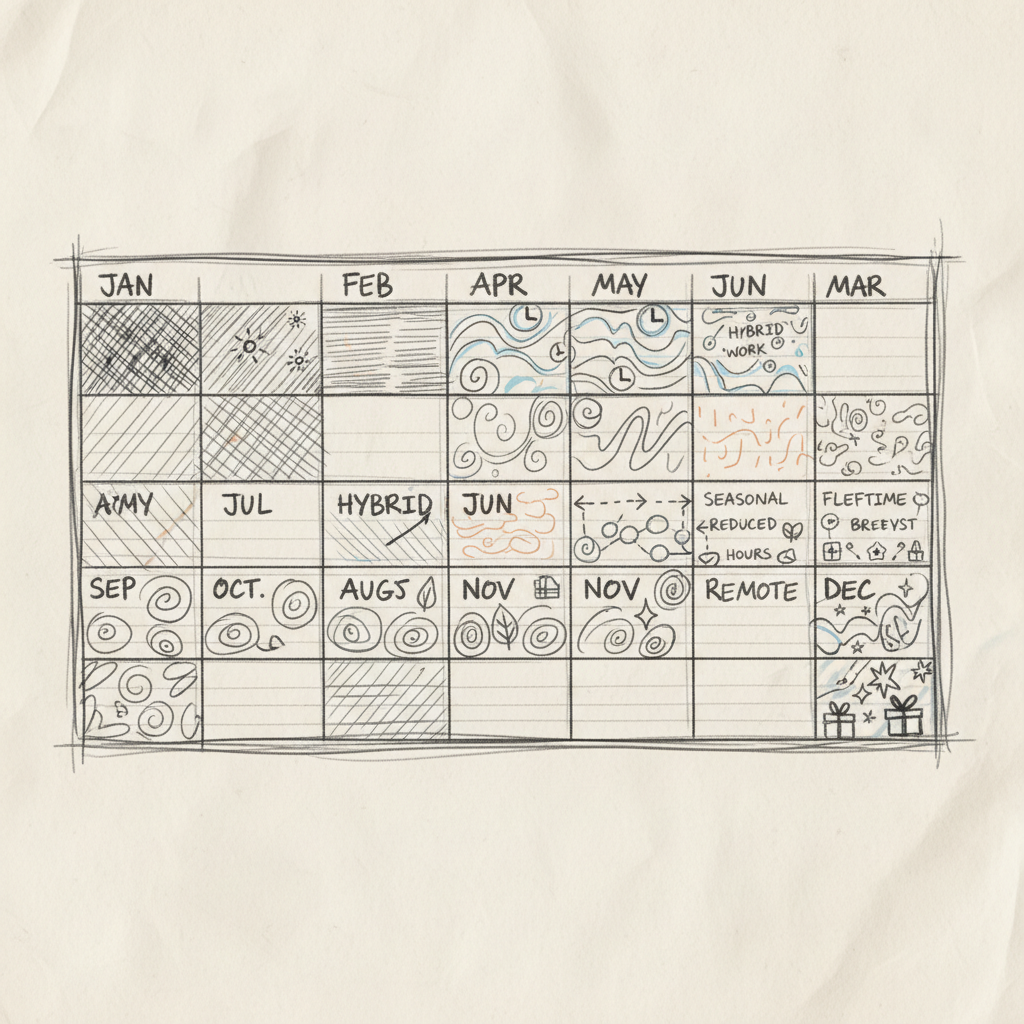
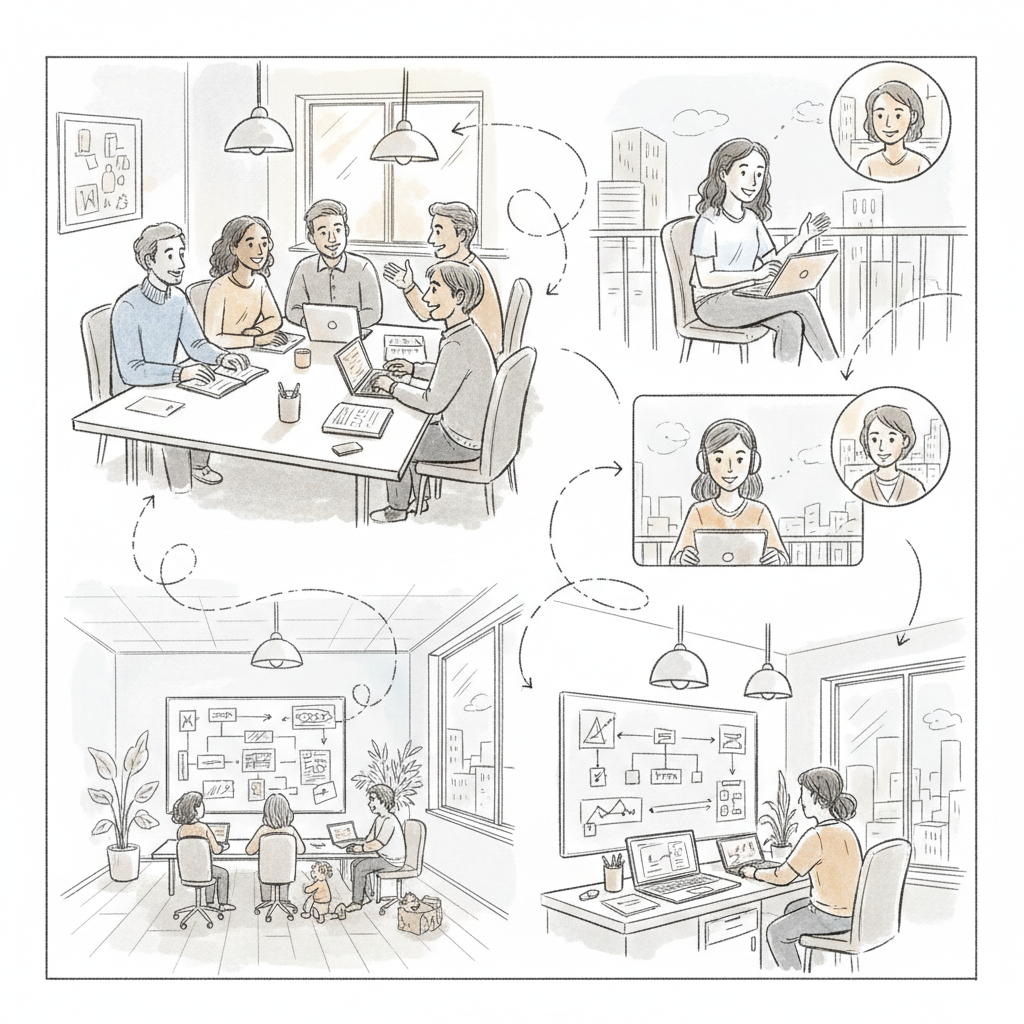
The modern workplace has fundamentally shifted. Workplace flexibility models have evolved from occasional remote work perks to strategic business imperatives that drive talent retention, productivity, and cost optimization. As organizations navigate the complexities of hybrid work in 2026, understanding and implementing the right flexibility framework isn't just about employee satisfaction—it's about competitive survival.
Recent research from the World Bank indicates that flexible work arrangements are crucial for economic inclusion, growth, and gender equality [1]. With 88% of organizations now offering some form of workplace flexibility, the question isn't whether to adopt these models, but which ones align best with your business objectives and workforce needs.
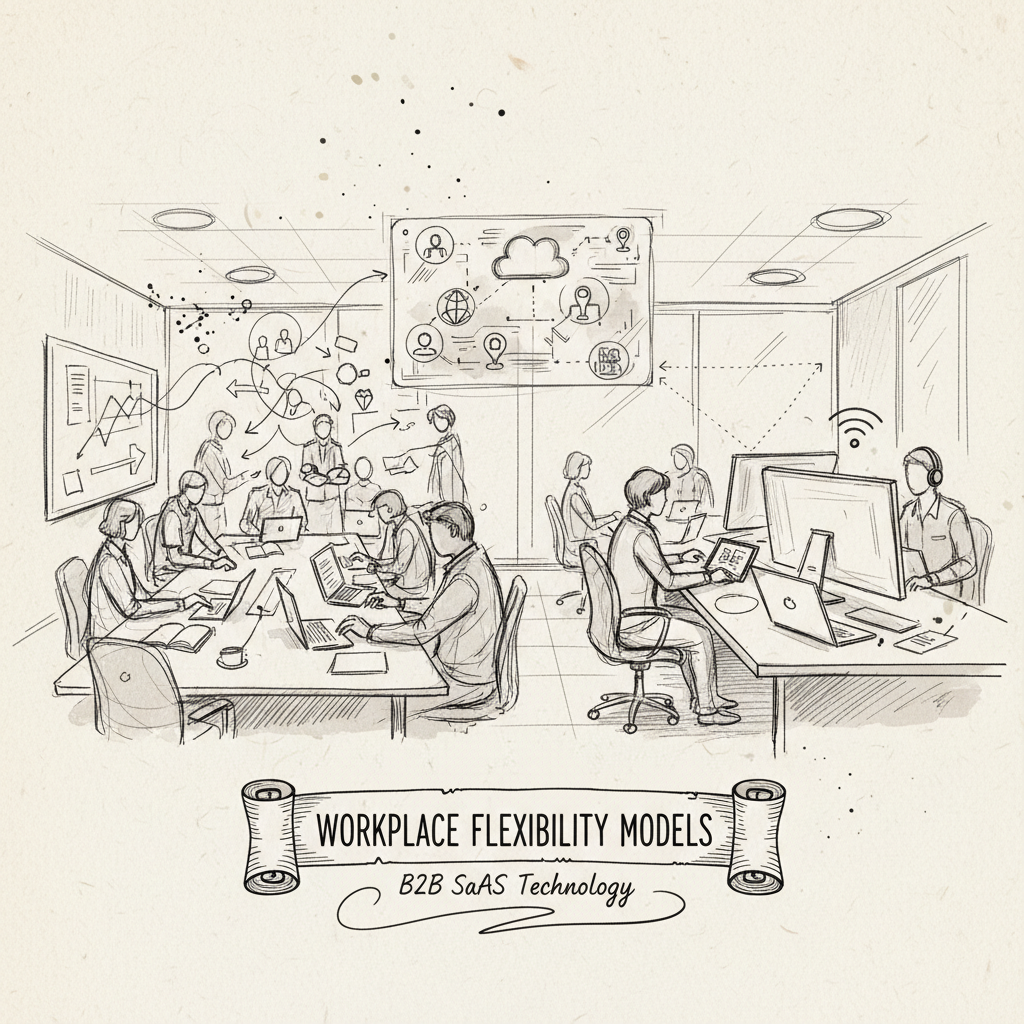
This comprehensive guide examines 12 proven workplace flexibility models, their implementation strategies, and the measurable outcomes you can expect. Whether you're optimizing real estate spend or enhancing employee experience, these frameworks provide the foundation for sustainable workplace transformation.
1. Hybrid Work Model: workplace flexibility models
Hybrid work combines in-office presence with remote work flexibility, allowing employees to split their time between company locations and alternative workspaces. This model has become the dominant workplace flexibility approach, with 83% of organizations implementing some variation as of 2026.
Key Characteristics and Implementation
The hybrid model operates on three core principles: location flexibility, schedule coordination, and technology integration. Employees typically work 2-3 days in the office with remaining days remote, though specific arrangements vary by role and business needs.
Pro Tip: Use AI-powered attendance forecasting to predict office capacity needs. Upflex's UnifyAI technology delivers 97% accuracy in predicting who's coming in, enabling better space planning and team coordination.
Successful hybrid implementation requires:
- Clear attendance expectations and team coordination protocols
- Technology infrastructure supporting seamless collaboration across locations
- Physical office redesign optimizing for collaboration over individual work
- Performance metrics focused on outcomes rather than presence
Benefits and Challenges
Organizations implementing hybrid models report significant advantages. Research from Harvard Business Review shows companies achieve 40% reduction in real estate costs while maintaining productivity levels [2]. Employee satisfaction scores increase by an average of 23% when hybrid options are available.
However, challenges include coordination complexity and potential for reduced spontaneous collaboration. Teams must establish explicit communication protocols and invest in digital collaboration tools to maintain cohesion.
Best for: Knowledge workers, creative teams, and organizations with distributed talent pools requiring both collaboration and focused work time.
2. Remote-First Work Model
Remote-first organizations design all processes, communication, and culture around distributed work, with physical offices serving as optional collaboration hubs rather than primary workspaces. This model represents the most comprehensive commitment to location independence.
Strategic Framework and Operations
Remote-first differs from remote-friendly approaches by prioritizing asynchronous communication, documented processes, and outcome-based performance measurement. Companies like GitLab and Buffer have demonstrated this model's viability at scale, maintaining global teams without traditional headquarters.
Implementation requires:
- Comprehensive digital infrastructure and security protocols
- Asynchronous communication standards and documentation practices
- Results-oriented performance management systems
- Intentional culture-building initiatives and virtual team bonding
Operational Advantages and Considerations
The remote-first model enables access to global talent pools and eliminates geographical hiring constraints. Organizations report 65% reduction in facility costs and 40% improvement in employee retention rates. Time zone diversity can extend business hours and improve customer coverage.
Challenges include potential isolation, communication delays, and difficulty building company culture. Success requires strong leadership commitment and robust systems for knowledge sharing and relationship building.
Best for: Technology companies, consulting firms, and organizations prioritizing global talent access over in-person collaboration requirements.
3. Flexible Hours (Flextime) Model
Flextime allows employees to adjust their daily start and end times while maintaining core business hours for collaboration and customer service. This model addresses individual productivity patterns and personal scheduling needs without compromising team coordination.
Core Hours and Flexibility Windows
Most flextime arrangements establish core hours (typically 10 AM to 3 PM) when all team members are available, with flexibility in early morning and evening hours. Employees might work 7 AM to 3 PM or 10 AM to 6 PM based on personal preferences and role requirements.
| Schedule Type |
Core Hours |
Flexibility Window |
Best For |
| Standard Flextime |
10 AM - 3 PM |
7 AM - 7 PM |
Customer service, operations |
| Extended Flextime |
11 AM - 2 PM |
6 AM - 9 PM |
Global teams, technical roles |
| Compressed Core |
12 PM - 2 PM |
6 AM - 10 PM |
Creative teams, research roles |
Implementation and Management
Successful flextime programs require clear expectations about availability, communication protocols, and performance standards. According to the Office of Personnel Management, organizations implementing structured flextime see 15% improvement in employee satisfaction and 8% reduction in turnover [3].
Managers must shift from presence-based to outcome-based evaluation. Regular check-ins and project milestone tracking become essential for maintaining accountability and team cohesion.
Best for: Roles with individual deliverables, global teams across time zones, and employees with varying personal schedules or commuting constraints.
4. Compressed Workweek Model
Compressed workweeks allow employees to work their full-time hours in fewer days, typically four 10-hour days instead of five 8-hour days. This model provides extended weekends while maintaining total work hours and business coverage.
Schedule Variations and Coverage Strategies
The most common compressed schedule is the 4/10 arrangement (four 10-hour days), though some organizations implement 9/80 schedules where employees work nine days over two weeks with every other Friday off. Coverage strategies include staggered teams or maintaining standard hours for customer-facing roles.
Popular compressed arrangements include:
- 4/10 Schedule: Monday-Thursday, 10-hour days
- 9/80 Schedule: Alternating Fridays off over two-week cycles
- 3/12 Schedule: Three 12-hour days (common in healthcare and manufacturing)
- Seasonal Compression: Summer Fridays or project-based intensive periods
Productivity and Well-being Outcomes
Research from multiple industries shows compressed workweeks can increase productivity by 13% while reducing burnout and improving work-life balance. The extended time off allows for better recovery and personal task completion, leading to higher engagement during work days.
However, longer daily hours can cause fatigue and may not suit all role types or personal situations. Customer service roles require careful scheduling to maintain coverage, and some employees struggle with the intensity of extended workdays.
Best for: Manufacturing, healthcare, project-based work, and roles where deep focus periods are more valuable than daily availability.
5. Job Sharing Model
Job sharing involves two or more employees splitting the responsibilities of one full-time position, each working part-time hours while collectively providing full coverage. This arrangement offers career flexibility while maintaining business continuity and expertise.
Structure and Coordination Mechanisms
Effective job sharing requires clear role division, seamless communication systems, and shared accountability measures. Partners typically divide responsibilities by function, time periods, or client relationships, with overlap periods for knowledge transfer and coordination.
Pro Tip: Establish shared digital workspaces and regular handoff meetings. Document all client interactions and project status updates in accessible systems to ensure continuity.
Key success factors include:
- Compatible work styles and communication preferences between partners
- Clear documentation and knowledge transfer protocols
- Shared performance metrics and accountability structures
- Regular coordination meetings and overlap periods
Business Benefits and Implementation Challenges
Job sharing enables organizations to retain valuable employees who need reduced hours while maintaining full-time coverage and expertise. Companies report 90% retention rates for employees in job-sharing arrangements compared to 60% for those transitioning to part-time roles.
Challenges include coordination overhead, potential communication gaps, and higher administrative complexity. Success requires strong project management skills from both partners and supportive management practices.
Best for: Senior roles requiring expertise retention, positions with clear task division, and employees seeking work-life balance without career sacrifice.
6. Results-Only Work Environment (ROWE)
ROWE eliminates traditional time and location requirements, focusing exclusively on output and results. Employees have complete autonomy over when and where they work, provided they meet performance expectations and deliverables.
Performance Management and Accountability
ROWE requires sophisticated performance measurement systems and clear outcome definitions. Instead of tracking hours or presence, organizations measure project completion, quality metrics, and business impact. This model demands high trust levels and mature performance management capabilities.
Implementation elements include:
- Specific, measurable performance objectives and deadlines
- Regular outcome reviews and feedback cycles
- Clear communication expectations for team coordination
- Technology systems enabling transparent progress tracking
Cultural Transformation Requirements
ROWE represents a fundamental shift from industrial-age management to knowledge-work optimization. Organizations implementing ROWE report 35% improvement in productivity and 90% employee satisfaction rates, according to research from Best Buy's pioneering program.
However, ROWE requires significant cultural change and may not suit all industries or management styles. Customer service roles, manufacturing, and time-sensitive operations often cannot accommodate complete schedule flexibility.
Best for: Knowledge work, creative roles, project-based organizations, and companies with strong performance management cultures and high employee autonomy.
7. Seasonal Flexibility Model
Seasonal flexibility adjusts work arrangements based on business cycles, industry demands, or employee needs during specific periods. This model recognizes that optimal work patterns may vary throughout the year based on operational requirements and personal circumstances.
Cyclical Arrangements and Business Alignment
Many industries experience seasonal fluctuations requiring different staffing and schedule approaches. Retail organizations might implement extended hours during holiday seasons, while educational institutions adjust to academic calendars. Tax firms often compress schedules during busy season followed by extended time off.
Common seasonal arrangements include:
- Summer hours: Shortened Fridays or compressed schedules during low-activity periods
- Holiday flexibility: Extended time off in exchange for intensive periods
- Project-based intensity: Compressed schedules during deliverable periods
- Industry cycle alignment: Adjusting to sector-specific busy and slow seasons
Strategic Planning and Employee Engagement
Seasonal flexibility requires advance planning and clear communication about expectations during different periods. Employees appreciate predictability in scheduling changes and the opportunity to plan personal activities around work cycles.
Organizations implementing seasonal models report 25% improvement in employee satisfaction and better alignment between business needs and workforce capacity. The key is establishing clear policies and ensuring equitable distribution of intensive and relaxed periods.
Best for: Seasonal businesses, project-based organizations, industries with cyclical demands, and companies seeking to optimize workforce allocation throughout the year.
8. Unlimited PTO Model
Unlimited paid time off eliminates accrual limits and tracking requirements, allowing employees to take time off as needed while maintaining performance standards. This model shifts focus from time management to outcome achievement and personal responsibility.
Policy Framework and Performance Integration
Successful unlimited PTO requires clear guidelines about approval processes, minimum notice requirements, and performance expectations. Without proper structure, the policy can lead to either abuse or, more commonly, employees taking less time off due to unclear boundaries.
Essential policy elements include:
- Minimum time off requirements (typically 15-20 days annually)
- Advance notice requirements for extended absences
- Team coordination protocols for coverage during absences
- Performance standards that must be maintained regardless of time off
Cultural Impact and Management Practices
Companies with unlimited PTO report 13% higher employee retention and improved talent attraction capabilities. However, success depends heavily on management modeling and cultural support for time off utilization.
The primary challenge is ensuring employees actually use the benefit. Research shows employees in unlimited PTO programs often take less time off than those with traditional accrual systems due to guilt or uncertainty about appropriate usage levels.
Best for: High-trust cultures, knowledge work environments, and organizations with strong performance management systems and supportive leadership practices.
9. Flexible Location Model
Flexible location arrangements allow employees to work from various approved locations including home offices, coworking spaces, client sites, or satellite offices. This model provides geographic flexibility while maintaining some structure around work environments.
Location Options and Infrastructure Requirements
Organizations typically provide a menu of approved work locations with different technology and security requirements. Home offices might require VPN access and ergonomic equipment, while coworking spaces need expense reimbursement policies and security protocols.
| Location Type |
Technology Needs |
Security Requirements |
Cost Considerations |
| Home Office |
High-speed internet, equipment stipend |
VPN, secure file storage |
Equipment, utility allowances |
| Coworking Space |
Mobile device management |
Public WiFi protocols |
Membership fees, day passes |
| Client Sites |
Mobile connectivity |
Client security compliance |
Travel expenses |
| Satellite Offices |
Full IT infrastructure |
Physical security systems |
Lease, utilities, maintenance |
Geographic Talent Access and Operational Benefits
Flexible location models enable organizations to access talent beyond traditional commuting ranges and reduce real estate costs. Companies report 30% expansion in candidate pools and 25% reduction in facility expenses when implementing comprehensive location flexibility.
At Upflex, we've found that organizations combining owned office space with on-demand workspace networks achieve optimal flexibility while maintaining cost control. This hybrid approach provides employees location options without long-term real estate commitments.
Best for: Distributed teams, client-facing roles, organizations seeking geographic talent access, and companies optimizing real estate portfolios.
How to Choose the Right Workplace Flexibility Model
Selecting appropriate workplace flexibility models requires analyzing your organization's operational needs, workforce preferences, and strategic objectives. The decision framework should consider industry requirements, company culture, technology capabilities, and performance management maturity.
Assessment Framework and Decision Criteria
Begin by evaluating your current workplace challenges and desired outcomes. Are you addressing talent retention, cost optimization, productivity enhancement, or employee satisfaction? Different flexibility models excel in different areas, and your primary objectives should guide selection.
Key evaluation criteria include:
- Operational requirements: Customer service hours, collaboration needs, equipment dependencies
- Workforce demographics: Career stages, family situations, commuting challenges
- Technology infrastructure: Collaboration tools, security capabilities, performance tracking
- Management capabilities: Performance measurement, communication skills, trust levels
- Industry constraints: Regulatory requirements, client expectations, competitive pressures
Implementation Planning and Change Management
Successful flexibility model implementation requires phased rollouts, pilot programs, and continuous feedback collection. Start with willing teams and roles that naturally accommodate flexibility, then expand based on lessons learned and demonstrated success.
Pro Tip: Implement attendance forecasting and space optimization tools before rolling out flexibility programs. Understanding current utilization patterns helps predict the impact of new arrangements and optimize resource allocation.
Change management considerations include manager training, employee communication, policy development, and technology deployment. Expect a 6-12 month transition period for full adoption and cultural integration.
Performance Measurement and Optimization
Establish baseline metrics before implementing flexibility models and track progress across productivity, satisfaction, retention, and cost measures. Regular assessment enables continuous optimization and demonstrates business value to stakeholders.
Monitor both quantitative metrics (productivity scores, retention rates, cost savings) and qualitative indicators (employee feedback, manager satisfaction, client response). Use this data to refine policies and expand successful programs while addressing challenges.
Sources & References
- World Bank Blogs, "Flexibility at work: Insights from 50 years of data", 2024
- Harvard Business Review, "The Future of Flexibility at Work", 2021
- Office of Personnel Management, "Flexible Work Schedules", 2026
- Catalyst, "10 Models of Workplace Flexibility", 2021
- Airswift, "Five flexible work models to improve employee productivity", 2026
- Great Place to Work, "Top Flexibility at Work Examples From Great Workplaces", 2025
- Harvard Business Review, "How Flexible Hiring Models Are Redefining Workforce Resilience", 2025
Frequently Asked Questions
1. What are three work models that offer employees flexibility?
The three most effective workplace flexibility models are hybrid work (combining in-office and remote work), flexible hours (allowing adjusted start/end times), and compressed workweeks (working full-time hours in fewer days). These models address different aspects of flexibility: location independence, schedule control, and time optimization, making them suitable for various role types and personal needs.
2. What is the 9-9-6 rule?
The 996 working system requires employees to work from 9:00 AM to 9:00 PM, six days per week, totaling 72 hours weekly. This intensive schedule, primarily used in some Chinese technology companies, represents the opposite of workplace flexibility and has faced criticism for its impact on employee well-being and work-life balance. This is particularly relevant for workplace flexibility models.
3. What are flexible work models?
Flexible work models are structured approaches that give employees greater control over when, where, and how they work while meeting business objectives. These models include hybrid work arrangements, remote work options, flexible scheduling, compressed workweeks, and job sharing, all designed to optimize both employee satisfaction and organizational performance. When considering workplace flexibility models, this point stands out.
4. What are the 5 principles of flexibility?
The five principles of workplace flexibility are outcome focus (measuring results rather than hours), employee autonomy (providing choice in work arrangements), operational alignment (matching flexibility to business needs), technology enablement (supporting remote collaboration), and continuous adaptation (adjusting policies based on feedback and changing requirements). For those exploring workplace flexibility models, this matters.
5. How do you implement workplace flexibility models successfully?
Successful implementation requires starting with pilot programs, establishing clear performance metrics, training managers on outcome-based evaluation, investing in collaboration technology, and creating policies that balance employee autonomy with business needs. Regular feedback collection and policy refinement ensure long-term success and adoption. This directly impacts workplace flexibility models outcomes.
6. Which workplace flexibility model is best for reducing real estate costs?
Hybrid work models combined with flexible location arrangements offer the greatest potential for real estate cost reduction, typically achieving 30-40% savings. These models reduce office space requirements while maintaining collaboration capabilities through strategic use of both owned offices and on-demand workspace networks. This is particularly relevant for workplace flexibility models.
7. What challenges do organizations face when implementing flexible work models?
Common challenges include maintaining team coordination across different schedules and locations, shifting management practices from presence-based to outcome-based evaluation, ensuring equitable access to flexibility across different roles, and maintaining company culture and communication effectiveness in distributed work environments. When considering workplace flexibility models, this point stands out.
The workplace transformation of 2026 demands strategic thinking about flexibility models that serve both employee needs and business objectives. Organizations that thoughtfully implement these frameworks while maintaining focus on outcomes and performance will gain significant competitive advantages in talent attraction, retention, and operational efficiency.
As you evaluate these workplace flexibility models for your organization, consider starting with pilot programs that align with your immediate challenges and strategic goals. Whether you're optimizing real estate spend, improving employee satisfaction, or accessing global talent pools, the right flexibility framework can deliver measurable results while positioning your organization for sustainable growth.
The future of work isn't about choosing between flexibility and performance—it's about designing systems that optimize both. At Upflex, our
workplace optimization platform helps organizations implement these flexibility models with confidence, providing the AI-powered insights and global workspace network needed to make flexibility work for everyone.
About the Author
Written by the SaaS experts at Upflex. Our team brings years of hands-on experience helping businesses with workplace optimization and hybrid work implementation, delivering practical guidance grounded in real-world results from enterprise deployments. For those exploring workplace flexibility models, this matters.
Recommended Articles
Explore more from our content library: