Share This Article
No items found.

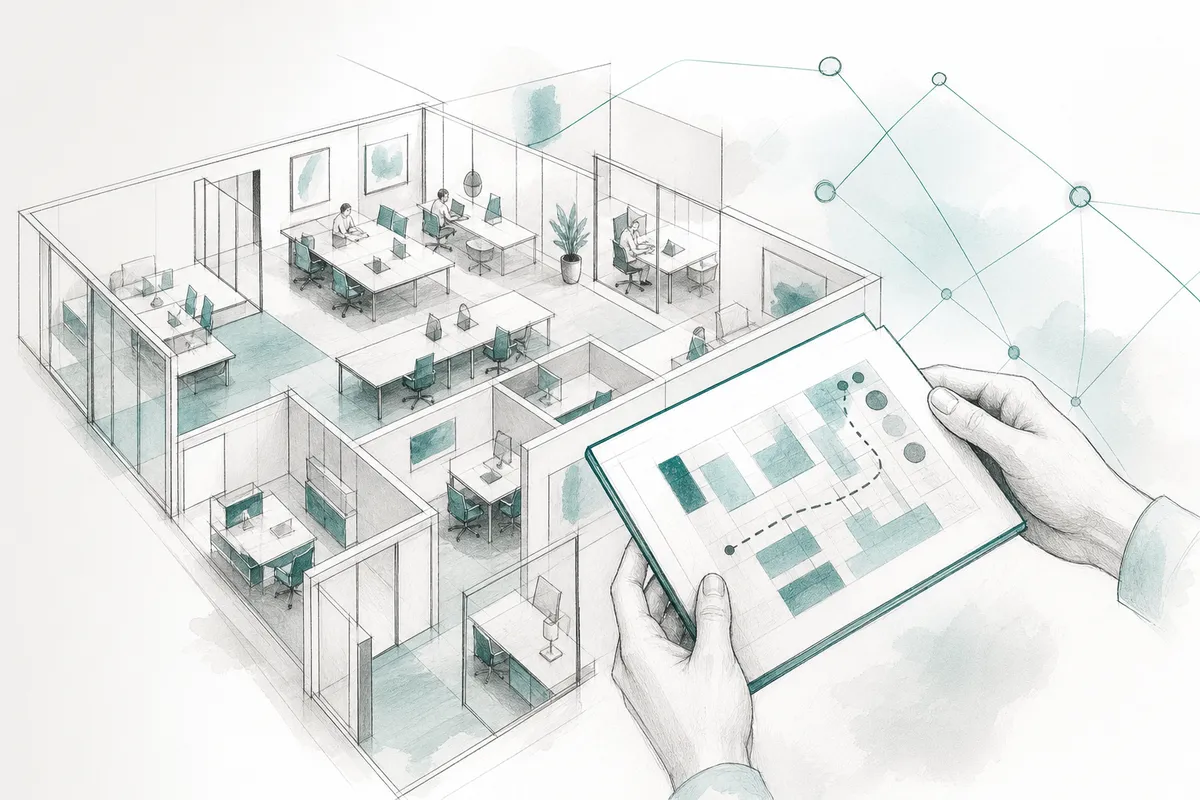
Workforce space intelligence is the discipline of combining people data, attendance patterns, team schedules, collaboration behavior, with physical space data to make smarter decisions about how, where, and how much office space an organization needs. It goes beyond generic workplace analytics by tying headcount and workforce dynamics directly to real estate outcomes. The result is a system that tells you not just how full your office is, but why, and what to do about it.
This discipline combines workforce behavior data — who attends, when, and with whom — with physical space utilization data to drive real estate decisions.
Workplace intelligence, by contrast, typically covers sensor-based occupancy counts and facilities metrics: how many seats are filled, which floors are active, when HVAC runs. That data tells you a building's physical state. It does not tell you whether the finance team and the product team are ever in the office on the same day, or whether a floor consolidation would break a critical collaboration pattern.
The workforce layer — headcount dynamics, team structures, scheduling behavior — ties directly to space decisions. Neither layer alone is sufficient. Occupancy sensors without workforce context produce averages that mask team-level patterns. Workforce data without space context produces scheduling recommendations that ignore physical capacity constraints. Platforms like OfficeSpace offer real-time dashboards that bring both layers together in a single view.
Spatial intelligence answers the question: how is the space being used? It draws on floor-plan capacity data, badge access records, and desk booking logs to measure density, peak hours, and underutilized zones.
Workforce intelligence answers a different question: who is the workforce, and how does it move? It draws on HRIS headcount data and calendar signals to map team structures, collaboration dependencies, and attendance rhythms.
Combining both layers produces decisions neither can support alone — for example, identifying that a 200-person floor runs at 35% average occupancy, but that the 40-person engineering team clusters there every Tuesday and Wednesday, making consolidation viable only if those two days are protected.
AI processes the combined data stream by running pattern recognition across four core inputs:
Upflex's UnifyAI engine applies this approach to forecast office attendance with 97% accuracy, generating predictive insights rather than purely descriptive reports. The output is not a utilization chart from last month; it is a forward-looking picture of which teams will be in, on which days, and whether the space can absorb them — the foundation of any credible real estate consolidation decision.
Converting attendance data into decisions — on leases, floor layouts, team scheduling, and daily operations — replaces guesswork with demonstrated demand.
Attendance forecasting tells facilities and real estate teams exactly which teams arrive on which days, and in what volume. That precision lets portfolio managers right-size floor plates, consolidate underused locations, or enter lease renegotiations armed with actual occupancy trends rather than headcount estimates. A floor running at 35% utilization on Mondays and Fridays is a data-supported argument for downsizing, not a hunch.
Portfolio-level analysis goes further. When attendance data is aggregated across multiple offices, it separates locations that are structurally underutilized from those that are simply quiet during a seasonal dip. That distinction matters: consolidating a structurally low-demand site generates lasting savings, while exiting a temporarily quiet one creates a capacity problem six months later. Upflex's real estate portfolio optimization tools surface exactly this kind of pattern, giving corporate real estate leaders the evidence base to make consolidation or expansion calls with documented outcomes, including real estate spend reductions of 40% or more.
Hybrid work planning adds a second layer that simple desk-booking tools don't provide. Matching each team's co-attendance needs against available space prevents both overcrowding on peak days and ghost-floor waste on quiet ones. A booking tool tells you a desk is reserved; space intelligence tells you whether the right teammates are in the building at the same time to make the trip worthwhile.
Knowing who occupies space, and when, changes how facilities teams operate day to day. Neighborhood assignments can reflect actual team clustering rather than org-chart assumptions. Amenity placement, phone booths, collaboration zones, catering points, follows real traffic patterns. Cleaning and facilities scheduling shifts from fixed rotations to demand-driven deployment, cutting costs and improving the in-office experience simultaneously. For more information, see Intelligence Artificielle Banque R Volution Technologique.
These are the outputs that separate intelligence from reporting. Raw occupancy numbers describe the past; space-driven workforce analytics directs tomorrow's decisions before the day starts.
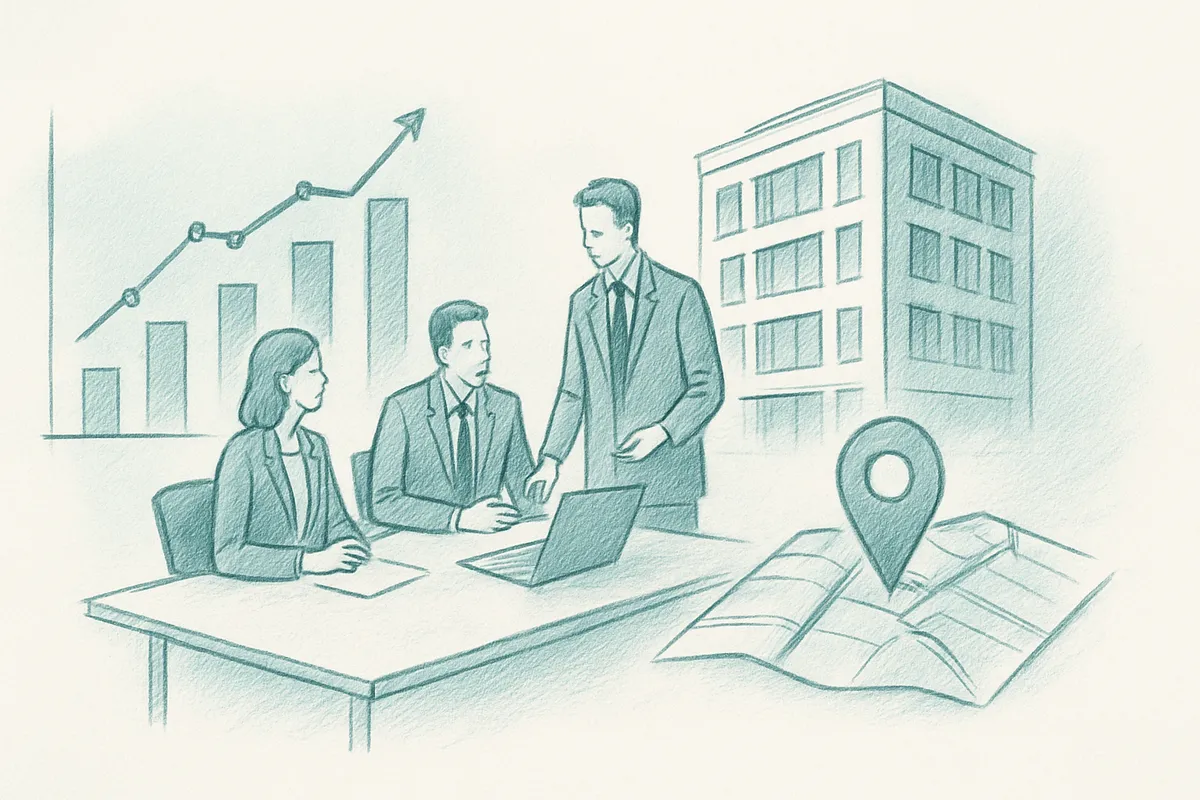
Workforce space intelligence deployments collect sensitive employee data, so organizations must apply clear governance rules before going live, not after.
The data these platforms collect spans several categories: badge swipes, desk booking records, calendar metadata, and sensor-based presence signals. Of these, individual location and movement records carry the highest regulatory sensitivity under GDPR and equivalent regional frameworks, because they can reveal behavioral patterns about specific employees, not just aggregate space usage.
Data minimization is the most effective first control. Where the business case requires only occupancy trends, platforms should collect anonymized, aggregate signals rather than individual tracking records. This approach reduces legal exposure under frameworks that require proportionality between data collection and purpose, and it reduces employee resistance, which directly affects adoption rates.
Transparency is not optional. Employees should receive clear, written communication covering what data is collected, why it is collected, and how long it is retained before a deployment goes live. Organizations that skip this step consistently see lower adoption and higher opt-out rates, which undermines the accuracy of the space intelligence itself.
Governance structure ties everything together. Data ownership policies should define who holds accountability for space data. Access controls must separate individual-level records, visible only to authorized HR or real estate leads, from aggregate dashboards available to broader teams. Audit trails log who accessed what and when, protecting both the organization during regulatory review and employees from unauthorized monitoring.
Connecting workforce space intelligence to your HRIS is the foundational step — without live headcount data, every space model runs on stale assumptions.
this approach platforms depend on accurate, current data about who works where, on which teams, and under what location policy. That data lives in your HRIS, and without a live feed from it, your space models reflect the org structure as it was, not as it is.
Most modern platforms connect via REST APIs to HRIS systems such as Workday, SAP SuccessFactors, or BambooHR, alongside calendar systems and access-control or desk-booking tools. The architecture choice between real-time sync and batch sync matters directly to decision quality. Real-time sync surfaces attendance signals within minutes, letting space coordinators act on the day's actual demand. Batch sync, typically running overnight, is adequate for monthly portfolio reviews but too slow to support daily desk allocation or attendance forecasting at the accuracy Upflex's UnifyAI engine delivers.
Three friction points appear in nearly every integration project:
Each issue is solvable, but the solution is organizational as much as technical. IT, HR, and facilities each own a segment of the data pipeline, and no single team can resolve schema conflicts or enforce a canonical identifier alone. Cross-functional governance — a standing working group with defined data ownership — is what keeps the integration accurate after go-live, not just at launch.
the practice delivers measurable returns across three categories: real estate cost reduction, facilities efficiency, and team productivity.
Real estate savings are the most direct outcome. When demand becomes visible and predictable, the gap between contracted square footage and actual occupancy closes, and that gap is where budget disappears. Forecast accuracy determines the size of the saving: a platform that predicts attendance with 97% accuracy, as Upflex's UnifyAI engine does, gives portfolio leaders the confidence to consolidate leases rather than carry buffer space "just in case." Upflex customers have documented reductions in real estate spend exceeding 40%.
Facilities efficiency is the second category. Demand-driven scheduling of cleaning, catering, and amenities, calibrated to actual occupancy forecasts rather than fixed rosters, cuts operational waste without degrading the employee experience.
Productivity outcomes round out the picture. When employees can find a desk, sit near their team, and meet co-attendance targets, friction drops. Upflex tracks co-attendance achievement as a discrete metric, with an 88% benchmark across its customer base.
Reduced employee frustration from overcrowded or poorly allocated space is real but difficult to attach a dollar figure to. Faster adoption of new hybrid policies is another: when space data is accurate, managers gain confidence to communicate clear expectations. Both outcomes also improve the data quality feeding your next headcount planning cycle.
Build your vendor comparison around outcomes, not feature lists. Ask each vendor these questions directly:
A vendor that answers these questions with specific, verifiable numbers is worth a deeper evaluation. One that deflects to demo decks is telling you something important about the data underneath.

No, any organization with a hybrid workforce and fixed real estate costs can benefit, regardless of size. A single-office company with 200 employees still pays for square footage whether desks are occupied or not. this practice helps right-size that footprint based on actual attendance patterns. That said, the financial case is strongest for organizations managing multiple locations, where consolidation decisions carry the highest dollar impact.
Most organizations see initial utilization data within the first few weeks of deployment, with actionable patterns emerging after 4–8 weeks of baseline collection. Portfolio decisions, such as floor consolidations or lease renegotiations, follow a longer cycle tied to contract timelines. Attendance coordination improvements, like teams aligning their in-office days, often show measurable gains within the first 30–60 days once forecasting and booking workflows are active.
Yes, booking and calendar data alone can power meaningful space analytics, though accuracy improves when combined with additional signals. Desk reservations, meeting room bookings, and calendar invites provide a solid attendance baseline. Badge access data and occupancy sensors add real-time verification that someone actually showed up. Platforms like Upflex use scheduling inputs and utilization data together to reach 97% attendance forecast accuracy, but organizations can start with software-only data sources and add hardware incrementally.
A desk-booking system records reservations; this method interprets what those reservations — and the gaps between them — mean for your real estate portfolio. Booking tools answer "is this desk free right now?" Space intelligence answers "do we need this floor at all, and which days should teams be here?" The distinction matters because booking data alone doesn't trigger portfolio decisions. this strategy layers forecasting, trend analysis, and cost modeling on top of that raw data to produce recommendations your CFO can act on.
Space intelligence data can inform more than real estate decisions — it also reveals how teams collaborate, where knowledge clusters, and which roles are physically co-located versus distributed. Organizations investing in AI-ready workforce development, such as those partnering with platforms like Workera to build AI-skilled teams, can use space intelligence to ensure that training cohorts, mentorship pairings, and cross-functional collaboration happen in the right physical environments on the right days.
this approach is the difference between managing office space reactively — by gut feel and badge swipes — and making portfolio decisions backed by attendance forecasts, utilization trends, and cost data. Three things are worth acting on: first, audit what data you already collect (bookings, calendar, badge) and identify the gaps; second, set a measurable co-attendance target before evaluating any platform, so you have a baseline to improve against; third, treat your next lease event as the forcing function — that deadline is when space intelligence pays back fastest.
If you want to see what 97% attendance forecast accuracy looks like applied to your own office portfolio, request a demo from Upflex and bring your current utilization data to the conversation.
Explore more from our content library: