Share This Article
No items found.

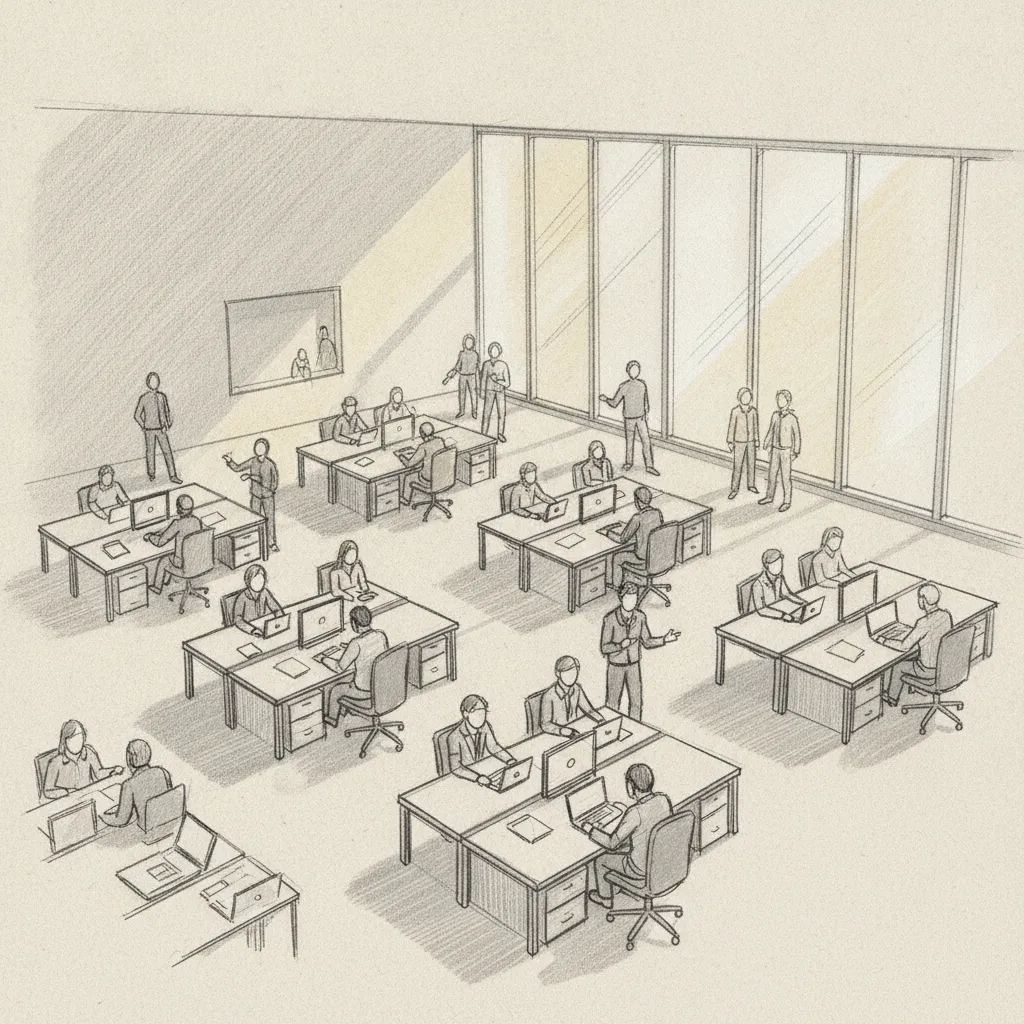
Office capacity planning is the strategic process of matching your physical workspace supply to actual employee demand, ensuring you're not overpaying for empty desks or turning people away at the door. Done well, it combines attendance data, space utilization metrics, and forward-looking forecasts to help corporate real estate leaders make confident, cost-justified decisions about their office portfolio. As hybrid work becomes the permanent operating model for most global enterprises, getting this right is no longer optional.
The numbers tell the story clearly. Most enterprises today operate at 30–50% average office utilization [1], yet they continue paying for 100% of their real estate footprint. That gap represents billions of dollars in wasted spend annually. Effective office capacity planning closes that gap by aligning your space commitments with how your teams actually work.
Office capacity planning is the ongoing process of evaluating how much workspace your organization needs, when it needs it, and where, based on real attendance data and future workforce projections. It's not a one-time floor plan exercise. It's a continuous discipline that connects your real estate portfolio to your workforce strategy.
According to Washington University IT's capacity planning framework, the core goal is to forecast resource needs accurately enough to prevent both overcapacity (wasted spend) and undercapacity (poor employee experience) [2]. For offices specifically, that means understanding peak attendance days, team clustering patterns, and the types of spaces employees actually need when they do come in.
Most capacity planning frameworks focus on a single variable. Effective office capacity planning requires tracking three distinct dimensions simultaneously:
Research from MIT Sloan Management Review highlights that organizations often optimize for peak capacity rather than average utilization, which systematically leads to over-investment in real estate [3]. A building designed for 500 people on its busiest Friday is almost certainly oversized for the other four days of the week.
Pre-2020, office capacity planning was relatively straightforward. Headcount grew predictably, and space followed. Hybrid work broke that relationship entirely. Attendance is now variable, team-driven, and often unpredictable without the right tools.
As Wikipedia's overview of office space planning notes, modern workplace design must account for the dynamic nature of how people use space, not just static headcount figures [4]. The organizations winning in 2026 are those that treat capacity as a live variable, not a fixed assumption baked into a lease signed three years ago.
Pro Tip: Don't anchor your capacity model to pre-pandemic attendance data. Build your baseline from the last 12 months of actual badge swipes or desk booking records, segmented by day of week and team. That's the only honest starting point for a 2026 capacity plan.
Effective office capacity planning depends on tracking the right metrics consistently, not just pulling a headcount report once a quarter and calling it done.
The metrics that matter most fall into two categories: utilization metrics (what's happening now) and demand metrics (what's coming). Most organizations track the former reasonably well. Very few have a reliable system for the latter, which is where costly surprises originate.
Utilization metrics tell you what happened. Demand forecasting tells you what will happen, which is what you actually need to plan space, staff facilities, and make lease decisions.
Industry analysts consistently note that manual forecasting methods (surveys, manager estimates, spreadsheet models) produce accuracy rates well below 70%, making them unreliable for consequential real estate decisions. That's why AI-powered forecasting has become the standard for enterprise-grade capacity planning.
Upflex's UnifyAI engine, for example, delivers 97% attendance forecast accuracy by processing scheduling inputs, historical patterns, and team coordination signals together. That level of precision means you can confidently right-size a floor or consolidate a location without gambling on whether the forecast holds.
| Metric | What It Measures | Planning Use | Typical Benchmark |
|---|---|---|---|
| Peak Occupancy Rate | Maximum simultaneous occupancy | Emergency egress, safety compliance | ≤ 80% of capacity |
| Average Daily Utilization | Mean occupancy across working hours | Portfolio right-sizing decisions | 40–60% in hybrid environments |
| Desk-to-Employee Ratio | Seats available per headcount | Lease consolidation planning | 0.6–0.8 desks per employee (hybrid) |
| Co-Attendance Rate | Team overlap on in-office days | Collaboration zone sizing | Target ≥ 80% (Upflex customers achieve 88%) |
| Meeting Room Utilization | Booked vs. actual occupied time | Room mix optimization | Target 60–75% booked utilization |
A structured office capacity planning process converts raw utilization data into actionable real estate decisions, following a repeatable methodology rather than reacting to immediate pressures.
The Atlassian capacity planning framework recommends starting with a clear inventory of current resources before attempting any demand analysis [5]. For office environments, that principle translates directly: know exactly what you have before you decide whether you need more or less of it.
A common mistake in this process is treating step five as the end. Office capacity planning is a cycle, not a project. Industry research consistently shows that organizations that run this process quarterly outperform those that treat it as an annual exercise, because hybrid attendance patterns shift faster than annual review cycles can track [7].

Pro Tip: Run your capacity model against your lease expiration calendar. The highest-value moments to act on capacity planning insights are 12–18 months before a major lease renewal, when you still have negotiating leverage. Miss that window and you're locked into commitments your data already told you were wrong.
The right office capacity planning software transforms manual spreadsheet exercises into a continuous, data-driven process that updates in near-real-time as attendance patterns shift.
As of 2026, the market has matured significantly beyond basic desk booking tools. The most capable platforms now combine space management, attendance forecasting, and portfolio analytics into a single workflow. That integration matters because disconnected point solutions create exactly the data fragmentation that makes capacity planning unreliable.
Many organizations still run this practice in Excel. That's understandable for smaller portfolios, and free capacity planning templates can provide a reasonable starting framework [8]. But spreadsheets have a fundamental ceiling: they're static snapshots that require manual updates, can't ingest real-time data, and don't scale across multiple locations.
For enterprises managing 500+ employees across multiple offices, the operational cost of maintaining spreadsheet-based capacity models typically exceeds the cost of a dedicated platform within 12–18 months. More importantly, spreadsheet models can't provide the forecast accuracy needed for lease-level decisions.
Platforms like Upflex go further by pairing internal office management with access to the world's largest on-demand workspace network. When your capacity model identifies a surplus location, you don't just have data; you have an immediate alternative for employees who need a place to work while you consolidate. That's the kind of end-to-end solution that development teams at companies like thegoodcode.io rely on when designing distributed work environments for modern enterprises.
Pro Tip: When evaluating capacity planning software, ask vendors for a proof-of-concept using your own utilization data, not a demo dataset. A tool that looks impressive on curated sample data may struggle with the messiness of real badge swipes, no-show bookings, and multi-floor attendance patterns.
The organizations reducing real estate spend by 40%+ aren't just using better tools. They're following a set of practices that turn capacity planning from a periodic exercise into a continuous operational capability.
Research published through the Academic Research Repository on future-oriented office space planning emphasizes that successful workplace optimization requires aligning space design with actual employee work types and behaviors, not just headcount ratios [9]. That research finding has only become more relevant as hybrid work has diversified how, when, and why people use office space.
this method that isn't connected to your lease calendar is an academic exercise. The practical value of knowing you're at 45% utilization is zero if your next lease renewal is eight years away and you have no flexibility clauses.
Best-in-class corporate real estate teams maintain a rolling 24-month view of lease events and align their capacity planning cycles to those milestones. They also increasingly build flexibility into new lease agreements, including sublease rights, contraction options, and shorter initial terms, specifically because their capacity models tell them demand is harder to predict than it used to be.
A common pitfall: designing office layouts around a fixed headcount assumption that becomes outdated within 18 months. The better approach is designing for a range of utilization scenarios.
The MIT Sloan Management Review's analysis of strategic workspace planning found that organizations that design for flexibility rather than fixed headcount consistently achieve better cost outcomes and higher employee satisfaction scores [10].
Capacity planning isn't only a cost reduction exercise. Under-capacity on peak days creates exactly the frustrated employee experience that undermines return-to-office initiatives. Employees who show up and can't find a desk, or whose team isn't there, don't come back.
At Upflex, we've found that the organizations achieving the highest co-attendance rates (88% in our documented outcomes) are those that use capacity data not just to right-size space, but to actively coordinate when teams come in together. The forecasting capability and the coordination capability have to work together.
The Breakroom capacity planning framework similarly emphasizes that matching workforce capacity to workload demand requires both supply-side management (space) and demand-side coordination (scheduling) [11].
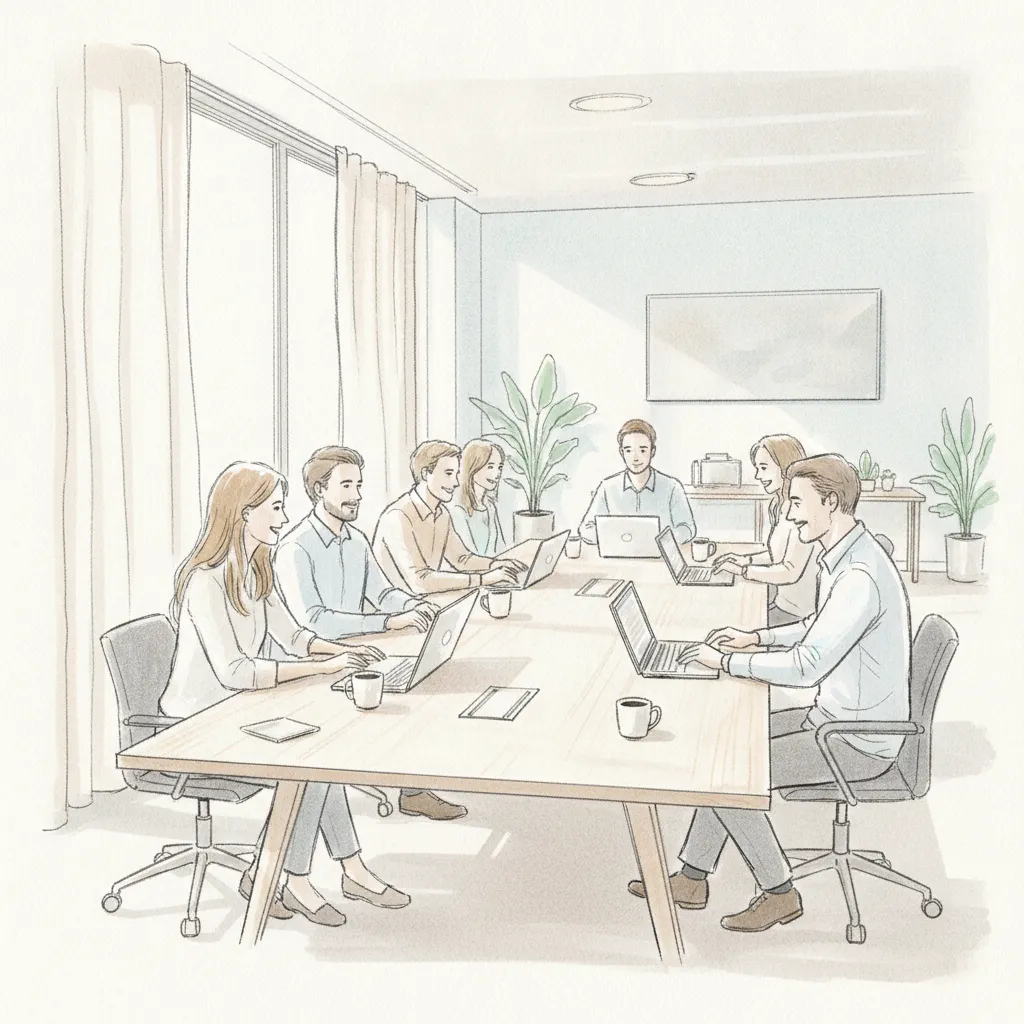
this strategy is the strategic process of determining how much workspace an organization needs, when, and where, based on current utilization data and projected future demand. It aligns physical space supply with actual employee attendance patterns to prevent overspending on underused real estate while ensuring employees always have a productive place to work. Effective this approach combines space audits, utilization metrics, and attendance forecasting into a continuous operational cycle.
Office capacity is calculated by dividing your total usable desk count by your target desk-to-employee ratio. For a hybrid workforce, a ratio of 0.6 to 0.8 desks per employee is typical, meaning a 200-person team might need 120 to 160 desks. You then validate that number against peak attendance data to ensure you're not hitting constraints on your busiest days. Most organizations also add a 10–15% buffer for visitors, contractors, and growth.
Tools range from free Excel templates and capacity planning spreadsheets for smaller organizations to dedicated workplace management platforms for enterprises. Enterprise-grade solutions combine desk booking, badge access integration, attendance forecasting, and portfolio analytics in a single platform. Upflex's UnifyAI engine adds AI-powered attendance forecasting with 97% accuracy, making it one of the most precise options available for organizations making consequential lease and consolidation decisions.
For hybrid environments as of 2026, average daily utilization rates of 40–65% are considered healthy and expected. Peak utilization (typically Tuesday through Thursday) should stay below 80% of total capacity to avoid a degraded employee experience. If your average utilization consistently falls below 35%, that's a strong signal to consider portfolio consolidation. If you're regularly hitting 85%+ on peak days, you likely need overflow capacity solutions.
Quarterly reviews are the minimum recommended cadence for hybrid organizations. Monthly reviews are preferable for organizations actively managing lease events, consolidations, or significant headcount changes. Annual planning cycles are too slow for the pace at which hybrid attendance patterns shift. The most effective teams maintain a live capacity dashboard and review key metrics monthly, with formal scenario modeling and decision-making quarterly.
the practice focuses on how much space you need and when, while space planning focuses on how that space is physically arranged and designed. Capacity planning is a strategic and financial discipline; space planning is more operational and design-oriented. The two are closely related: capacity planning outputs (how many desks, what types of spaces) directly inform space planning decisions (where to put them and how to configure them). Both are required for a fully optimized workplace.
Yes, and significantly. Organizations that implement data-driven this practice consistently identify surplus space that can be consolidated, subleased, or exited at lease renewal. Upflex customers have achieved 40%+ reductions in real estate spend by using utilization data and attendance forecasting to make confident consolidation decisions. The key is having accurate enough data to take action, not just observe the problem.
The desk-to-employee ratio is the number of physical desks divided by total headcount. A ratio of 1:1 means one desk per employee, which was the pre-hybrid standard. Most hybrid organizations now target ratios between 0.6:1 and 0.8:1, reflecting the fact that not everyone comes in every day. Getting this ratio right is one of the most direct levers in this method, because it directly determines how much space (and therefore how much cost) your portfolio requires.
this strategy has moved from a facilities management nicety to a core financial discipline for any enterprise running a hybrid work model. The organizations that get it right are cutting real estate spend by 40% or more, not by guessing, but by tracking real utilization data, forecasting attendance accurately, and making lease decisions grounded in evidence rather than assumption.
The five-step process outlined here (audit, collect, model, identify gaps, define actions) gives you a repeatable framework. The metrics table gives you the benchmarks to measure against. And the best practices section tells you where most organizations leave value on the table.
Upflex brings all of this together in a single platform. UnifyAI delivers the 97% forecast accuracy your capacity model needs to be trustworthy. The desk booking and space management layer gives you real-time utilization data. And the world's largest on-demand workspace network means that when your capacity planning tells you to consolidate, your employees still have a great place to work. That's this approach done at the level your real estate portfolio deserves.
Explore more from our content library: