Share This Article
No items found.

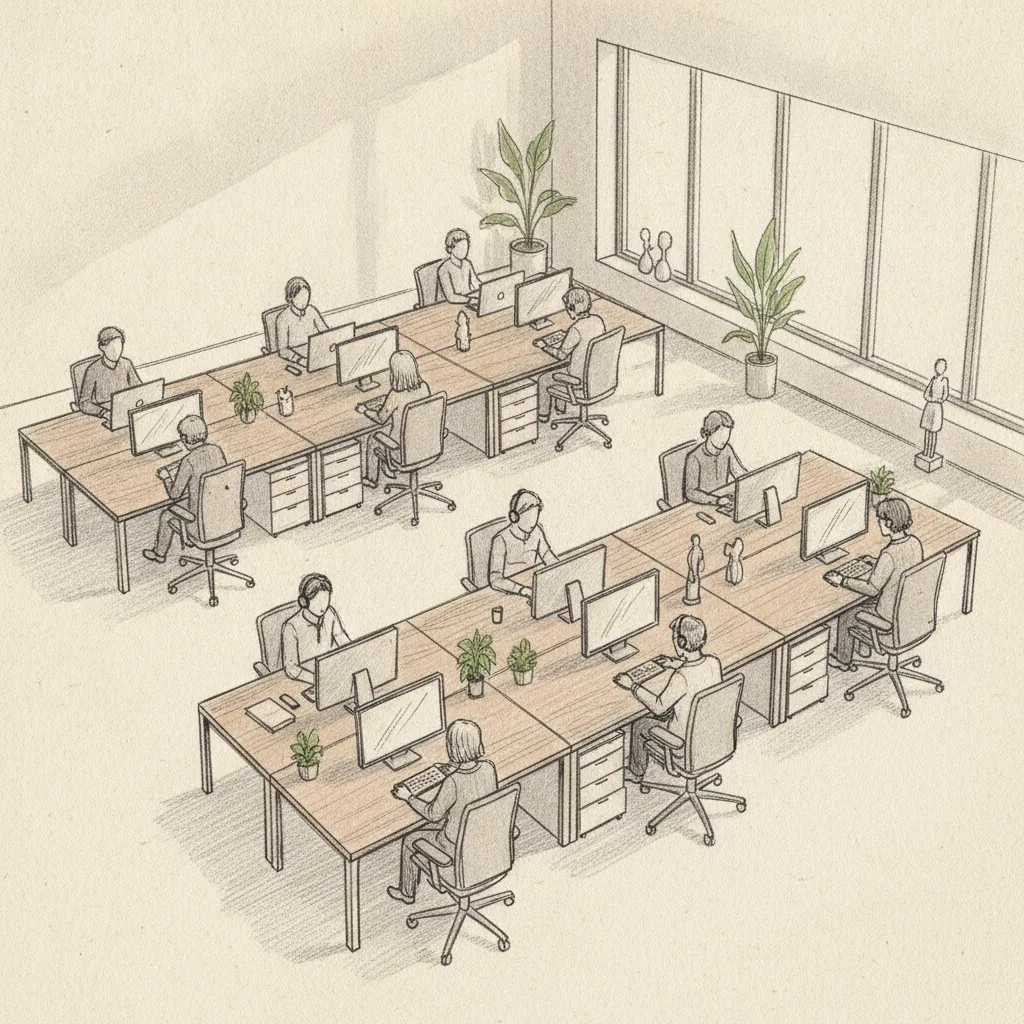
Managing distributed teams effectively means establishing clear communication rhythms, defining measurable goals, and giving every team member consistent access to the tools and workspaces they need to do their best work. The challenge isn't just logistical. As of 2026, enterprises running hybrid and distributed models are dealing with unpredictable office attendance, fragmented tooling, and real estate portfolios that haven't caught up with how people actually work. This guide covers how to manage distributed teams with strategies that go well beyond the standard tips list.
A distributed team is one where members work across different locations, whether that's multiple offices, home setups, coworking spaces, or a mix of all three. Research from Insightful confirms that the most successful distributed teams share three traits: deliberate communication structures, clearly defined roles, and technology that reduces coordination overhead rather than adding to it [1]. Get those three things right, and most other challenges become manageable. This is particularly relevant for how to manage distributed teams.
Effective distributed team communication requires a deliberate architecture, not just a collection of apps. Without structure, teams default to reactive messaging that creates noise, buries decisions, and leaves remote members out of key conversations.
The most effective distributed teams distinguish clearly between synchronous communication (real-time calls and meetings) and asynchronous communication (written updates, recorded walkthroughs, and threaded discussions). Gmelius recommends treating asynchronous communication as the default and reserving synchronous time for decisions that genuinely require real-time input [2].
A common mistake is treating every communication channel the same way. Teams that use Slack for both casual chat and critical project decisions quickly find that important information gets lost in the noise. Assign each tool a specific purpose and communicate that purpose explicitly during onboarding.
Distributed teams spanning multiple time zones need a meeting cadence that rotates the burden of inconvenient hours. Scrum.org notes that teams with fixed meeting times disproportionately disadvantage members in certain regions, which erodes engagement over time [3].
Pro Tip: Document every significant decision in a shared, searchable location immediately after it's made. PEO Insider research shows that the most effective distributed teams normalize written decision logs so no one is disadvantaged by missing a synchronous session [4].
Distributed teams perform best when every member understands not just what they're working on, but why it matters and how success is measured. Vague direction is expensive in any team. In a distributed one, it's compounding. When considering how to manage distributed teams, this point stands out.
The OKR framework (Objectives and Key Results), popularized by Intel and later adopted at scale by Google, is particularly well-suited to distributed team management. It separates aspirational direction (the objective) from concrete measurement (the key results), giving remote managers a shared vocabulary for progress that doesn't depend on physical proximity.
According to Atlassian, distributed teams that establish clear goals and role boundaries report significantly higher alignment scores than those that rely on informal coordination [5]. The data point is consistent with what we see in practice: when people know exactly what they're accountable for, they need less hand-holding and deliver more.
Beyond goals, each team member needs a clear understanding of their decision-making authority. A RACI matrix (Responsible, Accountable, Consulted, Informed) is a practical tool for mapping accountability in distributed environments. It eliminates the ambiguity that causes duplicated work or, worse, tasks that fall through entirely because everyone assumed someone else owned them.
| RACI Role | Definition | Distributed Team Application |
|---|---|---|
| Responsible | Does the work | Assigned per task in project management tool |
| Accountable | Owns the outcome | Single owner per deliverable, no exceptions |
| Consulted | Provides input before decisions | Tagged in async threads for feedback |
| Informed | Kept in the loop after decisions | Receives written summary post-decision |
Managing distributed teams isn't just about digital coordination. It also means solving the physical workspace challenge: where do people work, and how do you ensure they have the right environment when they need it?
One of the most underappreciated challenges in distributed team management is workspace fragmentation. Employees in major cities might have easy access to a company office, while colleagues in secondary markets or traveling for work have no reliable option. This creates a two-tier experience that quietly undermines team cohesion and productivity. For those exploring how to manage distributed teams, this matters.
At Upflex, we've found that organizations with distributed teams consistently cite "inconsistent workspace access" as a top-three friction point, right alongside communication and time zones. The fix isn't signing more long-term leases in every city your team touches. It's giving employees on-demand access to professional workspaces wherever they are, without the overhead of permanent real estate commitments.
Upflex's platform combines AI-powered office orchestration with access to the world's largest on-demand workspace network, so distributed team members can book professional workspace in their city, on their schedule, without requiring their employer to pre-negotiate local leases. The result is a consistent work experience across every location your team operates in.
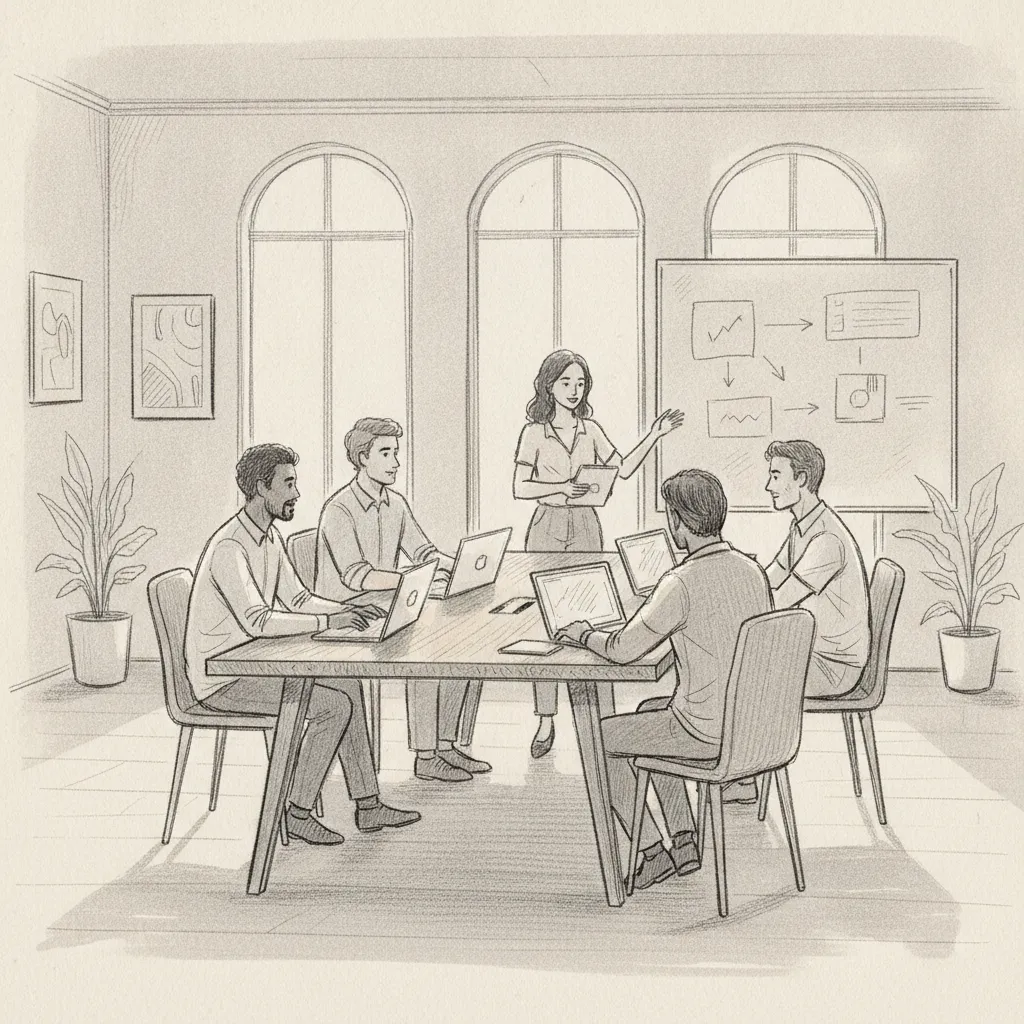
For teams with a central office, the challenge shifts to coordination: how do you get the right people in the same place on the same day without mandating rigid schedules? Unpredictable attendance is the number one reason hybrid offices feel empty and disconnected.
AI that forecasts who's coming in, when, and where, that's what Upflex's UnifyAI engine delivers. It predicts office attendance with 97% accuracy and automates workplace coordination so teams can achieve meaningful co-attendance without top-down mandates. Customers using the platform report 88% co-attendance achievement, meaning teammates are reliably present together when it matters. For Corporate Real Estate leaders, the downstream benefit is equally significant: utilization data precise enough to support real estate portfolio consolidation decisions, with documented outcomes of 40%+ reduction in real estate spend.
Industry analysts at CTO Magazine note that enterprises managing distributed teams at scale increasingly rely on AI-driven attendance forecasting to bridge the gap between flexible work policies and meaningful in-person collaboration [6]. This directly impacts how to manage distributed teams outcomes.
Pro Tip: Don't rely on badge swipe data alone to understand office utilization. Badge data tells you who entered the building, not whether they collaborated with their team. AI-powered attendance forecasting gives you predictive insight, not just historical records, so you can design for co-attendance rather than just measure it after the fact.
Culture in a distributed team doesn't happen by accident. It requires deliberate investment in rituals, recognition, and shared identity that don't depend on physical proximity.
The onboarding process is the highest-leverage moment for establishing culture in a distributed team. A new hire who joins without a structured onboarding experience will form their understanding of the team's norms from whatever they observe first, which may not reflect the culture you're trying to build. For more information, see 2nd Infantry Division Trailer Hitch Cover Official Licensed Indianhead.
According to TalentDesk, distributed teams that invest in structured onboarding report faster time-to-productivity and higher retention in the first 90 days compared to those relying on informal processes [7].
Remote and distributed employees are statistically more likely to feel overlooked for recognition and promotion than their in-office counterparts. This isn't just a morale issue. It's a retention risk.
The PEO Insider research on distributed team culture emphasizes that psychological safety, the belief that you can speak up without fear of negative consequences, is significantly harder to establish across distance and requires explicit, repeated reinforcement from leadership [4]. This is particularly relevant for how to manage distributed teams.
From experience, one of the most effective interventions is simple: have managers ask "what's one thing that would make your work easier this week?" in every 1:1. It signals genuine interest in removing friction, not just tracking output.
Tool selection for distributed teams should follow a governance-first approach: decide how your team will work, then choose tools that support those decisions. The reverse, adopting tools and hoping behavior follows, is one of the most common and costly mistakes in distributed team management.
Every distributed team needs tools covering four functional areas. The specific products matter less than ensuring each area is covered without redundancy.
| Function | What It Covers | Key Requirement |
|---|---|---|
| Communication | Messaging, video calls, async updates | Clear channel-purpose documentation |
| Project Management | Task tracking, deadlines, accountability | Single source of truth for all work |
| Documentation | Decisions, processes, knowledge base | Searchable, version-controlled, accessible |
| Workspace Management | Desk booking, attendance forecasting, on-demand access | Covers both owned offices and external workspaces |
Tool adoption without governance creates digital sprawl. Teams end up with five messaging apps, three project management tools, and no shared understanding of which one to use for what. Establish a written "rules of engagement" document that specifies:
The DASA guidance on distributed DevOps teams reinforces this point: strategic focus on systems and culture, not just talent, is what separates high-performing distributed teams from fragmented ones [8]. When considering how to manage distributed teams, this point stands out.
For teams managing physical workspace alongside digital coordination, integrating workspace management into the core tech stack is non-negotiable. Platforms that unify desk booking, attendance forecasting, and on-demand workspace access into a single interface eliminate the coordination overhead that otherwise falls on managers and employees alike.
Pro Tip: Audit your distributed team's tool stack every six months. Ask each team member to list the three tools they use most and the three they find most frustrating. The overlap between "rarely used" and "frequently frustrating" tools is your consolidation target.
The right approach to managing distributed teams depends on your team's size, geographic spread, and the nature of the work. There's no single model that works for every organization, but there are clear decision criteria.
According to General Catalyst, the most effective distributed team structures are designed around the work, not inherited from in-office models [9]. That means questioning every meeting, every process, and every tool to ask whether it serves a distributed context or just replicates what worked when everyone was in the same building.
One pitfall to watch for: organizations that treat distributed team management as a temporary accommodation rather than a permanent operating model. Teams that invest in proper infrastructure, communication governance, and workspace solutions consistently outperform those waiting to "return to normal." As of 2026, distributed work is the normal.
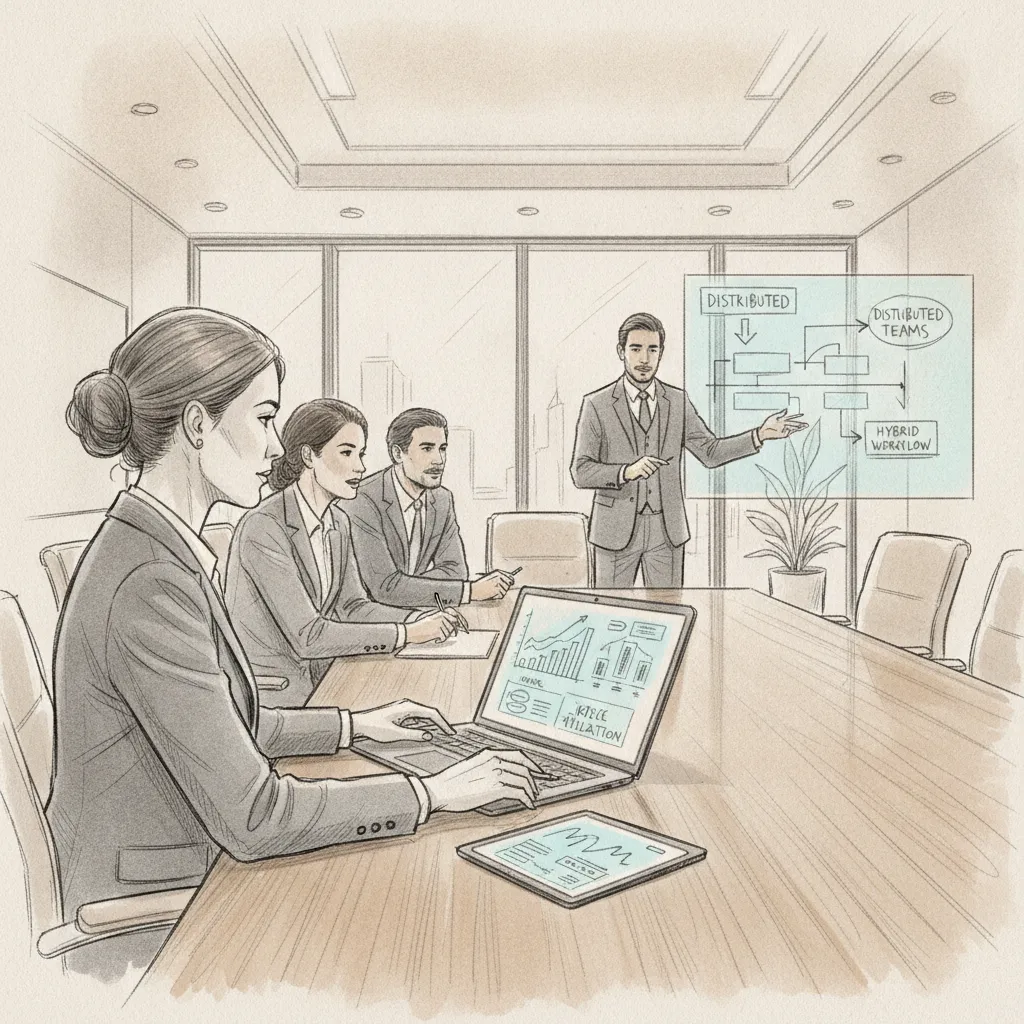
Managing distributed teams effectively requires a combination of deliberate communication architecture, measurable goal-setting frameworks like OKRs, and consistent access to professional workspaces. Beyond communication tools, successful managers establish written governance for how decisions are made, create structured onboarding that embeds culture from day one, and use AI-powered attendance forecasting to coordinate in-person collaboration without rigid mandates. The goal is to build systems that reduce coordination overhead for both managers and team members. For those exploring how to manage distributed teams, this matters.
The five stages are Forming, Storming, Norming, Performing, and Adjourning, as defined by psychologist Bruce Tuckman in 1965. In a distributed context, each stage takes longer to move through because the informal social cues that accelerate team development in person (shared lunches, hallway conversations, reading body language) are absent. Distributed team leaders need to actively facilitate progression through each stage with structured check-ins, explicit conflict resolution processes, and deliberate relationship-building activities rather than waiting for organic cohesion to develop.
The single biggest challenge is maintaining alignment without the ambient information flow that exists in a shared physical space. In an office, employees absorb context through overheard conversations, visual cues, and informal interactions. In a distributed team, that context has to be deliberately created and documented. Organizations that solve this with structured communication protocols, transparent decision logs, and AI-powered coordination tools consistently outperform those that rely on goodwill and occasional all-hands meetings.
Building culture in a distributed team requires treating cultural investment as a recurring operational commitment, not a one-time initiative. The most effective approaches include structured onboarding with a written team operating manual, peer recognition programs that are asynchronous and visible to all, regular no-agenda social touchpoints, and explicit documentation of the behaviors and values that define how the team works. According to PEO Insider, the highest-performing distributed teams normalize written updates and transparent progress tracking so that no one is disadvantaged by geography or time zone.
As of 2026, distributed teams need tools covering four core functions: communication (both synchronous and asynchronous), project management, documentation, and workspace management. The workspace management category is often overlooked but increasingly critical. Teams with members across multiple cities need platforms that handle desk booking in owned offices and provide on-demand access to professional workspaces in locations where the company doesn't have a permanent presence. Platforms that unify these functions reduce the coordination overhead that otherwise consumes significant manager time.
Managing time zones in a distributed team requires three structural commitments: rotating meeting times so the burden of inconvenient hours is shared equitably, establishing a defined "core hours" overlap window where all members are reachable, and defaulting to asynchronous communication for everything that doesn't require real-time input. Scrum.org research shows that teams with fixed meeting times disproportionately disadvantage members in certain regions, which compounds into engagement and retention problems over time. Recording all synchronous sessions and distributing written summaries within 24 hours is a minimum standard for time-zone-inclusive distributed team management.
Inconsistent workspace access creates a two-tier employee experience that quietly undermines distributed team cohesion. Team members in major cities with easy office access have a materially different work environment than colleagues in secondary markets or traveling locations. Providing on-demand access to professional workspaces through a global network levels that experience without requiring employers to sign long-term leases in every city. Organizations that solve the workspace access problem report higher productivity, better collaboration outcomes, and improved retention among distributed team members who previously worked from home by default.
Knowing how to manage distributed teams in 2026 means moving well past the basics of video calls and shared project boards. The organizations getting this right are the ones that treat distributed work as a permanent operating model requiring deliberate infrastructure: communication governance, measurable goal frameworks, intentional culture-building, and workspace solutions that give every team member a professional environment regardless of location.
The physical workspace dimension is where most distributed team guides stop short. But for Corporate Real Estate and HR leaders, it's where the biggest operational and financial leverage sits. Upflex combines AI-powered office orchestration with access to the world's largest on-demand workspace network, delivering 97% attendance forecast accuracy, 88% co-attendance achievement, and 40%+ reductions in real estate spend for organizations that need both coordination and cost control.
If your distributed team is dealing with unpredictable attendance, fragmented workspace access, or a real estate portfolio that hasn't caught up with how your people actually work, those are solvable problems. The tools and strategies in this guide give you the framework. Upflex gives you the platform to execute it at scale.
Explore more from our content library: