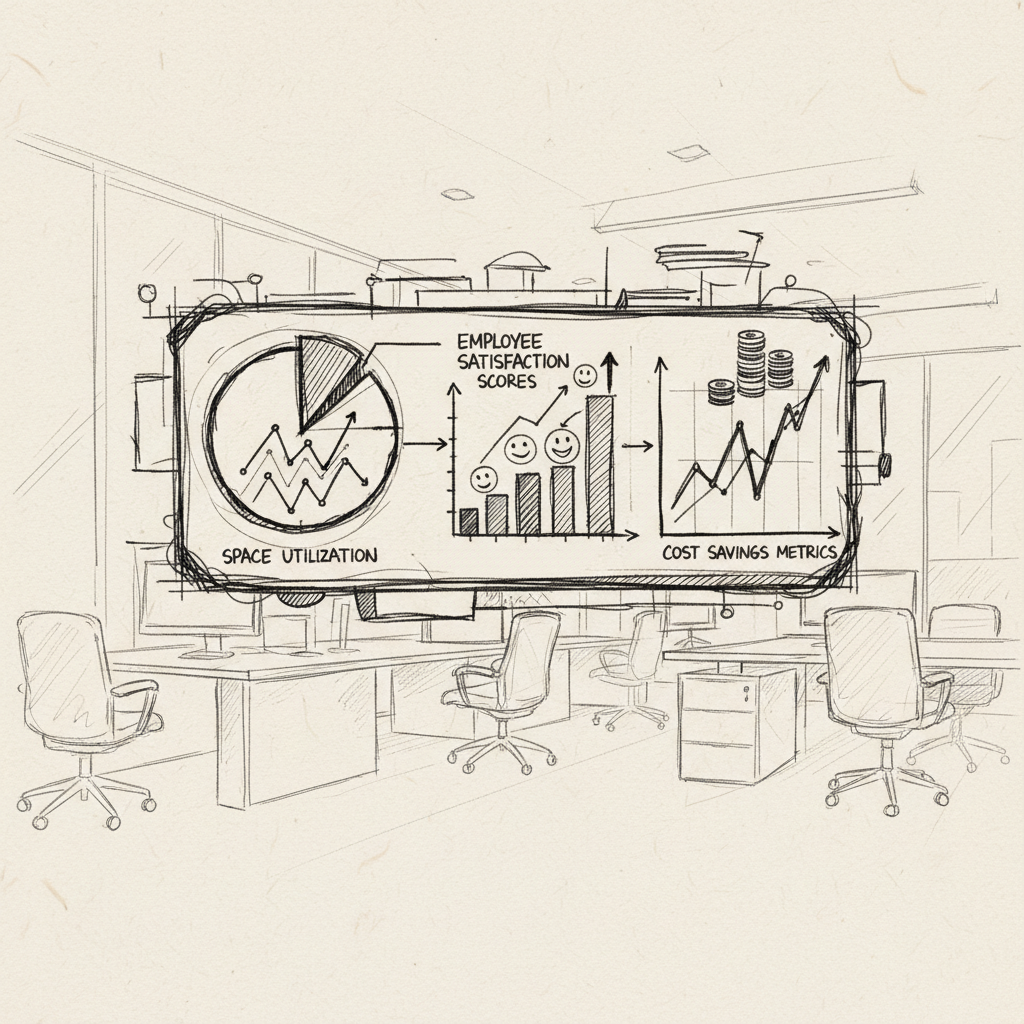
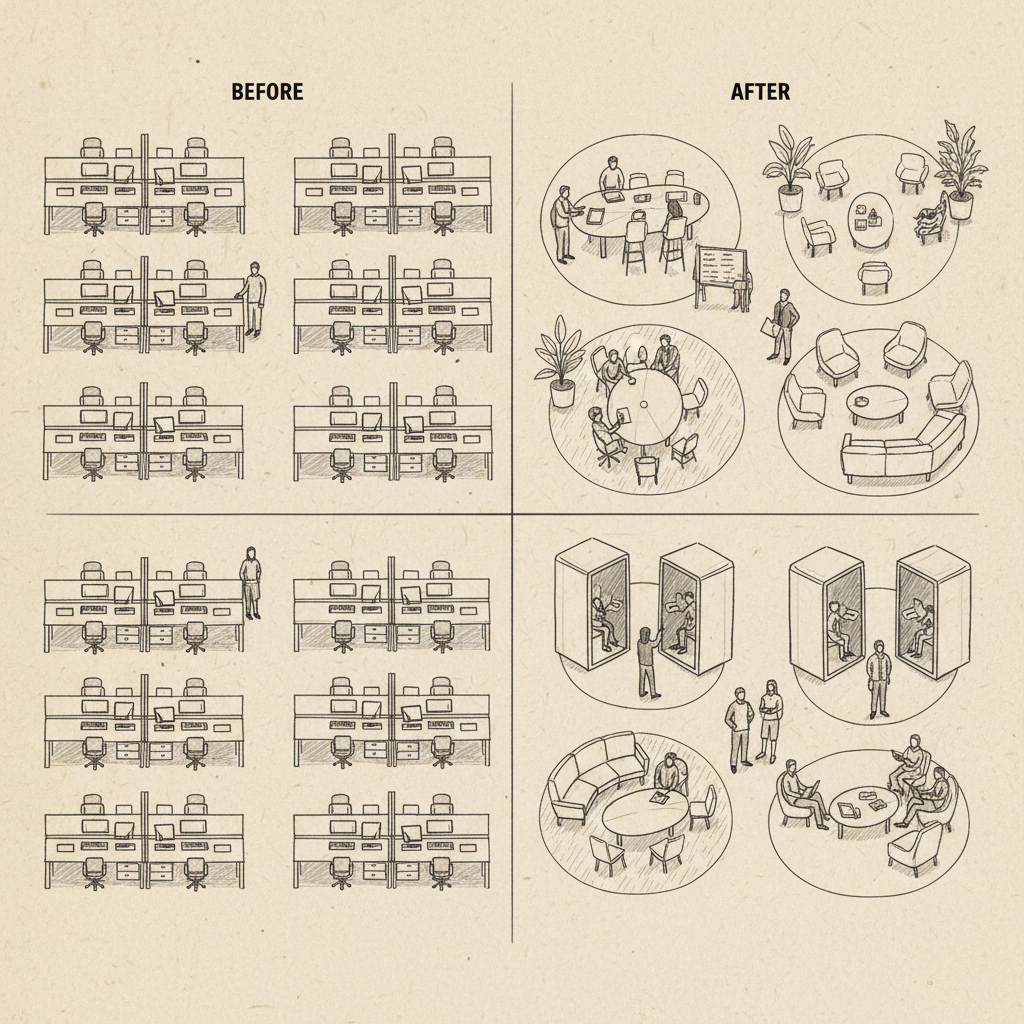
Modern organizations face unprecedented challenges in managing their physical and digital work environments. As hybrid work models become the standard in 2026, companies are discovering that traditional office management approaches no longer deliver the efficiency and cost savings they need. Implementing effective workplace optimization strategies has become essential for maintaining competitive advantage while controlling operational costs.
Workplace optimization is a strategic approach that uses data-driven insights and technology to maximize the efficiency of physical work environments while minimizing operational costs. This comprehensive methodology combines space utilization analytics, employee behavior patterns, and predictive forecasting to create work environments that adapt to actual usage rather than assumptions. The result is typically a 40% reduction in real estate expenses alongside improved employee satisfaction and productivity.
In this guide, you'll discover how optimized workplace strategies transform traditional office management, the key technologies driving this revolution, and practical strategies for implementing these solutions in your organization. We'll explore real-world case studies, common implementation challenges, and expert recommendations for maximizing your investment in workplace technology.
What Is Workplace Optimization in 2026?
Modern space optimization represents a fundamental shift from static office management to dynamic, data-driven space utilization strategies. Unlike traditional facilities management that relies on fixed desk assignments and estimated capacity needs, optimized workplace strategies use real-time data to continuously adjust space allocation based on actual usage patterns.
Core Components of Modern Workplace Optimization
The foundation of effective space optimization rests on several interconnected elements:
- Space Utilization Analytics: Real-time monitoring of how employees use different areas, from individual workstations to collaboration zones
- Predictive Forecasting: AI-powered algorithms that predict future space needs based on historical patterns, calendar data, and business cycles
- Dynamic Space Management: Flexible allocation systems that can reconfigure spaces based on demand
- Employee Experience Integration: Tools that connect space optimization with worker preferences and productivity metrics
The Technology Behind Workplace Optimization
Modern optimized workplace platforms leverage several advanced technologies. Internet of Things (IoT) sensors track occupancy levels, environmental conditions, and equipment usage throughout the day. Machine learning algorithms analyze this data to identify patterns and predict future needs with remarkable accuracy.
Pro Tip: Companies implementing comprehensive space optimization typically see ROI within 6-12 months through reduced real estate costs and improved space efficiency.
According to the
General Services Administration, organizations using data-driven space optimization strategies report average space efficiency improvements of 25-35%. This translates directly to significant cost savings, especially for companies with large real estate portfolios.
Why Workplace Optimization Matters Now
The shift to hybrid work has fundamentally changed how organizations think about office space. Research from SHRM indicates that 73% of employees now work in hybrid arrangements, creating unprecedented variability in office utilization. Traditional space planning methods, which assumed consistent daily occupancy, no longer reflect reality.
Companies that haven't adapted their space strategies are often paying for significantly underutilized real estate. A recent study found that the average office operates at just 42% capacity on any given day, representing millions in wasted real estate investment for large organizations.
How Workplace Optimization Works
Optimized workplace strategies function through a continuous cycle of data collection, analysis, prediction, and adjustment. The process begins with comprehensive baseline measurement of current space utilization patterns across all areas of the workplace.
The Data Collection Phase
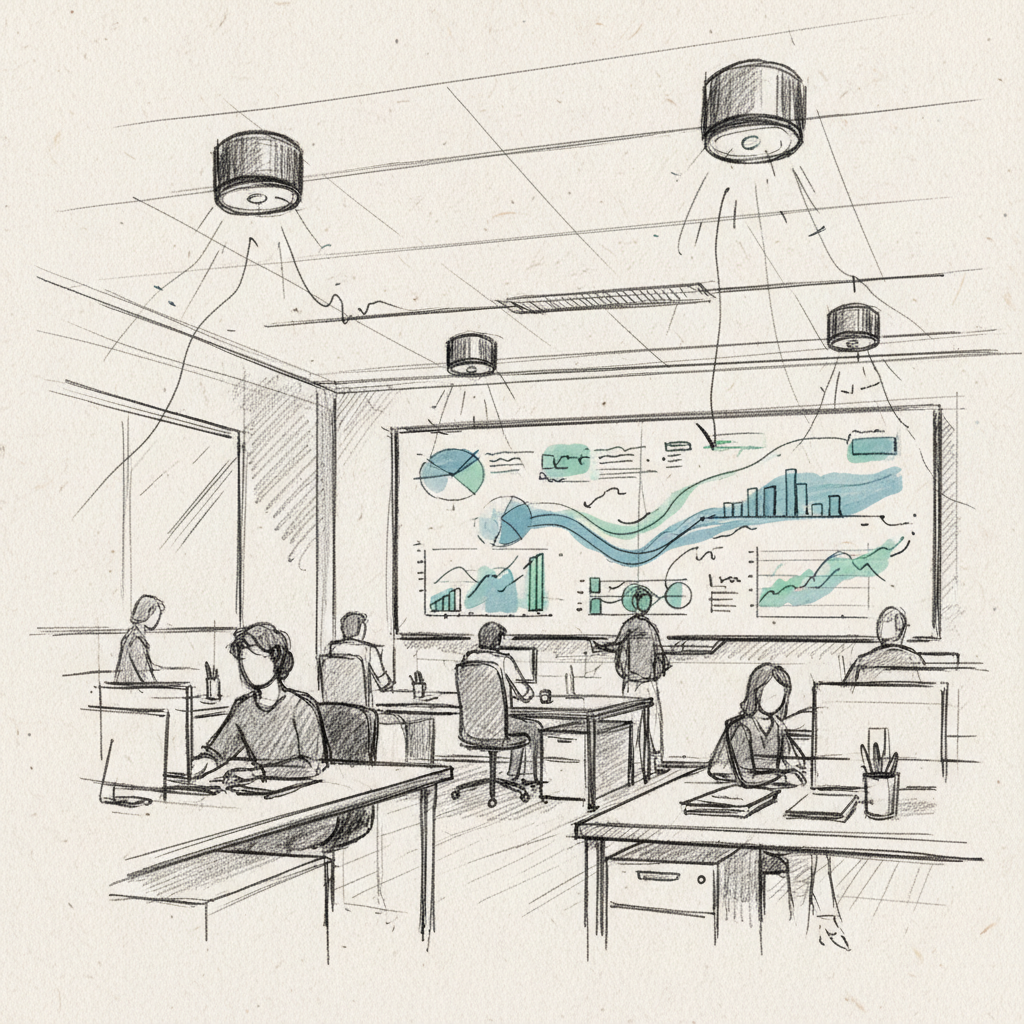
Modern space optimization systems deploy various sensors and tracking technologies throughout the office environment:
- Occupancy Sensors: Monitor desk and room usage in real-time without compromising privacy
- Environmental Monitors: Track temperature, lighting, and air quality to optimize comfort
- Badge/Access Data: Analyze entry patterns and movement flows through secure areas
- Calendar Integration: Connect meeting bookings with actual room usage to identify discrepancies
This data collection creates a comprehensive picture of how spaces are actually used versus how they're intended to be used. Many organizations discover significant gaps between their assumptions and reality during this phase.
Analysis and Pattern Recognition
Once baseline data is established, AI-powered analytics platforms identify usage patterns, peak demand periods, and underutilized areas. The most advanced systems can predict space needs up to 30 days in advance with 97% accuracy, enabling proactive rather than reactive space management.
| Metric |
Traditional Approach |
Optimized Approach |
Improvement |
| Space Utilization |
42% |
78% |
+85% |
| Forecast Accuracy |
65% |
97% |
+49% |
| Real Estate Costs |
Baseline |
-40% |
40% reduction |
| Employee Satisfaction |
68% |
88% |
+29% |
Implementation and Continuous Optimization
The final phase involves implementing changes based on data insights and continuously refining the approach. This might include reconfiguring spaces, adjusting booking policies, or redistributing resources to better match actual usage patterns.
At Upflex, we've found that organizations achieve the best results when they combine internal space optimization with access to external workspace networks. This hybrid approach provides maximum flexibility while maintaining cost control.
Key Benefits of Workplace Optimization
Optimized workplace strategies deliver measurable benefits across multiple organizational dimensions, from financial performance to employee satisfaction. The most significant advantages become apparent within the first year of implementation.
Financial Impact and Cost Reduction
The primary driver for most space optimization initiatives is cost reduction. Real estate typically represents the second-largest expense for most organizations, making it a prime target for efficiency improvements.
- Reduced Real Estate Footprint: Organizations commonly reduce their office space needs by 30-50% without impacting productivity
- Lower Operational Costs: Optimized spaces require less energy, cleaning, and maintenance
- Improved Space ROI: Better utilization means getting more value from existing real estate investments
- Flexible Cost Structure: On-demand workspace access provides variable cost options for peak periods
Enhanced Employee Experience
Modern space optimization goes beyond cost savings to create better work environments. According to research from
CareerForce, companies with optimized workplaces report 23% higher employee engagement scores.
Employees benefit from more variety in their work environments, better access to collaboration spaces when needed, and reduced competition for resources. The data-driven approach ensures that space allocation matches actual work patterns rather than outdated assumptions.
Pro Tip: Focus on optimizing collaboration spaces first, as these typically show the highest utilization variability and greatest potential for improvement.
Operational Efficiency Gains
Space optimization creates more efficient operations through better resource allocation and reduced waste. Facilities teams can focus their efforts on areas that actually need attention rather than maintaining unused spaces.
The predictive capabilities of modern systems enable proactive maintenance scheduling, reducing downtime and extending asset lifecycles. This shift from reactive to predictive maintenance can reduce facilities costs by 15-25%.
Strategic Flexibility
Perhaps most importantly, optimized workplace strategies provide strategic flexibility for future changes. As business needs evolve, optimized workplaces can adapt more quickly and cost-effectively than traditional fixed arrangements.
This flexibility proved crucial during the 2020-2022 period and continues to provide value as organizations navigate changing work patterns and economic conditions in 2026.
Common Challenges and How to Overcome Them
Despite the clear benefits, space optimization implementation faces several recurring challenges. Understanding these obstacles and their solutions is crucial for successful deployment.
Data Privacy and Employee Concerns
The most common initial resistance comes from employee concerns about surveillance and privacy. Workers may worry that occupancy tracking could be used for performance monitoring rather than space optimization.
- Transparent Communication: Clearly explain what data is collected, how it's used, and what protections are in place
- Anonymized Analytics: Use aggregated, anonymous data that focuses on space usage rather than individual behavior
- Employee Involvement: Include staff in the planning process and gather feedback on proposed changes
- Clear Policies: Establish written policies about data use and employee rights
Technology Integration Complexity
Many organizations struggle with integrating optimized workplace platforms with existing systems. Legacy building management systems, HR platforms, and security systems may not communicate effectively with new optimization tools.
The solution involves careful planning and often requires working with vendors who have experience in complex enterprise integrations. According to HHS Workforce Optimization Initiative, organizations that invest in proper integration planning reduce implementation time by 40%.
Change Management Resistance
Space optimization often requires significant changes to established routines and policies. Employees accustomed to assigned desks or traditional booking systems may resist new approaches.
Pro Tip: Start with pilot programs in willing departments before company-wide rollout. Success stories from early adopters help overcome resistance in other areas.
Measuring ROI and Success
Determining the success of space optimization initiatives can be challenging without proper metrics and baseline measurements. Many organizations struggle to quantify benefits beyond simple cost savings.
| Metric Category |
Key Indicators |
Measurement Frequency |
| Financial |
Real estate cost per employee, space utilization rate |
Monthly |
| Operational |
Booking efficiency, maintenance costs, energy usage |
Weekly |
| Employee Experience |
Satisfaction scores, collaboration frequency |
Quarterly |
| Strategic |
Flexibility metrics, adaptation speed |
Annually |
Vendor Selection and Platform Reliability
Choosing the right space optimization platform is critical but challenging. The market includes numerous vendors with varying capabilities, integration options, and track records.
Key evaluation criteria should include forecast accuracy, integration capabilities, scalability, and ongoing support quality. Organizations should also consider whether they need a single comprehensive platform or can benefit from best-of-breed solutions for different functions.
Best Practices for Workplace Optimization Success
Successful space optimization requires strategic planning, careful implementation, and ongoing refinement. Organizations that achieve the best results follow proven methodologies and avoid common pitfalls.
Strategic Planning and Goal Setting
Before implementing any optimized workplace technology, establish clear objectives and success metrics. Different organizations may prioritize cost reduction, employee satisfaction, operational efficiency, or strategic flexibility.
- Baseline Assessment: Measure current space utilization, costs, and employee satisfaction
- Stakeholder Alignment: Ensure leadership, facilities, HR, and IT teams agree on priorities
- Phased Implementation: Start with pilot areas before company-wide deployment
- Success Metrics: Define specific, measurable goals for each optimization objective
Technology Selection and Implementation
The space optimization market offers numerous solutions with different strengths and capabilities. According to
SHRM, organizations that conduct thorough vendor evaluations achieve 60% better outcomes than those making quick decisions.
Key technology considerations include:
- Integration Capabilities: Ensure the platform works with existing systems
- Scalability: Choose solutions that can grow with your organization
- User Experience: Prioritize platforms that employees will actually use
- Analytics Depth: Look for actionable insights, not just data collection
Change Management and Communication
Successful space optimization requires buy-in from all stakeholders. Effective change management starts with clear communication about benefits and addresses concerns proactively.
Pro Tip: Create space optimization champions in each department who can help colleagues adapt to new systems and provide feedback on improvements.
Continuous Improvement and Optimization
Space optimization is not a one-time implementation but an ongoing process. The most successful organizations continuously refine their approaches based on new data and changing needs.
Regular review cycles should evaluate both quantitative metrics (utilization rates, costs, satisfaction scores) and qualitative feedback (employee comments, operational challenges, new opportunities). This ongoing refinement ensures that optimized workplace strategies continue to deliver value as conditions change.
At Upflex, we've observed that organizations with formal quarterly review processes achieve 35% better long-term results than those with ad-hoc evaluation approaches.
Sources & References
- General Services Administration, "Workplace optimization", 2026
- SHRM, "Talent Optimization: 3 Steps to Build a High-Impact Workforce", 2026
- CareerForce, "Workforce Optimization Cycle", 2026
- HHS, "Workforce Optimization Initiative", 2026
- AIHR, "What is Workforce Optimization? Examples, Benefits & ...", 2026
- Zendesk, "Workforce optimization: The ultimate guide for 2026", 2026
- Robin Powered, "Workplace Optimization, Explained", 2026
Frequently Asked Questions
1. What's the difference between workplace optimization and workforce optimization?
Understanding workplace optimization is essential. Space optimization focuses on physical spaces and environments, while workforce optimization deals with people management and productivity. This method uses space analytics and environmental data to improve office efficiency, whereas workforce optimization manages staffing, scheduling, and employee performance.
2. How long does it take to see ROI from workplace optimization?
Most organizations see initial ROI within 6-12 months through reduced real estate costs and improved space efficiency. Full benefits, including enhanced employee satisfaction and operational improvements, typically materialize within 18-24 months of implementation.
3. What data privacy concerns should organizations address?
Key privacy concerns include employee surveillance fears and data security. Address these by using anonymized occupancy data, implementing clear data governance policies, and focusing on space utilization rather than individual tracking. Transparent communication about data use is essential.
4. Can small companies benefit from workplace optimization?
Yes, though the approach may differ. Small companies can use simplified analytics tools and focus on basic space utilization improvements. Even modest optimizations can yield significant cost savings when real estate represents a large portion of overhead expenses.
5. What happens if workplace optimization reduces space needs significantly?
Organizations typically have several options: sublease excess space, consolidate locations, redesign remaining areas for better functionality, or use saved costs for other strategic investments. The key is planning for space reduction as part of the optimization strategy.
6. How does workplace optimization support hybrid work models?
This strategy is ideal for hybrid work because it matches space allocation to actual usage patterns rather than fixed assignments. It provides flexible booking systems, predicts peak demand periods, and ensures adequate collaboration spaces when teams are in-office together.
7. What technologies are essential for effective workplace optimization?
Core technologies include IoT occupancy sensors, space booking platforms, data analytics tools, and integration capabilities with existing systems. Advanced implementations may include AI-powered forecasting, environmental monitoring, and mobile applications for employee interaction.
8. How can organizations measure workplace optimization success?
Success metrics include space utilization rates, real estate cost per employee, booking efficiency, employee satisfaction scores, and operational cost reductions. Regular measurement and benchmarking against baseline data helps track progress and identify areas for continued improvement.
Conclusion
Optimized workplace strategies represent a fundamental shift in how organizations approach office space management. By leveraging data-driven insights and advanced technologies, companies can achieve significant cost reductions while creating better work environments for their employees.
The evidence is compelling: organizations implementing comprehensive space optimization strategies typically see 40% reductions in real estate costs, 85% improvements in space utilization, and measurable increases in employee satisfaction. These benefits become even more pronounced as hybrid work models continue to evolve.
Success in space optimization requires careful planning, appropriate technology selection, and ongoing commitment to continuous improvement. Organizations that take a strategic approach, address employee concerns proactively, and focus on measurable outcomes achieve the best results.
As we move through 2026, optimized workplace strategies will become increasingly essential for competitive advantage. Companies that master these strategies will enjoy lower costs, more flexible operations, and happier employees. Those that don't risk paying premium prices for underutilized real estate while struggling to adapt to changing work patterns.
The time to begin your space optimization journey is now. Start with a baseline assessment of your current space utilization, engage stakeholders across your organization, and develop a clear roadmap for implementation. The investment in optimized workplace technology and processes will pay dividends for years to come.
About the Author
Written by the SaaS experts at Upflex. Our team brings years of hands-on experience helping businesses with this approach, delivering practical guidance grounded in real-world results.
Recommended Articles
Explore more from our content library: