Share This Article
No items found.

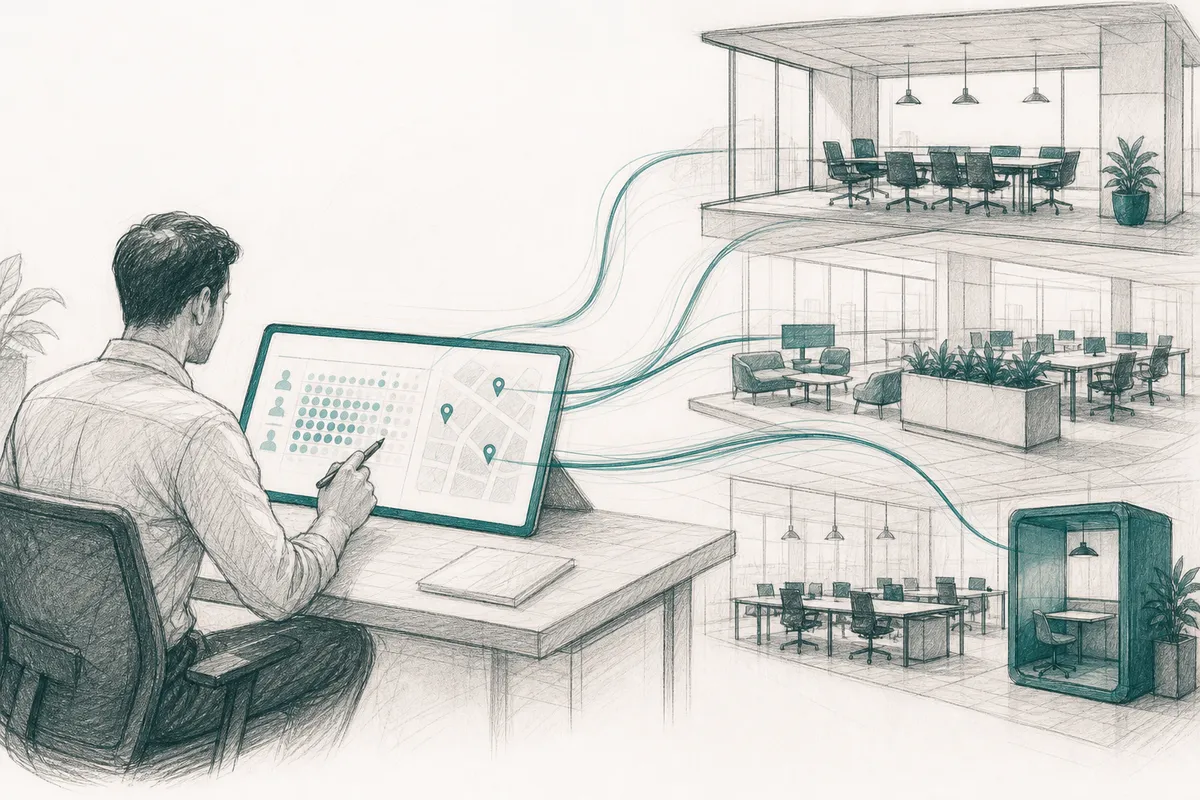
Workplace occupancy management is the systematic process of tracking, analyzing, and optimizing how physical office space is used, so organizations can align real estate supply with actual employee demand. Done well, it reduces wasted square footage, cuts real estate costs by 40% or more, and gives hybrid teams the right space at the right time. This guide walks you through every step, from setting up sensors to acting on data, in a practical sequence you can start implementing this quarter.
As of 2026, global office utilization rates hover between 30% and 50% on any given day, according to CBRE's 2026 Global Workplace & Occupancy Insights [1]. Yet most organizations still pay for 100% of their leased footprint. That gap is where workplace occupancy management earns its value.
Workplace occupancy management is the discipline of measuring how, when, and by whom physical spaces are used, then using that data to make smarter decisions about space allocation, lease commitments, and employee experience. It combines sensor technology, data analytics, and operational policy to close the gap between the space you pay for and the space your teams actually need.
According to Cisco Spaces [2], occupancy management involves tracking and analyzing how people use physical spaces, including office floors, meeting rooms, and communal areas, to improve efficiency and reduce unnecessary costs. It's not just about counting heads. It's about understanding patterns: which floors peak on Tuesdays, which meeting rooms sit empty every Friday, which neighborhoods fill up when a specific team comes in. This is particularly relevant for workplace occupancy management.
These two terms are often used interchangeably, but they're distinct disciplines. Space utilization (the percentage of available seats or rooms in active use at a given moment) is a metric. Occupancy management is the broader practice that uses utilization data alongside attendance forecasts, booking records, and business scenarios to make portfolio-level decisions.
Industry analysts at JLL [3] describe effective occupancy planning as a data-driven process that helps organizations right-size facilities and boost utilization across the portfolio. The key word is "right-size," not just "reduce." Sometimes occupancy data reveals you need more space in one location and less in another.
In a workplace context, occupancy refers to the proportion of available workstations, rooms, or zones that are actively in use during a defined period. This is different from the call-center definition of occupancy (the percentage of time agents spend on interactions), though both measure productive use of a resource. For corporate real estate leaders, workforce occupancy is a signal of whether your physical footprint matches your headcount and attendance patterns.
Pro Tip: Track occupancy at three levels simultaneously: building-level (are people coming in?), floor-level (which zones are used?), and seat-level (are specific desks consistently empty?). Each level reveals a different cost-saving opportunity.
Start by establishing a baseline: map every space you're paying for, identify existing data sources, and calculate your current utilization rate before touching a single sensor or software platform.
This step sounds obvious, but it's where most programs stall. Organizations frequently have badge access data, calendar booking records, and Wi-Fi connection logs sitting in separate systems that have never been combined. Elia's occupancy management guide [4] notes that fragmented data is the single most common barrier to accurate occupancy measurement. When considering workplace occupancy management, this point stands out.
In practice, a 4-week audit period spanning different months of the year gives you a more accurate picture. One mid-size professional services firm we're aware of discovered through this process that two of its five floors were operating below 25% utilization on average, a finding that directly informed a lease consolidation decision saving over $2M annually.
Not all data sources are equal. Here's a comparison of the most common methods:
| Data Source | Accuracy | Cost | Privacy Impact | Best For |
|---|---|---|---|---|
| Badge / Access Control | Medium | Low (existing) | Low | Building entry/exit counts |
| Desk Booking Software | Medium-High | Medium | Low | Planned attendance patterns |
| IoT Occupancy Sensors | High | Medium-High | Low-Medium | Real-time seat/room usage |
| Wi-Fi / Network Data | Medium | Low (existing) | Medium | Zone-level presence estimates |
| AI Attendance Forecasting | Very High (97%+) | Medium | Low | Predictive space planning |
Effective workplace occupancy management depends on tracking the right numbers, not every number available. Define a core metric set before deploying any technology, so your team knows exactly what success looks like.
Elia's workplace occupancy monitoring guide [5] identifies peak occupancy, average utilization, and booking-to-attendance ratio as the three metrics that most directly inform real estate decisions. Here's what each one tells you:
A common mistake is setting a blanket utilization target (say, 80%) across every location and space type. In practice, a collaboration-heavy floor and a quiet focus zone have fundamentally different demand patterns and should be benchmarked separately.
Research from Density's occupancy planning guide [6] suggests that most enterprise offices are optimally designed for a utilization rate of 60–75%, leaving enough buffer for peak days without carrying excessive idle capacity. Targets above 85% tend to generate employee complaints about desk availability, which erodes the return-to-office experience. For those exploring workplace occupancy management, this matters.
Pro Tip: Calculate your cost per occupied seat monthly, not annually. Monthly tracking catches seasonal dips (like August and December) that would otherwise distort your annual average and lead to over-optimistic consolidation decisions.
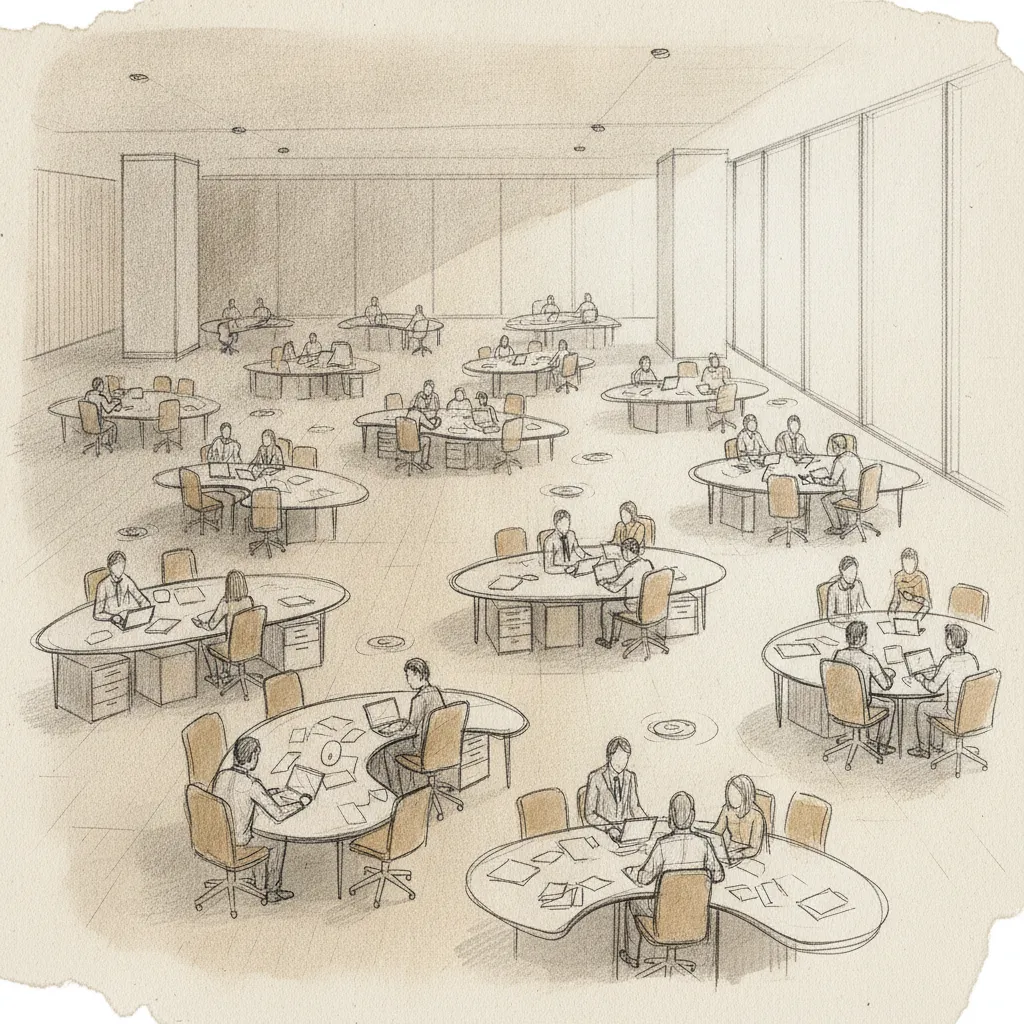
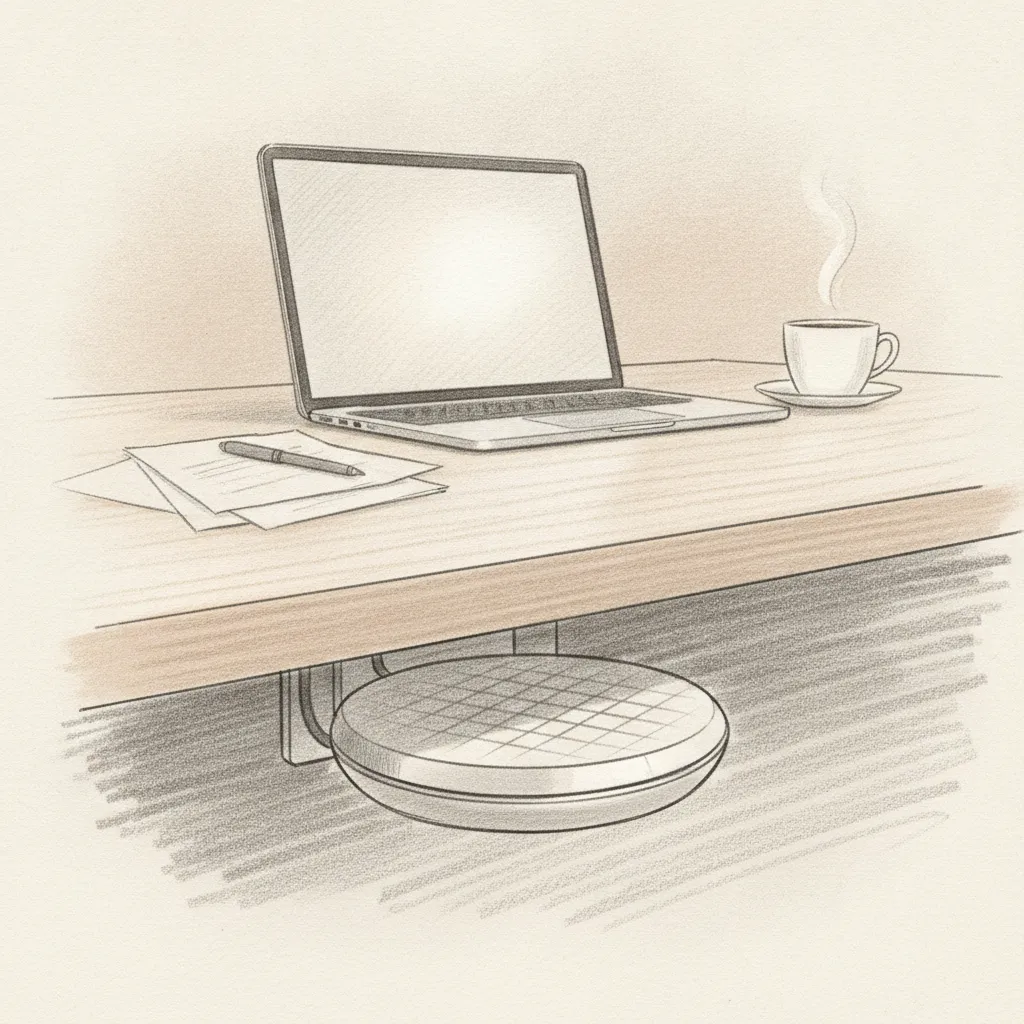
Deploy a combination of passive sensing (IoT sensors, Wi-Fi analytics) and active booking tools (desk reservation software) to capture both planned and actual attendance across your portfolio.
Real-time occupancy management, as described by Tango Analytics [7], is the process of determining when employees come in and where they sit based on live space usage data. The key word is "real-time." Historical badge data tells you what happened last month. Sensor data tells you what's happening right now, and that's what enables dynamic space allocation.
Sensors tell you what happened. AI forecasting tells you what will happen. That's the distinction that separates reactive occupancy monitoring from proactive workplace occupancy management.
At Upflex, we've found that organizations relying solely on historical sensor data consistently underestimate Thursday and Friday variability, leading to either over-staffed facilities or frustrated employees who can't find desks. Upflex's UnifyAI engine, which forecasts attendance with 97% accuracy, processes team scheduling signals, booking patterns, and calendar data to predict who's coming in before they arrive. That forecast accuracy enables facilities teams to activate or deactivate floors, adjust cleaning schedules, and pre-assign neighborhoods, all automatically.
The result isn't just operational efficiency. It's the data confidence to make a lease consolidation decision worth millions of dollars.
Once you have 4–8 weeks of combined sensor and booking data, run a structured analysis to identify which spaces are underperforming, which are oversubscribed, and where your real estate spend is generating the least value. This directly impacts workplace occupancy management outcomes.
According to Minew's occupancy management guide [8], the most actionable occupancy insights come from comparing utilization rates across three dimensions: time of day, day of week, and space type. Most organizations find that their worst-performing spaces cluster predictably: large conference rooms booked for two-person calls, entire floors that are nearly empty every Monday and Friday, and neighborhoods assigned to teams that switched to fully remote.
Space rationalization (the process of systematically reducing or reallocating underperforming space to cut costs and improve efficiency) is the strategic output of occupancy analysis. Use this four-quadrant framework to prioritize action:
| Utilization Rate | Cost per Sq Ft | Action | Priority |
|---|---|---|---|
| Below 40% | High | Consolidate or exit | Immediate |
| Below 40% | Low | Repurpose or sublease | Medium |
| 40–70% | High | Optimize layout, reduce assigned desks | Medium |
| Above 70% | Any | Protect, monitor for overflow risk | Maintain |
For locations where you can't reduce leased space immediately, consider supplementing with on-demand workspace access. Rather than signing new long-term leases to cover peak days, organizations can give employees access to a global network of flex workspaces, absorbing overflow demand without adding fixed real estate cost. This is a core part of how Upflex helps teams manage the gap between their owned office capacity and actual attendance peaks.
Some organizations exploring adjacent operational strategies, such as studiodentistico-oberti.it, have found that applying similar data-driven space allocation principles to their own facilities yields meaningful efficiency gains, reinforcing that occupancy optimization is a broadly applicable discipline beyond corporate offices.
Data without action is just reporting. Translate your occupancy analysis into concrete policy changes, space reconfigurations, and employee-facing workflows that shift behavior and reduce waste. This is particularly relevant for workplace occupancy management.
The LinkedIn analysis on optimizing office space through occupancy management [9] notes that technology alone rarely drives sustainable utilization improvements. The organizations that achieve lasting results combine sensor data with clear attendance policies, team neighborhood assignments, and booking workflows that make the right behavior the easy behavior.
Pro Tip: When rolling out new occupancy policies, frame them as employee experience improvements, not cost-cutting measures. "You'll always find a desk that matches how you're working today" lands better than "we're reducing our real estate footprint." Both are true; one drives adoption.
Use 6–12 months of validated occupancy data to make defensible, data-backed real estate portfolio decisions, including lease renewals, consolidations, and footprint reductions.
This is where workplace occupancy management delivers its highest financial return. The CBRE Global Workplace & Occupancy Insights report [10] found that organizations using data-driven occupancy planning consistently achieve greater real estate cost reductions than those relying on headcount ratios or manager estimates alone. The difference is the quality of evidence brought to the negotiating table.
Corporate real estate decisions rarely happen in isolation. You need finance, HR, and legal aligned before any lease action. Your occupancy data becomes the shared evidence base that makes that alignment possible.
Our team at Upflex recommends presenting this business case to CFOs and CHROs simultaneously, not sequentially. When finance sees the cost savings and HR sees the collaboration data in the same meeting, the conversation moves from "should we do this?" to "how quickly can we move?"

Even well-resourced programs make avoidable errors. Here are the pitfalls that most consistently derail occupancy management initiatives, drawn from real-world implementation experience. When considering workplace occupancy management, this point stands out.
Workplace occupancy management is the systematic practice of measuring, analyzing, and optimizing how physical spaces are used by employees, so organizations can align their real estate footprint with actual demand. It combines sensor technology, booking data, and AI-powered forecasting to track utilization rates across desks, meeting rooms, and floors, then translates those insights into actionable decisions about space allocation, lease consolidation, and portfolio right-sizing. Unlike simple space counting, effective occupancy management connects utilization data to financial outcomes, giving corporate real estate leaders the evidence they need to reduce costs without harming the employee experience.
In a workplace context, occupancy refers to the proportion of available workstations, rooms, or zones that are actively in use during a defined time period. For corporate real estate leaders, workforce occupancy is a direct signal of whether your physical footprint matches your team's actual attendance patterns. It's distinct from the call-center definition of occupancy (time agents spend on interactions) and is measured through a combination of sensor data, badge records, and desk booking confirmations. A building with 500 desks and an average daily occupancy of 200 people has a 40% occupancy rate, meaning 60% of the space and its associated cost is generating no productive use on an average day.
As of 2026, the appropriate amount of office space per employee depends heavily on your hybrid work model, industry, and space mix. Traditional layouts average 150–250 square feet per person. Activity-based working environments designed for hybrid teams typically target 80–120 square feet per assigned headcount, since not all employees are in the office simultaneously. The more useful metric for hybrid organizations is space per peak daily occupant, not per total headcount. If your 500-person company peaks at 200 people on Thursdays, you need space for 200, not 500, and your per-occupant target should reflect the mix of focus, collaboration, and social spaces your teams actually need.
The core technology stack for occupancy management typically includes IoT occupancy sensors (for real-time seat and room detection), desk booking software (to capture planned attendance), badge access systems (for building-level entry data), and a central analytics platform that aggregates all three. Increasingly, AI-powered attendance forecasting tools are being added to this stack to shift from reactive measurement to predictive planning. Platforms like Upflex combine desk booking, AI forecasting (via the UnifyAI engine), and access to a global on-demand workspace network in a single interface, eliminating the need to stitch together multiple point solutions.
Office space utilization is measured by dividing the number of occupied seats (or rooms) by the total number of available seats (or rooms) during a defined period, expressed as a percentage. For accuracy, use sensor data rather than badge counts alone, since badge data doesn't capture when employees leave. Measure at multiple intervals (hourly, daily, weekly) to capture both peak and average utilization. Track by space type separately: desk utilization, meeting room utilization, and collaborative zone utilization often tell very different stories and require different optimization responses.
Research suggests that 60–75% average utilization is the optimal range for most hybrid offices, providing enough capacity buffer for peak days while avoiding the cost of carrying excessive idle space. Rates consistently below 40% signal a strong case for consolidation or footprint reduction. Rates above 85% often generate employee complaints about desk availability, which undermines return-to-office efforts. Results vary by industry, location, and company culture, and the right target for your organization should be set based on your own attendance data, not industry averages alone. For those exploring workplace occupancy management, this matters.
Workplace occupancy management is no longer a nice-to-have for corporate real estate teams. It's the operational foundation for every major portfolio decision your organization will make in 2026 and beyond. Start with an honest audit of your current space and data sources. Define a focused set of metrics. Deploy the right sensing and booking technology. Analyze patterns rigorously. Then translate that analysis into policy changes and, ultimately, into lease decisions that reflect how your teams actually work.
The organizations achieving 40%+ reductions in real estate spend aren't guessing. They're measuring. They're forecasting. And they're acting on evidence, not assumptions about what hybrid work looks like in theory.
Upflex brings together AI-powered attendance forecasting, desk booking, and access to the world's largest on-demand workspace network in a single platform, giving corporate real estate, finance, and HR leaders the tools to manage occupancy proactively rather than reactively. If your current occupancy data isn't driving decisions you're confident enough to take to your CFO, that's the gap worth closing first.
Explore more from our content library: