Share This Article
No items found.

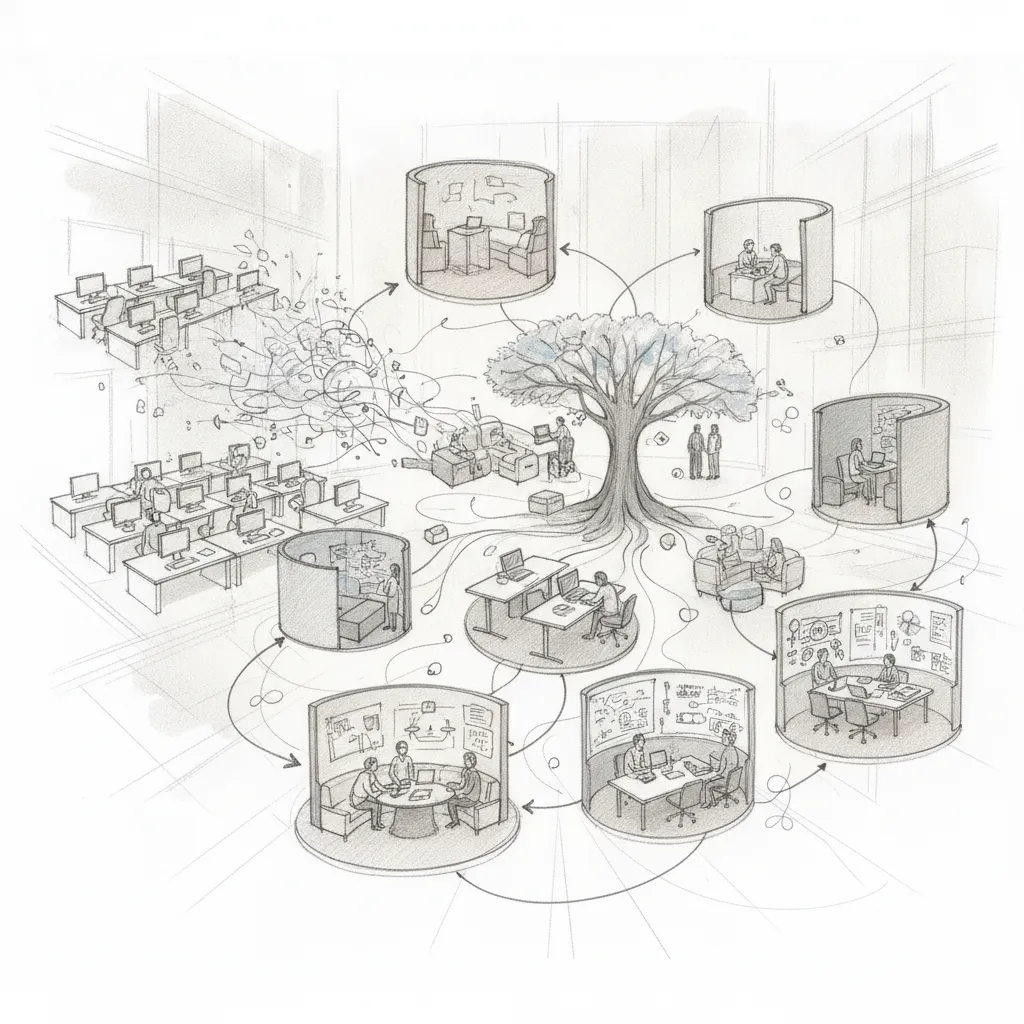
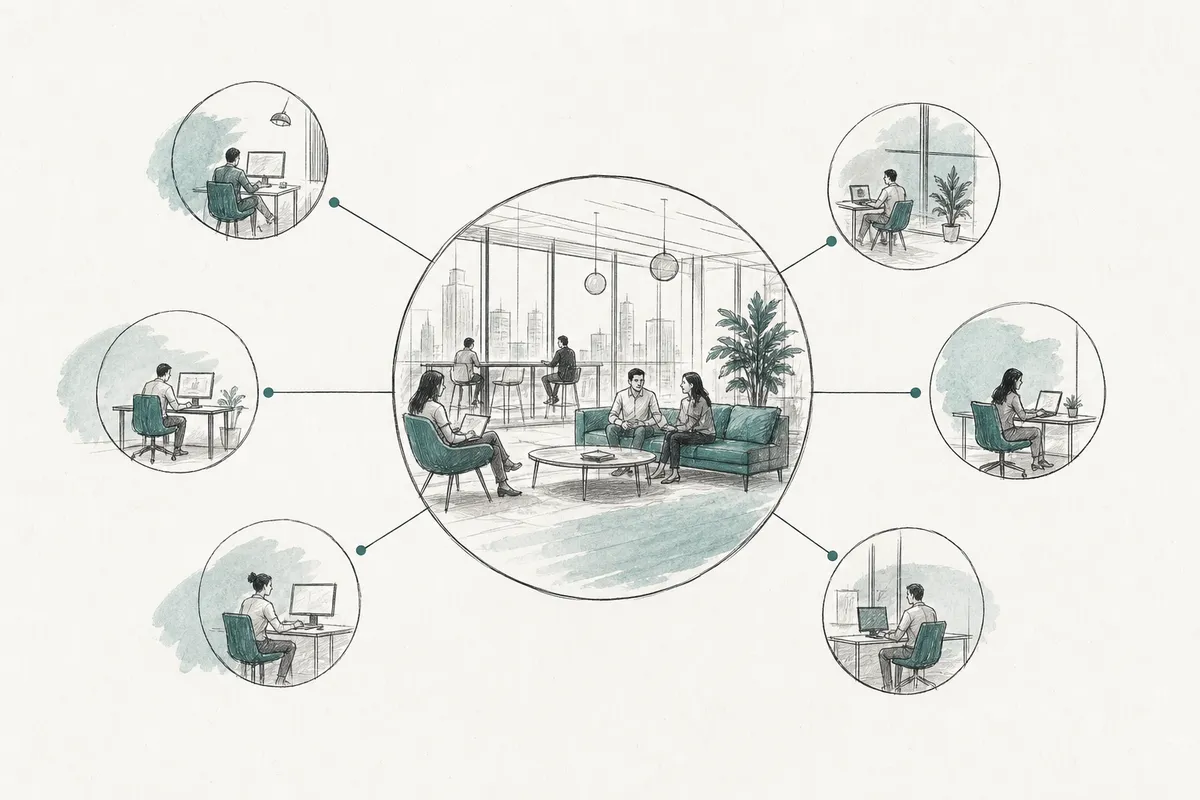
Understanding activity based office transition is essential. An activity-based office transition moves your team from assigned desks to a flexible environment where employees choose their workspace based on the task at hand, focus rooms for deep work, collaboration zones for team sessions, and quiet areas for calls. Done right, companies report 30–40% reductions in real estate costs and measurable gains in space utilization. Success depends on phased planning, change management, and the right booking and analytics technology before day one.
Before any desks move or floor plans change, you need four things in place: utilization data, a desk ratio target, stakeholder alignment, and a technology audit. This is particularly relevant for activity based office transition.
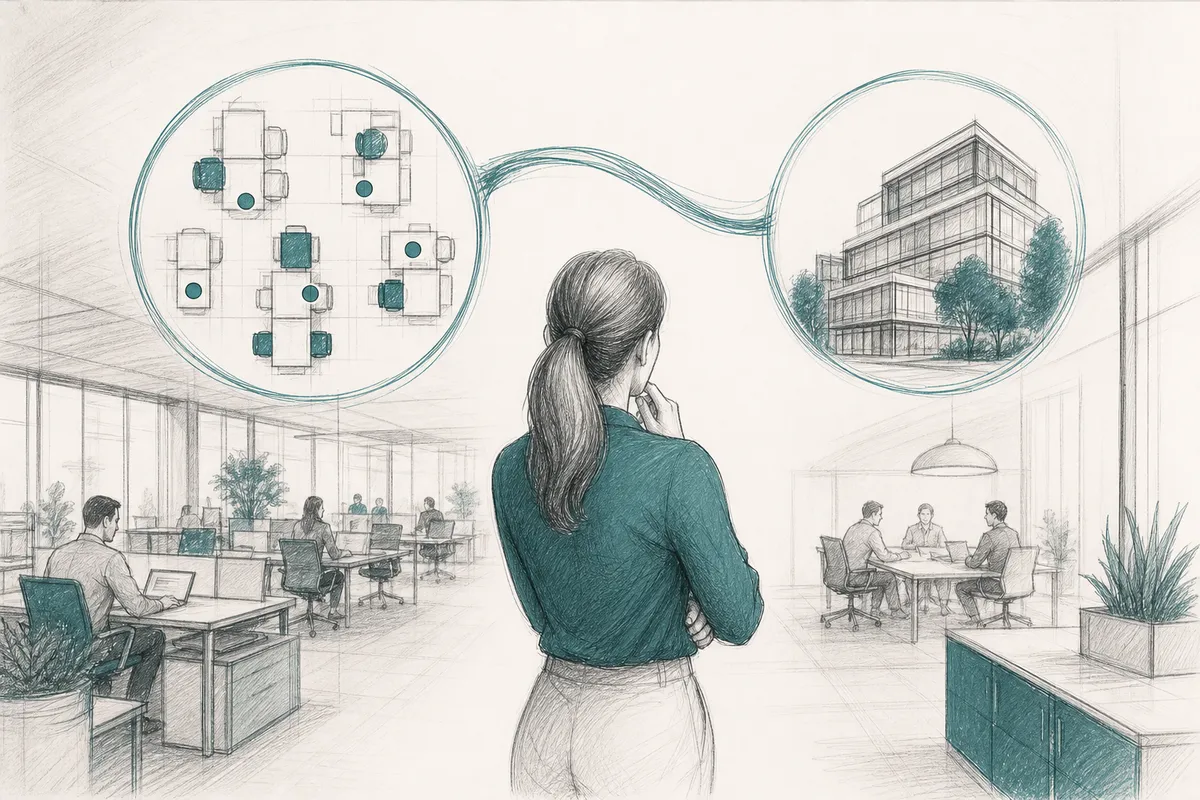
Start with a space utilization audit covering at least 4–6 weeks. Use badge access data or occupancy sensors to measure actual attendance patterns across your office. Most corporate offices run at 40–60% actual utilization, that gap between what you're paying for and what employees actually use is the business case for activity-based working [2].
Set a baseline desk-to-employee ratio before you redesign anything. The industry benchmark for activity-based offices is 0.6–0.8 desks per person, compared to the traditional 1:1 model. Knowing your current ratio tells you how far you need to move, and how much space you can realistically consolidate.
Align three internal stakeholders before launch: HR owns change management and employee communication; IT owns the technology stack and integrations; Facilities or Corporate Real Estate owns space design and cost targets. Missing any one of these creates gaps that stall the transition mid-execution.
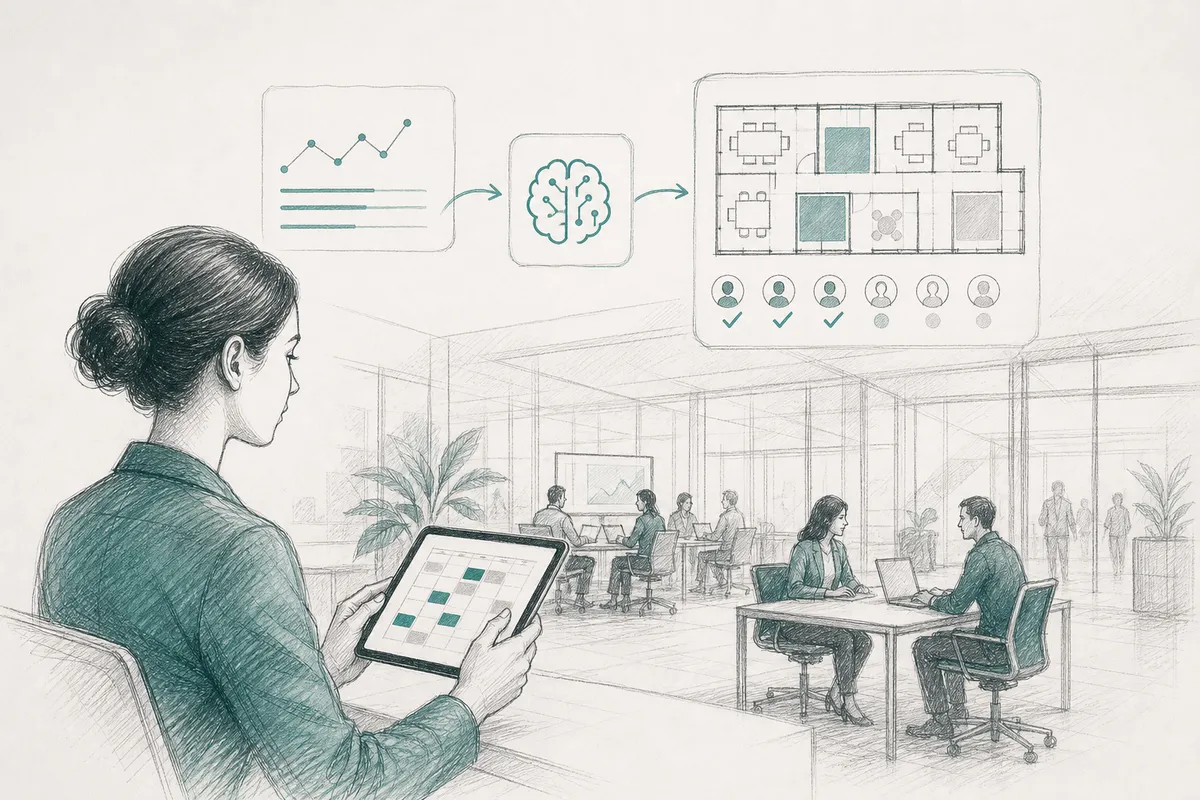
Audit your existing technology. Confirm whether you have a desk booking system, a wayfinding app, and occupancy analytics in place. Technology gaps are the leading cause of failed activity based office transitions, employees revert to informal desk squatting when they can't find or reserve space reliably. Platforms like Upflex combine desk booking, AI-powered attendance forecasting, and utilization analytics in a single interface, which closes the most common gaps before day one.
Define a specific cost reduction target upfront, for example, a 30% reduction in leased square footage within 18 months. Companies that set a concrete real estate savings goal are significantly more likely to achieve measurable ROI than those that treat cost reduction as a secondary outcome.
According to Tango Analytics' research on activity-based working, organizations that conduct a thorough pre-transition audit are far more likely to hit their space efficiency targets within the first year. Skipping this diagnostic step is one of the most common and costly mistakes companies make when beginning a workplace transformation.
"The single biggest predictor of a successful activity-based office transition is the quality of the data you collect before you move a single piece of furniture. Organizations that invest in a rigorous utilization audit consistently outperform those that rely on assumptions." — Dr. Peggie Rothe, Chief Insights Officer at Leesman
A phased 18-month roadmap, pilot, expand, optimize, gives your activity based office transition a clear structure with decision gates that prevent costly mistakes at scale.
Break the transition into three distinct phases, each with defined milestones and a clear trigger for moving forward.
Phase 1 (Months 1–3): Pilot. Choose one department or floor that already works flexibly, remote-capable teams with variable in-office patterns are ideal candidates. Track three metrics weekly: desk utilization rate, employee satisfaction scores (via a short pulse survey), and IT ticket volume related to workspace issues. Set a go/no-go gate at the end of Month 3. If desk utilization in the pilot area does not reach 70% or satisfaction drops more than 15 points from baseline, pause and diagnose before expanding.
Phase 2 (Months 4–9): Expand. Apply pilot learnings to 50–75% of the office. Reconfigure space into four defined activity zones: focus (quiet individual work), collaboration (group tables and whiteboards), social (informal seating and café-style areas), and phone/video (enclosed booths or pods). This is the stage where occupancy data starts shaping real decisions, not assumptions.
Phase 3 (Months 10–18): Optimize and consolidate. Roll out fully and use 12 months of occupancy data to inform lease renegotiation or portfolio consolidation decisions. Organizations using Upflex at this stage can draw on AI-powered utilization reporting to identify underperforming floors and right-size their footprint, with documented outcomes of 40%+ reduction in real estate spend. When considering activity based office transition, this point stands out.
Run a 90-day post-launch review at each phase transition. Track three quantified targets: cost per seat, average booking lead time, and the spread between peak and off-peak utilization. A healthy spread, under 30 percentage points between your busiest and quietest days, signals that activity zones are absorbing demand without bottlenecks.
During the expansion phase, it is equally important to establish clear zone etiquette norms and communicate them through multiple channels. Post visual reminders at zone entrances, include etiquette guidelines in onboarding materials for new hires, and reinforce expectations in team meetings. Behavioral norms erode quickly without consistent reinforcement, especially in the first 90 days when employees are still forming new habits.
"Activity-based working is not simply a real estate strategy — it is a behavioral change program that happens to involve furniture. The organizations that treat it as the latter consistently achieve better adoption and longer-lasting results." — Kay Sargent, Senior Principal and Director of WorkPlace at HOK
Upfront costs are real and should be budgeted explicitly before the pilot begins. Typical line items include furniture reconfiguration ($50–$150 per square foot depending on scope), acoustic treatment for focus zones, AV upgrades for collaboration areas, and a desk booking platform. Change management, training, communications, and manager coaching, adds 10–15% on top of physical costs and is the item most often cut and most often regretted.
The ROI case rests on seat ratio reduction. Activity-based working [2] typically targets a desk-to-employee ratio of 0.6–0.8 rather than 1:1, which directly reduces the square footage you need to carry. Combined with a 12-month occupancy dataset from Phase 3, that ratio gives your real estate team the evidence to renegotiate leases or exit underused locations, the decisions that drive the largest cost reductions.
Beyond direct real estate savings, organizations frequently report secondary financial benefits including reduced energy consumption from smaller, better-utilized footprints and lower facilities maintenance costs. Research published in PMC on workplace environment and employee wellbeing also suggests that well-designed flexible workplaces can reduce absenteeism and improve employee retention, both of which carry measurable financial value that strengthens the overall business case for transition.
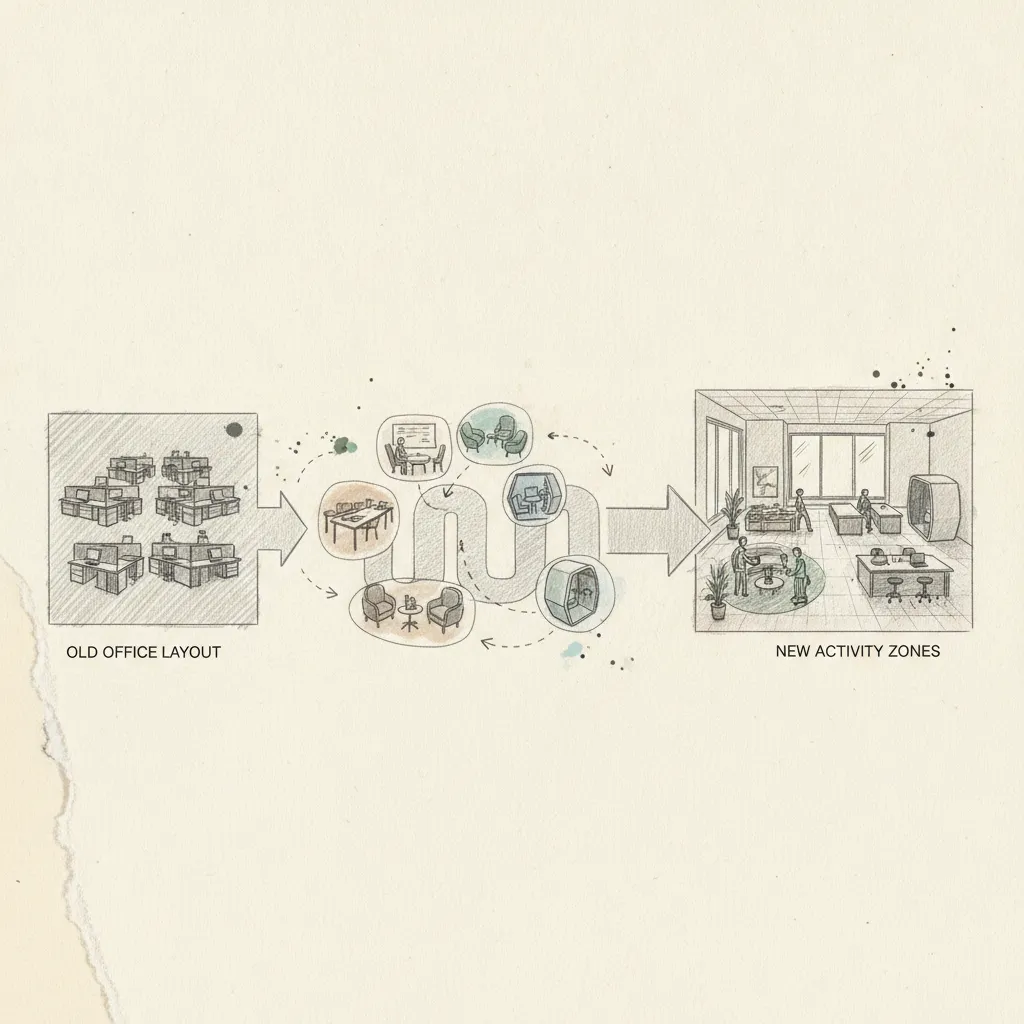
Five technology layers, booking software, occupancy sensors, wayfinding displays, analytics dashboards, and HRIS integration, determine whether an activity-based office transition succeeds or stalls. For more information, see Service As Software Back Office.
Desk and room booking software is the foundation. Employees must be able to reserve a space in under 60 seconds from a mobile device, anything slower and adoption collapses within weeks. Prioritize platforms with native Slack or Microsoft Teams integration and real-time availability maps; both remove the friction of switching apps mid-workflow.
Occupancy sensors fill the data gap that badge swipes leave open. Passive infrared and ultrasonic sensors capture actual time-in-seat, not just building entry events. A desk that badge data marks as "occupied all day" may sit empty for four of those hours, sensors surface that truth, giving your space planning the ground-truth utilization data it needs.
Wayfinding displays at zone entrances solve the "where do I sit?" problem that drives employee frustration in the first 90 days of an activity-based office transition [2]. Digital signage showing live zone availability cuts arrival confusion before it becomes a culture complaint. For those exploring activity based office transition, this matters.
Analytics dashboards must go deeper than total headcount. Surface peak utilization by zone type, focus rooms, collaboration areas, phone booths, so you can identify mismatches early. Too many quiet rooms and too few team tables is a fixable problem, but only if your data shows it at the zone level.
Platforms like Upflex connect this layer by integrating booking data with your HRIS, correlating attendance patterns with actual team schedules. That integration enables coordinated team days, the single most effective answer to the top employee complaint about activity-based working: losing spontaneous collaboration with colleagues [2].
"The technology layer is where most activity-based office transitions either accelerate or collapse. When employees can find a space in seconds and managers can see utilization data in real time, the model sustains itself. Without that infrastructure, informal workarounds undermine the entire design intent within months." — Janet Pogue McLaurin, Global Director of Workplace Research at Gensler
Most activity based office transitions fail at the same five points, all predictable, all preventable with the right sequencing and policies.
Cutting desks before proving utilization. Removing 40% of desks on day one without pilot data creates immediate overcrowding on high-attendance days. Run a 60-to-90-day utilization pilot first, then right-size the desk count based on actual peak occupancy figures, not assumptions.
Skipping personal storage solutions. Employees who lose assigned desks need secure lockers. Without them, "hot-desking anxiety" spikes and adoption stalls within 60 days [2]. Budget for personal storage before the first desk is removed, not as an afterthought.
Training managers last. Managers who don't model the behavior, choosing different zones, booking ahead, respecting etiquette, undermine the cultural shift before it takes hold. Train them first. Their visible compliance signals to the team that the model is real, not optional.
Positioning the transition as a cost-cutting exercise publicly. Employees who believe the move is purely about reducing headcount or real estate spend resist harder and longer [2]. Lead all communications with productivity gains and personal autonomy, even when cost reduction is the internal driver.
Ignoring "office peacocking" dynamics. Without clear zone etiquette policies and booking enforcement, high-status employees claim premium zones informally. Informal hierarchies re-emerge and negate the flexibility model entirely. Enforce booking rules from day one, no exceptions for seniority.
A frequently overlooked mistake is failing to account for neurodiversity and accessibility needs during zone design. Employees with sensory sensitivities, attention-related conditions, or mobility requirements may struggle in an open activity-based environment without dedicated accommodations. Build at least one fully enclosed, bookable quiet room per floor, ensure all zones meet ADA or equivalent accessibility standards, and create a confidential process for employees to request workspace accommodations without stigma. Inclusive design is not a compliance checkbox — it is a prerequisite for equitable adoption across your workforce.
Address hesitancy before launch, not after complaints surface. Involve employees in zone design decisions, publish clear etiquette guidelines, and give managers a structured 30-day adoption script. Attendance forecasting tools, Upflex's UnifyAI engine predicts office attendance with 97% accuracy, help employees see exactly when their team will be in, which reduces the uncertainty that drives resistance most. This directly impacts activity based office transition outcomes.
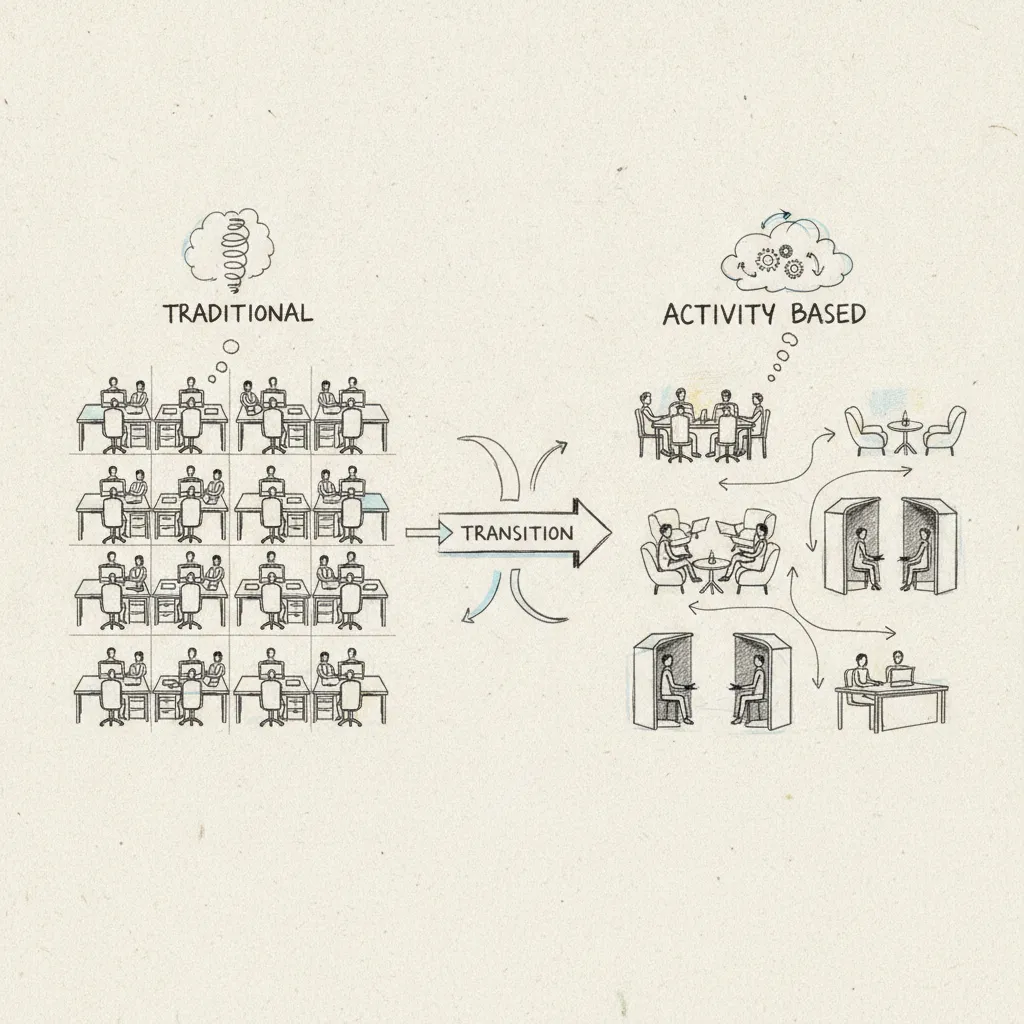
A full activity-based office transition typically takes 12 to 18 months from planning through post-launch optimization. The first three months cover space audits and stakeholder alignment; months four through nine focus on physical redesign and technology deployment; the final phase addresses change management and behavioral adoption. Organizations that skip the audit phase or rush change management often extend the timeline by six months or more as they backtrack to address employee resistance.
Most activity-based offices target a desk-to-employee ratio of 0.6:1 to 0.8:1, roughly six to eight desks per ten employees [2]. The right number depends on your actual attendance patterns. Organizations with reliable attendance forecasting can push closer to 0.6:1 without creating a shortage; those operating without utilization data should start at 0.8:1 and adjust after 90 days of measurement.
Companies report real estate cost reductions of 30–40%+ after a successful activity-based office transition [2]. Upflex customers have documented 40%+ reductions in real estate spend alongside 88% co-attendance achievement, meaning teams actually meet in person at the rate they planned. Productivity and satisfaction gains are harder to quantify uniformly, but space efficiency improvements are consistently the fastest and most defensible return to present to a CFO.
Activity-based working is not suitable for every role, it works best for knowledge workers whose tasks vary between focused work, collaboration, and calls [2]. Roles requiring fixed equipment, regulated workstations, or continuous physical presence (manufacturing, clinical, lab) are poor fits. Professional services, technology, finance, and media companies have adopted ABW most widely. Any organization should audit role types before committing to a full transition rather than applying the model uniformly across all functions.
Track a combination of quantitative and qualitative metrics throughout the transition. Key quantitative indicators include desk utilization rate by zone, cost per seat, booking lead time, and peak-to-off-peak utilization spread. Qualitative signals include employee satisfaction scores from pulse surveys and manager-reported adoption behaviors. According to peer-reviewed workplace research on flexible office environments, organizations that track both dimensions are significantly more likely to sustain adoption beyond the first year and achieve their stated real estate efficiency goals.
An activity-based office transition succeeds or fails on three decisions: whether your space audit reflects actual attendance data rather than assumptions, whether your zone mix matches the real distribution of work types your teams perform, and whether change management runs parallel to construction rather than after it. Get those three right and the cost reductions, typically 30–40%+ on real estate spend, follow from the design rather than requiring a second intervention.
Your most concrete next step: pull 90 days of badge or booking data before you finalize any floor plan. If that data doesn't exist or isn't reliable, request a demo of Upflex's UnifyAI attendance forecasting to establish a baseline, then design the office around what employees actually do, not what you assume they will.
Explore more from our content library: