Share This Article
No items found.

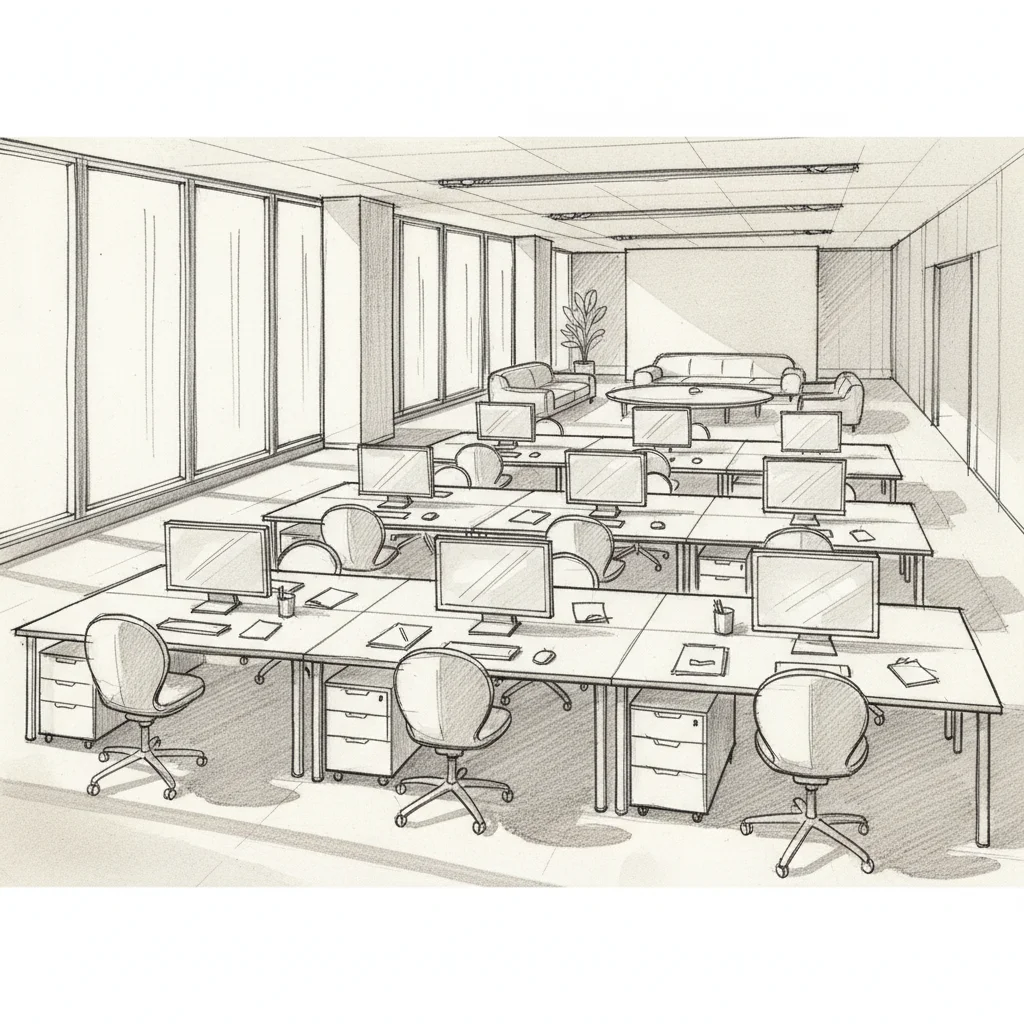
Half your office floor sits empty on Tuesdays. Your lease renewal is six months away. And the CFO wants a data-driven case for every square foot you're keeping. Corporate real estate software is the category of enterprise technology designed to solve exactly this problem. It centralizes lease management, space utilization, attendance data, and portfolio analytics into a single platform, giving real estate and finance leaders the visibility to make confident, cost-justified decisions. This guide covers how the software works, what to look for, and how leading platforms are reshaping hybrid portfolio strategy in 2026.
This is a category of enterprise SaaS platform that helps organizations manage their office portfolios, lease obligations, space utilization, and workplace costs from a centralized system. It replaces spreadsheets, legacy IWMS tools, and disconnected badge data with a unified data layer that supports both day-to-day operations and long-term portfolio decisions.
Real estate is typically a company's second or third largest operating expense, after payroll. Yet most enterprises still manage it reactively. A lease comes up for renewal, someone pulls badge swipe data from the last quarter, and a decision gets made on incomplete information.
These platforms change that model. Instead of backward-looking reports, they deliver forward-looking intelligence. Platforms in this category typically combine several functional layers:
The hybrid work model has fundamentally broken the assumptions behind traditional office planning. According to Gartner's 2026 property management software review, organizations are increasingly prioritizing platforms that integrate utilization forecasting with lease decision support [1]. The old model of fixed desks and five-day occupancy no longer reflects reality for most enterprises.
Industry analysts suggest that companies operating without dedicated portfolio management tools are paying for 20-40% more space than their teams actually use on any given day. That's not a facilities problem. It's a data problem. And the right software is the fix.
Pro Tip: Before evaluating any corporate real estate software, audit your current data sources: badge swipe records, desk booking logs, and HVAC sensor data. The quality of your inputs directly determines the quality of your portfolio decisions.
These platforms work by aggregating workplace data from multiple sources, processing it through analytics or AI engines, and surfacing actionable recommendations for space, scheduling, and portfolio decisions.
Most platforms follow a similar data architecture. Understanding it helps you evaluate vendors more critically.
The most significant shift in workplace portfolio management over the past two years has been the move from descriptive analytics (what happened) to predictive and prescriptive analytics (what will happen and what to do about it).
Platforms like Upflex deploy proprietary AI engines, specifically UnifyAI, which forecasts office attendance with 97% accuracy. That level of precision matters because it lets real estate leaders make portfolio decisions based on what will actually happen, not on last quarter's badge swipes. The result: customers achieve 40%+ reductions in real estate spend and 88% co-attendance rates for hybrid teams [2].
Legacy platforms like Yardi Voyager and MRI Software have strong lease administration and accounting modules but were built before hybrid work reshaped occupancy patterns [3][4]. They're excellent for managing what you have. The newer generation of platforms is built to help you decide what you should have.

The right platform delivers measurable financial returns, operational efficiency, and the data confidence to make portfolio decisions that hold up to CFO scrutiny.
The financial case is straightforward. Real estate is expensive. Underutilized real estate is expensive and wasteful. Software that quantifies exactly how underutilized your portfolio is gives you the business case to act.
| Benefit Category | What It Delivers | Typical Outcome |
|---|---|---|
| Real estate cost reduction | Identifies underused floors, buildings, or markets | 30-40%+ spend reduction |
| Attendance forecasting | Predicts which days teams will be in-office | Up to 97% forecast accuracy |
| Co-attendance coordination | Aligns team schedules for meaningful in-person time | 88% co-attendance achievement |
| Lease optimization | Flags renewal decisions with utilization data | Avoids unnecessary renewals |
| Employee experience | Ensures desks and spaces are available when needed | Reduced friction, higher office adoption |
Beyond the numbers, there's a strategic benefit that's harder to quantify but just as important: credibility. When a Head of Corporate Real Estate walks into a lease negotiation or a board presentation with utilization data, attendance forecasts, and cost-per-seat analysis, the conversation changes. Decisions that used to be made on gut feel get made on evidence.
One underappreciated benefit of modern workplace management platforms is their role in hybrid work coordination. Tools that combine space management with attendance forecasting can align team schedules automatically, so the right people are in the office on the same days without requiring managers to manually coordinate calendars.
Research from Accruent's corporate real estate management solutions indicates that centralized lease and space data reduces decision-making time for portfolio changes by a significant margin [5]. When your data is unified, your response time to market changes improves proportionally.
For organizations managing employees across multiple cities or countries, access to an on-demand workspace network adds another layer of value. Instead of signing new leases in secondary markets, employees can book third-party workspaces on demand. Upflex provides access to the world's largest on-demand workspace network, giving distributed teams a professional place to work without adding to the lease portfolio.
Pro Tip: Don't evaluate corporate real estate software purely on lease administration features. In 2026, the platforms that deliver the most value combine portfolio analytics with hybrid scheduling tools. If a vendor can't show you how their platform handles attendance forecasting, you're looking at yesterday's solution.
Enterprise real estate platforms fail most often not because of bad technology, but because of bad implementation decisions and misaligned expectations going into the purchase.
A common mistake is purchasing a platform for its lease administration capabilities and then discovering it can't integrate with your existing HR or facilities tools. Before signing any contract, map out your full data ecosystem:
One pitfall to watch for: organizations that deploy these tools without a data governance plan. The platform is only as good as the data going into it. If badge data is incomplete, desk bookings are inconsistent, or sensor coverage is patchy, the utilization reports will be misleading, and the portfolio decisions that follow will be wrong.
The enterprise real estate technology market includes platforms built for very different use cases. DoorLoop's 2026 commercial property management software guide notes that many buyers conflate property management software (designed for landlords managing tenant relationships) with this approach (designed for occupiers managing their own portfolio) [6]. These are different products solving different problems.
Similarly, Gitnux's 2026 platform comparison highlights that legacy tools like Archibus, Planon, and FM:Systems were built for static office environments and require significant customization to handle hybrid work patterns [7]. If your workforce is hybrid, prioritize platforms built with that assumption baked in, not bolted on.
Compliance is another area where mistakes are costly. Organizations managing leases across multiple jurisdictions need to ensure their software supports lease accounting standards like ASC 842 (US GAAP) and IFRS 16 (international). For businesses operating in regions with specific document and process requirements, understanding local compliance frameworks matters. For example, businesses in the UAE may also need to account for document authentication requirements under UAE legal standards when managing cross-border lease documentation.
Pro Tip: Ask every vendor for a reference customer with a similar hybrid work model and portfolio complexity. Product demos show you what the software can do. Reference calls tell you what it actually does in practice, when the data is messy and the org chart is complicated.
Selecting the right platform comes down to matching capabilities to your specific portfolio complexity, hybrid work model, and internal data maturity.
Use this structured approach when evaluating platforms. It's based on what we've seen work in practice when organizations are making high-stakes portfolio decisions under time pressure.
The the practice market in 2026 includes a range of platforms with different strengths. Here's a high-level comparison of the major categories:
| Platform Type | Best For | Key Limitation | Examples |
|---|---|---|---|
| Legacy IWMS | Large static portfolios, FM workflows | Poor hybrid work support | Archibus, Planon, FM:Systems |
| Lease Administration | Lease accounting, compliance, critical dates | Limited space/scheduling tools | Yardi, MRI Software |
| Hybrid Work Platforms | Attendance forecasting, desk booking, co-attendance | Varies by vendor depth | Upflex, Robin, Envoy |
| Portfolio Analytics | Multi-location utilization, consolidation decisions | Often requires data integration work | Accruent, VTS |
| Workplace Optimization (AI-native) | End-to-end: forecasting + space + flex network | Newer category; fewer legacy integrations | Upflex (UnifyAI) |
At Upflex, we've found that the organizations achieving the largest real estate savings aren't choosing between internal space management and external flex access. They're doing both through a single platform. That dual approach, managing owned offices while providing on-demand workspace access for distributed employees, is what makes real portfolio consolidation possible without sacrificing employee experience.
Research from CREtelligent's 2026 commercial real estate software guide confirms that AI-native platforms are increasingly outperforming traditional IWMS tools on utilization accuracy and decision speed [8]. The gap is widening as AI capabilities mature.

this practice is used by enterprise organizations to manage their office portfolios, track lease obligations, measure space utilization, and coordinate hybrid work schedules. It centralizes data from multiple sources to help real estate, finance, and HR leaders make cost-justified decisions about their physical workspace footprint.
Property management software is typically designed for landlords managing tenant relationships, rent collection, and maintenance workflows. this method is designed for occupiers, meaning companies that lease or own space for their own employees. The focus is on internal utilization, portfolio optimization, and workplace cost reduction rather than tenant management.
Prioritize attendance forecasting accuracy, desk booking integration, lease administration and ASC 842/IFRS 16 compliance, portfolio analytics across multiple locations, and integration with your existing HR and calendar systems. In 2026, AI-powered platforms that forecast future utilization rather than just reporting past occupancy deliver significantly more decision-making value.
Free options exist for basic property tracking and lease management, but enterprise-grade platforms with AI forecasting, multi-location portfolio analytics, and hybrid work coordination are almost exclusively subscription-based SaaS. Free tools typically lack the data integration depth, compliance support, and forecasting capabilities that enterprise portfolios require.
AI improves these platforms by shifting them from descriptive reporting to predictive intelligence. Instead of showing you last month's occupancy, AI engines forecast which days teams will be in office, identify underperforming spaces before lease renewal decisions, and automate scheduling coordination. Platforms like Upflex achieve 97% attendance forecast accuracy using proprietary AI, enabling real estate leaders to right-size portfolios with confidence.
An IWMS (Integrated Workplace Management System) is a legacy category of enterprise software that manages facilities, space, leases, and maintenance from a single platform. this strategy is a broader, more modern term that includes IWMS functionality but also encompasses AI-powered attendance forecasting, hybrid work scheduling, and on-demand workspace network access. Most legacy IWMS platforms were built before hybrid work became the norm and require significant customization to handle modern occupancy patterns.
Implementation timelines vary significantly based on portfolio complexity, data readiness, and integration requirements. A single-location pilot can typically be live within 4-8 weeks. Enterprise-wide rollouts across multiple countries with legacy system integrations can take 6-18 months. Running a structured 90-day pilot on one location before committing to full deployment is a best practice that reduces risk and surfaces data quality issues early.
Yes, and this is one of the most valuable use cases in 2026. Modern platforms combine space management with AI-powered attendance forecasting to align team schedules automatically. This means employees come in on the same days as their colleagues without requiring managers to manually coordinate calendars. Upflex, for example, delivers 88% co-attendance achievement for hybrid teams through automated workplace orchestration.
The stakes around office portfolio decisions have never been higher. Lease renewals, headcount changes, and hybrid work patterns are all converging at once, and the organizations that manage them with data will outperform those that manage them with instinct.
this approach is no longer a nice-to-have for enterprise real estate teams. It's the infrastructure that makes confident, defensible portfolio decisions possible. Whether you're trying to cut costs, coordinate hybrid attendance, or right-size a lease portfolio that was designed for a five-day work week, the right platform gives you both the intelligence and the tools to act.
Upflex combines AI-powered office orchestration through UnifyAI with access to the world's largest on-demand workspace network, giving corporate real estate leaders a single platform to manage owned offices, forecast attendance with 97% accuracy, and provide employees with professional workspaces wherever they are. The result is a 40%+ reduction in real estate spend without sacrificing the workplace experience your teams expect.
If your current tools can't tell you who's coming in tomorrow, they can't help you decide what space you need next year. That's the gap Upflex is built to close.
Explore more from our content library: