Share This Article
No items found.


The right vendor questions separate real estate analytics platforms that actually cut occupancy costs from dashboards that just display data. Before signing, ask vendors how they measure utilization, what data sources they integrate, how predictive forecasting works, and how pricing scales with your portfolio. The strongest platforms combine occupancy sensors, lease data, and workplace tools into one system that tells you which offices to shrink, keep, or close, and back forecasts with a track record of accuracy, not just raw data feeds.
Ask how the platform measures occupancy at the desk level, not just how many sensors or badge readers it can connect to.
Start by asking what data sources feed the utilization numbers: motion sensors, Wi-Fi triangulation, badge swipes, and room booking systems all produce different pictures of the same floor, and a credible vendor explains how it reconciles conflicting signals rather than picking whichever number looks best. A badge swipe at the building entrance tells you someone arrived, it doesn't tell you whether they used a desk, sat in a conference room all day, or left after an hour.
This matters because seats booked and seats actually used are not the same metric. A team that books 80% of its desks but shows up for 45% of them is sitting on capacity that looks fully allocated on paper and sits empty in practice, a gap that inflates perceived capacity and leads to bad lease decisions.
This question matters most for teams managing multiple sites with inconsistent or no existing sensor infrastructure, where estimates from booking data alone can be dangerously optimistic.
The differentiator most vendors skip: ask how they validate accuracy against ground truth, spot audits, camera counts, or manual walkthroughs, rather than just listing which sensor brands they integrate with. Upflex addresses this directly, with UnifyAI forecasting attendance at 97% accuracy by cross-checking scheduling inputs against actual utilization patterns instead of relying on a single data stream.
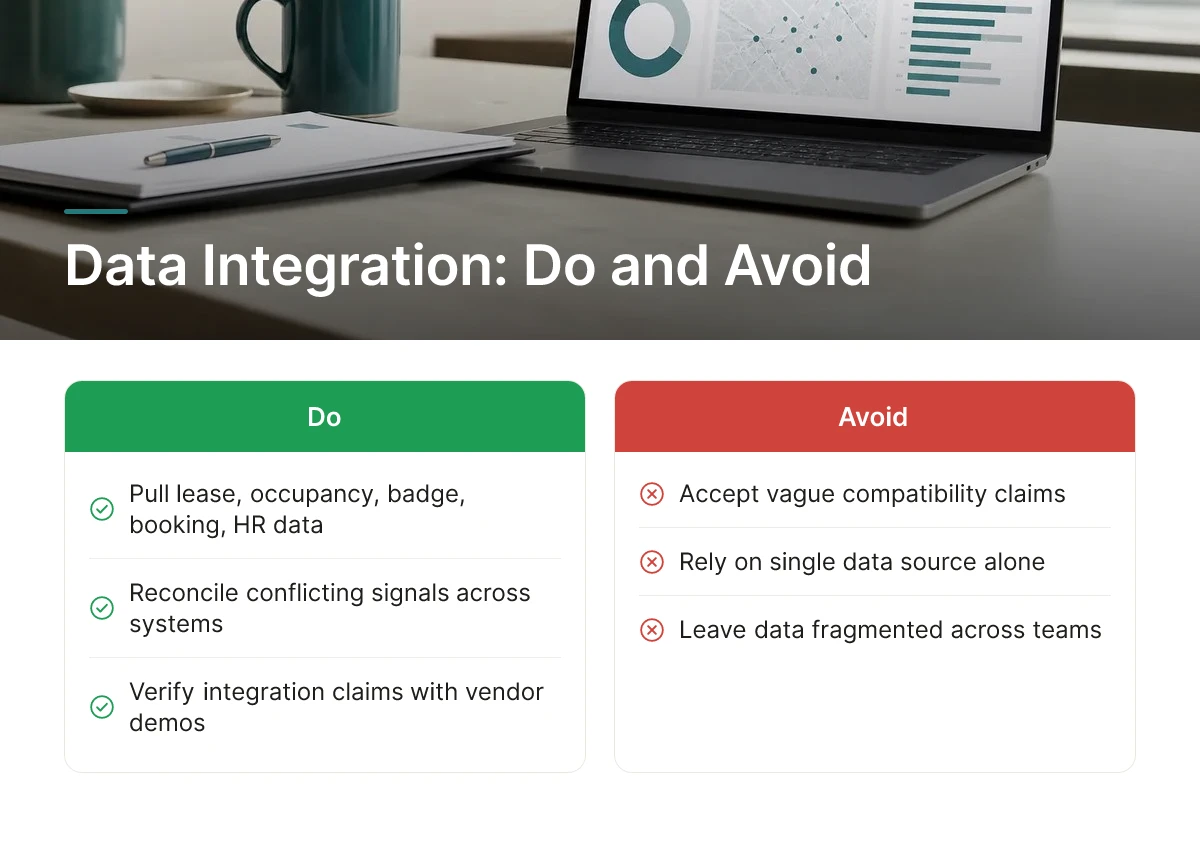
A real estate analytics platform needs to ingest lease data, occupancy sensors, badge systems, booking tools, and HR headcount feeds into one connected view.
At minimum, the platform should pull in lease terms and expiration dates, occupancy sensor feeds, badge system logs, room and desk booking data, and HR headcount records. Each of these lives in a different system today, usually managed by a different team, which is exactly why fragmented data is the default state for most corporate real estate portfolios.
Don't take integration claims at face value, ask for actual API documentation and a list of pre-built connectors to the tools already in use, such as Microsoft 365, Google Workspace, or a legacy IWMS like Archibus or Planon. A vendor that can show a working connector beats one that promises custom integration work after signature.
Disconnected spreadsheets and siloed tools force manual reconciliation, and manual reconciliation delays decisions that depend on current numbers, a lease renewal deadline doesn't wait for someone to cross-reference three systems by hand. A unified platform resolves this by pulling each feed into one dataset automatically, so utilization, cost, and lease timing stay in sync without a quarterly spreadsheet exercise.
This question matters most for organizations already running multiple workplace tools that need one unified view instead of a full rip-and-replace. Upflex's office orchestration dashboard is built around this exact need, unifying booking, forecasting, and workspace network access into a single interface rather than requiring a company to abandon its existing stack.
The platform should calculate cost-per-employee alongside cost-per-square-foot, because headcount shifts faster than lease terms do.
Cost-per-square-foot is static until a lease changes. Cost-per-employee moves every time a team grows, shrinks, or shifts to hybrid, which makes it the more honest metric for understanding whether a space still fits how people actually work. A platform that only reports square footage costs is giving finance half the picture.
Push vendors to show how they surface hidden costs beyond rent: underused meeting rooms booked but rarely occupied, duplicate amenities across two nearby offices, and utilities running on floors nobody uses. These costs rarely show up in a lease summary, but they add up across a multi-site portfolio.
Normalizing these metrics across locations lets finance and real estate leaders compare offices on equal footing, a downtown office with premium rent but high utilization can outperform a cheaper suburban site that sits half-empty. That apples-to-apples view is what makes a consolidation case defensible.
This is built for finance and corporate real estate leaders who need numbers that hold up in a budget conversation, not estimates that get challenged in the room.
A credible platform should let you model what happens to cost and capacity before you sign or walk away from a lease, not after.
Ask a vendor to walk through a live scenario: two offices merge into one, what happens to attendance capacity, cost per employee, and commute burden for affected teams. A real estate analytics platform that can't answer this in a demo isn't ready for a renewal decision. The model needs attendance patterns broken down by team, not just building-wide averages, plus commute distances for employees who'd be reassigned and the actual lease end dates driving the timeline.
Right-sizing doesn't have to mean choosing between a big lease and a smaller one. Access to on-demand, third-party workspace gives a company room to shrink its owned footprint while still covering employees who travel or sit outside commuting range of a core office. Upflex factors this directly into portfolio decisions, pairing attendance forecasting with access to a global on-demand workspace network so a consolidation doesn't strand distributed employees without a place to work.
This scenario work matters most for organizations juggling several leases with staggered expiration dates and uneven attendance across regions, where one blanket policy rarely fits every site.

Forecasting should predict who's coming in, when, and where, tested against real outcomes before you commit to a renewal decision based on it.
Ask how the model handles irregular attendance: hybrid schedules that shift week to week, seasonal dips around holidays, and team-specific patterns that don't follow a company-wide average. A forecast built on a single data stream, like historical badge counts alone, misses the shifts that actually drive space decisions.
A credible mechanism combines historical attendance, booking intent, and team-level patterns rather than one signal extrapolated forward. This is the logic behind Upflex's UnifyAI engine, which forecasts attendance at 97% accuracy and has helped teams hit 88% co-attendance achievement by coordinating in-office days around actual team behavior instead of guesswork.
Before rolling out company-wide, ask for a pilot period where forecast predictions get checked against actual attendance. If a vendor won't commit to validating its own numbers against what happens on the floor, treat the accuracy claim as unproven.
This capability matters most for organizations planning lease renewals 12 to 24 months out, where confidence in future space needs determines whether to renew, downsize, or exit a location.
A strong lease management module keeps every expiration date, renewal option, and escalation clause in one searchable record instead of scattered spreadsheets. Corporate real estate teams managing 10 or more locations often lose track of which leases auto-renew and which carry below-market escalation terms simply because the data lives in different formats across different landlords.
Centralized lease data becomes use only when paired with actual utilization numbers. If a location shows 35% average desk occupancy and the lease is up for renewal in eight months, that combination gives a real estate leader grounds to push for a smaller footprint, a shorter term, or better concessions, not just a hunch that the space feels empty.
Automated alerts on upcoming lease milestones matter as much as the data itself. Without a 90- or 180-day warning on renewal windows, teams default into costly auto-renewals on space they already know is underused. A platform that flags these dates against utilization trends turns lease management from reactive paperwork into a planning tool.
This capability matters most for organizations managing a portfolio spread across multiple landlords, countries, and lease structures, where no single person can track every clause from memory.
A real estate analytics platform should connect to the tools already in place, desk booking, visitor management, HRIS, and facilities ticketing, not replace them.
Ask vendors for a specific list of supported integrations, not a vague claim of compatibility. The categories that matter most are desk and room booking systems, visitor management platforms, HRIS tools for headcount and org structure, and facilities ticketing systems that track maintenance requests tied to specific floors or buildings.
A platform that cannot sync with the booking tool employees already use forces duplicate data entry, someone books a desk in one system and logs attendance in another. That mismatch erodes trust in the numbers fast, because the utilization dashboard stops matching what people experience on the floor.
Single sign-on and shared identity data reduce friction during rollout, since employees and facilities staff don't need separate logins or duplicate profiles across systems. This matters most for departments adopting the platform at different speeds.
Upflex is built to layer office orchestration, desk booking, attendance forecasting, and workspace network access, on top of an existing stack rather than forcing a rip-and-replace, which fits organizations with an established workplace tech stack who need analytics added, not a new system to manage.
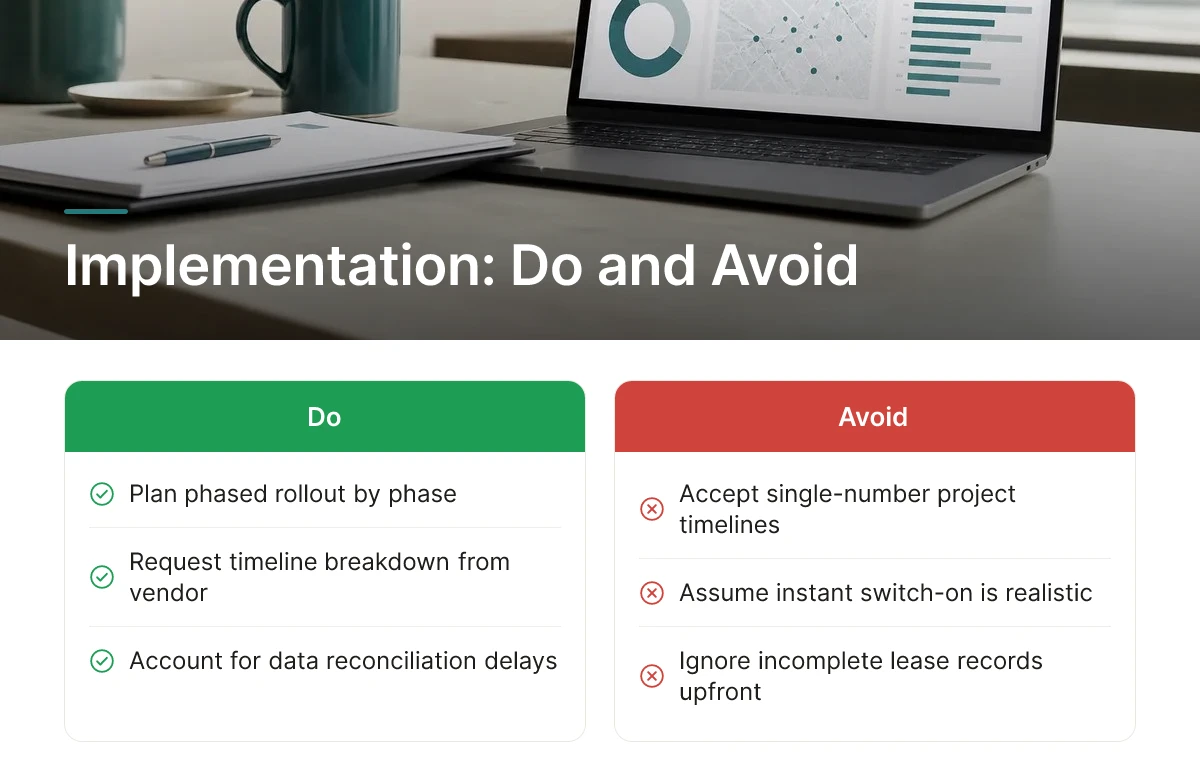
Most organizations should expect a phased rollout of data connection, validation, dashboard deployment, and team training, not an instant switch-on.
Ask vendors for a timeline broken into those four phases, with estimated durations for each. A vendor who answers with a single number for the whole project, rather than a phase breakdown, probably hasn't implemented the platform across a portfolio with real-world messiness.
Common slowdowns show up early: incomplete lease records that need manual reconciliation, inconsistent space naming across buildings, one site calls it "Floor 3 East," another calls it "3E", and, for sensor-based systems, hardware installation delays tied to building access or IT approval.
Starting with a smaller pilot location, rather than a full portfolio rollout, surfaces these data quality issues while the stakes are still low. A single building reveals naming inconsistencies, missing lease fields, or integration gaps that are far cheaper to fix before scaling to 20 more sites.
This phased approach fits organizations that have never centralized real estate data and should expect some cleanup work before the dashboards reflect reality.
Match the platform to your portfolio's complexity and data maturity, then confirm forecast accuracy with a real pilot before signing anything.
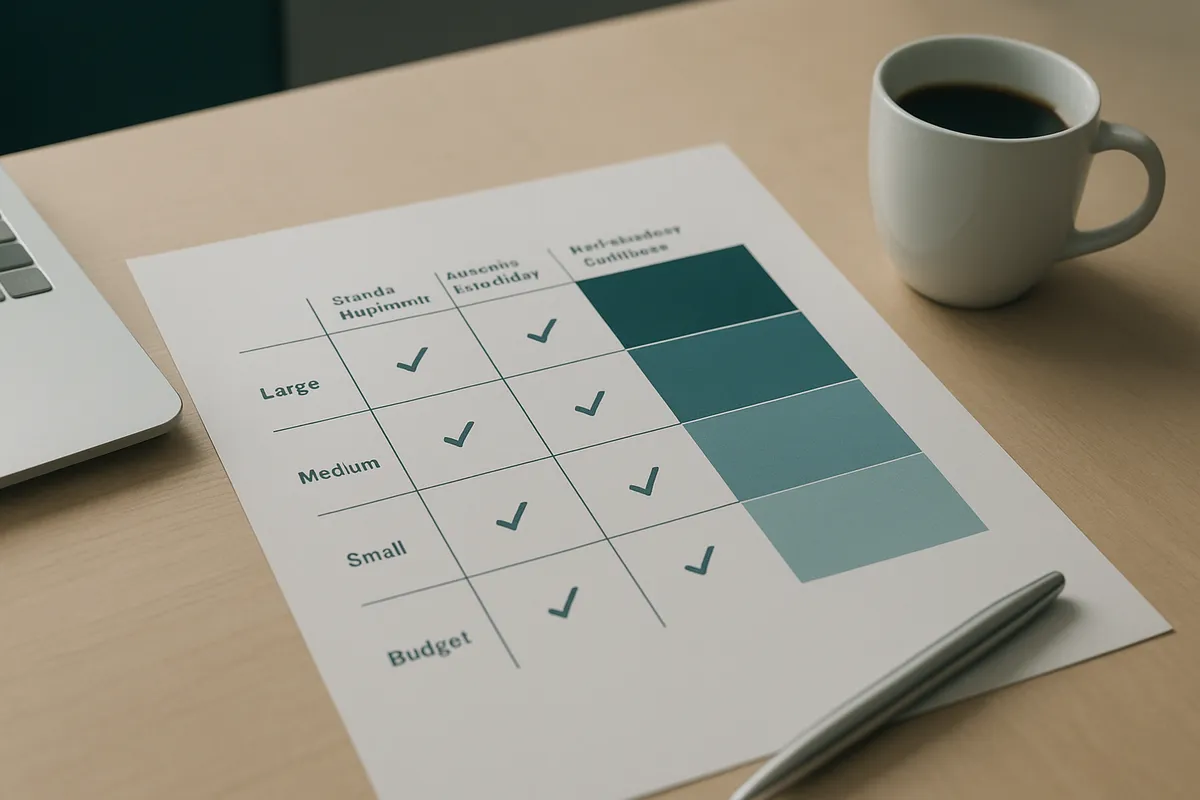
Start with a quick profile check. Organizations with multi-country portfolios and varied lease structures should weight lease management and integration depth heavily, since those are the areas where fragmented data causes the most expensive mistakes. Single-country organizations with a handful of offices can prioritize attendance forecasting and desk booking first, since lease complexity is lower.
Budget tier should track portfolio size and data complexity, not the other way around. A budget-friendly tool may handle a 3-building portfolio fine but struggle once lease records, sensor feeds, and HRIS data from 15 buildings need to sync in real time, at that point, a mid-range or enterprise-tier platform earns its cost through reduced manual reconciliation.
Before committing to a full contract, request a pilot or sandbox test using actual occupancy data from one or two buildings. Score vendors on the forecast accuracy they demonstrate in that trial, not the percentage in their marketing deck. Upflex, for example, points to 97% attendance forecast accuracy and 88% co-attendance achievement as benchmarks worth testing against your own data before expanding the platform portfolio-wide.
Traditional portfolio management tracks leases, costs, and square footage; real estate analytics adds forecasting and live utilization data to guide decisions. Instead of reviewing occupancy after the fact, a platform like Upflex predicts attendance patterns and surfaces underused space before a renewal deadline forces a reactive call.
Hybrid teams don't show up on fixed schedules, so static floor plans and headcount-based planning no longer reflect actual demand. Analytics platforms track day-by-day attendance patterns and co-attendance rates, giving real estate and HR leaders a shared, data-driven basis for consolidation or space redesign decisions.
Look at utilization trends over weeks, not single days, and pair them with team-level co-attendance data before cutting space. A floor averaging 30% occupancy might still serve a critical team that needs five consecutive high-density days a month, context like Upflex's co-attendance tracking prevents cutting space that collaboration actually depends on.
Organizations typically target real estate spend reductions in the 30-40%+ range once forecasting and consolidation decisions replace guesswork. Upflex customers have documented reductions exceeding 40% in real estate spend alongside 88% co-attendance achievement, showing that cost cuts and in-office collaboration goals aren't mutually exclusive. Results depend on portfolio size, lease flexibility, and how quickly leadership acts on the data the platform surfaces.
Forecasting tells you how much space you'll actually need before you sign or renew a lease, not after. Attendance forecasting engines, like Upflex's UnifyAI at 97% accuracy, let real estate leaders size offices to real demand instead of historical headcount assumptions.
Picking the right analytics approach starts with matching the tool to the decision in front of you: utilization dashboards for day-to-day space planning, forecasting engines for lease renewals, and consolidated reporting for CFO conversations. The organizations cutting real estate spend by 30-40%+ aren't guessing, they're pairing attendance forecasting with real utilization data before signing or renewing anything.
If a lease renewal or consolidation decision is on your calendar in the next two quarters, start by auditing which of your current tools actually forecast attendance versus simply logging it after the fact. That gap is usually where the real savings are hiding.
Explore more from our content library: