Share This Article
No items found.

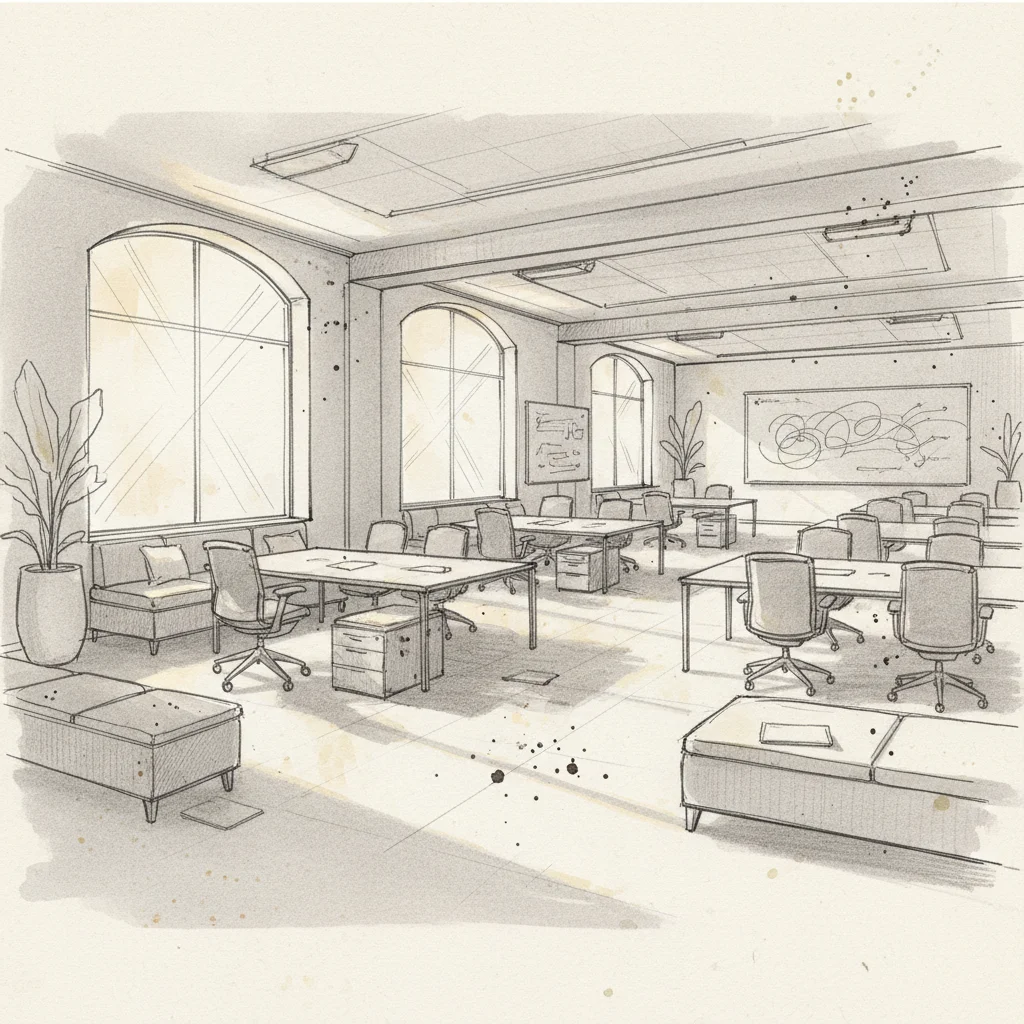
Corporate office solutions have evolved well beyond desks, chairs, and a lease. As of 2026, they encompass everything from AI-powered attendance forecasting and on-demand workspace networks to modular furniture systems and real estate portfolio consolidation strategies. If your organization is still managing office space the way it did in 2019, you're almost certainly overpaying and underdelivering on employee experience. This guide covers the most effective corporate office solutions available right now, who each one is best for, and what to look for when building your own workplace strategy.
The stakes are real. According to research from Steelcase, workplace design directly affects employee engagement and productivity [1]. Meanwhile, organizations running hybrid teams face a compounding challenge: offices that sit half-empty on Tuesdays still cost the same as a full floor on Fridays. The right mix of corporate office solutions closes that gap between what you're paying for and what you're actually using.
AI-powered workplace orchestration is a category of corporate office solutions that uses machine learning to forecast attendance, automate desk assignments, and coordinate team schedules without manual intervention.
Traditional desk booking tools tell you where people sat yesterday. AI orchestration tells you who's coming in tomorrow and coordinates their teams around that prediction. The difference is consequential for anyone managing a large office portfolio.
Upflex's UnifyAI engine, for example, processes employee scheduling inputs and utilization data to forecast attendance with 97% accuracy. That level of precision means Corporate Real Estate leaders can make right-sizing decisions based on what will actually happen, not on last quarter's badge swipes. The result: customers achieve 40%+ reductions in real estate spend without imposing rigid attendance mandates.
Pros: Removes guesswork from space planning; delivers measurable cost savings; automates coordination workflows that previously required manual effort.
Cons: Requires integration with existing HR and scheduling systems; ROI is highest at scale, so smaller organizations may find simpler tools sufficient.
Pro Tip: Before evaluating any AI workplace platform, audit your current utilization data sources (badge data, calendar integrations, desk booking logs). The quality of your inputs directly determines the accuracy of attendance forecasts. Platforms like Upflex are built to unify these signals, but knowing what you have upfront accelerates deployment significantly.
On-demand workspace networks give employees access to third-party office locations, coworking spaces, and meeting rooms on a per-use basis, eliminating the need for satellite leases in every city where staff occasionally work.
For global enterprises with distributed teams, signing a long-term lease in every city where employees live is financially reckless. On-demand workspace networks solve this by giving employees a professional place to work wherever they are, without committing your organization to square footage you can't predict filling.
Upflex operates the world's largest on-demand workspace network, giving employees access to thousands of vetted locations globally through a single platform. This matters because fragmented access (one app for coworking, another for meeting rooms, another for day offices) creates administrative overhead and poor employee experience. A unified network eliminates both problems.
According to Development Aid's profile of leading workplace consultancies, integrated workspace solutions that combine design, technology, and flexible access consistently outperform siloed approaches [2].
Pros: Pay-per-use model eliminates fixed overhead; employees get quality workspace anywhere; no lease negotiation required.
Cons: Requires a reliable network with sufficient location density; quality varies across providers if not properly vetted.
Desk booking and space management software are digital tools that allow employees to reserve workstations, meeting rooms, and collaborative zones in advance, giving facilities teams real-time visibility into how space is being used.
Basic desk booking is table stakes in 2026. The platforms worth evaluating go further: they integrate with calendar systems, surface utilization analytics, and connect booking data to broader real estate decisions. Corporate Source, a national office space planning firm, notes that data-driven space planning is now a prerequisite for any serious corporate office redesign [3].
At Upflex, we've found that organizations get the most value from desk booking when it's connected to attendance forecasting. Booking tells you where someone sat. Forecasting tells you whether the right people were there at the same time. That second layer is what drives 88% co-attendance achievement, a benchmark Upflex customers consistently reach.
Pros: Reduces desk conflicts; provides utilization data for portfolio decisions; improves employee experience on in-office days.
Cons: Adoption requires change management; standalone tools without forecasting integration miss the bigger opportunity.
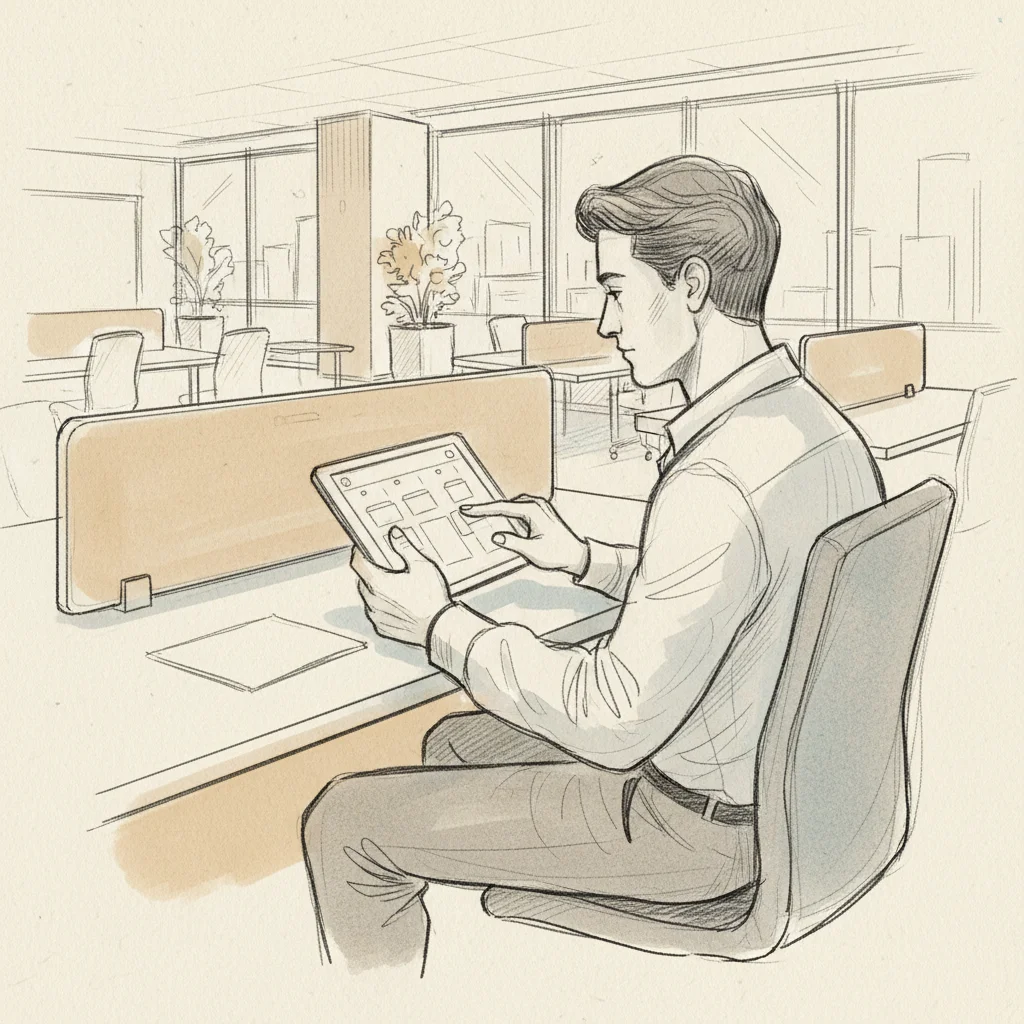
Modular and height-adjustable furniture systems are physical workspace solutions designed to reconfigure quickly as team sizes, work modes, and office layouts change, reducing the cost and disruption of office redesigns.
Hybrid work has made fixed office layouts a liability. A floor configured for 200 assigned desks in 2022 may need to support 80 collaborative workstations, 40 focus pods, and 20 phone booths in 2026. Modular systems make that transition possible without a full buildout.
According to COS Online's analysis of height-adjustable and modular furniture trends, businesses are increasingly prioritizing environments that adapt to people rather than requiring people to adapt to fixed environments [4]. Height-adjustable desks, in particular, support both focus work and standing collaboration without requiring dedicated zones for each.
Providers like Steelcase have built entire product lines around activity-based working (ABW), a framework that assigns space to tasks rather than individuals, allowing organizations to serve more employees with less square footage [5].
Pros: Long-term flexibility reduces redesign costs; supports diverse work modes; ergonomic benefits improve employee health outcomes.
Cons: Higher upfront cost than fixed furniture; requires thoughtful space planning to avoid a disconnected layout.
Pro Tip: When specifying modular furniture for a hybrid office, map your actual work modes first. Identify the ratio of focus work to collaboration to social interaction your teams need, then configure zones accordingly. Furniture vendors like BOS and ORI offer workplace consultancy services that can help you run this analysis before committing to a configuration [6][7].
Workplace consultancy services help organizations assess their current space, define future work patterns, and design office environments that align with business strategy, culture, and real estate budget.
Consultancy isn't just interior design. The best firms combine utilization data analysis, employee experience research, and real estate strategy into a single engagement. Corporate Office Solutions (COS), a leading specialist in workplace consultancy and design, offers integrated services spanning design, fit-out, mechanical and electrical works, project management, and furniture supply [8]. That end-to-end model reduces the coordination overhead that typically inflates project costs and timelines.
From experience, one of the most common mistakes organizations make is commissioning a design before they've analyzed actual utilization data. A beautiful office designed around assumptions about how people work is still a waste of money if those assumptions are wrong. Good consultants start with data, not mood boards.
Pros: Expert guidance reduces costly design mistakes; integrated services streamline project delivery; data-driven approach aligns design with actual work patterns.
Cons: Quality varies significantly between firms; engagements can be expensive; results depend heavily on the accuracy of the utilization data provided.
Real estate portfolio optimization is a strategic corporate office solution that uses utilization data, lease analysis, and workforce planning to identify opportunities to reduce, consolidate, or right-size an organization's office footprint.
Real estate is typically the second or third largest operating cost for global enterprises. Yet as of 2026, most large organizations still carry significant underutilized square footage from pre-hybrid lease commitments. Industry analysts suggest that enterprises running hybrid models are, on average, utilizing only 40-60% of their leased space on any given day. The financial implication is straightforward: you're paying for space that sits empty.
Portfolio optimization addresses this by combining attendance forecasting data, lease expiry schedules, and workforce distribution analysis to build a consolidation roadmap. Upflex delivers this capability through its Office Orchestration Dashboard, which unites booking data, AI-generated utilization insights, and on-demand workspace access into a single view. The output: a defensible, data-driven case for the CFO that identifies exactly which leases to exit, which to right-size, and which to retain.
Pros: Directly reduces one of the largest operating cost lines; data-driven approach is defensible to finance leadership; creates ongoing savings, not a one-time fix.
Cons: Requires reliable utilization data to be credible; lease exit strategies can be complex and time-consuming; change management is essential to prevent employee resistance.
Pro Tip: Don't wait for a lease renewal to trigger a portfolio review. The organizations that achieve 40%+ real estate savings start the analysis 18-24 months before a major lease event, giving them enough time to build the data case, model alternatives, and negotiate from a position of strength rather than deadline pressure.

The right corporate office solutions depend on your organization's size, hybrid work maturity, real estate portfolio complexity, and the specific pain point you're solving first.
Not every organization needs every solution on this list. Use this framework to prioritize:
| Primary Pain Point | Recommended Solution | Expected Outcome |
|---|---|---|
| Unpredictable attendance / empty offices | AI-powered attendance forecasting | 97% forecast accuracy; right-sized staffing |
| Employees in cities without a lease | On-demand workspace network | Professional workspace access without new leases |
| Desk conflicts and poor space visibility | Desk booking and space management software | Real-time utilization data; 88% co-attendance |
| Rigid layouts that don't support hybrid work | Modular and height-adjustable furniture | Flexible space that adapts without full redesign |
| No data to justify office redesign | Workplace consultancy services | Data-driven design aligned to actual work patterns |
| Overpaying on underutilized leases | Real estate portfolio optimization | 40%+ reduction in real estate spend |
One pitfall to watch for: organizations often evaluate corporate office solutions in isolation, selecting a desk booking tool, a furniture vendor, and a consultancy separately without a unifying strategy. The result is a patchwork of systems that don't talk to each other and can't produce a coherent picture of how your real estate is performing. A platform that combines orchestration, booking, and network access, like Upflex, avoids this fragmentation by design.
Corporate office solutions are the tools, technologies, services, and strategies organizations use to design, manage, and optimize their workplace environments. As of 2026, this category spans AI-powered attendance forecasting, desk booking software, on-demand workspace networks, modular furniture systems, workplace consultancy, and real estate portfolio optimization. The best corporate office solutions work together to reduce costs while improving employee experience.
Organizations using AI-powered workplace optimization platforms like Upflex achieve 40%+ reductions in real estate spend by identifying underutilized space, consolidating leases, and replacing fixed satellite offices with on-demand workspace access. Results vary depending on portfolio size, current utilization rates, and lease flexibility, but the savings potential is highest for enterprises with multiple locations and unpredictable hybrid attendance patterns.
Desk booking software records where employees sit and allows advance reservations. AI workplace orchestration goes further: it forecasts who will come in, when, and with whom, then automates coordination to ensure teams share in-office days. Upflex's UnifyAI engine delivers 97% attendance forecast accuracy, enabling proactive space management rather than reactive booking. The two capabilities are most powerful when combined in a single platform.
On-demand workspace networks give employees access to vetted third-party offices, coworking spaces, and meeting rooms on a per-use basis through a single platform or app. Employees book what they need, when they need it, without the organization signing a long-term lease. Upflex operates the world's largest such network, making it possible for distributed teams to work professionally from virtually any city without additional real estate commitments.
Prioritize providers that offer modular and height-adjustable systems, space planning consultancy, and installation support. Vendors like Steelcase, BOS, and ORI offer integrated design and furniture services that go beyond product sales. Also evaluate lead times, warranty terms, and the vendor's experience with hybrid work configurations specifically, since those requirements differ significantly from traditional assigned-desk layouts.
Build the business case around utilization data, not assumptions. Use badge data, desk booking records, and AI attendance forecasting to document current space efficiency. Then model the financial impact of right-sizing: reduced lease costs, lower facilities overhead, and avoided capital expenditure on underused space. Platforms like Upflex generate the utilization reports and consolidation models that make this conversation straightforward rather than speculative.
Many corporate office solutions, particularly AI-powered platforms and on-demand workspace networks, are designed for enterprises with 500+ employees and multi-location portfolios. That's where the ROI is highest. Smaller organizations may find simpler desk booking tools and furniture providers like Offices to Go or Corp Inc more appropriately scaled to their needs. Results depend on your specific situation, so evaluate based on your actual portfolio complexity, not headcount alone.
Activity-based working (ABW) is a workplace design framework that assigns space to tasks rather than individuals. Instead of one assigned desk per employee, an ABW office provides focus pods for deep work, collaborative zones for team meetings, and social spaces for informal interaction. This approach allows organizations to serve more employees with less square footage, which is particularly valuable for hybrid teams where not everyone is in the office simultaneously.
The landscape of corporate office solutions in 2026 is broader and more consequential than it's ever been. Organizations that treat office management as a facilities function rather than a strategic lever are leaving significant money on the table and delivering a worse employee experience in the process.
The most effective approach combines AI-powered attendance forecasting, on-demand workspace access, smart desk booking, and data-driven real estate strategy into a coherent system. That's precisely what Upflex delivers: a single platform that pairs AI office orchestration with the world's largest on-demand workspace network, giving Corporate Real Estate and HR leaders the tools to cut real estate spend by 40%+ while maintaining the in-person collaboration that makes hybrid work actually work.
This article covers the primary categories of corporate office solutions available as of 2026. It doesn't address specific lease negotiation tactics, local zoning regulations, or the full range of regional furniture vendors, all of which are worth exploring with qualified advisors for your specific situation. Start with the decision framework above, identify your most pressing pain point, and build from there.
Explore more from our content library: