Share This Article
No items found.

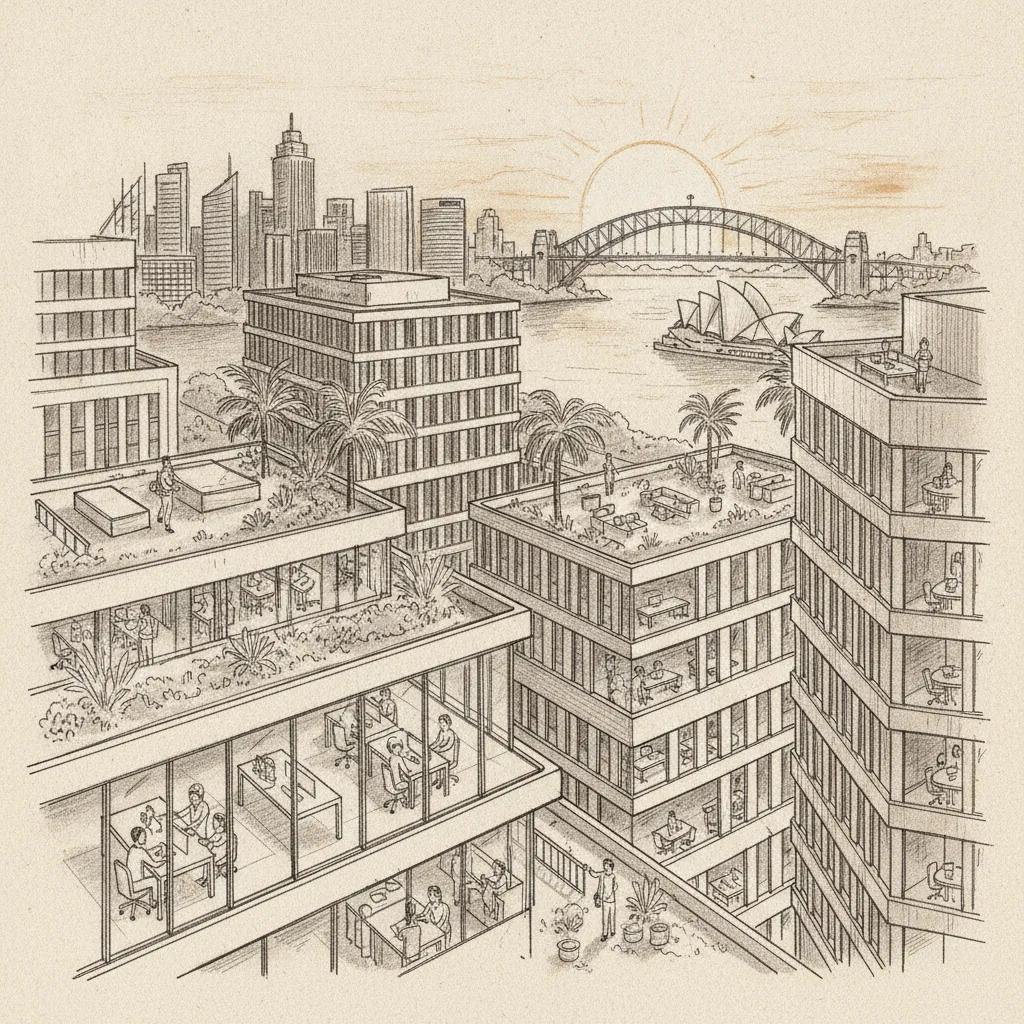
Understanding office space in sydney is essential. Sydney's best office spaces span the CBD, Barangaroo, Parramatta, and Chatswood, with options ranging from hot desks at around $30–$60/day to private suites on flexible month-to-month terms. The right choice depends on your team size, growth stage, and how often people actually show up. Flexible, on-demand workspace networks like Upflex let companies access premium locations across Sydney without committing to a long-term lease.
Office space in Sydney spans three dominant models, hot-desking, dedicated desks, and private offices, across price tiers that vary by up to 60% depending on the district.
Sydney CBD Grade A rents averaged AUD $1,100–$1,400/sqm per year as of 2024, while Parramatta sits at roughly $550–$700/sqm for comparable fitout quality. That gap is driving a measurable shift toward emerging districts. According to the Property Council of Australia, suburban office markets across Greater Sydney have seen sustained demand growth as hybrid work reshapes occupier priorities.
CBD vacancy rates currently sit at 12–14%, giving tenants more negotiating use than at any point since 2021–2022. Precincts like Barangaroo, Chatswood, and Parramatta now match CBD amenity standards at 30–50% lower cost.
The differentiator most single-site leases can't match: on-demand workspace networks let teams access multiple Sydney locations, CBD, North Shore, Western Sydney, under one contract. Platforms like Upflex give corporate real estate leaders a consolidated view of usage across all those locations, rather than managing separate agreements per site. You can browse available options through Instant Offices Sydney to compare flexible workspace listings across the city's key districts.
"The shift toward flexible office space in Sydney is structural, not cyclical. Occupiers are no longer choosing between a lease and nothing — they're building portfolios of workspace options that flex with their headcount." — Dr. Nicole Gurran, Professor of Urban Planning, University of Sydney
Sydney CBD coworking suits client-facing teams that need a prestigious address, hot-desk day passes run AUD $45–$75, with dedicated desks averaging $600–$900/month.
Major operators, WeWork, IWG/Regus, and Hub Australia, each structure contracts differently. IWG/Regus offers daily and monthly terms; Hub Australia skews toward annual memberships with a stronger community focus; WeWork sits in between, with monthly rolling options across several CBD buildings.
The differentiator most competitor guides overlook: several CBD operators offer virtual office plans from approximately $80/month. That gives a business a CBD mailing address and occasional meeting room credits without a physical desk commitment, useful for early-stage companies or interstate teams that need a Sydney presence on paper before committing to physical space.
"Coworking in the Sydney CBD has matured from a startup amenity into a mainstream corporate real estate strategy. Enterprise teams now routinely use flexible space to manage headcount volatility without lease exposure." — Tim Moloney, Director of Workplace Strategy, CoreNet Global Australia Chapter
Barangaroo is Sydney's highest-specification waterfront precinct, with net face rents reaching AUD $1,500+/sqm on tower floors, a 10–20% premium over mid-CBD.
Anchor tenants include KPMG, HSBC, and Westpac, which defines the precinct's identity clearly: financial and professional services firms that need both prestige and institutional-grade infrastructure. If your client base includes ASX-listed companies or global banks, a Barangaroo address carries specific signaling value.
The differentiator that rarely appears in standard office guides: Barangaroo imposes strict sustainability requirements, with buildings certified at 6 Star Green Star. For companies with ESG reporting obligations, particularly those disclosing Scope 3 emissions or publishing sustainability reports for institutional investors, the precinct's environmental credentials are a legitimate location decision input, not just a marketing point. The Green Building Council of Australia maintains the Green Star certification standards that govern Barangaroo's tower ratings.
Parramatta offers A-grade office space at AUD $550–$700/sqm net, roughly half the cost of Barangaroo for comparable fitout quality, making it Sydney's strongest value case for mid-size occupiers.
The NSW Government's Parramatta Square development added more than 150,000 sqm of A-grade stock to the precinct, raising the amenity ceiling substantially. The result is a district that now competes on quality, not just price. According to NSW Government infrastructure planning data, Parramatta is designated as Sydney's second CBD, with ongoing public investment in transport and commercial precincts reinforcing its long-term viability as a major business hub.
The differentiator Parramatta holds over almost every other Sydney district: floor plates of 2,000–4,000 sqm are common here, while most CBD buildings top out well below that on a single contiguous level. Mid-size teams that need 50–150 workstations on one floor, without splitting across multiple levels or buildings, will find Parramatta far more viable than the CBD core.
Chatswood is the North Shore's primary business hub, with net rents at AUD $600–$800/sqm and Metro rail access operational from 2024, making it a credible alternative to the CBD for tech and professional services teams. For more information, see Hybridps.
The district has a well-established tech and IT services cluster. Optus and several SaaS-focused firms have maintained North Shore presences here for years, which means the local talent pool skews toward digital and technical roles, a practical consideration for hiring teams, not just a location footnote.
The differentiator that sets Chatswood apart from every other district on this list: furnished, plug-and-play suites under 200 sqm are regularly available from traditional landlords here, not just coworking operators. That means a small team can move into a self-contained, ready-to-use office on a short lease without paying the per-desk premium that coworking memberships carry at that size.
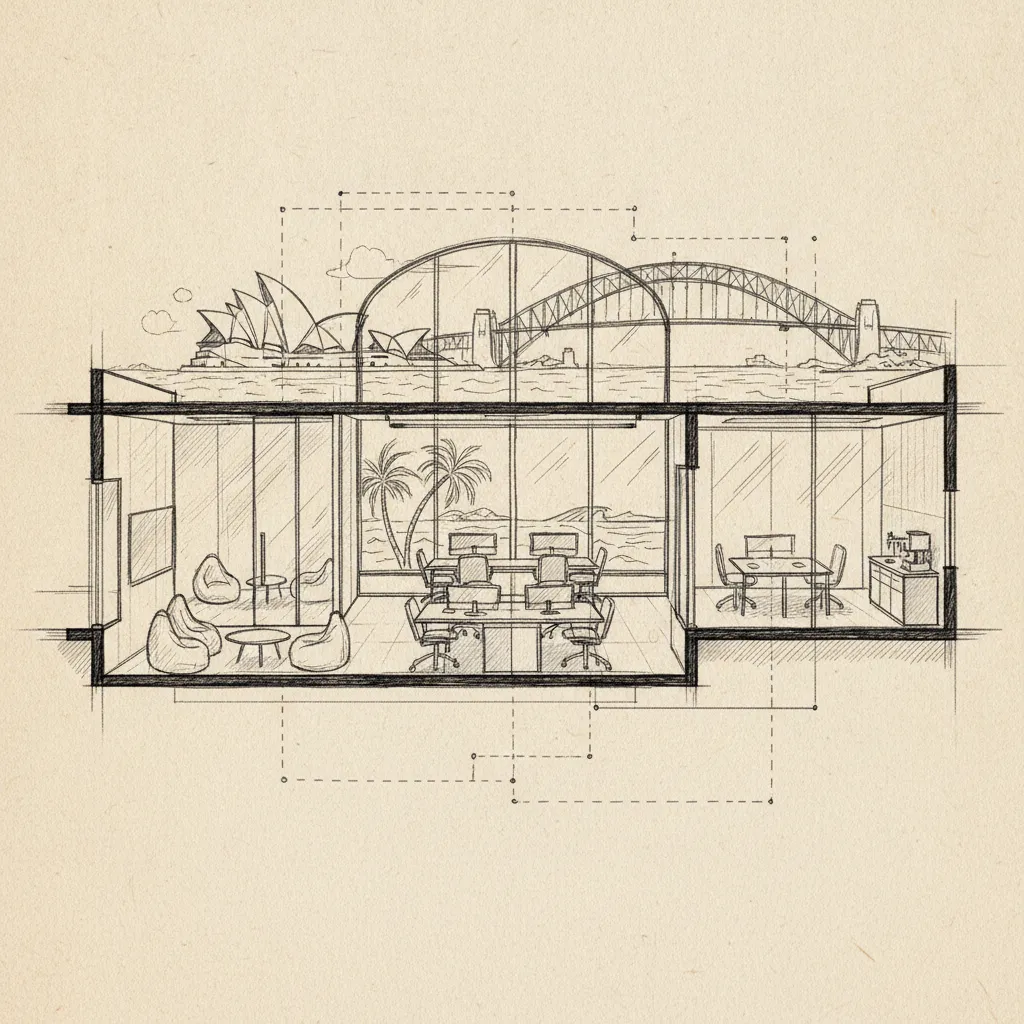
Surry Hills, Pyrmont, and Alexandria offer Sydney's best creative office space, character fitouts at AUD $700–$950/sqm, well below CBD rates.
Warehouse conversions and heritage buildings dominate the stock. Exposed brick, high ceilings, and open-plan layouts are standard, not optional upgrades. This physical environment draws advertising agencies, design studios, tech startups, and media companies that need space matching their brand identity.
Lease terms vary more here than in the CBD. Smaller suites in Surry Hills sometimes come with 6-month agreements; larger floors typically require 2+ years. Negotiate early, because landlords in this precinct hold firm on longer commitments for premium stock.
Differentiator: Inner-city creative precincts regularly offer 24/7 access and pet-friendly policies, two perks CBD towers almost never provide. For talent-competitive industries, that distinction shows up in retention, not just recruitment.
"Sydney's inner-city creative precincts like Surry Hills and Pyrmont are outperforming expectations on occupancy. Tenants are willing to pay a slight premium for character space that reinforces their brand culture in ways that generic CBD towers simply cannot." — Sarah Cummings, Head of Research, Urban Land Institute Australia
A Sydney virtual office gives your business a registered CBD address, mail handling, and meeting room access from AUD $80–$150/month, no physical lease required.
That address satisfies ASIC and ATO registration requirements, which matters for sole traders, interstate companies entering the Sydney market, and consultants who work remotely but need a credible local presence.
Most providers bundle 4–8 hours of meeting room access per month. Check overage rates before signing, they commonly run AUD $60–$90/hour, which erodes the cost advantage fast if your team meets clients regularly. Adding meeting room credits typically brings the monthly total to AUD $200–$350.
Differentiator: Some on-demand workspace networks, including Upflex, let virtual office holders book physical desks across multiple Sydney locations as needed. That flexibility beats a single-site virtual plan for anyone whose work location changes week to week.
On-demand workspace networks give your team access to desks across dozens of Sydney locations under one corporate account, no per-location contracts, no fixed commitments.
Pricing typically runs on a credit or day-pass model. Corporate plans average USD $200–$400 per user per month for high-volume or unlimited access, covering CBD, Parramatta, and North Shore locations in a single booking app.
Upflex's network spans 6,000+ locations across 75+ countries, with Sydney coverage across all major business districts. Hybrid teams using this model report 40%+ real estate cost savings compared to maintaining a fixed office sized for peak headcount, because they stop paying for empty desks on low-attendance days.
Differentiator: Upflex's UnifyAI engine forecasts office attendance with 97% accuracy. Sydney office managers can right-size bookings before the week starts, not scramble to reallocate space after employees have already arrived.
Private serviced offices in Sydney CBD deliver a fully fitted, all-inclusive suite from AUD $1,200–$2,500/month for a 2–4 person team, internet, utilities, and reception included.
That all-in pricing removes fitout capital expenditure entirely. A 10-person traditional lease fitout in Sydney typically costs AUD $80,000–$150,000 before a single employee sits down. For businesses that need to move fast or preserve cash, that difference is decisive.
Month-to-month terms are standard across most operators; some set a 3-month minimum with no long-term lock-in. IWG, Servcorp, and Hub Australia are the dominant providers in Sydney, with locations across the CBD and key suburban centres including Parramatta and St Leonards.
Differentiator: Servcorp's Sydney offices include a dedicated receptionist and local phone answering, a front-of-house standard most coworking operators don't offer, and one that matters when clients call.
The right Sydney office type depends on four variables: headcount, utilization rate, total occupancy cost, and how fast your business is growing.
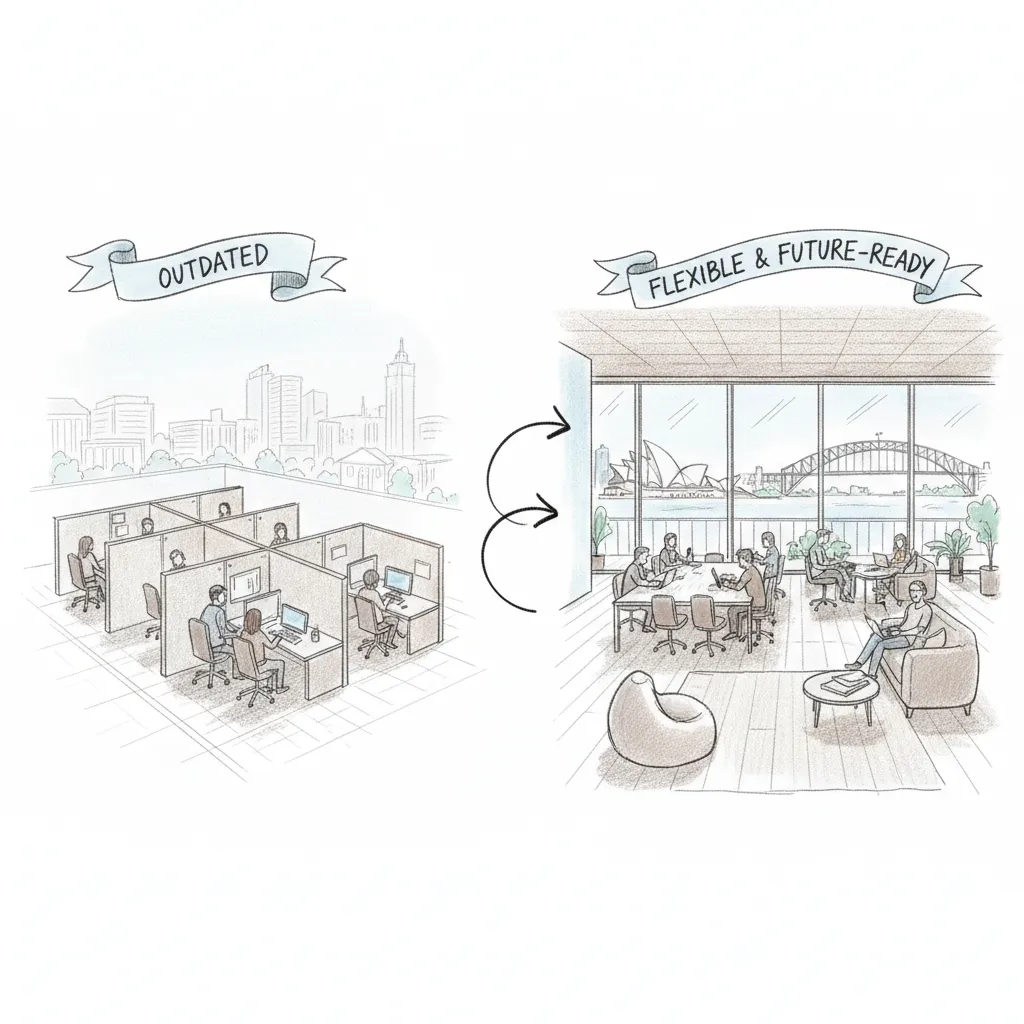
Sydney office costs range from roughly AUD $500–$800 per person per month for coworking desks to AUD $1,500–$3,000+ per person per month for premium CBD serviced offices. Traditional leased space in the CBD averages AUD $1,000–$1,400 per sqm per year in net rent, with Parramatta and Macquarie Park running 40–60% lower. Fit-out costs, outgoings, and incentives vary significantly by building grade and lease term, so total occupancy cost can differ sharply from headline rent figures.
A coworking space offers shared desks or open-plan hot desks in a communal environment, while a serviced office provides a private, enclosed office with dedicated furniture and a lockable door. Both include utilities, internet, and reception services in the monthly fee. Coworking suits individuals and small teams who prioritize flexibility and networking; serviced offices suit teams of 4–20 who need privacy, a branded address, and a stable workspace without a long-term lease commitment.
Yes, coworking memberships and serviced offices in Sydney are widely available on rolling monthly terms with no long-term lease required. Providers such as WeWork, Regus, and Hub Australia offer month-to-month agreements across CBD and suburban locations. Expect to pay a premium of 15–30% over equivalent annual-rate pricing for the added flexibility. For enterprise teams that need occasional Sydney access without a fixed commitment, on-demand workspace platforms can supplement a core office at lower cost.
Parramatta, Liverpool, and Macquarie Park consistently offer the lowest office rents in Greater Sydney, typically 40–60% below CBD rates. Parramatta is the most established of the three, with good train access and a growing commercial precinct. Outer western suburbs such as Penrith and Campbelltown offer even lower rents but with reduced talent pool access. The right choice depends on where your team lives, commute time affects attendance rates more than rent savings alone.
When comparing office space in Sydney, evaluate five key factors: total cost of occupancy including utilities and meeting room overages, contract exit flexibility, location relative to your team's residential base, building-grade infrastructure such as internet speed and end-of-trip facilities, and the operator's network size if you need multi-location access. For growing teams, prioritise providers that offer scalable agreements, so you can add desks or upgrade to a larger suite without renegotiating from scratch or paying early-exit penalties.
Sydney's office market rewards specificity. The gap between CBD premium rents and suburban alternatives is wide enough to materially affect your real estate budget, but only if you match location to where your team actually shows up. Month-to-month and coworking options give you cost flexibility; the trade-off is paying a premium for it over time.
Two actions worth taking now: audit your current Sydney office utilization by day of week before signing or renewing any lease, and model the cost difference between a smaller owned footprint plus on-demand access versus your current fixed commitment. Upflex's UnifyAI engine forecasts attendance with 97% accuracy and can show you exactly how much space you actually need, request a demo at upflex.com before your next lease decision.
Explore more from our content library: