Share This Article
No items found.

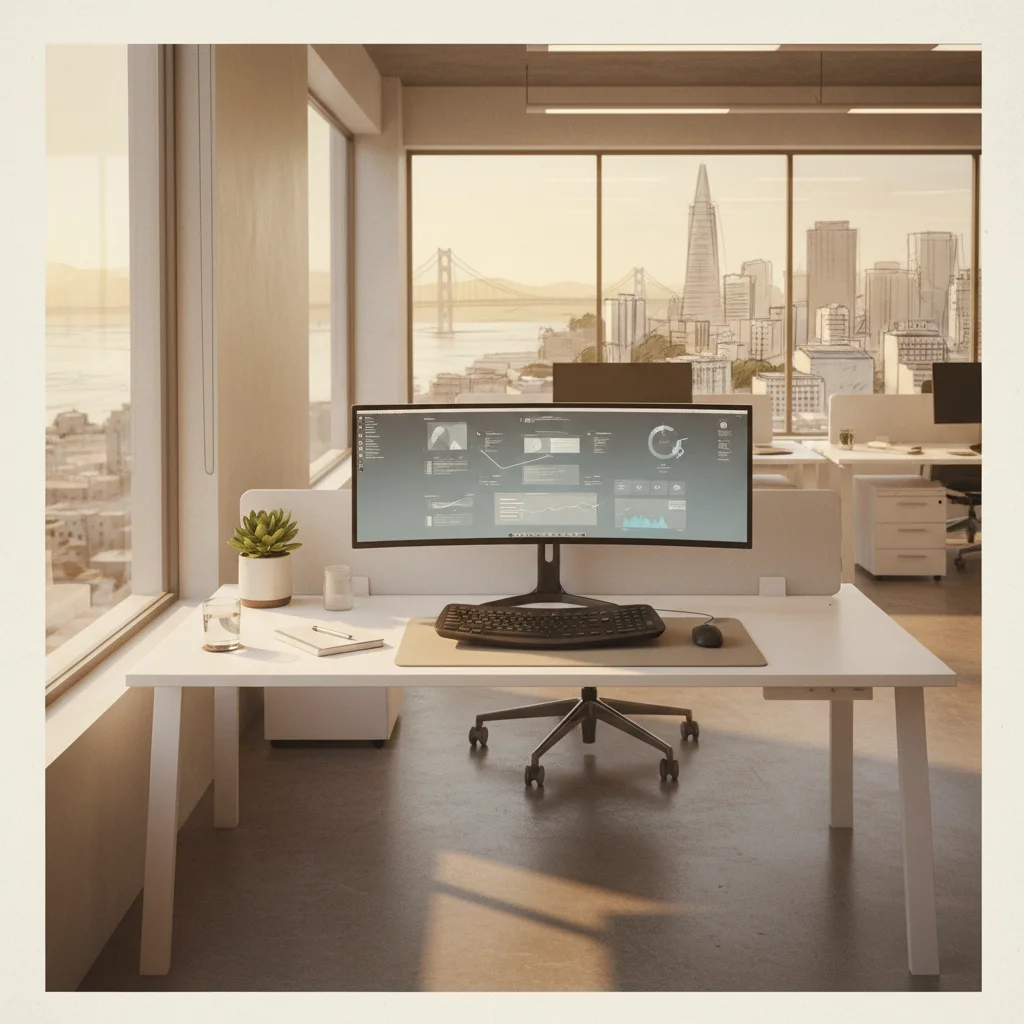
Office space in San Francisco is available across a wide range of formats, from traditional long-term leases in Class A towers to flexible coworking desks and on-demand private suites. As of 2026, the city's commercial real estate market has stabilized after several years of volatility, giving businesses both more options and more negotiating leverage than they've had in a decade. Whether you're a growing startup or a global enterprise right-sizing a hybrid portfolio, understanding how this market works will save you significant money and time.
This guide covers everything corporate real estate leaders, HR teams, and finance executives need to know: current pricing benchmarks, the best neighborhoods for different business needs, lease structures to consider, and how AI-powered workplace optimization is changing how companies manage their San Francisco footprint.
The San Francisco office space market encompasses commercial real estate available for lease, sublease, or flexible occupancy across the city's distinct business districts, ranging from traditional Class A towers in the Financial District to boutique creative spaces in SoMa and the Mission.
San Francisco's office market has undergone a significant reset since 2020. Vacancy rates that peaked near 35% in 2023 have moderated to roughly 22-25% as of 2026, according to data tracked by brokers like Cushman & Wakefield [1]. That still represents a historically elevated availability, which means tenants hold real negotiating power on rent, tenant improvement allowances, and lease flexibility.
The city's Office Development Annual Limitation Program, administered by SF Planning [2], governs how much new office development can be approved annually. Projects exceeding 25,000 gross square feet require approval under this program, which constrains new supply and helps stabilize pricing over the long run.
Technology companies remain the dominant tenants, but the composition has shifted. AI and machine learning firms, biotech companies, and financial services organizations have absorbed significant space vacated by earlier-stage startups. The city's SF.gov commercial location finder [3] lets businesses filter available spaces by type, size, and rate, and its Commercial Leasing Specialists provide one-on-one guidance for companies navigating options.
Industry analysts at JLL note that the flight-to-quality trend is pronounced in San Francisco: tenants are downsizing their square footage but upgrading the quality of the space they keep. That dynamic is driving demand for Class A and Trophy properties even as overall vacancy remains elevated [4].
Office space in San Francisco costs between $45 and $110 per square foot annually for direct leases, depending on building class, neighborhood, and lease term, with flexible and coworking options available from under $300 per month per desk.
Pricing varies considerably by location and asset quality. The table below reflects current market benchmarks as of mid-2026, based on listings tracked by JLL [4] and Cushman & Wakefield [1].
| Neighborhood / District | Building Class | Avg. Annual Rent ($/SF) | Typical Lease Term |
|---|---|---|---|
| Financial District | Class A / Trophy | $75 – $110 | 5 – 10 years |
| SoMa (South of Market) | Class B / Creative | $55 – $80 | 3 – 7 years |
| Mission Bay | Class A / Life Sciences | $65 – $95 | 5 – 10 years |
| Presidio / Civic Center | Class B / Institutional | $45 – $70 | 3 – 5 years |
| Flexible / Coworking | Hot Desk / Private Suite | $3,600 – $15,000/yr per desk | Month-to-month |
For teams that don't need a permanent footprint, flexible options are plentiful. Listings on platforms like Codi [5] and Tandem [6] offer private, fully furnished offices with conference rooms and flexible terms, often starting around $2,500–$5,000 per month for small teams. Craigslist's SF commercial listings [7] show hot desk options in the Financial District starting near $299/month, though these lack the amenities of managed coworking spaces.
Pro Tip: If your lease renewal is 12–18 months out, start benchmarking now. San Francisco's elevated vacancy rate means landlords are offering significant tenant improvement allowances and rent-free periods. Waiting until 6 months out leaves money on the table.
The Presidio offers a unique alternative worth noting. The Presidio Trust [8] leases commercial office space within the national park, offering a distinctive setting with competitive rates and strong transit access. For mission-driven organizations or companies that value a distinctive brand environment, it's a genuinely compelling option.
The best neighborhood for office space in San Francisco depends on your industry, team size, and commute priorities, with the Financial District suiting established enterprises, SoMa favoring tech and creative firms, and Mission Bay attracting life sciences tenants.
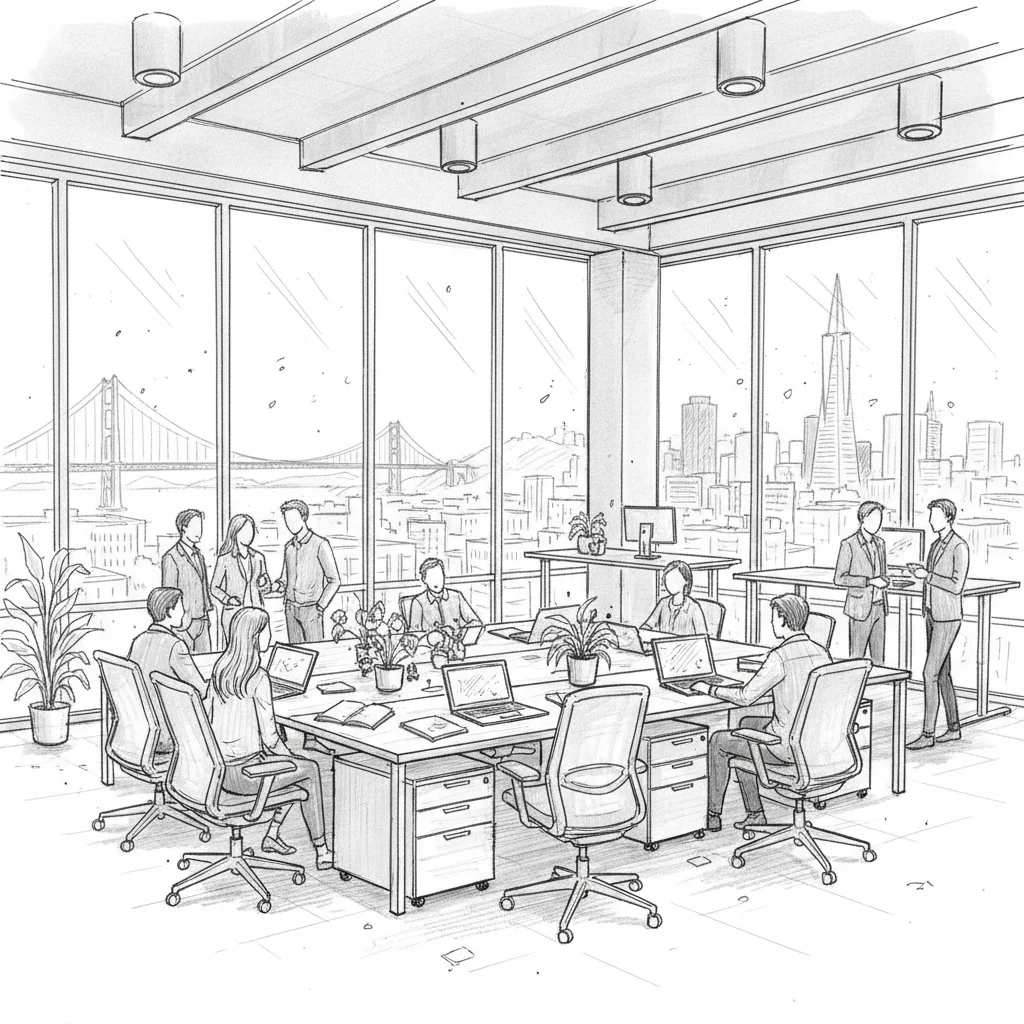
The Financial District remains San Francisco's premier business address. It offers the highest concentration of Class A and Trophy buildings, excellent BART and Muni access, and proximity to major financial institutions and law firms. It's the right choice for enterprises that need a prestigious address and can justify the premium rent.
One limitation is that the Financial District saw some of the deepest vacancy increases post-pandemic. While that creates negotiating leverage for tenants, it also means some buildings have lower occupancy, which can affect the energy and amenity levels that employees expect from a flagship office.
SoMa (South of Market) is the natural home for technology companies, offering lower rents than the Financial District, open-plan loft-style spaces, and proximity to the tech ecosystem. The neighborhood sits near major transit hubs and has a dense concentration of restaurants and amenities that employees value.
Mission Bay has emerged as a life sciences hub, anchored by UCSF's research campus. If you're in biotech, medtech, or health-adjacent industries, this is where your talent pool lives and works. Rents are competitive, and newer buildings offer lab-ready configurations alongside traditional office space.
For companies exploring San Francisco's cultural and historical richness beyond the office, the city offers remarkable architectural landmarks. The iconic San Francisco Church district reflects the city's layered history, a reminder that the best offices in SF sit within one of America's most architecturally distinctive cities.
Optimizing the practice for hybrid work requires combining accurate attendance data with flexible real estate strategies, so you're paying only for the space your teams actually use, not the space you assume they'll use.
San Francisco's rent levels make the cost of underutilized office space acute. A 10,000-square-foot floor at $80/SF costs $800,000 per year. If that floor sits at 40% utilization on most days, you're effectively paying $480,000 annually for empty desks. That's not a rounding error; it's a budget line that CFOs are now scrutinizing closely.
The core problem most organizations face isn't finding office space. It's managing it intelligently once they have it. Traditional desk booking tools tell you where people sat yesterday. They don't tell you how many people will show up next Tuesday, which teams need to be co-located, or whether your current footprint is the right size for your actual usage patterns.
Pro Tip: Before signing a new lease in San Francisco, run 90 days of utilization data through an AI forecasting tool. The difference between what your team says they'll use and what they actually use is often 30-40%. That gap should drive your square footage decision, not headcount projections from two years ago.
At Upflex, we've found that enterprises entering lease negotiations in high-cost markets like San Francisco consistently overestimate the space they need because they're relying on headcount rather than actual attendance patterns. The result is leases that are too large from day one.
This is where AI-powered office orchestration changes the calculus. Upflex's UnifyAI engine, which forecasts who's coming into the office, when, and in what team configurations, delivers 97% attendance forecast accuracy. That level of precision lets corporate real estate leaders make right-sizing decisions based on what will actually happen, not what they hope will happen.
The practical outcomes are significant:
For a company with 500 employees in San Francisco paying $85/SF for 20,000 square feet, a 40% reduction in footprint saves $680,000 per year. Those numbers get the CFO's attention.
| Approach | Space Decision Basis | Typical Utilization | Risk Level |
|---|---|---|---|
| Traditional Lease (headcount-based) | Headcount projections | 35 – 50% | High (overpaying) |
| Hybrid Lease + Flex Overflow | Estimated attendance | 50 – 65% | Medium |
| AI-Optimized Portfolio (Upflex) | 97% accurate forecasts | 75 – 90%+ | Low (right-sized) |
The most common mistakes when leasing this practice include signing leases based on peak headcount rather than actual attendance, underestimating operating expenses, and failing to negotiate flexibility provisions before signing.
This is the single most expensive mistake in high-cost markets. A common pattern: a company projects 300 employees in the office five days a week, leases accordingly, then shifts to hybrid work. Suddenly they're paying for 300 desks when 120 people show up on the busiest day. In San Francisco, that miscalculation at $80/SF costs millions over a five-year term.
The fix is to base your space decision on verified attendance data, not headcount. If you don't have 90 days of reliable utilization data before your lease decision, use a shorter-term flexible arrangement while you gather it. Platforms like Codi [5] and Tandem [6] offer private furnished offices with flexible terms that give you time to make a data-driven permanent decision.
San Francisco leases are typically structured as modified gross or NNN (triple net), meaning tenants pay base rent plus a share of operating expenses including property taxes, insurance, and maintenance. Operating expenses in San Francisco's Class A buildings can add $20–$35/SF annually on top of base rent. Many tenants focus on the headline rate and miss the full occupancy cost.
Pro Tip: In San Francisco's current market, landlords are offering free rent periods of 3–6 months on longer leases. Don't just take the free rent; use it as leverage to negotiate a shorter base term with renewal options, giving you flexibility if your hybrid work model evolves.
The best practices for managing this method in 2026 center on using real-time utilization data to make lease decisions, building flexibility into your real estate strategy, and aligning your physical footprint with how your hybrid teams actually work.
The organizations managing San Francisco office space most effectively in 2026 are treating their real estate portfolio as a dynamic asset, not a fixed cost. That means tracking utilization daily, forecasting attendance by team and day, and making portfolio decisions based on actual patterns rather than assumptions.
In practice, the most effective San Francisco offices in 2026 have shifted from assigned seating to neighborhood-based zoning, where teams have dedicated zones but individuals book specific desks within them. This approach, sometimes called activity-based working (ABW), reduces the total desk count needed while improving team co-location.
Research from workplace strategy consultants indicates that organizations implementing ABW alongside AI-powered attendance forecasting achieve 20–30% higher space efficiency than those using traditional assigned seating with basic booking tools. That efficiency gain translates directly to reduced square footage requirements and lower rent in expensive markets like San Francisco.
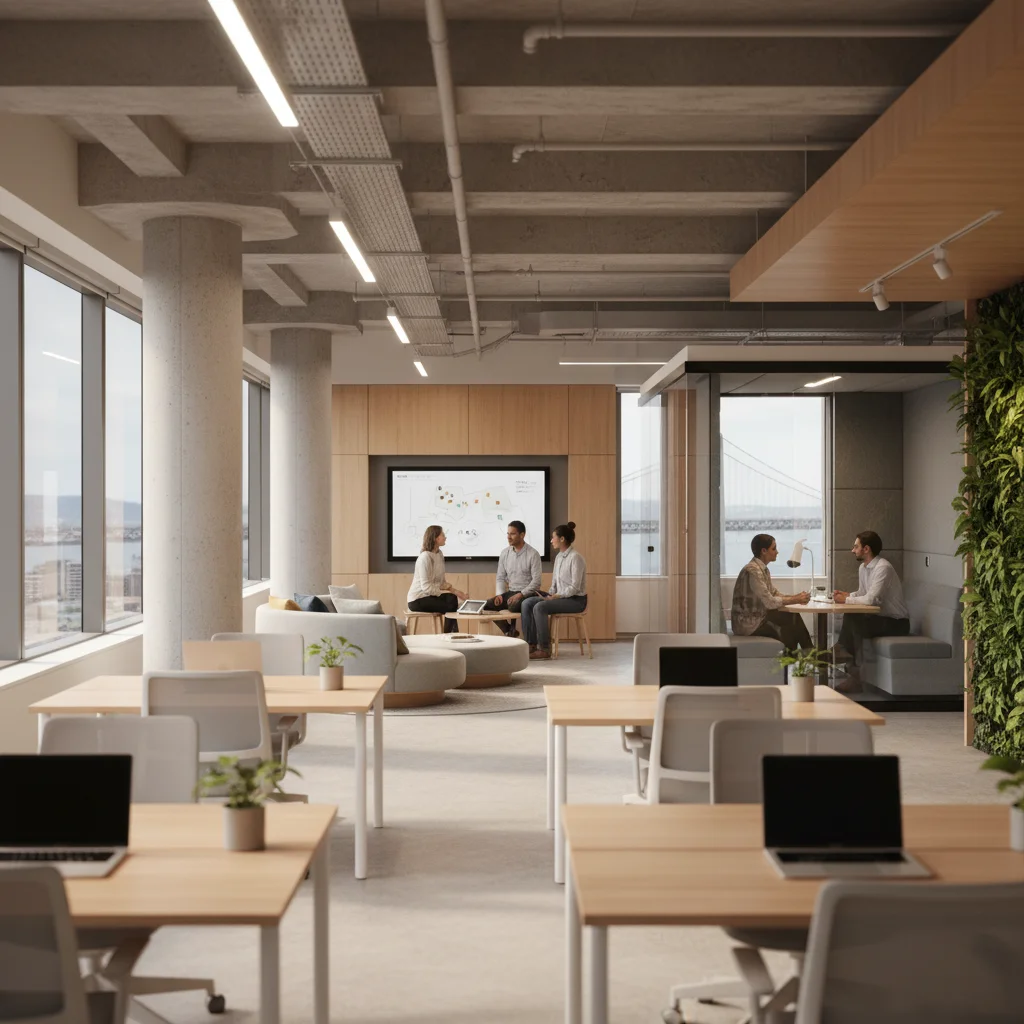
this strategy ranges from approximately $45 to $110 per square foot annually for direct leases, depending on building class and neighborhood. Class A space in the Financial District commands the highest rents ($75–$110/SF), while creative Class B space in SoMa or Dogpatch runs $45–$70/SF. Operating expenses typically add $20–$35/SF on top of base rent, so always calculate total occupancy cost, not just the headline rate.
The Financial District is best for established enterprises and financial services firms needing prestige and transit access. SoMa suits technology and creative companies. Mission Bay is the top choice for life sciences and biotech near UCSF. The Presidio offers a distinctive setting at competitive rates. Dogpatch and Potrero Hill provide affordable creative space for design-oriented firms. Your best neighborhood depends on your industry, talent pool location, and budget.
It depends on your team size, growth trajectory, and hybrid work model. Traditional leases offer cost efficiency at scale but require long commitments. Flexible and coworking spaces cost more per desk but provide month-to-month flexibility and no capital expenditure. A hybrid approach, a smaller core lease supplemented by on-demand workspace for overflow, often delivers the best balance of cost control and flexibility for companies with 50–500 employees operating hybrid schedules.
For budget-conscious options, explore sublease listings (often 20–40% below direct lease rates), outer neighborhoods like Dogpatch or the Outer Mission, and flexible platforms like Codi or Tandem for furnished private offices on short terms. The SF.gov commercial location finder connects businesses with a Commercial Leasing Specialist at no cost. Craigslist's SF commercial section also lists lower-cost options, though due diligence on building quality is essential.
As of 2026, San Francisco's office vacancy rate is approximately 22–25%, down from its peak of around 35% in 2023 but still historically elevated compared to pre-pandemic levels near 5–8%. This elevated vacancy gives tenants significant negotiating leverage on rent, tenant improvement allowances, and lease flexibility provisions. Brokers like Cushman & Wakefield and JLL track current availability across all submarkets.
AI-powered workplace optimization platforms use attendance forecasting to predict how many employees will be in the office on any given day, enabling companies to right-size their leases and manage space more efficiently. Upflex's UnifyAI engine delivers 97% attendance forecast accuracy, allowing corporate real estate leaders to make data-driven lease decisions rather than relying on headcount assumptions. Organizations using this approach have reduced real estate spend by 40%+ in high-cost markets like San Francisco.
Key provisions to negotiate include: a sublease right to offload excess space if needs change; an operating expense cap (3–5% annual increase limit); tenant improvement allowances to cover fit-out costs; free rent periods of 3–6 months on longer leases; renewal options at pre-agreed rates; and early termination rights with defined penalties. Given the current market's elevated vacancy, tenants have more leverage than at any point in the past decade, so push hard on all of these.
Yes. The Presidio Trust leases commercial office space within the Presidio of San Francisco, a national park managed by the federal government. It offers a unique setting with modern amenities, strong transit access, and competitive rates. The SF.gov commercial location finder also connects businesses with city-supported commercial spaces and provides access to a Commercial Leasing Specialist for personalized guidance.
this approach in 2026 presents a genuine opportunity for companies willing to approach it strategically. Elevated vacancy rates mean real negotiating leverage. The range of options, from Trophy towers in the Financial District to flexible private suites in SoMa, means you can match your space to your actual needs rather than defaulting to what was standard five years ago.
The companies getting this right aren't just finding cheaper space. They're managing their space more intelligently. They know how many people are coming in before the week starts. They're not paying for 300 desks when 120 people show up. And when their teams need workspace outside the main office, they're accessing it on demand without signing another lease.
That's the model Upflex is built to support. By combining AI-powered office orchestration with access to the world's largest on-demand workspace network, Upflex gives corporate real estate and HR leaders the data and the infrastructure to right-size their San Francisco footprint with confidence. The result isn't just cost savings. It's a real estate strategy you can defend to your CFO and a workplace experience your employees will actually use.
Explore more from our content library: