Share This Article
No items found.


Office buildings across corporate America sit half-empty on most Tuesdays, yet companies continue paying full rent for underutilized square footage. This disconnect between space availability and actual usage has pushed corporate real estate leaders to rethink how they manage office resources. Dynamic space allocation is the intelligent management of workspace resources that automatically adjusts space assignments, desk availability, and room configurations based on real-time demand and predictive analytics. Unlike traditional fixed seating arrangements, this approach uses data-driven insights to optimize space utilization while ensuring employees have access to the right workspace when they need it. Organizations implementing dynamic space allocation typically see 30-50% improvements in space efficiency and significant reductions in real estate costs.
Dynamic space allocation represents a fundamental shift from static office layouts to intelligent, responsive workspace management that adapts to changing business needs in real-time.
At its foundation, dynamic space allocation combines several key technologies and methodologies. Dynamic memory allocation principles from computer science inform how these systems manage and redistribute resources efficiently. The platform monitors occupancy patterns, analyzes booking data, and automatically adjusts space availability to match actual demand.
The system operates through three primary mechanisms:
Traditional office space management relied on fixed assignments and static layouts. Employees had assigned desks, conference rooms were booked manually, and space utilization was measured quarterly through surveys or badge swipe data. This approach worked when everyone came to the office five days a week, but hybrid work has exposed its limitations.
Modern dynamic allocation systems process thousands of data points daily. They track not just who's in the office, but when teams need to collaborate, which spaces are most productive for different types of work, and how to coordinate attendance across distributed teams. Research shows that organizations using dynamic allocation see 40-60% better space utilization compared to traditional fixed seating models.
Pro Tip: Start with desk booking data and badge swipe analytics to establish baseline utilization patterns before implementing predictive algorithms. This foundation ensures your dynamic allocation system makes decisions based on actual behavior, not assumptions.
Dynamic space allocation systems operate through a continuous cycle of data collection, analysis, prediction, and automated adjustment that optimizes workspace utilization without manual intervention.
The process begins with comprehensive data gathering from multiple sources. Occupancy sensors track real-time space usage, while booking systems provide advance demand signals. Badge access data reveals movement patterns, and calendar integrations show meeting schedules and team collaboration needs.
Advanced systems also incorporate external factors like weather data, public transit delays, and company events that influence attendance patterns. This multi-layered approach creates a complete picture of how space is actually used versus how it's planned to be used.
The analysis engine processes this data using machine learning algorithms that identify patterns and anomalies. For example, the system might discover that the marketing team consistently books conference rooms for 60 minutes but only uses them for 35 minutes, or that certain floors see peak usage on Tuesdays and Thursdays while remaining nearly empty on Fridays.
Once patterns are established, the system generates forecasts for future space demand. These algorithms work similarly to dynamic memory allocation in computer systems, where resources are assigned and deallocated based on real-time needs rather than predetermined allocations.
The prediction engine considers multiple variables:
At Upflex, we've found that our UnifyAI technology achieves 97% accuracy in attendance forecasting by combining these data sources with advanced machine learning models. This precision enables automatic space reallocation that anticipates demand rather than reacting to it.
| Data Source | Information Provided | Prediction Value |
|---|---|---|
| Badge Access Data | Entry/exit times, floor usage | Individual attendance patterns |
| Desk Booking Systems | Advance reservations, cancellations | Planned vs. actual usage |
| Calendar Integration | Meeting schedules, team collaboration | Team coordination requirements |
| Occupancy Sensors | Real-time space utilization | Actual space efficiency metrics |
Organizations implementing dynamic space allocation systems achieve measurable improvements in both cost efficiency and employee experience, with documented savings of 30-50% in real estate expenses.
The most immediate benefit appears in real estate cost savings. By accurately predicting space utilization, companies can make informed decisions about lease renewals, floor consolidations, and office closures. Instead of guessing which spaces are underutilized, dynamic allocation provides concrete data on actual usage patterns.
A recent study by facilities management researchers found that organizations using dynamic allocation reduced their office footprint by an average of 35% while maintaining employee satisfaction scores. This translates to millions in annual savings for large enterprises.
The system also eliminates waste from over-provisioning. Traditional space planning often involves adding 20-30% buffer capacity to handle peak demand, but dynamic allocation can redistribute resources in real-time, reducing the need for excess space.
this improves the employee experience by ensuring the right space is available when needed. Instead of arriving at the office to find no available desks or conference rooms, employees benefit from intelligent coordination that anticipates their needs.
Key experience improvements include:
Teams report 88% achievement of co-attendance goals when using dynamic allocation systems, compared to 45% with manual coordination methods. This improvement in team synchronization directly impacts project velocity and workplace culture.
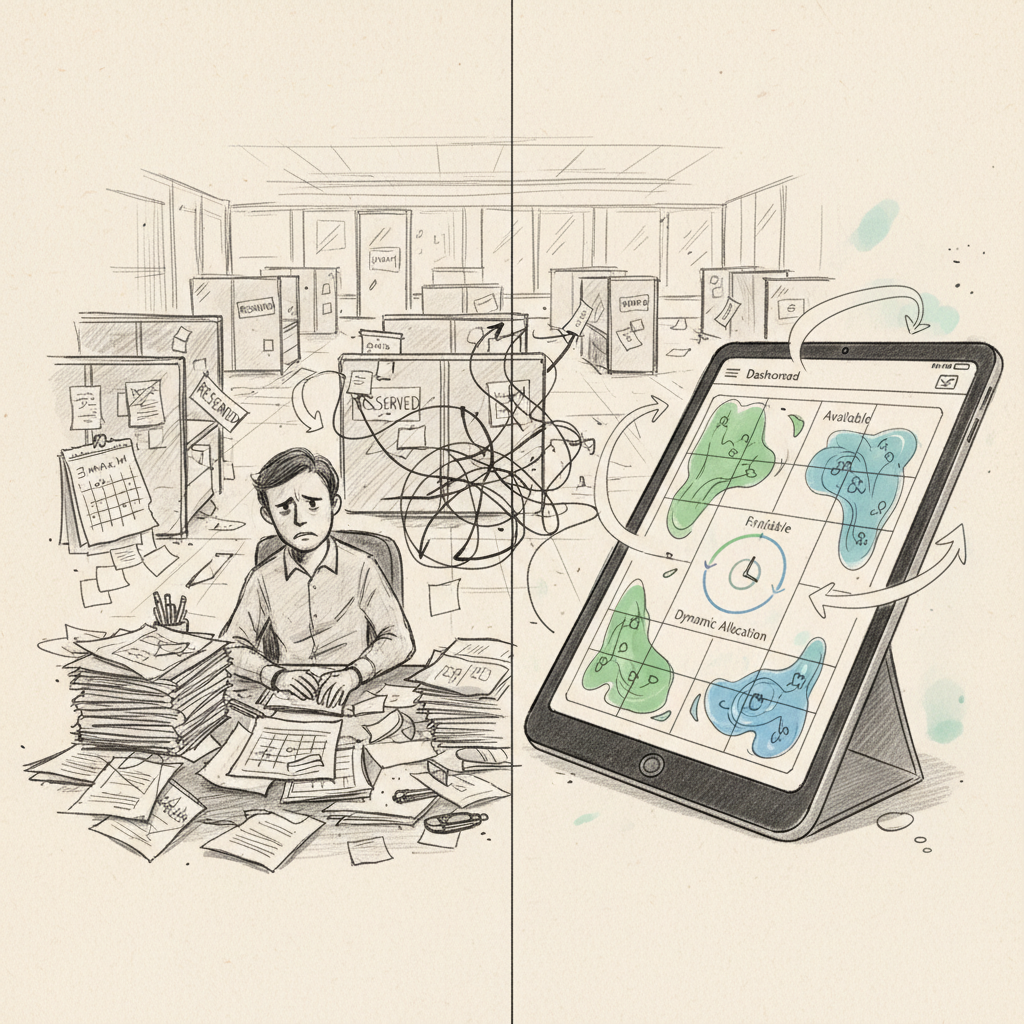
Pro Tip: Implement dynamic allocation gradually by starting with conference room optimization before expanding to desk assignments. This approach allows teams to experience the benefits without disrupting established work patterns too quickly.
While it offers significant benefits, organizations often encounter predictable obstacles during implementation that can be avoided with proper planning and change management strategies.
The most frequent implementation challenge involves integrating multiple data sources into a cohesive system. Many organizations discover that their existing badge access systems, booking platforms, and occupancy sensors use incompatible data formats or update frequencies.
Technical implementation requires careful attention to data synchronization and API reliability. A common mistake is underestimating the time needed to clean historical data and establish reliable data pipelines.
Organizations should expect to spend 2-3 months on data integration and validation before the dynamic allocation algorithms can operate effectively. Rushing this phase often results in inaccurate predictions and employee frustration.
Resistance to dynamic seating arrangements represents another significant challenge. Employees accustomed to assigned desks may feel uncomfortable with uncertainty about where they'll sit each day. This concern is particularly strong among senior staff and employees who personalize their workspace.
Successful implementations address these concerns through:
Companies that skip comprehensive change management see 40% higher employee dissatisfaction scores during the first six months of implementation. However, organizations that invest in proper training and communication typically achieve 85% employee satisfaction within three months.
A subtle but important pitfall involves over-optimizing space allocation at the expense of flexibility and spontaneity. While maximizing utilization is valuable, employees also need the ability to find quiet spaces for focused work or impromptu collaboration areas for unexpected meetings.
The most effective systems maintain 10-15% buffer capacity and include "flex zones" that can be allocated on-demand without advance booking. This approach balances efficiency with the human need for workspace spontaneity.
Successful this method implementation requires a strategic approach that balances technology capabilities with human-centered design principles and organizational change management.
Begin with comprehensive baseline measurement before implementing any dynamic features. Collect 3-6 months of occupancy data, booking patterns, and employee feedback to understand current utilization patterns and pain points. This foundation enables accurate algorithm training and realistic expectation setting.
Establish clear metrics for success beyond simple utilization percentages:
Our team at Upflex recommends starting with conference room optimization before expanding to desk allocation. Meeting rooms offer clearer usage patterns and less emotional attachment, making them ideal for demonstrating system value and building employee confidence.
Design your technology architecture for scalability and interoperability from day one. Dynamic allocation systems require robust data processing capabilities and real-time responsiveness that can handle peak usage periods without performance degradation.
Essential technology components include:
Ensure your chosen platform can integrate with both current systems and future acquisitions. Many organizations underestimate the complexity of maintaining data synchronization across multiple platforms, leading to costly custom development work later.
Pro Tip: Implement a phased rollout starting with one floor or department. This approach allows you to refine algorithms and processes before scaling organization-wide, reducing risk and improving employee buy-in.
Success depends as much on people as technology. Develop a comprehensive change management strategy that addresses both practical concerns and emotional responses to workspace changes.
Create workspace policies that balance optimization with employee needs. For example, allow employees to request consistent seating near their team members or in specific zones based on work requirements. Research indicates that flexibility in policy application increases adoption rates by 60% compared to rigid algorithmic assignments.
Establish feedback loops and continuous improvement processes. Dynamic allocation systems generate vast amounts of data about space usage patterns, but this information is only valuable if it's used to refine policies and improve employee experience over time.
| Implementation Phase | Duration | Key Activities | Success Metrics |
|---|---|---|---|
| Data Collection | 3-6 months | Baseline measurement, system integration | 90% data accuracy, complete integration |
| Pilot Program | 2-3 months | Limited deployment, algorithm training | 85% forecast accuracy, positive feedback |
| Full Rollout | 6-12 months | Organization-wide deployment | 30%+ cost reduction, 80% adoption |
| Optimization | Ongoing | Continuous improvement, policy refinement | 95% forecast accuracy, 90% satisfaction |
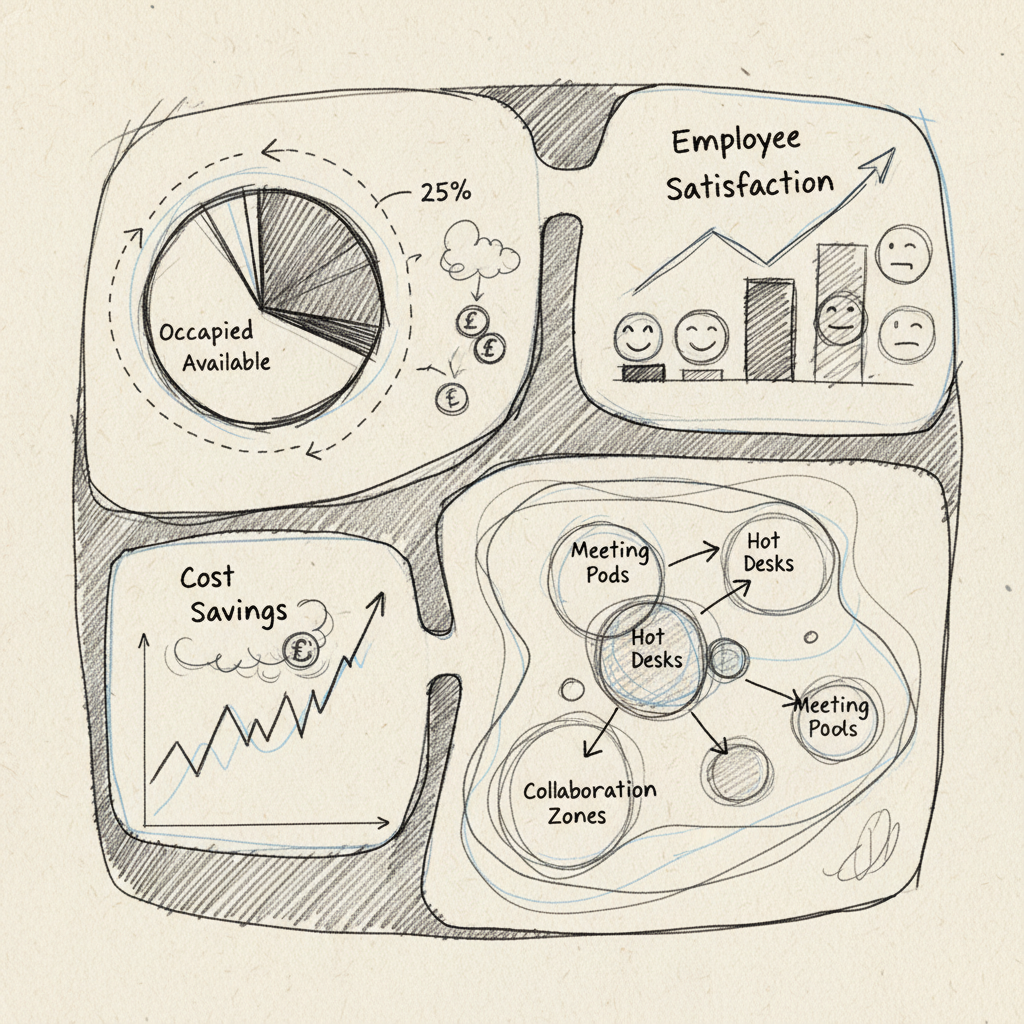
Dynamic memory allocation allows programs to request and release memory during runtime based on actual needs rather than predetermined fixed amounts. This flexibility enables efficient resource utilization, supports variable data sizes, and prevents memory waste that occurs with static allocation methods.
Dynamically allocated storage in workspace management refers to the real-time assignment of office resources based on current demand and predictive analytics. Unlike fixed desk assignments, this approach continuously redistributes available space to match actual usage patterns and optimize utilization efficiency.
Static space allocation assigns fixed resources like permanent desks or offices that remain unchanged regardless of actual usage. this strategy continuously adjusts resource assignments based on real-time demand, occupancy data, and predictive algorithms to maximize efficiency and adapt to changing needs.
Modern this approach systems achieve 90-97% accuracy in attendance forecasting when properly implemented with comprehensive data sources. Advanced platforms like those used in enterprise environments combine multiple data streams and machine learning algorithms to reach these high accuracy levels.
The primary challenges include integrating multiple data sources, managing employee change resistance, ensuring data quality and system reliability, and balancing optimization with flexibility needs. Organizations typically require 6-12 months for full implementation including proper change management and system integration.
Organizations typically achieve 30-50% reductions in real estate costs through this, with some enterprises documenting savings exceeding 40% of their annual office expenses. These savings result from improved utilization rates, informed downsizing decisions, and reduced need for buffer capacity.
Yes, modern it platforms integrate with existing badge access systems, calendar applications, booking platforms, and facility management software through APIs. However, successful integration requires careful planning and may involve data format standardization and synchronization setup.
this method represents a fundamental evolution in how organizations manage their physical workspace resources. By combining real-time data collection, predictive analytics, and automated optimization, companies can achieve significant cost savings while improving employee experience and workspace efficiency.
The technology has matured significantly in 2026, with leading platforms achieving 97% accuracy in attendance forecasting and delivering documented cost reductions of 40% or more. However, success depends on thoughtful implementation that balances technological capabilities with human-centered design and comprehensive change management.
For corporate real estate and workplace leaders facing pressure to optimize office costs while maintaining employee satisfaction, this strategy offers a data-driven path forward. The key lies in starting with solid baseline data, implementing gradually, and maintaining focus on both efficiency metrics and employee experience throughout the transformation process.
As hybrid work continues to evolve, organizations that master this approach will gain competitive advantages through lower real estate costs, higher employee satisfaction, and more agile workspace management capabilities. The investment in these systems pays dividends not just in immediate cost savings, but in building the foundation for future workplace flexibility and optimization.
Explore more from our content library: