Share This Article
No items found.

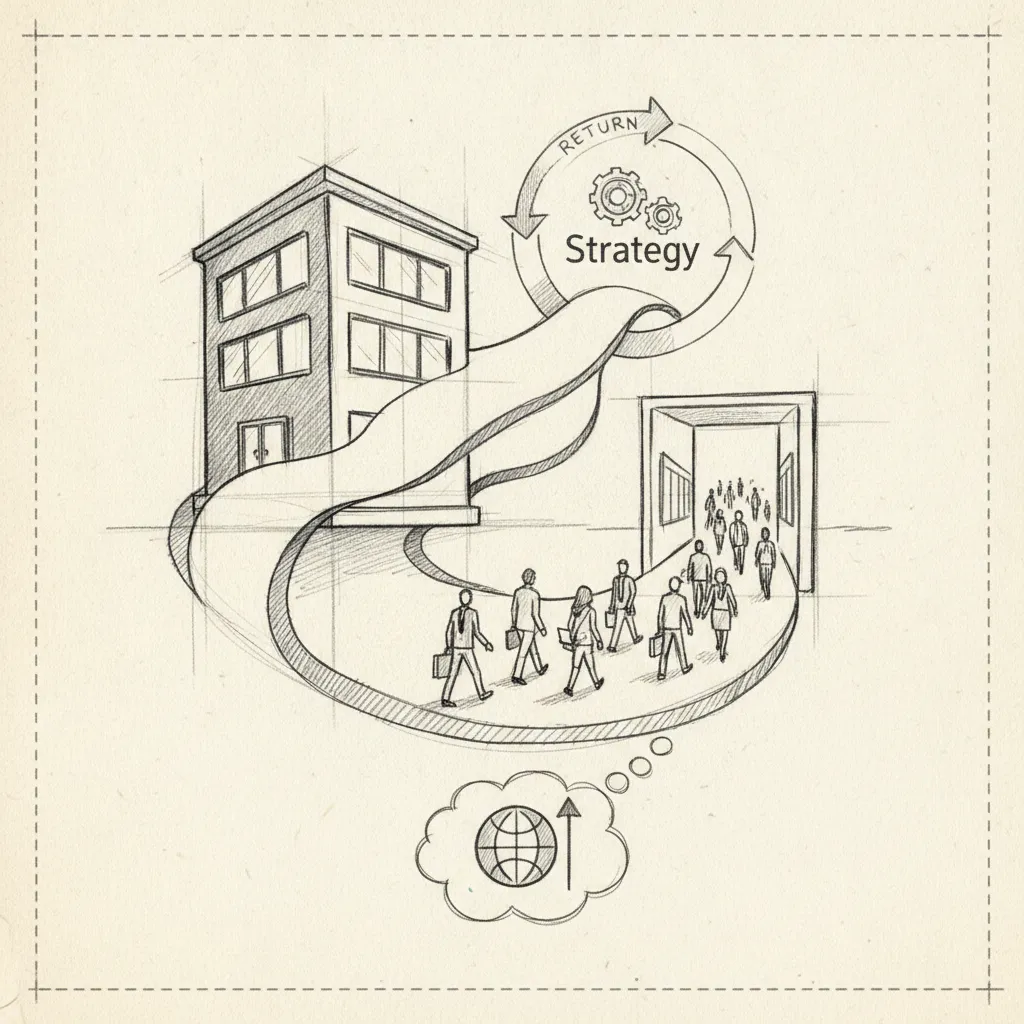
A return to office strategy is a structured plan that defines when, how, and under what conditions employees return to a physical workplace, whether full-time, hybrid, or on a flexible schedule. Companies need one to avoid the costly chaos of ad-hoc mandates: unplanned RTOs drive turnover spikes of 12–15%, while structured plans cut real estate spend and preserve engagement scores. The difference between a policy and a strategy is measurable outcomes.
A return to office strategy is a documented, phased plan, not a memo, covering schedule structure, space allocation, legal compliance, and employee communication.
It defines which employees return, when, under what conditions, and how the physical workspace will support them. A date-back-in-office announcement is not a strategy; it's a trigger event that, without the supporting framework, produces confusion, attrition, and wasted real estate spend.
The three terms are often used interchangeably, but they operate at different levels. This type of plan is the overarching framework — it sets the direction, timeline, and governance structure for how your organization moves people back into physical space. Hybrid and flexible work policies are delivery models that sit within that framework.
A hybrid policy answers "how many days in-office?" A flexible policy answers "which hours and locations are permitted?" Your RTO plan answers the prior question: "What is the business rationale, the phased rollout, and the success criteria for bringing people back at all?"
Companies that skipped the strategy layer and jumped straight to mandates paid for it. Organizations that issued abrupt full-time RTO mandates in 2023–2024 saw voluntary attrition rise 12–15% within six months, according to Unispace 2023 research and Microsoft WorkLab data. Senior and high-performing employees, the ones with the most options, left at disproportionate rates.
"The biggest mistake companies make with return-to-office is treating it as a policy announcement rather than an organizational change initiative. Without structured communication, phased timelines, and genuine employee input, even well-intentioned plans collapse under resistance." — Dr. Tracy Brower, Sociologist and VP of Workplace Insights at Steelcase
Legal obligations are not an afterthought, they belong in the plan from day one. Three areas demand early attention.
The strategic upside of getting this right is concrete. A well-structured RTO plan gives corporate real estate teams the utilization data they need to right-size their portfolio. Upflex clients who pair RTO planning with on-demand workspace data average 40%+ reductions in real estate spend, because the plan tells them exactly how much space they actually need, rather than how much they assumed they would.
The three obstacles that most reliably derail an office return plan are employee resistance, burnout from commuting, and offices that were never designed for hybrid occupancy.
Employee resistance is the most cited barrier, and the numbers are stark. A 2024 Gallup survey found that 65% of workers said they would look for a new job before accepting a full-time in-office mandate. That figure makes change management a business continuity issue, not just an HR preference. According to PowerToFly's analysis of the return to office movement, employee sentiment around mandates has grown increasingly polarized since 2023, making transparent communication more critical than ever.
Space capacity is the second structural problem. Most pre-pandemic offices were designed for 100% occupancy. Post-RTO, average utilization sits at 40–60%, which means companies are paying full-price rent for half-empty floors. Without dynamic space allocation built into the plan, that gap becomes permanent wasted spend. Upflex's utilization data shows that organizations using AI-powered attendance forecasting, predicting who is coming in, when, and where, can consolidate their real estate footprint by 40% or more without removing desks employees actually need.
The average U.S. round-trip commute runs 54 minutes, and research from the American Psychological Association consistently links commute length to burnout. RTO plans that ignore this see a measurable productivity dip in the first 90 days as employees absorb the time cost.
Three concrete additions to any written RTO plan reduce that impact:
Top-down mandates consistently produce the highest attrition risk. The approaches that work better are phased return timelines, 4 to 8 weeks per cohort, so teams adjust without simultaneous disruption across the organization.
Manager-led team agreements outperform company-wide policies because they tie in-office days to specific collaboration goals rather than arbitrary attendance counts. Pair that with a transparent two-way communication cadence, regular feedback loops where employees can flag problems before they become resignations, and resistance drops measurably.
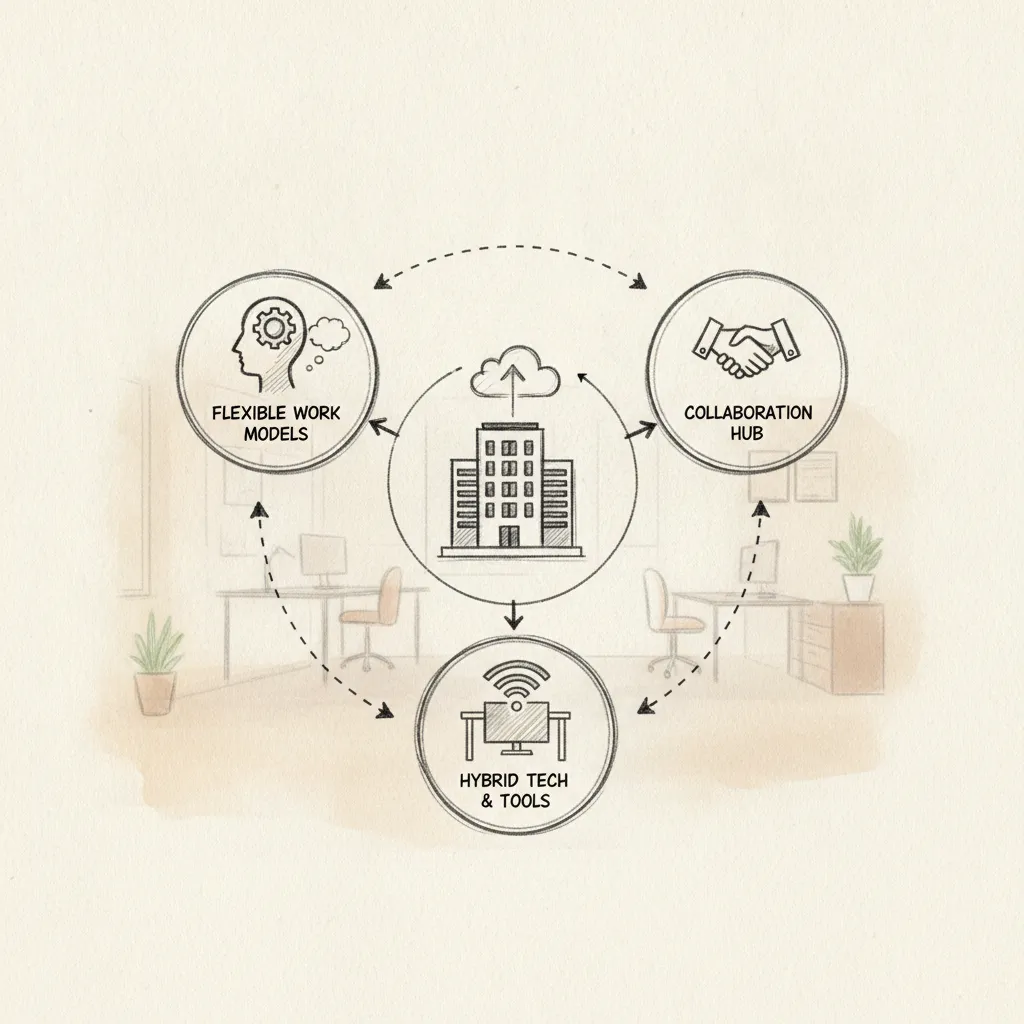
Three workplace reentry models dominate enterprise planning: full-time mandates, hybrid anchor days, and flexible activity-based attendance, each with distinct cost and retention trade-offs. For a detailed breakdown of how leading companies are structuring these models, HiBob's guide to back-to-office strategies offers practical frameworks used across industries.
Full-time RTO maximizes space utilization and preserves spontaneous collaboration, but it carries a steep talent cost. Stanford economist Nick Bloom's 2024 research found mandatory five-day RTO correlated with 18% higher senior-employee attrition compared to hybrid peers, a loss that erodes the very institutional knowledge full-time presence is meant to protect.
Hybrid RTO, typically two to three anchor days per week, is now the market majority. As of Q1 2025, 58% of Fortune 500 companies operate on this model. It delivers roughly 87% of the collaboration benefits of full-time in-office attendance at approximately 50% of the real estate footprint cost, making it the most defensible option for most enterprise portfolios.
Flexible or activity-based RTO lets employees choose in-office days based on task type: deep-focus work from home, collaborative sprints in the office. The model works well on paper but creates ghost-office risk, paying for space that sits empty on unpredictable days. Upflex addresses this directly: its network of 5,000+ on-demand workspace locations lets employees access professional space anywhere without committing to long-term leases, eliminating the fixed cost exposure that makes flexible models financially precarious.
Hybrid models show measurable retention advantages. Gallup's 2024 data found hybrid employees score 12% higher on engagement and experience 9% lower voluntary turnover than those under full-time mandates.
Flexible models produce similar retention outcomes, but they demand stronger coordination infrastructure, without tooling to align team presence, the in-office experience fragments and the collaboration rationale disappears.
On cost, the differences are stark. Full-time RTO locks in fixed lease obligations regardless of actual density. Hybrid reduces required square footage by 30–50%. Flexible models paired with on-demand workspace can cut real estate spend by 40% or more, while still achieving meaningful team co-attendance on the days that matter.
A successful office reentry plan follows five sequential steps: audit space, model costs, build manager buy-in, roll out by cohort, and add workspace flexibility.
Before setting any attendance targets, establish your current utilization baseline using badge data, occupancy sensors, or a workplace analytics platform. Many organizations discover they're running at 30–50% utilization, mandating full-floor attendance before verifying actual desk capacity creates the exact friction that kills RTO compliance.
Step 2 is a full cost-benefit analysis across two horizons: 12 months and 36 months. On the cost side, account for office fit-out, commuter benefits, catering, and IT infrastructure upgrades. On the gain side, model reduced remote infrastructure spend, real estate consolidation savings, and collaboration ROI from increased co-attendance.
A 36-month view matters because real estate decisions, lease renewals, consolidations, exits, rarely pay back in under two years. Skipping this step is how workplace reentry decisions get reversed six months in when the CFO sees the bill.
Step 3 is manager alignment, and it must happen before any company-wide announcement. According to Mercer's 2023 research, managers who co-design team agreements drive 2x higher compliance rates than those handed a top-down script.
Step 4 is a phased rollout. Start with volunteer early adopters, then collect utilization and sentiment data over 4–6 weeks. Those internal proof points reduce resistance when you expand to later cohorts, employees respond to peer evidence, not policy memos.
Not every employee lives near a company office, and not every in-office day needs to happen at HQ. Platforms like Upflex give employees on-demand access to the world's largest global workspace network, filling the gap between home and headquarters without adding fixed lease obligations. That flexibility also gives Corporate Real Estate leaders the data to right-size their owned portfolio with confidence.
Track office utilization rate, voluntary attrition, employee engagement scores, and collaboration frequency, reviewed at 30, 90, and 180 days.
Office utilization rate is the first number to watch. Target 60–75% occupancy on anchor days, anything below 50% on non-anchor days signals you're paying for empty square footage rather than productive workspace.
When utilization drops that low, the financially sound response is to introduce on-demand workspace options instead of carrying fixed overhead. Platforms like Upflex track cost-per-occupied-desk weekly, giving corporate real estate leaders a direct line between attendance data and real estate spend, the kind of visibility that turns a utilization dip into a portfolio decision rather than a surprise at lease renewal.
Collaboration frequency rounds out the picture. Measure meeting density and cross-team project velocity before and after your workplace reentry plan launches — these tell you whether in-person time is generating the coordination value that justified the policy.
Run a monthly pulse survey on employee engagement for the first six months. Sentiment shifts fast in the early weeks; a monthly cadence catches problems before they become attrition.
Never use badge swipes as a proxy for output. Pair attendance data with project completion rates and OKR achievement to build a productivity picture that holds up to scrutiny from finance and HR leadership alike.
For retention, set your baseline against the 12 months before the RTO launch, then segment attrition by tenure and seniority. RTO mandates disproportionately drive out employees in the 5–10 year range and senior individual contributors, the exits that carry the highest replacement cost and the least visibility in aggregate turnover numbers.
Build the review schedule into the RTO plan document before day one: a 30-day pulse check post-launch, a 90-day formal review with leadership, and a full 6-month strategy audit. Making these dates non-negotiable from the start prevents measurement from becoming optional when early results are uncomfortable.
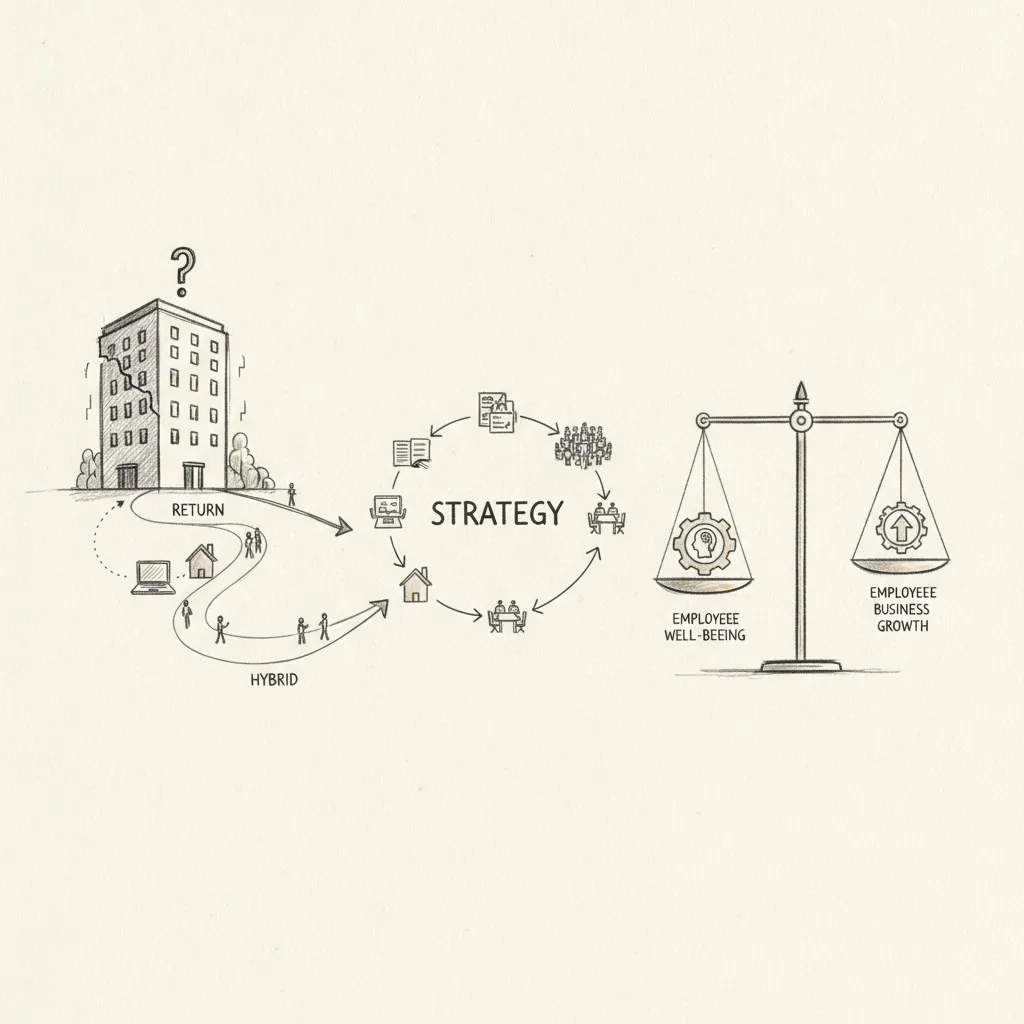
Most companies need 3–6 months to move from policy design to full implementation. The first 4–6 weeks typically cover stakeholder alignment, policy drafting, and manager briefings. The following 6–8 weeks focus on space readiness, technology setup, desk booking systems, attendance tracking, and employee communication. A phased rollout, starting with voluntary or department-level returns before company-wide enforcement, reduces friction and gives your team time to surface operational gaps before they become compliance problems.
Start by diagnosing why compliance is low before escalating to disciplinary action. Resistance usually signals one of three problems: employees don't see a clear reason to commute, the office experience doesn't justify the cost, or the policy feels arbitrary. Gather structured feedback, address the specific objections, better collaboration spaces, flexible scheduling, reliable desk availability, and track attendance data to identify whether non-compliance is isolated or systemic. Enforcement without understanding the root cause tends to accelerate attrition.
Collective bargaining agreements can legally restrict an employer's ability to change work location terms without negotiating with the union first. In unionized environments, remote or hybrid work arrangements established during the pandemic may have become implied or explicit terms of employment. Before issuing an RTO mandate, HR and legal teams should audit existing agreements for any language covering work location, commuting, or scheduling, and engage union representatives early to avoid grievances or work stoppages.
A hybrid approach can reduce real estate costs significantly, but only if your space is actively right-sized to match actual attendance. A full-time mandate fills desks but locks you into fixed overhead regardless of utilization. A hybrid model, paired with attendance forecasting tools that predict which days employees will come in, lets you consolidate space based on real demand. Upflex customers using AI-powered attendance forecasting have reduced real estate spend by more than 40% without issuing rigid full-time mandates.
Technology is foundational to any modern office reentry effort. Desk booking systems, occupancy sensors, and attendance forecasting platforms give HR and real estate teams the data they need to make evidence-based decisions. Without reliable utilization data, organizations risk either over-investing in space they don't need or under-preparing for the days when demand peaks. AI-powered tools can predict attendance patterns with high accuracy, enabling proactive space management rather than reactive scrambling after problems emerge.
A return to office strategy succeeds or fails on three decisions: how clearly you define the "why" behind in-person work, how accurately you can predict and coordinate attendance, and whether your physical footprint matches actual demand rather than pre-pandemic assumptions. Companies that treat RTO as a policy problem tend to fight employee resistance indefinitely. Those that treat it as a data and space problem, measuring utilization, forecasting attendance, and adjusting their portfolio accordingly, cut costs and improve the in-office experience at the same time.
Your most concrete next step: pull your last 90 days of badge or desk booking data and map it against your current lease obligations. That gap is your real estate opportunity, and the starting point for a plan built on evidence, not headcount targets. If you don't yet have reliable attendance data, Upflex's UnifyAI forecasting gives you 97% accuracy from day one.
Explore more from our content library: