Share This Article
No items found.


Austin's commercial real estate market offers a wide range of office space options, from traditional long-term leases in the Central Business District to flexible coworking desks in East Austin and on-demand private suites near The Domain. Whether you're a growing startup or an enterprise rightsizing its portfolio, finding the right office space in Austin requires understanding the city's distinct submarkets, current vacancy dynamics, and the true cost of each workspace model.
Austin's office market has shifted significantly since 2024. Downtown vacancy rates have climbed to record highs, according to a 2025 report from CBRE cited by KUT News [1]. That creates real leverage for tenants willing to negotiate. At the same time, demand for flexible, short-term workspace has surged as enterprises manage hybrid teams that don't need a full floor five days a week. This guide covers the leading workspace types, key submarkets, pricing benchmarks, and the decision framework you need to choose wisely in 2026.
Austin's office market is defined by high vacancy in traditional Class A space and strong demand for flexible, hybrid-ready alternatives. As of 2026, downtown Austin is experiencing some of its highest office vacancy rates on record, driven by hybrid work adoption and tech-sector consolidations [1].
The oversupply of traditional office space in Austin has put downward pressure on asking rents, particularly in the Central Business District. Tenants negotiating new leases in 2026 have more concessions available to them than at any point in the past decade. Free rent periods, generous tenant improvement allowances, and flexible lease terms are all on the table.
Industry analysts from Cushman & Wakefield note that Austin's office market is bifurcating: Class A trophy buildings with modern amenities continue to attract tenants willing to pay a premium, while older Class B and Class C stock struggles with sustained vacancies [2]. The gap between the best and the rest has never been wider.
Austin's office market isn't monolithic. Each submarket has its own character, tenant mix, and pricing dynamic.
Austin offers at least six distinct workspace models, each suited to different team sizes, budget constraints, and operational requirements. Choosing the right type is the most important decision you'll make before signing anything.
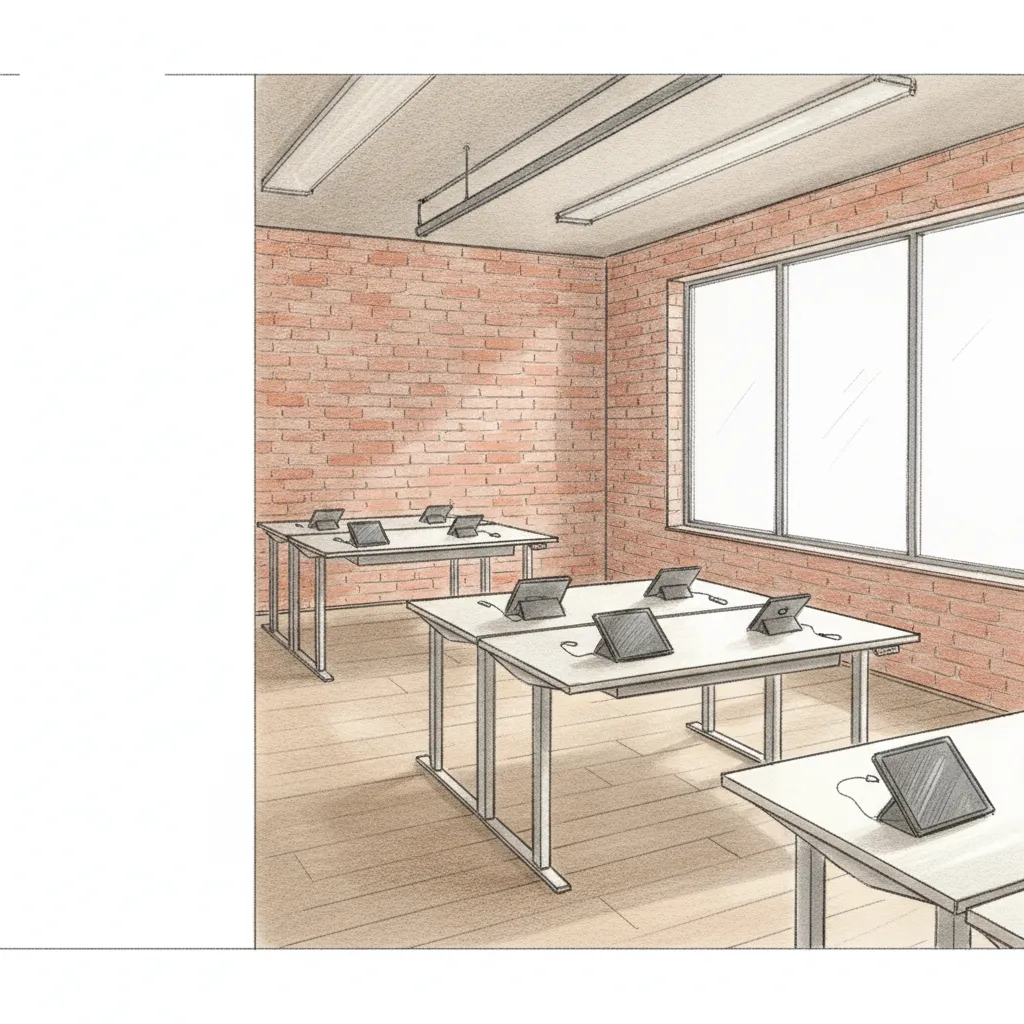
A direct lease gives you full control over your environment, branding, and layout. It's the right choice for teams of 50 or more who need a stable, dedicated headquarters. JLL lists a broad inventory of available leased office space across Austin's submarkets, including both full-floor and partial-floor options [6].
Coworking spaces provide shared desks, amenities, and community in a month-to-month or annual membership format. Austin has a strong coworking ecosystem, with options ranging from large national operators to locally owned independent spaces. CoworkingResources maintains a curated guide to the best coworking spaces in Austin, covering neighborhoods from East Austin to The Domain [3].
Private offices within managed buildings offer a middle ground: dedicated, lockable space without a long-term lease. Providers like Regus and Executive Workspace offer furnished, move-in-ready suites in Austin's key business corridors [4] [7].
Austin's elevated vacancy rate has created an active sublease market. Companies that over-leased during the 2021 to 2023 growth period are now offering quality space at significant discounts. Commercial Search lists hundreds of sublease options across Austin's submarkets [8].
On-demand workspace (booking a desk or private office by the hour or day) has become a legitimate enterprise strategy, not just a freelancer convenience. Platforms like Deskpass aggregate available private office space across Austin's neighborhoods, including Downtown, South Congress, East Austin, and The Domain [9].
Pro Tip: If your team's in-office attendance varies week to week, don't sign a lease based on peak headcount. Use 60 to 90 days of actual badge or booking data to establish your true utilization baseline before committing to square footage. Overbuilding is the most common (and most expensive) mistake corporate real estate teams make in hybrid markets.
Choosing the right office space in Austin comes down to four variables: team size, lease flexibility, budget per employee, and how predictably your team actually uses the office.
| Workspace Type | Typical Term | Avg. Monthly Cost | Best Team Size | Flexibility |
|---|---|---|---|---|
| Direct Lease (Class A) | 3–10 years | $45–$65/sq ft/yr | 50+ employees | Low |
| Sublease | 1–3 years | 20–35% below market | 10–100 employees | Medium |
| Executive Suite / Serviced Office | Monthly–1 year | $800–$2,500/office | 2–15 employees | High |
| Coworking Membership | Monthly | $149–$600/person | 1–20 employees | Very High |
| On-Demand Workspace | Per day/hour | $20–$80/day/person | Any size | Maximum |
Pro Tip: For hybrid teams with 3 or more Austin-based employees, consider a blended strategy: a smaller permanent footprint for anchor days combined with on-demand workspace credits for overflow days. This approach can reduce your real estate commitment by 30 to 40% versus sizing for peak occupancy.
Managing office space in Austin for a hybrid workforce requires more than a lease and a floor plan. You need visibility into who's coming in, when, and why, so you can right-size your footprint and justify every dollar to the CFO.
A common mistake enterprises make is leasing space based on headcount rather than actual utilization. In practice, hybrid teams in Austin (and across every major U.S. market) use their offices at 40 to 60% capacity on average. That means companies are routinely paying for 40 to 60% of their square footage to sit empty on any given day.
Research from CBRE and JLL consistently shows that office utilization data, when collected and acted on, supports real estate decisions that reduce portfolio costs by 30 to 40% without reducing employee satisfaction [2] [6]. The challenge is collecting that data systematically and turning it into action.
Workplace optimization platforms have emerged as the operational layer between your lease and your people. At Upflex, we've found that the biggest gap in most enterprise real estate strategies isn't the lease negotiation. It's the absence of reliable attendance forecasting. Without knowing who's coming in tomorrow, you can't staff the floor, coordinate team co-presence, or make a defensible case for consolidation.
Upflex's UnifyAI engine forecasts attendance with 97% accuracy, automating the coordination between your owned Austin office and on-demand workspace across the city. The result: customers achieve 40%+ reductions in real estate spend and 88% co-attendance rates, giving finance the hard numbers and HR the culture proof they both need.

Pro Tip: Before your next Austin lease renewal, run a 90-day utilization audit using desk booking or badge data. If average daily occupancy is below 65% of your leased capacity, you have a quantifiable case for downsizing or renegotiating. Presenting this data to your CFO as part of a portfolio optimization strategy, backed by AI forecasting, is far more persuasive than anecdotal observations.
Austin's office submarkets each serve different corporate needs. Knowing which neighborhood fits your team's profile saves time, reduces commute friction, and improves in-office attendance.
Downtown Austin remains the city's primary business address. It offers direct access to city government, financial institutions, and major law firms. Republic Austin, for example, is one of the few commercial office buildings with direct access to Republic Square Park, making it a distinctive option for companies that value walkability and urban amenity [10].
Downtown is best for client-facing businesses, financial services, and companies that need a prestigious address. The tradeoff is cost: Class A downtown space commands the highest rents in the market, and parking adds meaningful expense for employees who drive. According to KUT News reporting on downtown Austin office vacancies, the city and local businesses are actively developing creative solutions to address the impact of rising vacancy rates on foot traffic and neighborhood vitality [1].
The Domain has matured into Austin's second downtown. Apple, Indeed, and other major tech firms have significant presences here. The area offers newer Class A inventory, better parking ratios than downtown, and proximity to North Austin's residential neighborhoods where much of the city's tech workforce lives.
JLL and Cushman & Wakefield both maintain active listings in The Domain submarket [2] [6], and it's consistently one of the most competitive submarkets for quality talent attraction. For tech companies and corporate back-office operations, The Domain often delivers better value per square foot than the CBD.
East Austin has transformed from an industrial district into one of the city's most vibrant creative and tech corridors. Coworking providers, boutique office buildings, and renovated warehouses offer a range of options for startups, agencies, and innovation teams. CoworkingResources identifies several of Austin's best independent coworking spaces in this corridor [3].
Rents are lower than downtown, the aesthetic is distinctive, and the neighborhood's walkability and restaurant density make it a draw for younger employees. One limitation is that parking can be challenging, and some older buildings lack the IT infrastructure that enterprise tenants require.
As of 2026, Class A office space in Austin's CBD ranges from approximately $45 to $65 per square foot annually. Suburban and Class B space in submarkets like The Domain and Northwest Austin typically runs $28 to $42 per square foot. Elevated vacancy rates have given tenants meaningful negotiating leverage, particularly on free rent periods and tenant improvement allowances.
The best neighborhood depends on your business type and workforce. Downtown Austin suits client-facing firms and financial services. The Domain is preferred by tech companies and corporations wanting newer Class A inventory with better parking. East Austin attracts creative agencies and startups. South Congress offers boutique options for design and media firms. Northwest Austin provides value-oriented suburban campuses for back-office operations.
Yes, 2026 is a favorable time for tenants. Downtown Austin office vacancies are at record highs, according to KUT News, which means landlords are offering more concessions than at any point in the past decade. Tenants with strong credit and clear space requirements can negotiate below-asking rents, extended free rent periods, and generous improvement allowances.
Coworking memberships provide access to shared open-plan desks and common areas on a flexible basis, typically month-to-month. Private offices are dedicated, lockable spaces within a managed building or coworking facility. Private office space for rent in Austin is available through providers like Regus, Deskpass, and Executive Workspace, and typically costs $800 to $2,500 per month depending on size and location.
Hybrid companies reduce wasted spend by combining a smaller permanent footprint with on-demand workspace access for overflow days. AI-powered platforms like Upflex forecast attendance with 97% accuracy, enabling proactive desk booking coordination and real-time space management. Customers using this approach have achieved 40%+ reductions in real estate spend without reducing team co-attendance or employee experience.
Small private offices and executive suites under 500 square feet are widely available through managed workspace providers. Regus, Executive Workspace, and Deskpass all list compact private offices across Austin's key neighborhoods. CommercialSearch also aggregates smaller direct-lease and sublease listings across the metro area, making it a useful starting point for small-team searches.
Prioritize natural light, IT infrastructure (fiber availability, backup power), HVAC reliability, parking ratio or transit proximity, and the quality of common areas. Ask the landlord for current occupancy rates in the building. A half-empty building can signal future amenity cuts or deferred maintenance. Also verify whether the lease includes operating expense caps, which protect you from unexpected cost increases over the term.
Austin's office market in 2026 offers something genuinely rare: a tenant's market in a city that was firmly in landlord territory just three years ago. Record vacancy rates, an active sublease pipeline, and a mature flexible workspace ecosystem give corporate real estate leaders more options, and more negotiating leverage, than they've had in years.
The right choice depends on your team's size, hybrid work patterns, and how much certainty you have about headcount over the next three to five years. Traditional leases still make sense for stable, large teams. Flexible and on-demand models make sense for hybrid organizations whose attendance is variable and whose real estate needs are evolving.
For companies managing hybrid teams across Austin and beyond, the real opportunity isn't just finding better office space in Austin. It's building the operational infrastructure to use that space intelligently. Upflex combines AI-powered attendance forecasting with access to a global on-demand workspace network, giving corporate real estate leaders the data and flexibility they need to right-size their portfolio, reduce spend by 40%+, and ensure their teams are in the office on the same days, for the right reasons.
Explore more from our content library: