Share This Article
No items found.

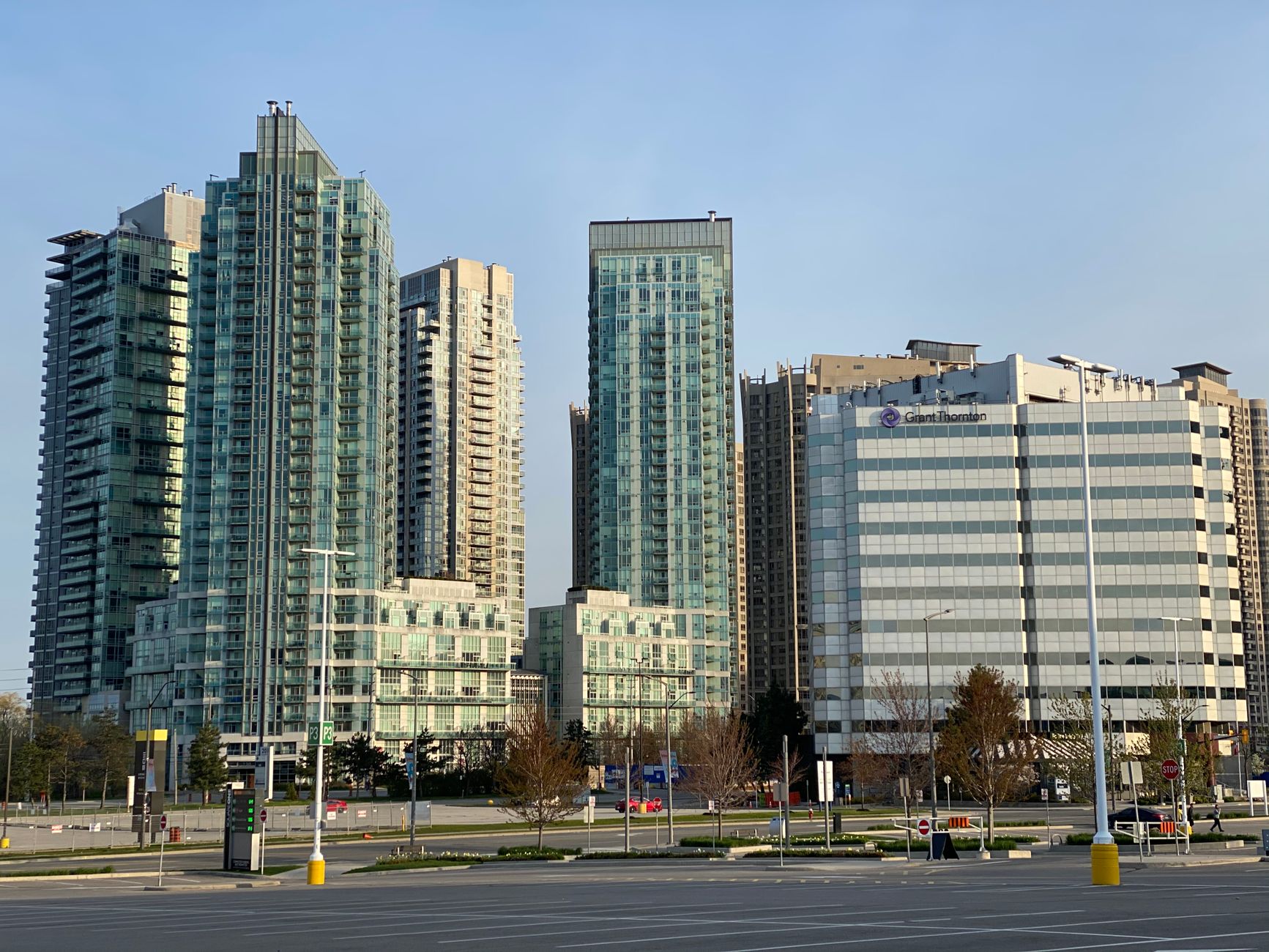
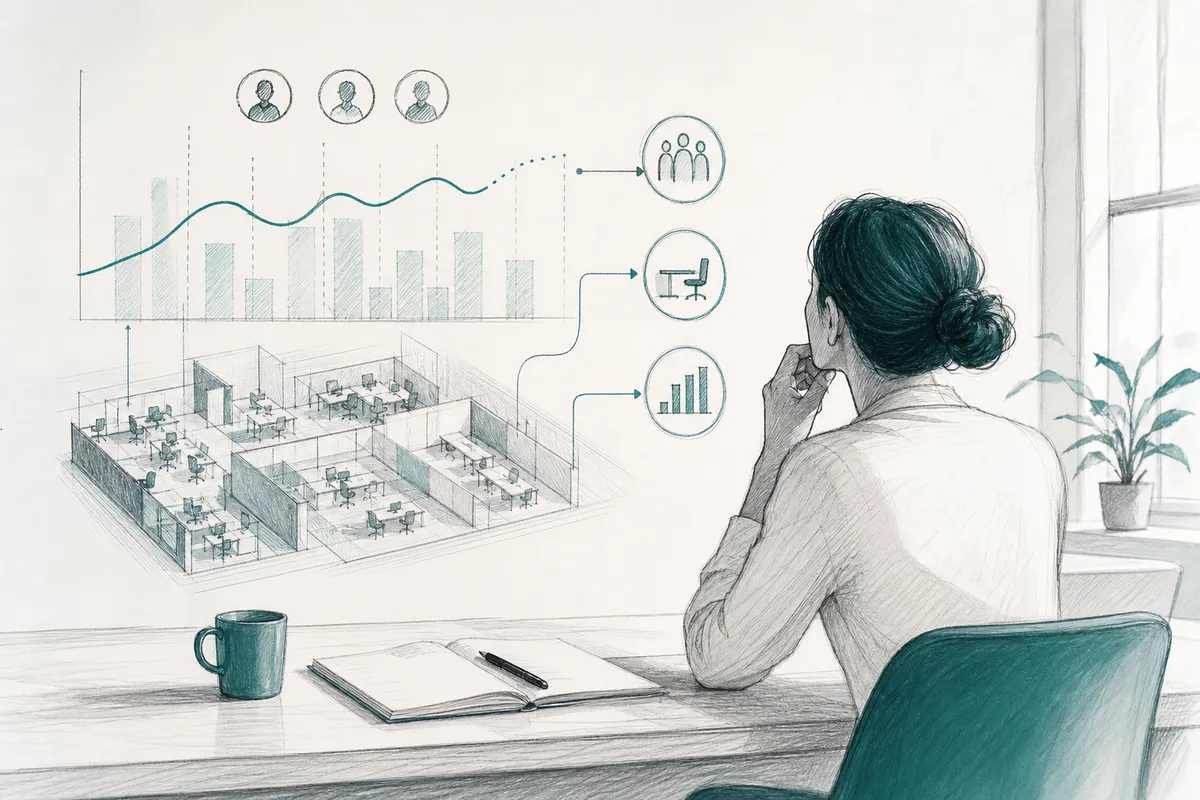
Office space in Houston ranges from $7 to $35 per square foot annually, depending on submarket, building class, and lease structure — making it one of the most competitively priced major commercial markets in the United States. As of 2026, the Houston office market is actively recalibrating, with hybrid work reshaping demand patterns across every neighborhood from Downtown to the Energy Corridor. Whether you're a corporate real estate leader evaluating a lease renewal or a growing team hunting for your first dedicated space, this guide covers pricing, submarkets, lease types, and the optimization strategies that separate smart real estate decisions from expensive ones.
Houston's office market recorded negative 218,426 square feet of net absorption in Q1 2026, with roughly 850,000 square feet of office space actively being repositioned or vacated across the metro [1]. That figure tells an important story: supply is still adjusting to the structural shift in how companies use space, and that creates real leverage for tenants who know what they're looking for.
The average rent for office space in Houston sits at approximately $19 per square foot, though rates vary significantly by submarket and building class [2]. Class A towers in the Galleria and Downtown command $28 to $35 per square foot. Class B space in submarkets like Westchase or Greenspoint can fall to $10 to $14 per square foot. Flexible and coworking options price differently, typically running $200 to $750 per person per month depending on amenities and location [3].
Industry analysts at Cushman & Wakefield note that Houston's office market benefits from a diversified economic base spanning energy, healthcare, aerospace, and technology sectors, which cushions it against single-industry downturns [4]. That diversification is one reason vacancy rates, while elevated, haven't collapsed asking rents the way some coastal markets have experienced.
The shift isn't just about fewer desks. Companies are rethinking the purpose of office space entirely. Research consistently shows that enterprises operating hybrid models carry 30 to 50% average office utilization rates while paying for 100% of their square footage. That gap is the core financial problem driving real estate consolidation decisions across Houston's corporate base.
At Upflex, we've found that the organizations making the smartest real estate decisions in 2026 aren't simply downsizing. They're using attendance data to right-size their portfolios with precision, retaining the space that genuinely drives collaboration while eliminating the square footage that sits empty on most days.
| Building Class | Typical Submarket | Annual Rate (per sq ft) | Best For |
|---|---|---|---|
| Class A | Galleria, Downtown, Greenway Plaza | $28 – $35 | HQ flagship, client-facing offices |
| Class B | Westchase, Katy Freeway, Midtown | $14 – $22 | Operations, mid-size teams |
| Class C | Greenspoint, Northeast Houston | $7 – $13 | Cost-sensitive, back-office functions |
| Flexible / Coworking | Downtown, Midtown, The Woodlands | $200 – $750/person/month | Hybrid teams, distributed employees |
Houston's office market is organized into distinct submarkets, each with its own pricing dynamics, tenant profile, and commute patterns — choosing the right one is as important as choosing the right building.
Downtown Houston houses the city's largest concentration of Class A office towers, including properties along Texas Avenue and the recently developed Texas Tower at 845 Texas Avenue [5]. It's the natural home for financial services, law firms, and energy majors that need prestige addresses and proximity to the courthouse and port authority offices. Midtown, just south of Downtown, offers a more creative, mixed-use environment with slightly lower rents and strong transit access via the METRORail Red Line.
Flexible workspace options are well-represented here. Providers operating in Downtown and Midtown offer fully furnished private office spaces that can be accessed daily or monthly, making them practical for hybrid teams that don't need dedicated square footage every day [6].
The Galleria submarket is Houston's most recognizable business address outside of Downtown. It attracts professional services firms, technology companies, and corporate regional offices. Rents here are among the highest in the metro, but the submarket offers exceptional amenity density, including hotels, restaurants, and retail that make it attractive for client-facing operations.
Locations in Uptown, including The Woodlands corridor to the north, provide private suites and team office configurations that suit companies wanting a polished environment without a Downtown commute [7].
The Energy Corridor along Interstate 10 West remains the operational backbone of Houston's oil and gas industry. Large campus-style buildings here offer significant square footage at competitive rates, and the submarket has seen renewed activity as energy companies restructure post-merger. Westchase, adjacent to the Energy Corridor, provides similar pricing with slightly more diverse tenant profiles. Flexible workspace options in this corridor start as low as $399 per month for private offices [8].
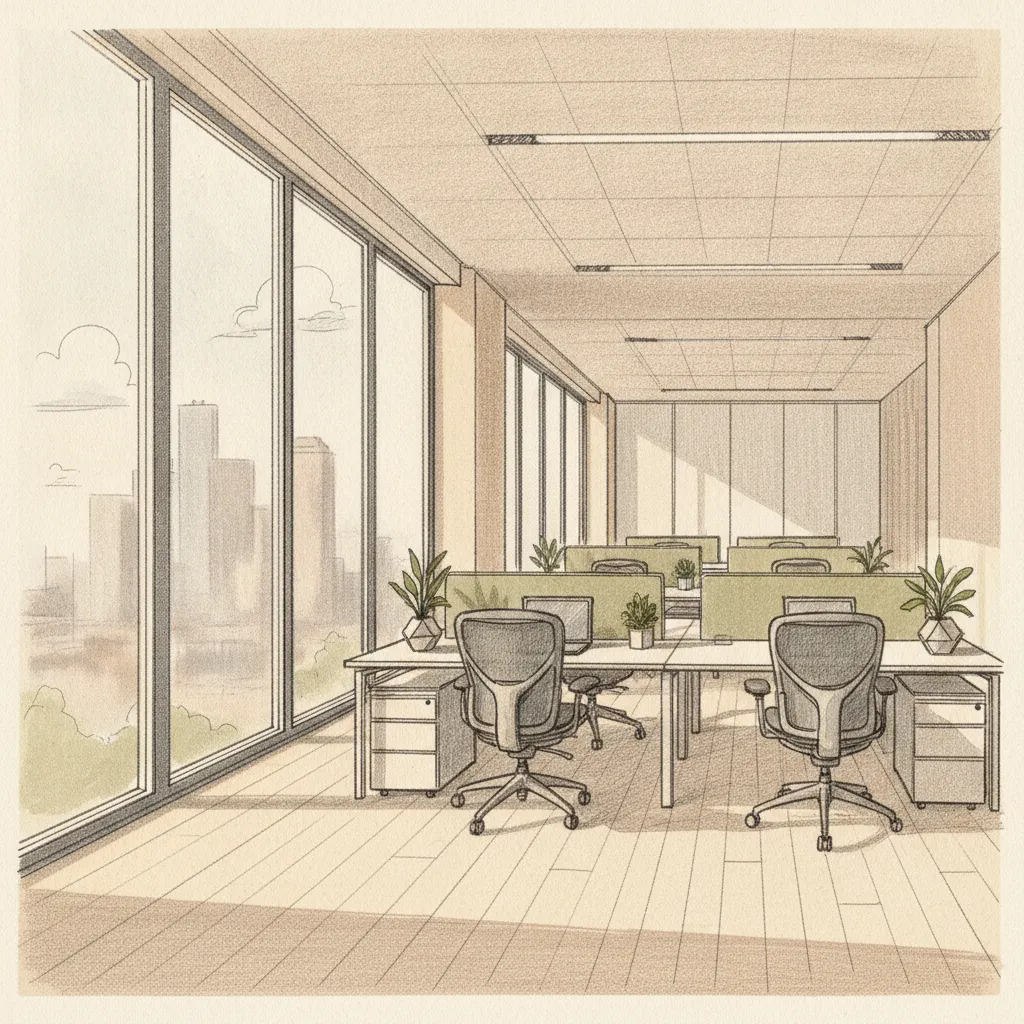
Houston offers four primary categories of office space, each suited to different team sizes, budget constraints, and operational requirements — understanding the differences before you sign anything will save you significant money.
A direct lease (also called a full-service gross lease or a modified gross lease, depending on how operating expenses are structured) gives you exclusive control of a defined space for a fixed term, typically three to ten years. This model suits organizations with stable headcount, predictable in-office attendance, and a need for full customization of their environment.
LoopNet currently lists over 9,300 office spaces for lease across Houston, with an average listing size of approximately 31,938 square feet and an average asking price of $22 per square foot [9].
Flexible workspace (coworking spaces, serviced offices, and executive suites) has matured considerably in Houston since 2024. These options let teams access fully furnished, move-in-ready environments on terms ranging from a single day to rolling monthly agreements. For hybrid teams, this model solves a specific problem: you don't need to pay for 10,000 square feet every day if only 30% of your team is in on any given Tuesday.
Pro Tip: If your team's in-office attendance varies by more than 25% week to week, a flexible workspace arrangement will almost always cost less than a direct lease sized for peak occupancy. Run the math on your actual badge data before committing to a long-term lease.
Houston's elevated vacancy rate has created a healthy sublease market. Subleases offer Class A space at Class B prices, often with furniture and infrastructure already in place. One limitation is that sublease terms are bounded by the original tenant's lease expiration, so you may face a forced relocation sooner than expected. That said, for companies with a two to four year planning horizon, subleases represent some of the best value in the current market.
Finding the right office space in Houston follows a clear sequence. Skipping steps, particularly the space programming and utilization analysis phases, is the most common reason companies end up with more space than they need.
Pro Tip: Request a "blend and extend" option in your lease negotiation. This lets you lock in current favorable rates while extending your term, giving the landlord certainty and you pricing protection against future market tightening.
Securing the right office space in Houston is only half the challenge. The other half is making sure the space you pay for is actually being used efficiently — and that your hybrid team can coordinate effectively when they do come in.
A common mistake is sizing a Houston office based on total headcount rather than actual peak concurrent attendance. In practice, most hybrid teams have a peak concurrent attendance of 40 to 60% of total headcount. A 100-person team may never have more than 55 people in the office on the same day. Leasing space for 100 people in that scenario means paying for roughly 45 empty desks every single day.
Research from the Houston Partnership confirms that the Houston metro office market recorded significant negative absorption in early 2026, reflecting exactly this dynamic: companies are actively shedding space they're no longer using [1]. The organizations that avoided this problem planned their space requirements around verified attendance data, not headcount assumptions.
Platforms that combine AI-powered office orchestration with on-demand workspace access are changing how corporate real estate leaders approach Houston portfolio decisions. Upflex's UnifyAI engine, for example, forecasts office attendance with 97% accuracy, giving real estate teams the data they need to right-size space commitments with confidence rather than guesswork.
The practical outcome: organizations using attendance forecasting and workplace optimization platforms have achieved 40%+ reductions in real estate spend without reducing headcount or mandating rigid in-office schedules. That's not a theoretical outcome. It's a documented result from enterprises that stopped guessing and started measuring.
Pro Tip: Before your next Houston lease renewal, run 90 days of attendance tracking data through an AI forecasting tool. The output will tell you exactly how much space you need, on which days, and in which configuration. That data is your most powerful negotiating asset with any landlord.

Most costly office leasing mistakes in Houston fall into a predictable set of categories. Avoiding them is straightforward once you know what to watch for.
The average rent for office space in Houston is approximately $19 per square foot annually as of 2026. Class A space in premium submarkets like the Galleria and Downtown runs $28 to $35 per square foot, while Class B and C space in areas like Westchase and Greenspoint can be found for $7 to $22 per square foot. Flexible coworking arrangements typically price at $200 to $750 per person per month.
The best submarket depends on your industry and workforce. Downtown and Midtown suit financial, legal, and professional services firms. The Galleria and Uptown attract technology and corporate regional offices. The Energy Corridor is the hub for oil, gas, and engineering companies. The Woodlands offers suburban campus options for companies with a north Houston workforce. Each submarket has distinct pricing, commute patterns, and amenity profiles.
Yes. Houston has a range of small office and coworking options priced below $1,000 per month. Private offices in coworking spaces start from approximately $299 per month, and executive suites with shared amenities are available from $600 per month in locations like Midtown and the Energy Corridor. Craigslist and local listing platforms also surface smaller private offices starting around $399 per month in suburban submarkets.
As of 2026, Houston's office market is generally favorable for tenants. Negative net absorption, elevated vacancy rates, and significant available sublease inventory give tenants strong negotiating leverage on rent, tenant improvement allowances, free rent periods, and lease flexibility. This is particularly true in Class B and C buildings, where landlords are actively competing for creditworthy tenants.
A full-service gross lease (common in multi-tenant office buildings) includes most operating expenses in the base rent. A triple net (NNN) lease requires the tenant to pay base rent plus their proportionate share of property taxes, insurance, and maintenance costs. Most Houston office buildings use modified gross or full-service gross structures, but always confirm what's included before comparing quoted rates across properties.
Managing hybrid attendance in a Houston office requires a combination of desk booking software, attendance forecasting, and clear team coordination policies. AI-powered platforms can forecast who will be in the office with up to 97% accuracy, helping you right-size space usage, coordinate team co-attendance, and avoid the common problem of paying for underutilized square footage. Deploying these tools before move-in, rather than after, produces significantly better outcomes.
Evaluate flexible workspace providers in Houston on five criteria: location relative to your team's commute patterns, availability of private offices versus open desks, meeting room access and pricing, IT infrastructure (dedicated internet, security), and contract flexibility. Month-to-month terms are preferable for hybrid teams whose space needs fluctuate. Also confirm whether the provider can scale with you across multiple Houston locations or connect to a global workspace network for traveling employees.
Modern office planning in 2026 targets 100 to 150 square feet per person for hybrid-optimized layouts, down from the traditional 200 to 250 square feet per person standard. The right number depends on your actual peak concurrent attendance, not total headcount. A 200-person company with 50% hybrid attendance may only need space for 80 to 100 people at any given time, which translates to roughly 10,000 to 15,000 square feet rather than 40,000 to 50,000 square feet.
Office space in Houston offers some of the most competitive pricing of any major U.S. market in 2026, with meaningful options across every budget, team size, and lease structure. The market is genuinely tenant-favorable right now, which means the organizations that approach their search with solid attendance data, clear submarket criteria, and strong lease negotiation will secure exceptional value.
The bigger opportunity, though, isn't just finding cheaper space. It's making sure the space you secure is sized correctly for how your team actually works. That requires knowing your real attendance patterns before you sign anything. Platforms like Upflex combine AI-powered attendance forecasting with access to a global on-demand workspace network, giving corporate real estate teams the data and flexibility to right-size their Houston footprint with confidence. The result: 40%+ reductions in real estate spend, 88% co-attendance achievement, and a workplace strategy that holds up when leadership asks for the numbers.
Start with your data. Then find your space.
Explore more from our content library: