Share This Article
No items found.

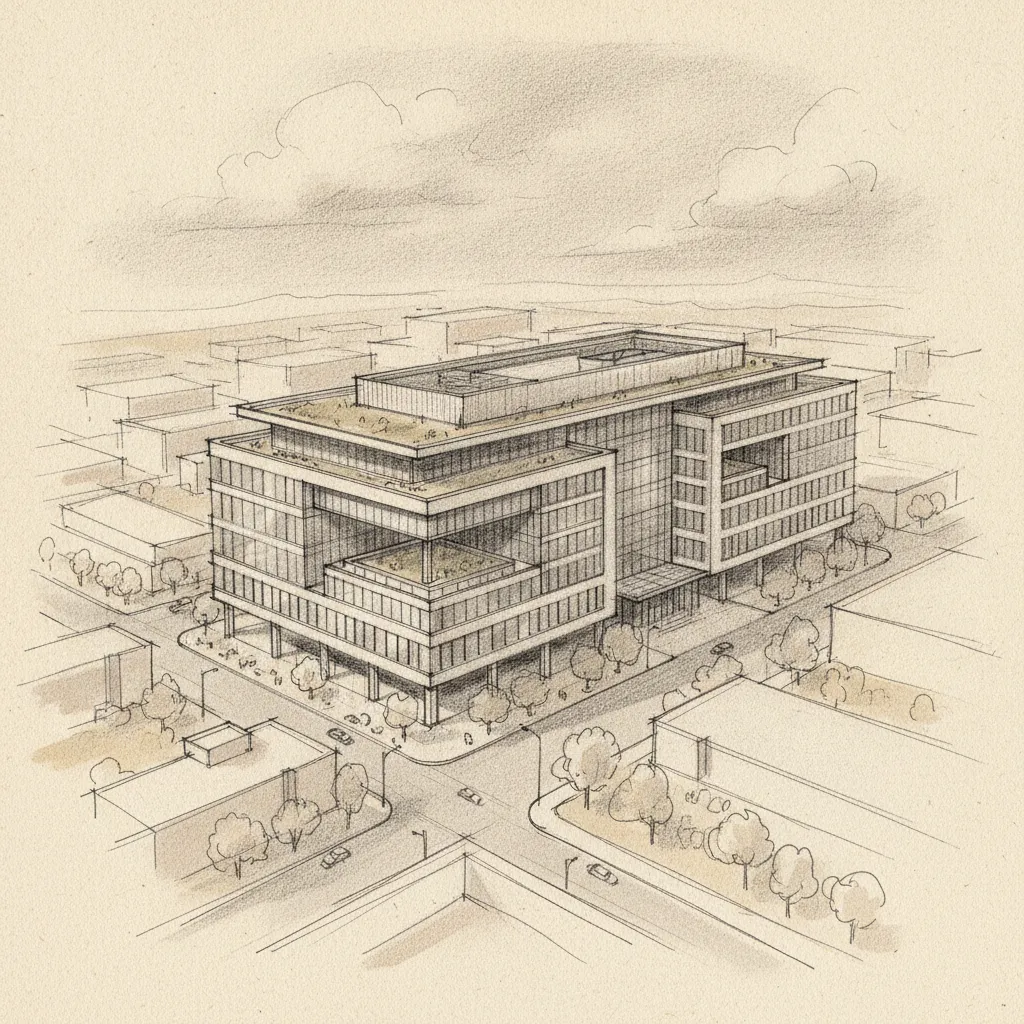
Finding the right corporate office space near me starts with understanding what your team actually needs, not just what's available on the nearest listing site. As of 2026, enterprises are no longer hunting for the biggest floor plate they can afford. They're looking for space that earns its cost through measurable utilization, flexible terms, and the ability to scale up or down as hybrid attendance shifts week to week. This guide walks you through exactly how to find, evaluate, and optimize corporate office space in your area, whether you're managing a single location or a multi-city portfolio.
You'll learn how to define your space requirements, search effectively, negotiate terms, and use data to make smarter real estate decisions. The process takes roughly two to four weeks for a single location and can save your organization 30 to 40 percent or more on real estate spend when done correctly.
Before you search for corporate office space near me, you need three things: a clear headcount forecast, a defined utilization target, and a realistic budget range tied to your lease flexibility requirements.
Most organizations skip the prerequisites and go straight to browsing listings. That's how you end up signing a five-year lease on 20,000 square feet when your team actually shows up three days a week at 60 percent capacity. From experience, the planning phase is where the real cost savings happen.
Pro Tip: Run your attendance forecast before you define your square footage target, not after. AI-powered forecasting tools can predict your peak occupancy days with up to 97% accuracy, which means you size for real demand rather than theoretical headcount. That single step often reduces your space requirement by 20 to 35 percent.
Defining your space requirements means translating headcount and attendance data into a specific square footage range, desk count, and amenity list before you contact a single landlord.
The industry standard for office space planning has shifted significantly. The traditional formula of 150 to 250 square feet per employee was designed for five-day-a-week occupancy. Hybrid work changes the math entirely.
Research from workplace analytics firms indicates that enterprises using data-driven space planning reduce their real estate footprint by an average of 25 to 40 percent compared to organizations that rely on headcount-based rules of thumb alone [3].
| Work Model | Typical Utilization Rate | Recommended Sq Ft per Employee | Desk-Sharing Ratio |
|---|---|---|---|
| Fully In-Office (5 days) | 80–95% | 150–200 sq ft | 1:1 |
| Hybrid (3 days in-office) | 50–70% | 80–120 sq ft | 1.2:1 to 1.5:1 |
| Hybrid (2 days in-office) | 30–50% | 60–90 sq ft | 1.5:1 to 2:1 |
| Remote-First (1 day in-office) | 15–30% | 40–60 sq ft | 2:1 to 3:1 |
Searching for corporate office space near me works best when you combine commercial listing platforms, local broker networks, and on-demand workspace marketplaces rather than relying on any single source.
The most comprehensive searches use multiple channels simultaneously. Each source surfaces different inventory, and the best deals often come from off-market opportunities that never appear on public platforms.
Location affects more than commute time. It affects your ability to attract talent, your operating costs, and your flexibility to expand or contract. Consider these factors when evaluating a submarket:
For example, office space listings in Colorado Springs [6] show a range of options from downtown suites near Tejon Street to suburban campuses near North Academy Boulevard, each with distinct cost profiles and amenity sets [7].
Pro Tip: Just as finding a great local discovery requires knowing where to look (much like using a guide to Find The Best Gelato Shop Near Me In 2026), finding the right office space in your area requires layering multiple search sources rather than defaulting to the first listing you see. The best options rarely surface on page one.
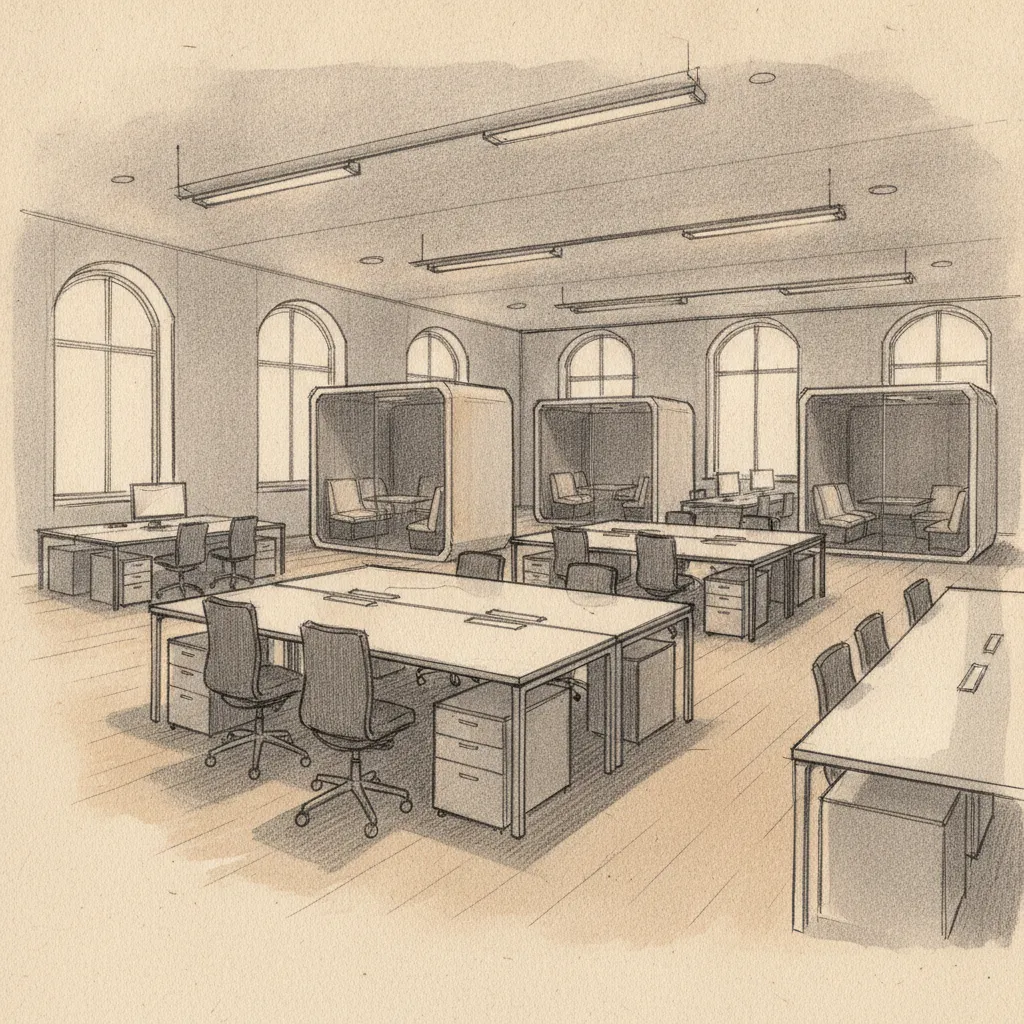
Evaluating corporate office space near me means scoring each candidate property against your predefined requirements before you invest time in site tours or lease negotiations.
A structured scoring framework prevents the common mistake of falling in love with a beautifully designed space that doesn't meet your operational requirements. In practice, teams that skip this step often end up renegotiating or exiting leases within 18 months.
Community-driven coworking spaces like iThrive Space [8] in suburban Philadelphia demonstrate how flexible, thoughtfully designed environments can serve hybrid teams without the overhead of a traditional corporate lease. These options are worth evaluating alongside conventional office buildings, especially for satellite locations.
| Evaluation Criterion | Weight | What to Look For |
|---|---|---|
| Cost per Sq Ft (NNN vs. Gross) | 25% | Compare all-in costs including OPEX, not just base rent |
| Lease Flexibility | 20% | Short-term options, contraction rights, sublease rights |
| Location and Accessibility | 20% | Transit access, parking, commute radius for your workforce |
| Building Quality and Amenities | 15% | LEED certification, HVAC, natural light, on-site services |
| IT Infrastructure | 10% | Fiber availability, redundancy, cell coverage |
| Expansion/Contraction Rights | 10% | Right of first refusal, contraction clauses |
Negotiating lease terms for corporate office space means securing provisions that protect your organization if headcount or attendance patterns change, which they will in a hybrid work environment.
Most corporate tenants focus on base rent during negotiations and overlook the provisions that matter most over the life of a lease. Industry analysts suggest that lease flexibility clauses can be worth more than a 10 to 15 percent rent reduction over a five-year term, particularly for organizations with volatile headcount.
Not every location requires a traditional lease. For satellite offices, project-based teams, or markets where your presence is uncertain, on-demand workspace networks offer a cost-effective alternative. You pay only for the space you actually use, with no long-term commitment.
At Upflex, we've found that organizations using a blended portfolio strategy, combining a right-sized owned or leased headquarters with on-demand workspace access for distributed employees, consistently achieve better cost outcomes than those relying exclusively on either model. The key is having the utilization data to know which model fits each location.
Implementing workplace technology means deploying desk booking, attendance forecasting, and utilization tracking tools before your team moves in, not after you've already signed the lease.
The right technology stack turns your office from a fixed cost into a managed asset. Without it, you're flying blind on utilization and making portfolio decisions based on anecdote rather than data.
Research from workplace analytics providers indicates that organizations using integrated workplace management platforms reduce their real estate operating costs by 25 to 40 percent within the first 24 months of deployment, primarily through space consolidation decisions enabled by utilization data [9].
Pro Tip: Don't wait until you're in the space to implement booking and forecasting tools. Run the forecasting model on your current office first. You'll likely discover that your peak occupancy is 20 to 30 percent lower than you assumed, which changes your space requirement calculation before you sign anything.
The most costly mistakes in corporate office leasing happen before the lease is signed, not during occupancy. Here are the pitfalls that consistently derail real estate decisions for hybrid organizations.

Start with commercial listing platforms like CommercialSearch or CommercialCafe to get a market overview, then engage a tenant representative broker who has access to off-market listings. For immediate needs, on-demand workspace networks give you professional corporate office space near me with no lease commitment, often bookable within hours. Combining both approaches gives you the fastest path to occupancy.
Costs vary significantly by market and building class. In secondary markets like Colorado Springs, Class A office space ranges from $18 to $28 per square foot annually on a full-service gross basis. Major metros like New York, San Francisco, and Chicago typically run $60 to $120 per square foot for comparable space. On-demand and coworking options range from $300 to $800 per desk per month, depending on location and amenity level.
A gross lease (also called a full-service lease) includes operating expenses, property taxes, and insurance in the base rent. A triple net (NNN) lease charges these expenses separately, meaning your actual monthly cost is higher than the quoted rent. Always compare leases on a total occupancy cost basis, not just base rent, to make a fair comparison between options.
A hybrid team working two to three days per week in the office typically needs 60 to 120 square feet per employee, compared to 150 to 250 square feet for fully in-office teams. The key variable is your peak attendance day. Use attendance forecasting data to identify your true peak occupancy, then size for that number with a 15 to 20 percent buffer for growth.
Prioritize contraction rights (the ability to reduce your footprint mid-lease), sublease rights, and short initial lease terms of two to three years with renewal options. These provisions protect you if hybrid attendance patterns shift or headcount changes. A tenant improvement allowance and free rent period are also important to negotiate upfront, as they reduce your effective first-year occupancy cost substantially.
The answer depends on your utilization patterns and portfolio strategy. Traditional leases offer cost efficiency at scale when utilization is consistently high (above 70 percent). On-demand workspaces are more cost-effective for satellite locations, overflow capacity, or markets where your presence is uncertain. Most enterprises in 2026 use a blended model: a right-sized leased headquarters supplemented by on-demand network access for distributed employees.
The most effective approach is to right-size your footprint using real utilization data, then invest the savings into higher-quality space and better amenities. Organizations that consolidate from underutilized large offices into smaller, well-designed spaces consistently report improved employee satisfaction alongside 30 to 40 percent reductions in real estate spend. Workplace technology, including desk booking and attendance coordination tools, ensures employees always have a great experience when they do come in.
At minimum, you need desk booking software, meeting room management, and occupancy tracking. For hybrid teams, AI-powered attendance forecasting adds significant value by predicting which days teams will be in the office so you can coordinate co-attendance and manage space proactively. A unified platform that combines these functions with access to on-demand external workspaces gives you a complete view of your entire real estate portfolio, owned and third-party, in one place.
Finding and optimizing corporate office space near me is a strategic decision, not just a real estate transaction. The organizations that get it right in 2026 are the ones that start with data, size for real attendance rather than theoretical headcount, negotiate flexible lease terms, and deploy workplace technology before they move in.
The steps in this guide give you a repeatable process: define requirements with utilization data, search across multiple channels, evaluate properties with a structured scorecard, negotiate for flexibility, and implement technology to maximize your space ROI. Results will vary based on your market, lease timing, and organizational complexity, but the framework applies across company sizes and geographies.
Upflex helps corporate real estate, finance, and HR leaders execute every stage of this process. From AI-powered attendance forecasting that delivers 97% accuracy to desk booking, co-attendance tracking, and access to the world's largest on-demand workspace network, Upflex gives you the data and the infrastructure to right-size your real estate portfolio with confidence. Organizations using the platform have achieved 40 percent or more reductions in real estate spend while improving the in-office experience for their hybrid teams.
Explore more from our content library: