Share This Article
No items found.

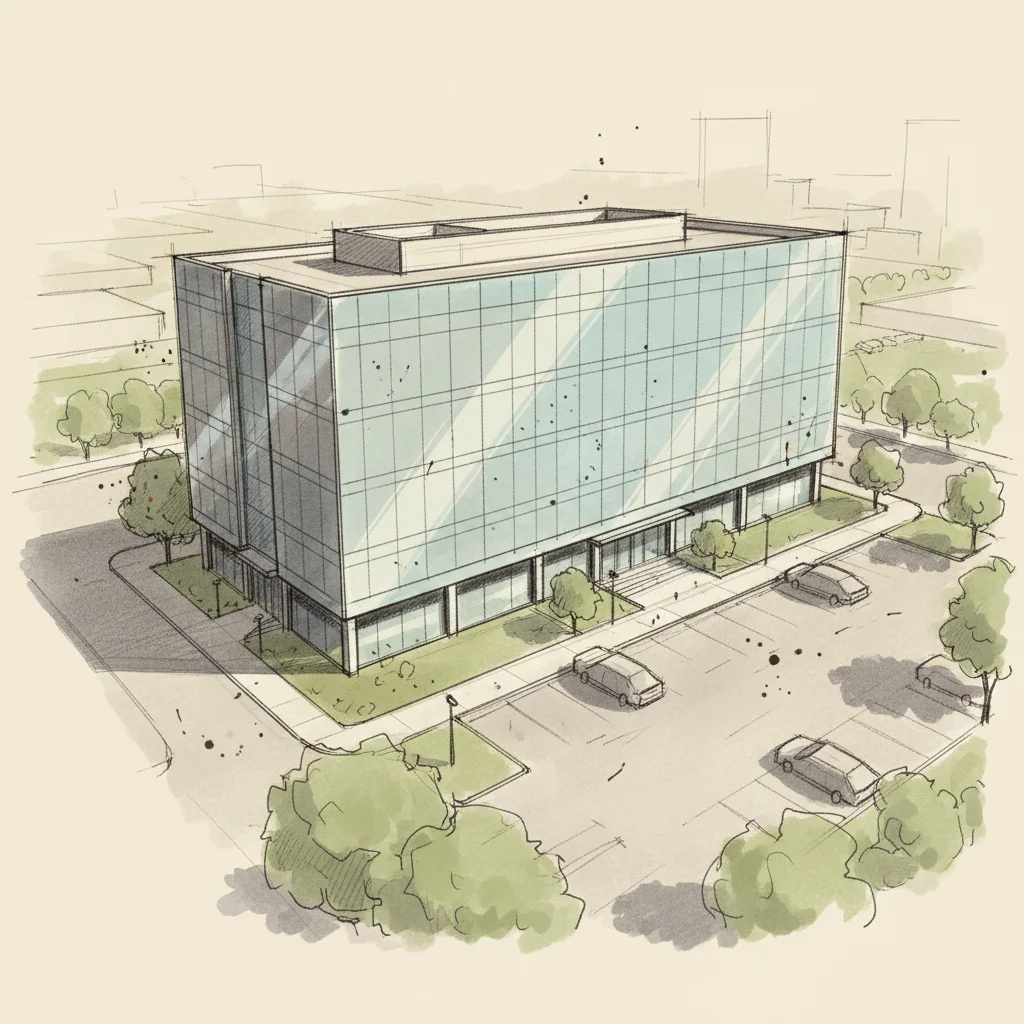
Office space pricing is one of the largest and most complex cost decisions any organization makes. Whether you're a corporate real estate leader approaching a lease renewal or an HR director trying to justify a hybrid work model to the CFO, understanding what drives office costs, and how to control them, is non-negotiable. As of 2026, the market has shifted dramatically. Hybrid work has permanently altered demand patterns, and organizations that still pay for space based on headcount rather than actual utilization are leaving serious money on the table. This guide walks you through every major factor in office space pricing, from lease structures and cost-per-square-foot benchmarks to flexible workspace alternatives and AI-driven optimization strategies. You'll come away with a clear framework for evaluating your current spend and making smarter real estate decisions.
Office space pricing is determined by a combination of location, building class, lease structure, and market supply and demand. No single factor dominates; they interact, and a shift in one can significantly change your total occupancy cost.
Location is still the most powerful pricing variable. Central business district (CBD) space in major metros commands the highest rates, while suburban markets and secondary cities offer meaningful discounts. Building class adds another layer:
According to Commercial Cafe's Denver Office Rent Price Report, statewide Colorado average office rents in 2024 were $37.67 per square foot for Class A and $24.08 per square foot for Class B [1]. As of 2026, Class A rates in high-demand metros like New York, San Francisco, and Boston regularly exceed $80 per square foot annually.
How you lease space matters as much as where. The three dominant lease structures each carry different cost implications:
Longer lease terms generally secure lower per-square-foot rates, but they also lock you into space commitments that may not reflect your actual utilization in a hybrid work environment [2]. APA Services notes that flexibility versus cost stability is the central tradeoff in the rent-versus-buy decision, and that same logic applies when choosing lease duration [3].
Pro Tip: Before signing any lease, model your actual space utilization using badge data or desk booking analytics. Organizations that negotiate based on real occupancy data, rather than headcount assumptions, consistently secure better terms and avoid paying for ghost square footage.
Office space pricing benchmarks vary widely by market, format, and flexibility tier. Knowing the going rate in your target market is the baseline for any negotiation.
The standard unit of measure for traditional office leases is cost per square foot per year (or per month in some markets). Here's a practical reference table for major U.S. markets as of 2026:
| Market | Class A ($/sq ft/yr) | Class B ($/sq ft/yr) | Notes |
|---|---|---|---|
| New York City (Midtown) | $80–$130+ | $45–$70 | Highest U.S. market |
| San Francisco (CBD) | $65–$95 | $38–$55 | Vacancy elevated post-2024 |
| Denver, CO | $37–$45 | $24–$30 | Strong suburban options |
| Houston, TX | $32–$48 | $18–$28 | Competitive pricing [4] |
| Chicago, IL | $40–$60 | $22–$35 | Loop vs. suburban split |
| Commerce City, CO | ~$19 avg. | $15–$18 | Suburban/industrial market [5] |
According to SquareFoot's Leasopedia, a practical formula for estimating annual rent is: annual rent = price per square foot × total square footage. For example, at $52 per square foot, a 1,000 sq ft office costs $52,000 per year, or roughly $4,333 per month [2].
The flexible workspace market has matured significantly. Coworking memberships, private offices, and day passes now represent a credible alternative to traditional leases, particularly for distributed hybrid teams. Pricing in Denver's coworking market illustrates the range well:
Providers like WeWork and Deskpass offer transparent monthly pricing with no long-term commitment, making flexible space an increasingly attractive option for organizations managing hybrid attendance patterns [8].
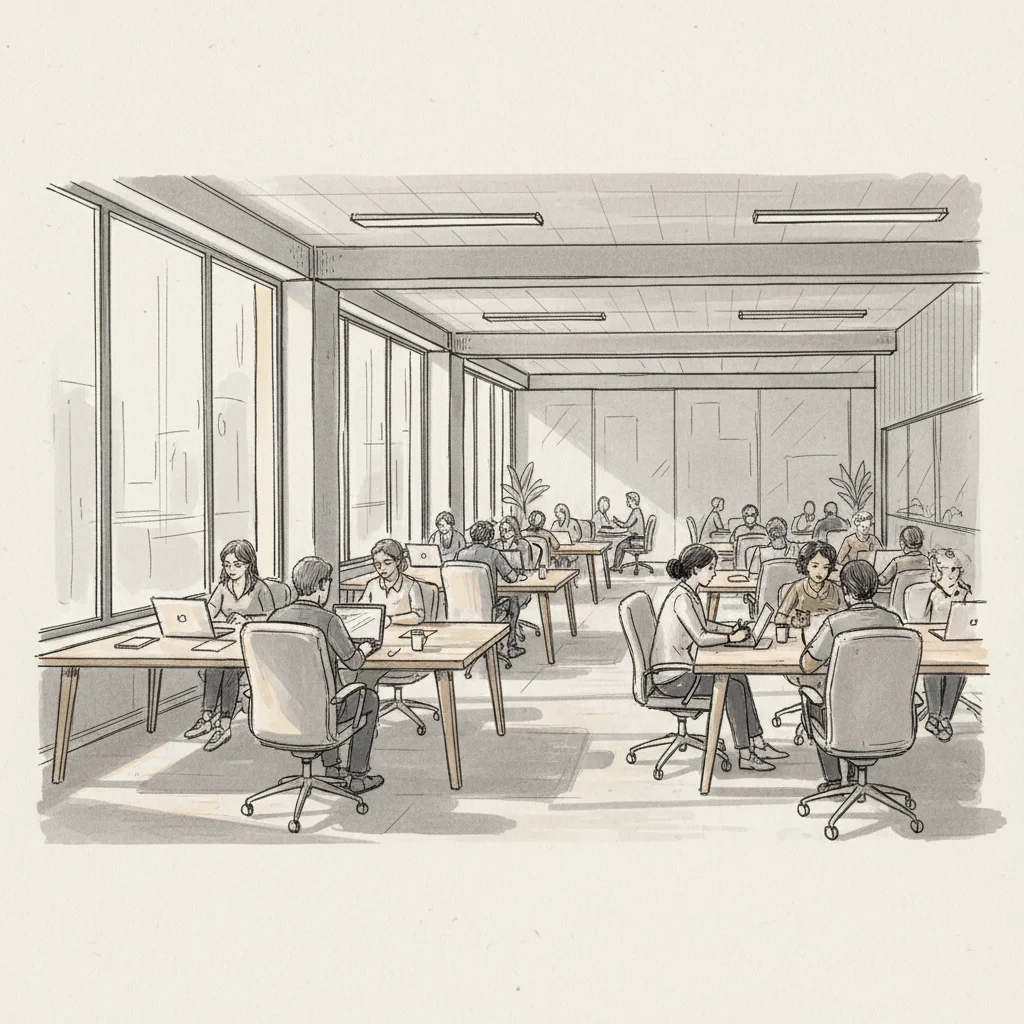
Calculating office space cost accurately requires looking beyond the headline rent figure to include all occupancy-related expenses. Here is a structured process to get to your real number.
Many organizations underestimate their true cost of occupancy (TCO) by focusing only on base rent. The TCO framework, widely used in corporate real estate practice, captures the complete picture:
Pro Tip: At Upflex, we've found that most enterprises discover their effective cost per occupied desk is 1.8x to 2.5x their stated cost per desk, once utilization data is factored in. That gap is where real estate savings live.
The GSA's rent pricing policy provides a useful public-sector benchmark for how government agencies calculate and allocate occupancy costs, and private-sector real estate teams can draw useful methodology from it [9]. According to GSA rent pricing guidance, rent is assessed based on market-comparable rates adjusted for location and building characteristics, a methodology that translates directly to private-sector benchmarking [9].
Hybrid work has fundamentally restructured office space pricing dynamics, shifting power toward tenants in many markets while creating new cost traps for organizations that haven't updated their space strategies.
The core problem is simple: most organizations sized their offices for five-day-a-week occupancy. Hybrid work means average daily utilization has dropped to 40–60% in most enterprises. You're paying for 100% of the space to serve 50% of the need, on average.
This creates a direct opportunity. Organizations that can accurately forecast attendance, coordinate team schedules, and right-size their footprint can reduce real estate spend by 30–40% or more without reducing headcount or mandating rigid schedules. That's not a theoretical number. Upflex customers have achieved 40%+ reductions in real estate spend by combining utilization data with AI-powered attendance forecasting to make portfolio consolidation decisions grounded in evidence rather than assumption.
Industry analysts at Cushman & Wakefield note that office leasing decisions in 2026 are increasingly driven by quality over quantity: organizations are trading square footage for better amenities, collaborative infrastructure, and location flexibility [10].
AI-powered workplace optimization is no longer a future-state concept. It's a live operational tool for corporate real estate leaders in 2026. Here's what it changes:
The combination of owned-office optimization and on-demand workspace access is what differentiates a modern workplace strategy from simply cutting square footage and hoping for the best.
Pro Tip: Before your next lease renewal, run a 90-day utilization audit using desk booking and badge data. The pattern you'll find, peak days Tuesday through Thursday, near-empty Mondays and Fridays, is the data you need to negotiate a smaller, smarter footprint at a lower total cost.
Office space pricing decisions carry long-term consequences. A misstep in a lease negotiation can lock your organization into costs that persist for five to ten years. Here are the most common and costly errors real estate and finance leaders make.
The single most expensive mistake is using total employee headcount as the basis for space planning. In a hybrid environment, not everyone comes in every day. Organizations that plan for 100% occupancy and sign leases accordingly end up with chronic underutilization. The correct input is your expected peak daily occupancy, informed by attendance data, not your org chart.
A common rule of thumb is 150–250 square feet per person for traditional layouts, or 80–150 sq ft per person in high-density open-plan environments. But these standards were built for five-day-a-week attendance. In hybrid settings, many organizations are finding that 60–100 sq ft per expected daily attendee is sufficient when space is designed for collaboration rather than individual assigned desks [3].
Focusing only on base rent per square foot leads to budget surprises. Operating expenses, parking, utilities, TI amortization, and fit-out costs can add 30–50% to your headline rent figure. Always model the full occupancy cost before comparing options.
Long-term leases offer lower per-square-foot rates, but they eliminate your ability to respond to business changes. From experience, organizations that signed 10-year leases in 2019 without contraction rights spent the following years paying for space they couldn't use and couldn't exit. Build contraction options, early termination rights, and sublease permissions into every long-term lease you sign.
| Lease Option | Typical Cost Premium/Discount | Flexibility | Best For |
|---|---|---|---|
| Traditional long-term (5–10 yr) | 10–20% discount vs. short-term | Very low | Stable, predictable headcount |
| Short-term lease (1–3 yr) | At or above market rate | Medium | Growing or uncertain headcount |
| Serviced/managed office | 20–40% premium, all-in | High | Teams needing plug-and-play space |
| On-demand / coworking | Variable; pay-as-you-go | Maximum | Distributed or hybrid teams |

Office space pricing varies significantly by market, building class, and lease type. In major U.S. metros, Class A space ranges from $37 to $130+ per square foot annually, while suburban and secondary markets often fall between $18 and $45 per square foot. For subleasing or licensing space to third parties, market rate is the standard benchmark: what comparable space in the same submarket is currently leasing for, adjusted for lease term, included services, and building quality. Always get a current market analysis from a commercial broker before setting a sublease rate.
As of 2026, WeWork's pricing varies by location, membership type, and city. Hot desk memberships typically start around $300–$500 per month per person, while private offices for small teams generally range from $700 to $3,000+ per month depending on size and market. In high-cost markets like New York and San Francisco, private office rates can exceed $5,000 per month for larger suites. WeWork advertises transparent pricing with no hidden fees and offers flexible month-to-month plans, which makes it a useful benchmark for comparing against traditional lease costs on a per-employee basis.
For 20 employees in a traditional five-day layout, the standard planning range is 150–250 square feet per person, meaning 3,000–5,000 square feet total. In a hybrid environment where not all 20 employees come in simultaneously, the calculation shifts to expected peak daily attendance. If your peak day brings in 12 of 20 employees, you may only need 1,800–3,000 square feet, depending on your layout. High-density collaborative environments can work at 80–100 sq ft per daily attendee, while layouts with private offices or focus rooms require more. Office space pricing for a 20-person team should always be based on utilization data, not total headcount.
The basic formula is: Annual rent = price per square foot × total square footage. For example, 2,000 sq ft at $40/sq ft equals $80,000 per year, or about $6,667 per month. But base rent is only part of your true cost. Add operating expenses (taxes, insurance, CAM), parking, utilities, and any amortized tenant improvement costs to get your total cost of occupancy. Then divide by your average daily headcount to find your effective cost per occupied desk. That figure, not the headline rent, is the number that tells you whether your office space pricing is competitive or wasteful.
A gross lease bundles base rent and most operating expenses into a single monthly payment, giving you cost predictability. A net lease (often triple-net or NNN) separates base rent from operating expenses: you pay rent plus your proportionate share of property taxes, building insurance, and maintenance costs. NNN leases typically have lower base rents but require careful modeling of the additional charges, which can add $8–$20 per square foot annually in many U.S. markets. A modified gross lease splits the difference, with some expenses included and others passed through to the tenant.
It depends on your team size, usage pattern, and market. For small teams or distributed employees who only need space a few days per week, coworking and on-demand workspace is almost always cheaper on a per-person basis than a traditional lease. For large teams with consistent five-day attendance, a traditional lease typically wins on cost. The real opportunity in 2026 is a hybrid model: maintain a smaller owned or leased footprint for your core team, and supplement with on-demand workspace access for distributed employees and overflow days. This approach is how organizations are achieving 40%+ reductions in real estate spend without sacrificing employee experience.
Office space pricing is not a static number you look up once. It's a dynamic function of market conditions, lease structure, building quality, and, most critically in 2026, your actual utilization patterns. Organizations that still plan space based on headcount are systematically overpaying. The ones cutting costs by 30–40% are doing it by measuring real occupancy, forecasting attendance accurately, and making portfolio decisions grounded in data.
The practical steps are clear: understand your market benchmarks, calculate your true cost of occupancy (not just base rent), model your utilization honestly, and explore whether a combination of right-sized leased space and on-demand workspace access delivers better economics than your current setup. For corporate real estate and finance leaders who want to move from guesswork to precision, Upflex's AI-powered workplace optimization platform, built around 97% attendance forecast accuracy and access to the world's largest on-demand workspace network, is designed exactly for this challenge. The data to justify your next real estate decision is already there. You just need the right tools to surface it.
Explore more from our content library: