Share This Article
No items found.

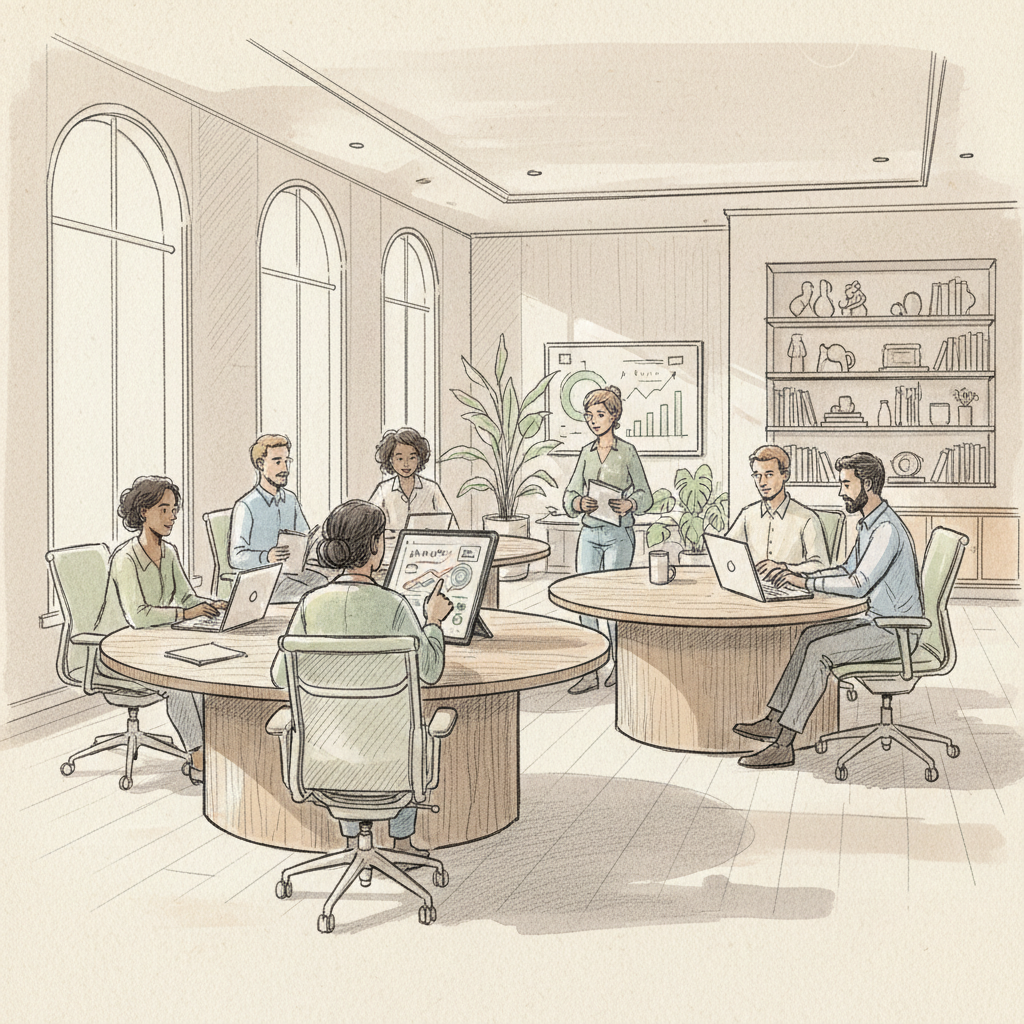
Half your workforce shows up on Tuesday. The other half is remote. Both groups report feeling disconnected, and your engagement scores have been quietly declining for two quarters. This is the exact scenario that employee wellbeing analytics is built to solve.
Employee wellbeing analytics is the systematic collection and analysis of data on how employees feel, behave, and perform at work to improve their physical, mental, and social health. It transforms subjective wellbeing signals into measurable, actionable insights. For HR, Corporate Real Estate, and Finance leaders, it's the difference between guessing at culture and managing it with precision.
This guide covers everything you need to know: what employee wellbeing analytics actually measures, how the data pipeline works, which metrics matter most in 2026, and how to avoid the common traps that derail wellbeing programs before they deliver results.
Employee wellbeing analytics is the practice of using data to understand, measure, and improve the overall health and experience of your workforce. It spans physical health indicators, mental health signals, workplace environment data, and social connection metrics, all unified into a coherent picture of how your people are actually doing.
Wellbeing isn't a single number. Research from Gallup identifies five core elements of wellbeing: career, social, financial, physical, and community. [1] In a workplace context, these translate into four measurable dimensions:
According to the National Safety Council's Workplace Wellbeing Hub, data for these dimensions can be gathered from HR systems, safety reports, workers' compensation programs, benefits utilization records, and training data. [2] The challenge isn't data availability. It's integration.
The business case has never been stronger. Gallup's ongoing research shows that employees with thriving wellbeing take fewer sick days, deliver higher performance, and stay longer. [1] Yet as of 2026, most enterprises are still managing wellbeing through annual surveys and gut instinct.
The shift to hybrid work has added a new layer of complexity. Employees split between home and office have different wellbeing profiles than fully on-site workers. Remote employees report higher rates of social isolation, while in-office workers increasingly cite commute friction and desk scarcity as stressors. Without employee wellbeing analytics, you're flying blind on both groups.
Deloitte research underscores the urgency: organizations that publicly report wellbeing metrics demonstrate greater accountability and see stronger employee trust scores than those that don't. [3] Transparency isn't just good ethics. It's a competitive differentiator in talent retention.
Employee wellbeing analytics works by collecting data from multiple sources, processing it through a structured measurement framework, and translating the output into decisions that improve workforce health and workplace design.
Effective analytics programs pull from a diverse set of inputs. No single data source tells the full story. Here's how a mature pipeline typically looks:
A systematic review published in PMC (PubMed Central) identified over 40 validated measurement instruments for worker wellbeing developed between 2010 and 2020. [5] The most reliable combine self-report data (surveys) with behavioral indicators (utilization, absenteeism) rather than relying on either alone.
Two frameworks dominate enterprise wellbeing measurement in 2026. The PERMA model (Positive Emotions, Engagement, Relationships, Meaning, Achievement), developed by Martin Seligman, provides a psychology-grounded structure for survey design. The WHO-5 Wellbeing Index, a validated five-item scale from the World Health Organization, offers a quick, reliable snapshot of mental wellbeing that's easy to deploy at scale.
Harvard's Population Center maintains a comprehensive library of validated scales for measuring wellbeing at work, including tools specifically designed for occupational settings. [6] Using validated instruments matters because it allows you to benchmark against population norms and track change over time with statistical confidence.
Pro Tip: Don't build your survey instrument from scratch. Start with a validated scale like the WHO-5 or the Warwick-Edinburgh Mental Wellbeing Scale (WEMWBS), then add 3-5 custom questions specific to your workplace context. This gives you both benchmarkable data and organization-specific insight.
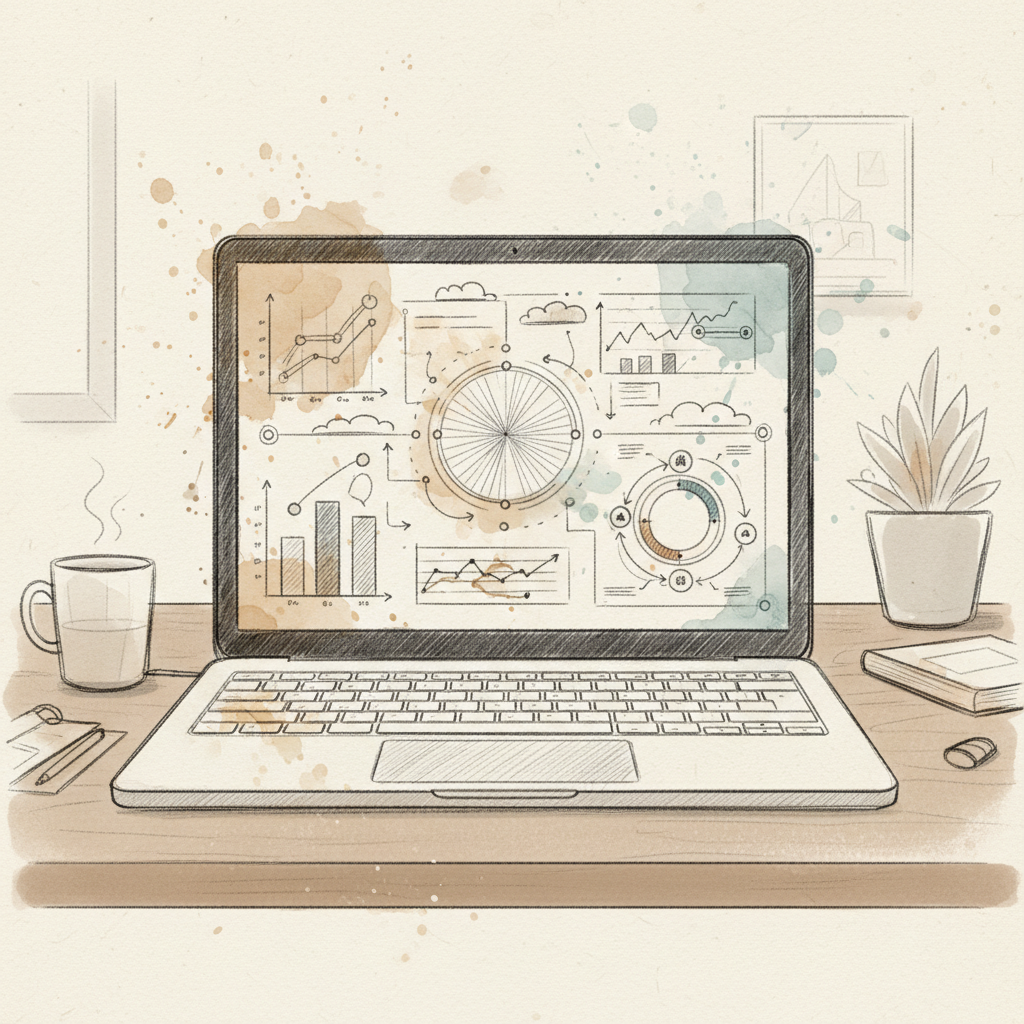
The most valuable employee wellbeing analytics metrics combine leading indicators (predictive signals) with lagging indicators (outcome data) to give you both early warning and confirmed results.
According to AIHR's analysis of wellbeing metrics, the most actionable indicators fall into three categories: health and safety, engagement and satisfaction, and work-life balance. [7] Here's a structured view of the metrics that matter most:
| Metric Category | Key Metric | What It Signals | Indicator Type |
|---|---|---|---|
| Health & Safety | Absenteeism rate | Physical health burden and disengagement | Lagging |
| Mental Health | EAP utilization rate | Psychological stress and support-seeking behavior | Leading |
| Engagement | eNPS (Employee Net Promoter Score) | Overall satisfaction and advocacy likelihood | Leading |
| Work-Life Balance | After-hours digital activity | Burnout risk and boundary erosion | Leading |
| Social Connection | Team co-attendance rate | In-person collaboration and belonging | Leading |
| Retention | Voluntary turnover rate | Wellbeing failure and flight risk materialized | Lagging |
| Workspace Experience | Desk utilization vs. satisfaction score | Physical environment impact on experience | Leading |
The social connection metric, specifically team co-attendance, is where workplace analytics and wellbeing analytics converge most directly. Research consistently shows that in-person collaboration is a significant driver of belonging and psychological safety. Workhuman's analysis confirms that employees who feel recognized and socially connected at work report substantially higher wellbeing scores. [8]
Hybrid work has created a new category of wellbeing risk: the "proximity gap." Employees who come in less frequently report feeling less visible, less connected, and less likely to be considered for advancement. This isn't a perception problem. It's a measurable wellbeing outcome.
At Upflex, we've found that organizations tracking co-attendance as a wellbeing metric, not just a productivity metric, see meaningfully different intervention strategies. When you know that a specific team hasn't shared physical space in six weeks, you can act proactively rather than waiting for engagement scores to drop. Upflex's UnifyAI engine, which delivers 97% attendance forecast accuracy, makes this kind of proactive coordination possible at scale.
For companies exploring how data-driven approaches to workforce wellbeing apply beyond traditional office environments, resources from sectors like manufacturing workforce management solutions offer useful cross-industry perspective on connecting operational data to employee health outcomes.
Most wellbeing analytics programs fail not because of bad intentions but because of predictable, avoidable mistakes in how data is collected, interpreted, and acted upon.
The single biggest barrier to effective employee wellbeing analytics is employee distrust. If your workforce believes that wellbeing data will be used for performance management or surveillance, they'll game the surveys, ignore the tools, and your data quality collapses.
A common mistake is launching wellbeing measurement without a clear, communicated data governance policy. Employees need to know:
Deloitte's research on wellbeing reporting explicitly recommends transparency as a foundation for program credibility. [3] Organizations that publish their wellbeing metrics, even imperfect ones, build more trust than those that keep data internal and opaque.
Another common pitfall is what practitioners call "survey fatigue" (the declining response rate that results from asking employees for data and never visibly acting on it). In practice, this is one of the fastest ways to destroy a wellbeing program.
Industry analysts suggest following a "close the loop" discipline: for every survey cycle, communicate at least one specific change that resulted from the data. It doesn't have to be large. A policy adjustment, a new resource, a team scheduling change. Employees need to see that their input produces outcomes.
One pitfall to watch for in hybrid environments specifically: relying exclusively on digital surveys while ignoring behavioral data. Survey data tells you how employees feel. Utilization data, absenteeism patterns, and collaboration metrics tell you what they're actually doing. The most accurate wellbeing picture combines both. [2]
Pro Tip: Set a "minimum viable action" rule for every survey cycle: before launching the next pulse survey, you must have communicated one concrete action taken in response to the previous one. This single discipline dramatically improves response rates and data quality over time.
The organizations getting the most value from employee wellbeing analytics in 2026 share a set of common practices: they integrate data sources, act on leading indicators, and connect wellbeing to workplace design decisions.
Siloed data is the enemy of insight. HR data, workplace utilization data, and benefits data sitting in separate systems can't tell a coherent story. The best programs connect these streams into a unified analytics layer.
Here's a practical framework for building that architecture:
According to WorkTango's guidance on data analytics for wellness programs, organizations that integrate multiple data sources see significantly stronger program outcomes than those relying on surveys alone. [9] The combination of self-reported wellbeing data with behavioral signals produces the most actionable insights.
This is where this intersects directly with real estate strategy. Workspace quality, desk availability, commute burden, and in-office experience are all measurable wellbeing drivers. And they're all within the control of Corporate Real Estate and Facilities leaders.
Our team at Upflex recommends tracking desk satisfaction scores alongside desk utilization rates. High utilization with low satisfaction is a signal of overcrowding stress. Low utilization with low satisfaction points to a different problem: employees aren't coming in because the experience isn't worth the commute. Both require different interventions.
Upflex's workplace optimization platform connects these dots directly. By combining AI-powered attendance forecasting with real-time utilization data, you can identify which spaces are driving positive wellbeing outcomes and which are creating friction. Organizations using Upflex have achieved 40%+ reductions in real estate spend while simultaneously improving the in-office experience, because right-sized space is better space.
| Wellbeing Signal | Workspace Implication | Recommended Action |
|---|---|---|
| Low co-attendance scores | Teams not coordinating in-office days | Use AI forecasting to align team schedules |
| High desk utilization + low satisfaction | Overcrowding and resource scarcity | Expand on-demand workspace access |
| Rising after-hours digital activity | Burnout risk from boundary erosion | Audit meeting load and set digital norms |
| Declining eNPS for remote employees | Social isolation and proximity gap | Provide on-demand workspace near employee locations |
| High absenteeism in specific locations | Office environment or commute friction | Investigate environmental factors and access options |
Pro Tip: Share aggregated wellbeing analytics with your real estate team quarterly. The intersection of employee experience data and space utilization data is where the most impactful workplace decisions get made. Don't let these datasets live in separate silos.

it is the practice of collecting and analyzing data on how employees feel, behave, and interact at work to improve their mental, physical, and social health. It combines survey data, HR system data, workplace utilization metrics, and digital behavior signals into a unified view of workforce health. The goal is to move from reactive wellbeing programs to proactive, data-driven interventions. [10]
Start with a balanced mix of leading and lagging indicators. Key metrics include absenteeism rate, eNPS (Employee Net Promoter Score), EAP utilization, after-hours digital activity, voluntary turnover, and team co-attendance rates. AIHR recommends tracking at least one metric from each wellbeing dimension (physical, mental, social, and environmental) to get a complete picture rather than optimizing one area at the expense of others. [7]
Anonymization and transparency are the two non-negotiables. Individual-level data should never be accessible to direct managers. Aggregate data at the team or department level (minimum 5-10 employees) before sharing. Publish a clear data governance policy that explains what's collected, how it's used, and what decisions it won't influence. Voluntary participation in surveys, with no performance implications, is standard practice for maintaining trust. [2]
Hybrid work creates distinct wellbeing profiles for remote and in-office employees that require separate measurement strategies. Remote workers face higher social isolation risk and proximity gap effects. In-office workers may experience commute friction and desk scarcity stress. Effective this method in a hybrid environment must track both populations separately while also measuring the quality of in-person collaboration when teams do share physical space.
Several validated instruments are widely used in 2026. The WHO-5 Wellbeing Index is a five-item scale that provides a reliable snapshot of mental wellbeing. The Warwick-Edinburgh Mental Wellbeing Scale (WEMWBS) offers a 14-item version for more granular measurement. The PERMA model provides a framework for survey design across five wellbeing dimensions. Harvard's Population Center maintains a comprehensive library of validated workplace wellbeing scales. [6]
Most HR analytics practitioners recommend a tiered cadence: pulse surveys every two to four weeks for real-time mood tracking, a more comprehensive survey quarterly for deeper trend analysis, and an annual deep-dive for strategic benchmarking. Annual-only surveys are increasingly considered insufficient because they capture a single point in time and can't detect emerging issues before they become retention problems. Results may vary based on your organization's size and survey fatigue tolerance.
Yes, directly. Wellbeing data that captures workspace satisfaction, commute burden, and desk experience quality informs smarter real estate decisions. When you know which office features drive positive wellbeing and which create friction, you can consolidate space around what works. Organizations using Upflex's workplace optimization platform, which integrates attendance forecasting with wellbeing-relevant utilization data, have achieved over 40% reductions in real estate spend while improving the in-office experience employees actually report.
Engagement analytics measures how committed and motivated employees are in their work roles. Wellbeing analytics is broader: it covers physical health, mental health, social connection, and environmental factors that affect quality of life at work. The two overlap significantly (engaged employees tend to report higher wellbeing, and vice versa), but they're not interchangeable. A high-performing, highly engaged employee can still be burning out. Wellbeing analytics catches that signal; engagement analytics alone often doesn't.
The organizations winning on talent in 2026 aren't the ones with the most generous benefits packages. They're the ones that actually know how their people are doing, and act on that knowledge before problems compound into turnover and disengagement.
this strategy gives you that operational visibility. It transforms wellbeing from a subjective cultural aspiration into a measurable, manageable dimension of business performance. From tracking co-attendance as a social health signal to connecting desk satisfaction scores with real estate decisions, the data is there. The question is whether you're using it.
For Corporate Real Estate and HR leaders managing hybrid workforces, the connection between wellbeing analytics and workplace design is particularly direct. Upflex brings these two domains together: AI-powered attendance forecasting that helps teams coordinate meaningful in-person time, combined with access to the world's largest on-demand workspace network so employees always have a great place to work, wherever they are. Better data, better spaces, better outcomes. That's what this approach looks like in practice.
Explore more from our content library: