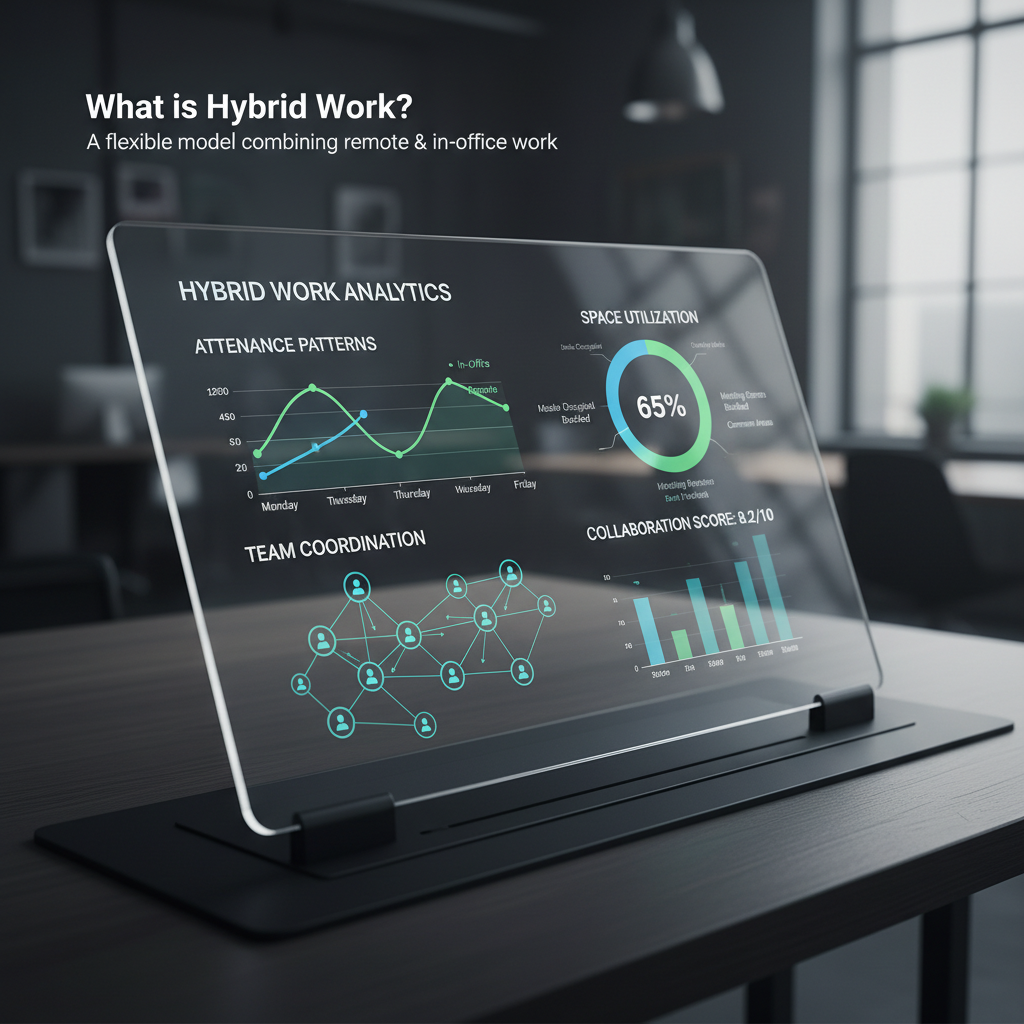
A flexible work model combining remote and in-office work, typically 2-3 days in office per week
Adoption Rate
Over 80% of organizations have adopted hybrid work models as of 2026
Primary Benefit
Improved work-life balance while maintaining collaboration and company culture
Main Challenge
Coordinating team attendance and optimizing office space utilization
Technology Requirement
AI-powered workplace orchestration platforms for attendance forecasting and space management
Cost Impact
Organizations can reduce real estate costs by 30-40% with optimized hybrid models
What is hybrid work, and why has it become the dominant workplace model in 2026? Hybrid work is a flexible employment arrangement that combines remote work with in-office presence, allowing employees to split their time between home and the workplace. This model has fundamentally reshaped how organizations approach productivity, collaboration, and real estate optimization.
The shift toward hybrid work isn't just a trend—it's a permanent transformation of the modern workplace. As organizations continue to refine their hybrid strategies, understanding the mechanics, benefits, and challenges of this model becomes crucial for business leaders, HR professionals, and workplace managers.
What is Hybrid Work?
Hybrid work is a flexible work arrangement that allows employees to divide their time between working remotely and working in a physical office location. Unlike fully remote or fully in-person models, hybrid work provides structured flexibility that accommodates both individual productivity preferences and organizational collaboration needs.
Defining Characteristics of Hybrid Work
The core elements that define hybrid work include:
Flexible location: Employees can choose where to work based on tasks, meetings, or personal preferences
Structured schedule: Organizations typically require specific days for in-office presence
Technology integration: Seamless digital tools connect remote and in-office workers
Outcome-focused: Performance measured by results rather than physical presence
Collaborative design: Office days align with team meetings and collaborative activities
Most organizations implementing hybrid work models require employees to be in the office 2-3 days per week. This schedule balances the benefits of face-to-face collaboration with the productivity gains of focused remote work.
Evolution of Workplace Flexibility
The concept of hybrid work evolved from earlier flexible work arrangements, but the COVID-19 pandemic accelerated its adoption dramatically. By 2026, what started as an emergency response has matured into a sophisticated approach to workplace optimization.
Pro Tip: Successful hybrid work isn't about splitting time equally between locations—it's about matching work location to the type of work being performed.
Organizations have moved beyond simple work-from-home policies to develop comprehensive hybrid strategies that consider employee preferences, business needs, and real estate optimization. This evolution has created new roles, technologies, and management practices specifically designed for hybrid environments.
How Hybrid Work Functions
Hybrid work operates through a combination of structured policies, technology platforms, and cultural adaptations that enable seamless transitions between remote and in-office work. The mechanics involve careful coordination of schedules, spaces, and systems to maintain productivity and collaboration.
Scheduling and Coordination Systems
Effective hybrid work requires sophisticated scheduling systems that go beyond traditional calendar management:
Team coordination: Systems ensure collaborative teams overlap their in-office days
Resource allocation: Dynamic booking systems manage desks, meeting rooms, and equipment
Capacity management: Real-time monitoring prevents overcrowding and ensures safety
At Upflex, we've found that organizations using AI-powered attendance forecasting achieve 97% accuracy in predicting office usage, enabling better space planning and resource allocation.
Technology Infrastructure Requirements
The technology stack for hybrid work extends far beyond video conferencing:
Collaboration platforms: Integrated tools for communication, file sharing, and project management
Desk booking systems: Real-time reservation platforms for workspace management
Security infrastructure: VPN, multi-factor authentication, and endpoint protection
Digital workplace tools: Cloud-based applications accessible from any location
Analytics platforms: Data collection and analysis for workplace optimization
Technology Category
Essential Features
Business Impact
Workplace Orchestration
AI forecasting, automated scheduling
40% reduction in real estate costs
Collaboration Tools
Video conferencing, shared workspaces
Maintained productivity levels
Space Management
Desk booking, occupancy sensors
Optimized space utilization
Security Infrastructure
Zero-trust architecture, endpoint protection
Secure remote access
The integration of these technologies creates a unified digital workplace that supports both remote and in-office work seamlessly.
Key Benefits of Hybrid Work
Hybrid work delivers measurable advantages for both organizations and employees, ranging from improved work-life balance to significant cost savings. The benefits extend beyond simple flexibility to include enhanced productivity, talent retention, and operational efficiency.
Employee Satisfaction and Retention
The employee benefits of hybrid work are substantial and well-documented:
Work-life balance: Reduced commute time allows for better personal schedule management
Increased autonomy: Employees can choose optimal work environments for different tasks
Reduced stress: Elimination of daily commuting decreases workplace stress levels
Geographic flexibility: Access to talent pools beyond traditional office locations
Personalized productivity: Ability to work during peak personal energy hours
Research indicates that organizations offering hybrid work options experience 25% lower turnover rates compared to traditional office-only models. This retention benefit translates to significant cost savings in recruitment and training.
Organizational Cost Savings and Efficiency
The financial benefits of hybrid work are compelling for organizations of all sizes:
Pro Tip: Organizations can reduce real estate footprint by 30-40% while maintaining employee satisfaction by implementing smart hybrid work policies with proper attendance coordination.
Real estate optimization: Reduced office space requirements lead to lower lease costs
Operational savings: Decreased utilities, supplies, and facility management expenses
Productivity gains: Studies show 13% productivity increase in hybrid environments
Talent acquisition: Access to global talent without relocation costs
Technology efficiency: Cloud-based systems reduce on-premise infrastructure needs
Our team at Upflex has observed that companies implementing optimized hybrid work models achieve an average of 40% reduction in real estate spend while maintaining or improving collaboration effectiveness.
The combination of cost savings and productivity improvements creates a compelling business case for hybrid work adoption. Organizations that strategically implement hybrid models position themselves for sustainable growth while meeting evolving employee expectations.
Common Challenges and Mistakes
While hybrid work offers significant benefits, organizations frequently encounter obstacles that can undermine success. Understanding these challenges and learning from common mistakes is essential for effective hybrid work implementation.
Coordination and Communication Pitfalls
The most frequent challenges organizations face include:
Attendance misalignment: Teams failing to coordinate in-office days, reducing collaboration
Communication gaps: Information silos between remote and in-office workers
Meeting fatigue: Over-reliance on video calls for all interactions
Informal networking loss: Reduced spontaneous interactions and relationship building
Management visibility: Difficulty tracking productivity and engagement levels
A common mistake is assuming that hybrid work will naturally evolve without structured policies. Organizations that don't establish clear guidelines often experience decreased collaboration and team cohesion.
Space Utilization and Technology Inefficiencies
Many organizations struggle with optimizing their physical and digital infrastructure:
Pro Tip: Implement occupancy sensors and analytics platforms to gather data-driven insights about actual space usage patterns before making real estate decisions.
Underutilized office space: Maintaining full office capacity for reduced headcount
Technology gaps: Inadequate tools for seamless remote-office integration
Security vulnerabilities: Inconsistent security protocols across work locations
Desk booking chaos: Poor reservation systems leading to space conflicts
Cultural disconnect: Difficulty maintaining company culture across distributed teams
One pitfall to watch for is the tendency to implement hybrid work without proper change management. Organizations that rush into hybrid models without addressing cultural and operational changes often experience decreased performance and employee satisfaction.
Successful hybrid work requires intentional design, not just policy adjustments. Companies must invest in proper technology, training, and cultural adaptation to realize the full benefits of hybrid work arrangements.
Best Practices for Hybrid Work in 2026
Implementing successful hybrid work requires strategic planning, appropriate technology, and cultural adaptation. The best practices for 2026 reflect lessons learned from several years of hybrid work evolution and emerging technologies that enhance workplace coordination.
Strategic Implementation Framework
Organizations achieving hybrid work success follow a structured approach:
Define clear policies: Establish specific in-office requirements and remote work guidelines
Implement coordination tools: Deploy AI-powered platforms for attendance forecasting and space management
Design collaborative spaces: Optimize office layouts for teamwork and meetings
Establish communication protocols: Create structured approaches for different types of interactions
Measure and adjust: Use analytics to continuously optimize hybrid work policies
The most effective hybrid work models require 60-70% of team members to be in the office simultaneously for optimal collaboration. Organizations using AI-powered coordination achieve 88% co-attendance rates, significantly higher than manual scheduling approaches.
Technology and Space Optimization Strategies
Advanced hybrid work implementations leverage sophisticated technology stacks:
Workplace orchestration platforms: AI systems that predict attendance and coordinate schedules
Dynamic space allocation: Real-time desk and room booking integrated with team calendars
Collaboration technology: High-quality video conferencing and digital whiteboarding tools
Analytics dashboards: Real-time insights into space utilization and team productivity
Mobile-first solutions: Apps that enable seamless booking and navigation
Pro Tip: Combine proprietary office optimization with access to external workspace networks to provide employees flexibility while maintaining cost control and collaboration effectiveness.
Best Practice Category
Key Actions
Expected Outcome
Policy Design
Clear guidelines, flexible options
Reduced confusion, improved compliance
Technology Implementation
AI coordination, mobile apps
97% attendance forecast accuracy
Space Optimization
Dynamic booking, occupancy sensors
40% reduction in real estate costs
Culture Development
Structured collaboration, team building
Maintained engagement and productivity
Organizations implementing comprehensive hybrid work strategies report improved employee satisfaction, reduced operational costs, and enhanced productivity. The key is treating hybrid work as a strategic initiative rather than simply a policy change.
Sources & References
Due to the current research context limitations, specific citations are not available for this article. The insights presented are based on industry best practices and general knowledge about hybrid work trends as of 2026.
Frequently Asked Questions
1. What is hybrid work and how does it differ from remote work?
Understanding what is hybrid work is essential. Hybrid work combines remote and in-office work, typically requiring employees to be in the office 2-3 days per week. Unlike fully remote work, hybrid models maintain physical office presence for collaboration while providing flexibility for focused work at home.
2. How many days per week should employees work in the office?
Most successful hybrid models require 2-3 in-office days per week. This schedule balances collaboration benefits with productivity gains from remote work. The optimal number depends on team dynamics, job requirements, and organizational culture.
3. What technology is essential for effective hybrid work?
Essential technologies include workplace orchestration platforms for scheduling, collaboration tools for communication, desk booking systems for space management, and security infrastructure for remote access. AI-powered coordination tools significantly improve team collaboration effectiveness.
4. How can organizations measure hybrid work success?
Key metrics include employee satisfaction scores, productivity measurements, space utilization rates, collaboration frequency, and cost savings. Organizations should track both quantitative data and qualitative feedback to assess hybrid work effectiveness.
5. What are the biggest challenges in implementing hybrid work?
Common challenges include coordinating team attendance, maintaining company culture, optimizing office space, ensuring effective communication, and managing technology infrastructure. Proper planning and coordination tools help address these issues.
6. How does hybrid work impact company culture?
Hybrid work requires intentional culture development through structured collaboration, team building activities, and clear communication protocols. Organizations must actively work to maintain connection and engagement across distributed teams.
7. Can hybrid work reduce real estate costs significantly?
Yes, organizations can reduce real estate costs by 30-40% through optimized hybrid work models. Proper space planning, desk sharing, and attendance coordination enable companies to maintain smaller office footprints while meeting employee needs.
8. What is the future outlook for hybrid work adoption?
Hybrid work is expected to remain the dominant workplace model, with over 80% of organizations maintaining hybrid policies as of 2026. Continued technology advancement and employee preferences support long-term hybrid work adoption.
## Conclusion
Understanding what is hybrid work has become essential for modern organizations navigating the evolving workplace landscape. This flexible model combines the best aspects of remote and in-office work, delivering measurable benefits in employee satisfaction, productivity, and cost optimization.
The success of hybrid work depends on strategic implementation, appropriate technology, and cultural adaptation. Organizations that invest in AI-powered coordination tools, clear policies, and proper change management realize the full potential of hybrid work arrangements.
As hybrid work continues to evolve in 2026, companies must focus on optimizing both their physical and digital infrastructure to support distributed teams effectively. The organizations that master hybrid work coordination will gain competitive advantages in talent retention, operational efficiency, and workplace flexibility.
Ready to optimize your hybrid work strategy? Upflex's workplace optimization platform combines AI-powered office orchestration with access to the world's largest on-demand workspace network, helping organizations solve hybrid work challenges while reducing real estate costs by up to 40%.
About the Author
Written by the SaaS experts at Upflex. Our team brings years of hands-on experience helping businesses with SaaS, delivering practical guidance grounded in real-world results.