Corporate real estate represents the second-largest expense for most organizations after payroll, yet many companies continue to operate inefficient office portfolios that drain resources without delivering value. The shift to hybrid work models has fundamentally changed how businesses should optimize real estate spend, creating unprecedented opportunities for cost reduction while maintaining employee satisfaction and productivity.
Modern workplace optimization combines AI-powered analytics with strategic portfolio management to deliver measurable results. Organizations implementing comprehensive real estate optimization strategies are achieving 40% reductions in property costs while improving space utilization rates from 60% to over 85%. This transformation requires a systematic approach that addresses everything from occupancy forecasting to flexible workspace integration.
What You'll Need to Optimize Real Estate Spend
Successfully implementing real estate cost optimization requires specific tools, data sources, and organizational capabilities that form the foundation of any effective strategy.
Essential Technology Infrastructure
Your optimization efforts depend on robust data collection and analysis capabilities. You'll need:
- Occupancy sensors and badge access data to track actual space usage patterns
- Workplace analytics platforms that integrate multiple data sources
- AI-powered forecasting tools for attendance prediction and space planning
- Desk booking and room reservation systems for demand management
- Financial management software to track real estate costs per square foot and employee
Key Data Requirements
Accurate optimization decisions require comprehensive data collection across multiple dimensions:
- Historical occupancy rates by floor, building, and time period
- Employee attendance patterns and hybrid work schedules
- Lease terms, renewal dates, and break clauses for all properties
- Operating costs including utilities, maintenance, and security
- Market rates for comparable office space in your locations
Pro Tip: Start data collection at least 6 months before making major real estate decisions. Seasonal variations and business cycles significantly impact occupancy patterns, and incomplete data leads to costly miscalculations.
Organizational Prerequisites
Successful real estate optimization requires cross-functional collaboration and executive support. Ensure you have:
- Executive sponsorship from both finance and HR leadership
- Dedicated project team with representatives from real estate, IT, and workplace experience
- Clear communication strategy for employee change management
- Budget allocation for technology implementation and potential lease modifications
Research from
Harvard Business Review indicates that organizations with dedicated workplace optimization teams achieve 23% better cost reduction outcomes compared to those managing real estate changes through traditional facilities management approaches [1].
Step 1: Analyze Current Space Utilization Patterns
Understanding how your organization actually uses office space forms the critical foundation for any cost optimization strategy, as most companies discover significant gaps between their assumptions and reality.
Conduct Comprehensive Occupancy Audits
Begin with systematic data collection across all office locations to establish baseline utilization metrics:
- Deploy occupancy sensors in all major spaces including open areas, conference rooms, and collaboration zones
- Analyze badge access data to identify peak usage times and low-utilization periods
- Survey employees about their actual office attendance patterns versus planned schedules
- Document space allocation by department and function to identify underutilized areas
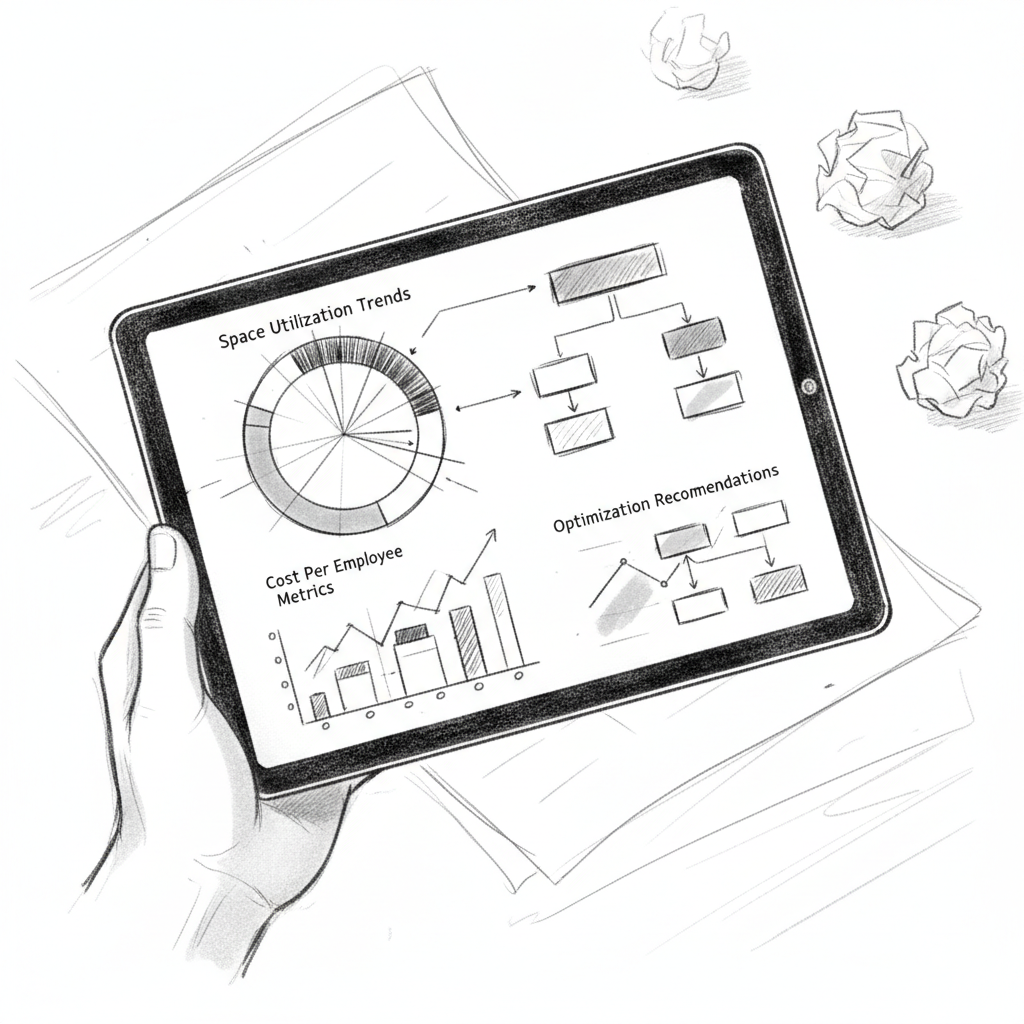
Industry data from 2026 shows that average office utilization rates hover around 60-65%, meaning organizations are paying for nearly 40% more space than they actively use [2]. Companies implementing systematic utilization tracking discover even more dramatic inefficiencies, with some conference rooms used less than 20% of available hours.
Identify Peak Demand Periods
Understanding when your spaces experience highest demand enables strategic capacity planning:
| Time Period | Typical Utilization Rate | Optimization Opportunity |
|---|
| Monday-Tuesday | 85-90% | Ensure adequate capacity for collaboration days |
| Wednesday-Thursday | 70-80% | Standard planning baseline |
| Friday | 45-55% | Consider reduced footprint or flexible arrangements |
| Summer months | 60-70% | Temporary space reduction opportunities |
Pro Tip: Track utilization for at least 3-6 months before making decisions. One month of data can be misleading due to holidays, company events, or seasonal business patterns that skew results.
Calculate True Cost Per Employee
Develop accurate cost metrics that reflect actual usage rather than theoretical capacity:
- Divide total real estate costs by average daily occupancy, not total headcount
- Include all associated costs: rent, utilities, cleaning, security, and maintenance
- Factor in productivity losses from underutilized amenities and collaboration spaces
- Compare costs against alternative workspace solutions including coworking and flexible offices
At Upflex, we've found that organizations typically discover their true cost per occupied desk is 40-60% higher than initially calculated when factoring in actual utilization rates rather than lease capacity.
Step 2: Implement AI-Powered Attendance Forecasting
Accurate prediction of office attendance patterns enables proactive space management and forms the cornerstone of successful real estate cost optimization in hybrid work environments.
Deploy Predictive Analytics Systems
Modern workplace optimization relies on sophisticated forecasting algorithms that consider multiple variables affecting employee attendance:
- Implement machine learning systems that analyze historical attendance data, calendar bookings, and team collaboration patterns
- Integrate weather data, public transportation schedules, and local events that influence office visits
- Configure automated alerts for predicted capacity constraints or underutilization periods
- Establish feedback loops to continuously improve forecast accuracy based on actual outcomes
Advanced AI systems achieve 95-97% accuracy in predicting daily office attendance when properly calibrated with sufficient historical data [3]. This level of precision enables confident decision-making about space reductions and flexible arrangements.
Optimize Team Coordination
Use attendance forecasting to maximize collaboration effectiveness while minimizing space requirements:
- Identify natural team clustering patterns and schedule coordinated office days
- Predict when cross-functional projects will require additional meeting space
- Automatically suggest optimal office days for individual employees based on their team's schedule
- Reserve conference rooms and collaboration areas based on predicted demand
Establish Dynamic Space Allocation
Transform static office assignments into flexible, demand-responsive environments:
| Space Type | Traditional Allocation | Dynamic Optimization | Potential Savings |
|---|
| Individual Desks | 1:1 employee ratio | 1.2-1.4:1 based on attendance | 20-30% |
| Meeting Rooms | Fixed booking limits | AI-optimized scheduling | 35-45% |
| Common Areas | Static configuration | Flexible furniture systems | 15-25% |
Pro Tip: Start with a 6-week pilot program in one office location before rolling out AI forecasting company-wide. This allows you to refine algorithms and address employee concerns while demonstrating concrete results to stakeholders.
Research from EisnerAmper demonstrates that organizations using predictive attendance analytics reduce their office footprint requirements by an average of 25-35% while maintaining or improving employee satisfaction scores [4].
Step 3: Consolidate and Right-Size Office Footprints
Strategic portfolio consolidation represents the most significant opportunity to optimize real estate spend, requiring careful analysis of location efficiency and employee accessibility.
Evaluate Location Performance Metrics
Systematic assessment of each office location reveals consolidation opportunities and helps prioritize which properties to retain, modify, or eliminate:
- Calculate cost per employee for each location including rent, utilities, and commuting subsidies
- Analyze employee geographic distribution and commute patterns to identify optimal hub locations
- Assess proximity to public transportation, parking availability, and local amenities
- Review lease terms, break clauses, and renewal dates to identify exit opportunities
Implement Hub-and-Spoke Models
Modern organizations are adopting distributed office strategies that balance cost efficiency with employee accessibility:
- Establish primary hubs in locations with highest employee density and collaboration needs
- Create smaller satellite offices or flexible workspace partnerships in secondary markets
- Negotiate shorter lease terms for experimental locations to maintain flexibility
- Design spaces for maximum flexibility with moveable walls and modular furniture
Companies implementing hub-and-spoke models typically reduce their total real estate costs by 30-40% while improving average employee commute times [5]. The key lies in strategic location selection based on actual employee distribution rather than historical preferences.
Negotiate Flexible Lease Arrangements
Leverage current market conditions to secure terms that support ongoing optimization efforts:
| Lease Component | Traditional Terms | Optimized Approach | Cost Impact |
|---|
| Lease Duration | 5-10 years fixed | 3-5 years with renewal options | Maintains flexibility |
| Space Expansion | Separate negotiations | Built-in expansion rights | 10-15% cost reduction |
| Early Termination | Limited options | Structured break clauses | Risk mitigation |
| Subleasing Rights | Landlord approval required | Streamlined subletting process | Revenue opportunity |
Design for Maximum Efficiency
Optimize physical layouts to support higher utilization rates and flexible work patterns:
- Implement activity-based working zones that adapt to different task requirements
- Create multipurpose spaces that serve both individual work and team collaboration
- Install technology infrastructure that supports seamless transitions between remote and in-office work
- Design wellness areas and amenities that encourage office attendance during designated collaboration days
Pro Tip: When consolidating offices, maintain at least 6 months of overlap between old and new locations to allow for gradual transitions and employee adjustment. Rushed consolidations often result in productivity losses that offset real estate savings.
Step 4: Integrate Flexible Workspace Solutions
Combining permanent office space with on-demand workspace access creates a hybrid real estate strategy that maximizes cost efficiency while maintaining operational flexibility.
Establish Strategic Coworking Partnerships
Modern workspace optimization extends beyond traditional office leases to include flexible arrangements that scale with actual demand:
- Identify high-quality coworking providers in markets where you need occasional presence
- Negotiate corporate rates for bulk day passes and meeting room access
- Establish preferred provider relationships that include dedicated account management
- Create standardized booking processes that integrate with your existing workplace technology
Implement Demand-Responsive Capacity
Use flexible workspace solutions to handle capacity fluctuations without maintaining excess permanent space:
- Reserve coworking spaces during peak attendance periods or special projects
- Provide employees with workspace allowances for productive remote work environments
- Utilize flexible meeting rooms for client presentations and team workshops
- Access specialized facilities like presentation theaters or training centers on-demand
Organizations implementing flexible workspace strategies report 25-35% reductions in fixed real estate costs while improving employee satisfaction with workspace variety and convenience [6].
Calculate Hybrid Cost Models
Develop comprehensive cost comparisons that account for all aspects of traditional versus flexible workspace arrangements:
| Cost Component | Traditional Office | Flexible Workspace | Hybrid Model |
|---|
| Base rent per sq ft | $35-50 annually | $25-35 daily | $20-30 annually |
| Utilities & maintenance | $8-12 per sq ft | Included | $4-6 per sq ft |
| Technology infrastructure | $15-25 per employee | Included | $8-12 per employee |
| Cleaning & security | $6-10 per sq ft | Included | $3-5 per sq ft |
Optimize Geographic Coverage
Strategic placement of flexible workspace access points enhances employee productivity while reducing commute-related costs and time:
- Map employee home locations to identify optimal coworking hub placement
- Provide workspace access in client-proximity locations for sales and consulting teams
- Establish temporary project spaces in markets with short-term business presence
- Create backup workspace options for business continuity planning
Pro Tip: Track employee usage patterns across different flexible workspace types to optimize your mix. Many companies discover that private offices are underutilized while collaborative spaces see heavy demand, allowing for more targeted capacity planning.
At Upflex, we've observed that companies combining permanent headquarters with flexible workspace access achieve the optimal balance of cost control and operational flexibility, typically reducing total real estate spend by 40% while maintaining high employee satisfaction scores.
Step 5: Leverage Data Analytics for Continuous Optimization
Ongoing real estate optimization requires sophisticated analytics capabilities that transform raw occupancy data into actionable insights for cost reduction and space efficiency improvements.
Implement Real-Time Monitoring Systems
Establish comprehensive data collection infrastructure that provides continuous visibility into space performance and utilization patterns:
- Deploy IoT sensors throughout office spaces to track occupancy, environmental conditions, and equipment usage
- Integrate badge access systems with calendar data to correlate planned versus actual space usage
- Configure automated dashboards that highlight utilization trends and cost anomalies
- Establish data quality protocols to ensure accurate reporting and decision-making
Develop Predictive Cost Models
Advanced analytics enable proactive identification of cost optimization opportunities before they become budget pressures:
- Model the financial impact of different occupancy scenarios on total real estate costs
- Predict seasonal variations in space demand to optimize temporary arrangements
- Identify correlation patterns between workspace design and employee productivity metrics
- Forecast maintenance and upgrade costs based on usage patterns and equipment lifecycle data
Establish Performance Benchmarks
Create measurable targets that drive continuous improvement in real estate efficiency:
| Metric | Industry Average 2026 | Best-in-Class Target | Optimization Impact |
|---|
| Space utilization rate | 65% | 85%+ | 25% footprint reduction |
| Cost per occupied desk | $12,000 annually | $8,000 annually | 33% cost savings |
| Meeting room efficiency | 45% | 75%+ | 40% capacity improvement |
| Employee satisfaction | 72% | 85%+ | Reduced turnover costs |
Automate Optimization Recommendations
Transform data insights into automated suggestions that streamline decision-making processes:
- Generate alerts when spaces consistently underperform utilization targets
- Recommend optimal desk-to-employee ratios based on actual attendance patterns
- Suggest meeting room reconfigurations to improve booking efficiency
- Identify opportunities for temporary space reductions during low-demand periods
Research from
the National Association of Industrial and Office Properties indicates that organizations using automated optimization systems achieve 15-20% better cost reduction outcomes compared to those relying on manual analysis [7].
Pro Tip: Establish monthly optimization reviews that combine quantitative data with qualitative employee feedback. Numbers tell you what's happening, but employee input reveals why patterns occur and how to improve them sustainably.
Common Mistakes to Avoid When Optimizing Real Estate Spend
Understanding typical pitfalls in real estate optimization helps organizations avoid costly errors that can undermine cost reduction efforts and employee satisfaction.
Insufficient Data Collection Periods
Many organizations rush into major real estate decisions based on limited data samples, leading to suboptimal outcomes. Common timing mistakes include:
- Making decisions based on less than 6 months of occupancy data
- Ignoring seasonal business cycles that affect space utilization patterns
- Failing to account for major company events, holidays, or industry-specific busy periods
- Overlooking the adjustment period required for employees to adapt to hybrid work policies
Underestimating Change Management Requirements
Real estate optimization affects every employee and requires comprehensive communication and support strategies:
- Announcing space changes without adequate advance notice or explanation
- Failing to address employee concerns about desk availability and workspace quality
- Implementing technology solutions without proper training and support
- Overlooking the impact of space changes on company culture and collaboration
Focusing Solely on Cost Reduction
While cost optimization is important, organizations that ignore productivity and satisfaction metrics often experience negative outcomes:
- Reducing space below levels that support effective collaboration
- Eliminating amenities that significantly impact employee retention
- Choosing locations based only on rent costs without considering commute impacts
- Implementing booking systems that create friction and reduce workspace accessibility
Pro Tip: Pilot major changes in one location or department before company-wide implementation. This approach allows you to identify and resolve issues while demonstrating success to skeptical stakeholders.
Technology Implementation Pitfalls
Workplace technology should enhance rather than complicate the employee experience:
- Deploying multiple disconnected systems that require separate logins and processes
- Choosing solutions based on features rather than user adoption and integration capabilities
- Failing to establish clear protocols for system maintenance and user support
- Overlooking data privacy and security requirements for employee monitoring systems
Sources & References
- Harvard Business Review, "Refining Your Organization's Real Estate Strategy with Cost-Predictive Operations", 2025
- JLL, "9 ways to significantly cut your organization's real estate costs", 2026
- EisnerAmper, "How to Optimize Real Estate Operations", 2023
- EisnerAmper, "How to Optimize Real Estate Operations", 2023
- Range, "4 Advanced Strategies for Real Estate Investors to Maximize Returns", 2026
- Gable, "How To Reduce Corporate Real Estate Costs: Strategic Approaches", 2026
- NAIOP, "How to Navigate Risk and Maximize Returns When Investing in Distressed Real Estate", 2023
Frequently Asked Questions
1. How quickly can organizations see results from real estate optimization efforts?
Most organizations begin seeing measurable cost reductions within 3-6 months of implementing optimization strategies. However, achieving maximum savings of 30-40% typically requires 12-18 months to fully optimize real estate spend through lease renegotiations and space consolidation.
2. What percentage of office space can be safely reduced without impacting productivity?
Research indicates that organizations can typically reduce office footprints by 25-35% when implementing proper hybrid work policies and space utilization analytics. The key is maintaining adequate capacity for peak collaboration days while eliminating consistently underutilized areas. This is particularly relevant for optimize real estate spend.
3. How do flexible workspace solutions compare to traditional office leases in terms of cost?
Flexible workspaces typically cost 20-30% less per utilized square foot when factoring in utilities, maintenance, and technology infrastructure. The savings increase significantly for organizations that need occasional rather than permanent presence in specific markets. When considering optimize real estate spend, this point stands out.
4. What technology investments are essential for successful real estate optimization?
Essential technology includes occupancy sensors, desk booking systems, and analytics platforms that integrate multiple data sources. AI-powered attendance forecasting tools provide the highest return on investment by enabling proactive capacity planning and space allocation decisions. For those exploring optimize real estate spend, this matters.
5. How can organizations maintain company culture while reducing office space?
Successful culture preservation requires designing remaining spaces specifically for collaboration and connection. Focus on creating high-quality amenities, flexible meeting areas, and coordinated team days that maximize face-to-face interaction when employees are in the office. This directly impacts optimize real estate spend outcomes.
6. What are the biggest risks in real estate optimization projects?
The primary risks include making decisions based on insufficient data, underestimating employee change management needs, and reducing space below levels that support effective collaboration. Proper planning and pilot programs help mitigate these risks while ensuring successful outcomes. This is particularly relevant for optimize real estate spend.
7. How do market conditions in 2026 affect real estate optimization strategies?
Current market conditions favor tenants, with increased landlord flexibility on lease terms and growing availability of high-quality flexible workspace options. Organizations can negotiate better terms and explore hybrid strategies that weren't viable in previous market cycles. When considering optimize real estate spend, this point stands out.
Conclusion
Successfully implementing strategies to optimize real estate spend requires a systematic approach that combines data-driven decision making with strategic portfolio management. Organizations that embrace AI-powered analytics, flexible workspace solutions, and continuous optimization achieve average cost reductions of 30-40% while maintaining or improving employee satisfaction and productivity.
The key to sustainable real estate optimization lies in balancing cost efficiency with operational effectiveness. Companies must invest in proper data collection infrastructure, implement change management strategies that support employee adaptation, and maintain flexibility to adjust their approach based on evolving business needs and market conditions.
As hybrid work models continue to mature in 2026, the organizations that proactively optimize their real estate portfolios will gain significant competitive advantages through reduced overhead costs and enhanced workplace agility. The combination of strategic space reduction, flexible workspace integration, and predictive analytics creates a foundation for long-term cost optimization and operational excellence.
About the Author
Written by the SaaS experts at Upflex. Our team brings years of hands-on experience helping businesses with SaaS, delivering practical guidance grounded in real-world results. For those exploring optimize real estate spend, this matters.
Recommended Articles
Explore more from our content library: