Hybrid Work Solutions: Complete 2026 Implementation Guide
Upflex team
April 9, 2026
Key Insight
Explanation
97% Forecast Accuracy
AI-powered attendance forecasting can achieve 97% accuracy, enabling precise space planning and cost optimization
40% Cost Reduction
Organizations implementing comprehensive hybrid work strategies report 40%+ reduction in real estate expenses
5 Critical Components
Successful hybrid solutions require technology infrastructure, space management, communication tools, policy frameworks, and cultural adaptation
88% Co-attendance Rate
Advanced coordination systems can achieve 88% team co-attendance when needed for collaboration
Multi-Modal Approach
Leading organizations combine on-site optimization with access to flexible workspace networks for maximum agility
2026 Compliance Focus
New regulations emphasize employee choice, data privacy, and equitable access across hybrid work arrangements
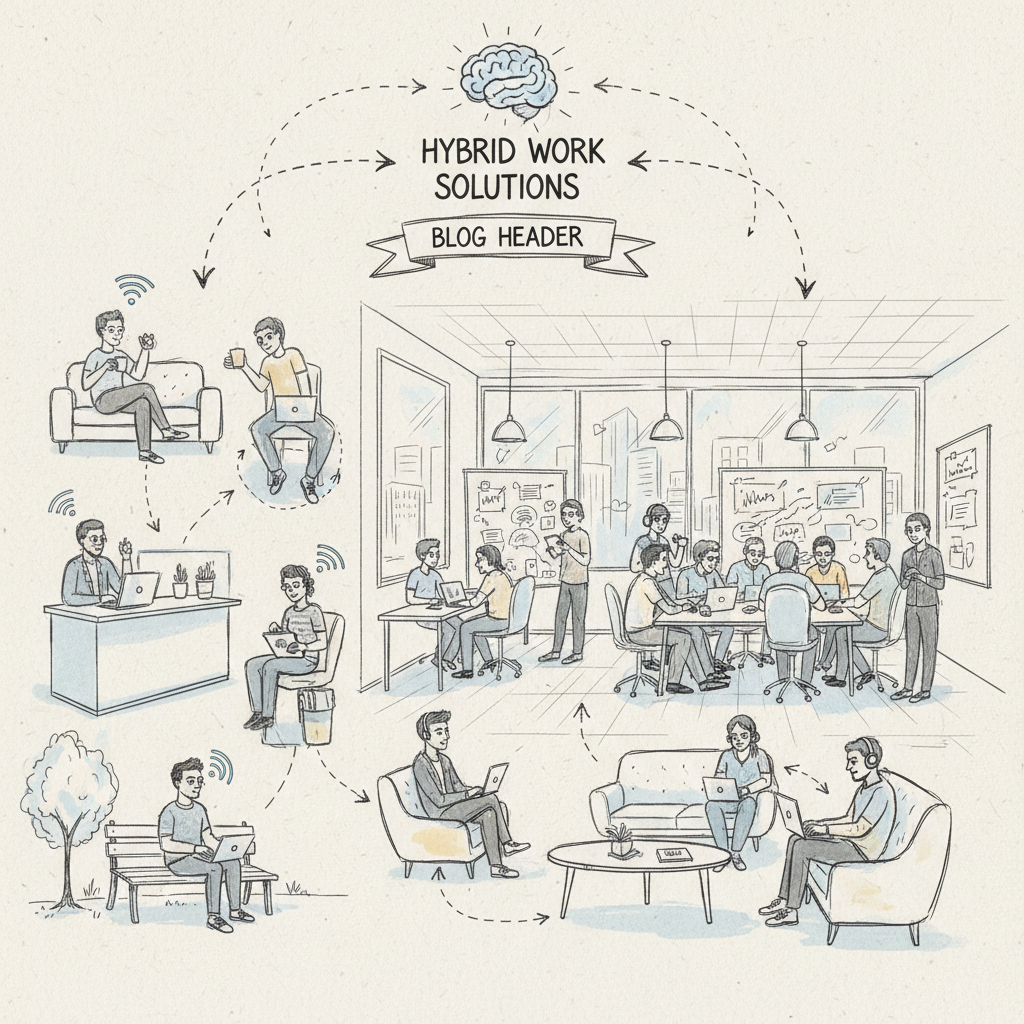
The modern workplace has fundamentally transformed, with hybrid work solutions becoming essential for organizational success in 2026. These comprehensive systems combine remote work flexibility with office-based collaboration, addressing the complex needs of today's distributed workforce. Organizations implementing effective hybrid work strategies report significant improvements in employee satisfaction, productivity, and cost efficiency.
This practical guide walks you through implementing flexible work systems that deliver measurable results. You'll learn to assess your current infrastructure, design optimal frameworks, and deploy technology that supports seamless transitions between remote and office work. The entire implementation process typically takes 3-6 months, depending on organization size and complexity.
What You'll Need: hybrid work solutions
Successful hybrid work solutions implementation requires careful preparation and the right foundation. Organizations need both technical infrastructure and strategic frameworks to support flexible work arrangements effectively.
Essential Technology Infrastructure
Your technology stack forms the backbone of any hybrid work solution. Core requirements include:
Cloud-based collaboration platforms (Microsoft 365, Google Workspace, or similar)
Video conferencing systems with room integration capabilities
Desk and room booking software with real-time availability
VPN and secure remote access solutions
Mobile device management (MDM) systems
Digital workplace platforms for internal communication
Pro Tip: Prioritize solutions that integrate with existing systems rather than replacing everything at once. This reduces implementation complexity and user resistance.
Organizational Prerequisites
Beyond technology, successful hybrid work strategies require organizational readiness:
Executive sponsorship and clear change management strategy
Dedicated project team with representatives from IT, HR, and facilities
Current workspace utilization data and employee preference surveys
Budget allocation for technology, training, and potential space modifications
Legal review of employment policies and compliance requirements
According to research from Harvard Business Review, organizations that invest in comprehensive change management are 67% more likely to achieve successful hybrid work transformations [1].
Step 1: Assess Your Current Infrastructure
Assessment forms the foundation of effective hybrid work implementation by identifying gaps between current capabilities and desired outcomes. This systematic evaluation prevents costly mistakes and ensures your implementation addresses actual needs rather than perceived ones.
Conduct Technology Audit
Begin with a comprehensive technology assessment covering all systems that support remote and office work:
Document existing collaboration tools and their utilization rates
Evaluate network capacity and security infrastructure for remote access
Assess current video conferencing capabilities and room technology
Review mobile device policies and management systems
Analyze data backup and recovery procedures for distributed work
Industry analysts suggest that 73% of organizations discover significant technology gaps during initial assessments, particularly in areas like room booking systems and attendance coordination [2].
Analyze Workspace Utilization
Understanding how your physical spaces are currently used provides critical insights for hybrid work design:
Metric
Measurement Method
Target Insight
Desk Occupancy
Badge swipe data + visual counts
Peak usage patterns and underutilized areas
Meeting Room Usage
Calendar integration + sensor data
Booking vs. actual usage rates
Collaboration Spaces
Time-based observation studies
Informal vs. formal meeting preferences
Common Areas
Traffic flow analysis
Social interaction patterns
Pro Tip: Collect baseline data for at least 4-6 weeks to account for seasonal variations and special events that might skew utilization patterns.
Step 2: Design Your Hybrid Framework
Designing effective flexible work systems requires balancing employee flexibility with business needs while ensuring equitable access and maintaining organizational culture. Your framework should address both strategic objectives and practical implementation challenges.
Define Work Arrangement Models
Establish clear categories for different types of hybrid work arrangements:
Determine core collaboration days when teams should be co-located
Define role-based flexibility levels based on job requirements
Create guidelines for remote work approval and documentation
Establish protocols for temporary location changes and travel
Design escalation procedures for conflicting schedule requests
Research from MIT Sloan indicates that organizations with clearly defined hybrid models experience 34% higher employee satisfaction compared to those with ad-hoc arrangements [3].
Develop Space Allocation Strategy
Transform your physical workspace to support flexible work arrangements effectively:
Convert assigned desks to hoteling or hot-desking arrangements
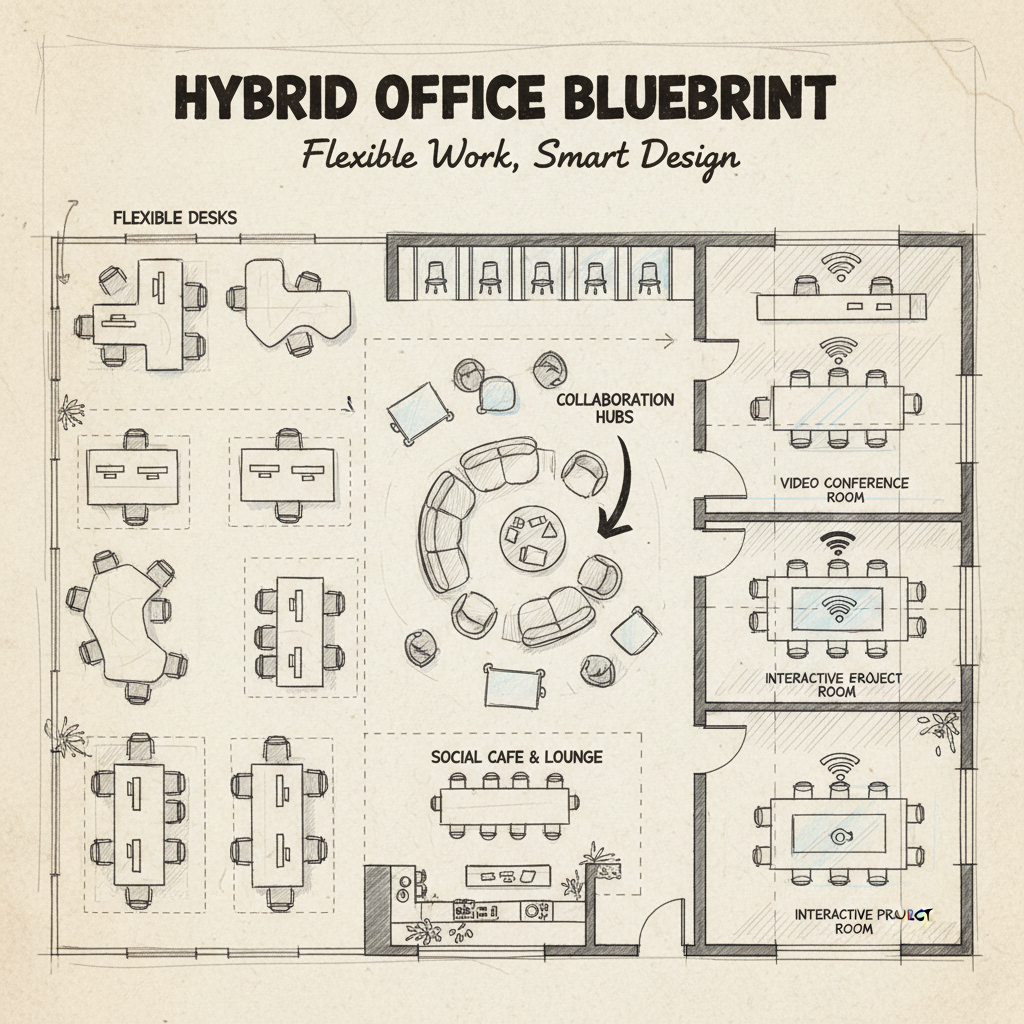
Increase collaboration spaces for team meetings and project work
Create focus areas for individual work when employees are on-site
Design technology-enabled spaces for seamless virtual participation
Plan quiet zones for phone calls and video conferences
At Upflex, we've found that organizations typically need 30-40% fewer assigned desks when implementing comprehensive hybrid work strategies, freeing up space for more collaborative and flexible arrangements.
Step 3: Implement Technology Solutions
Technology implementation forms the operational backbone of flexible work systems, enabling seamless coordination between remote and office-based employees. Focus on solutions that integrate well together and provide measurable value from day one.
Deploy Workspace Management Platform
Implement a comprehensive platform that handles desk booking, room reservations, and attendance coordination:
Install desk booking software with mobile app access and real-time availability
Configure room booking systems with capacity management and hybrid meeting support
Set up attendance forecasting tools to predict office utilization patterns
Integrate visitor management systems for external guests and contractors
Connect facilities management tools for cleaning schedules and maintenance coordination
Leading hybrid work platforms like those offered by Upflex can achieve 97% attendance forecast accuracy, enabling organizations to optimize space utilization and reduce real estate costs significantly.
Establish Communication Infrastructure
Create robust communication channels that work equally well for remote and office-based team members:
Deploy unified communication platforms with chat, video, and file sharing
Install high-quality video conferencing equipment in meeting rooms
Implement digital signage systems for office announcements and wayfinding
Set up virtual collaboration tools for project management and document sharing
Configure mobile apps for quick access to company resources and colleagues
Pro Tip: Test all technology solutions with a pilot group before full deployment. This helps identify integration issues and user experience problems early in the process.
Step 4: Optimize Space Management
Space optimization transforms traditional office environments into dynamic, flexible workspaces that adapt to changing needs throughout the day and week. Effective hybrid work strategies require intelligent space management that maximizes utilization while maintaining employee experience quality.
Implement Dynamic Space Allocation
Create flexible space assignments that respond to real-time demand and usage patterns:
Configure automated desk assignment based on team collaboration needs
Set up zone-based booking to keep related teams in proximity
Establish priority booking rules for project deadlines and client meetings
Create overflow protocols for high-demand periods and special events
Design space reallocation processes for changing team sizes and structures
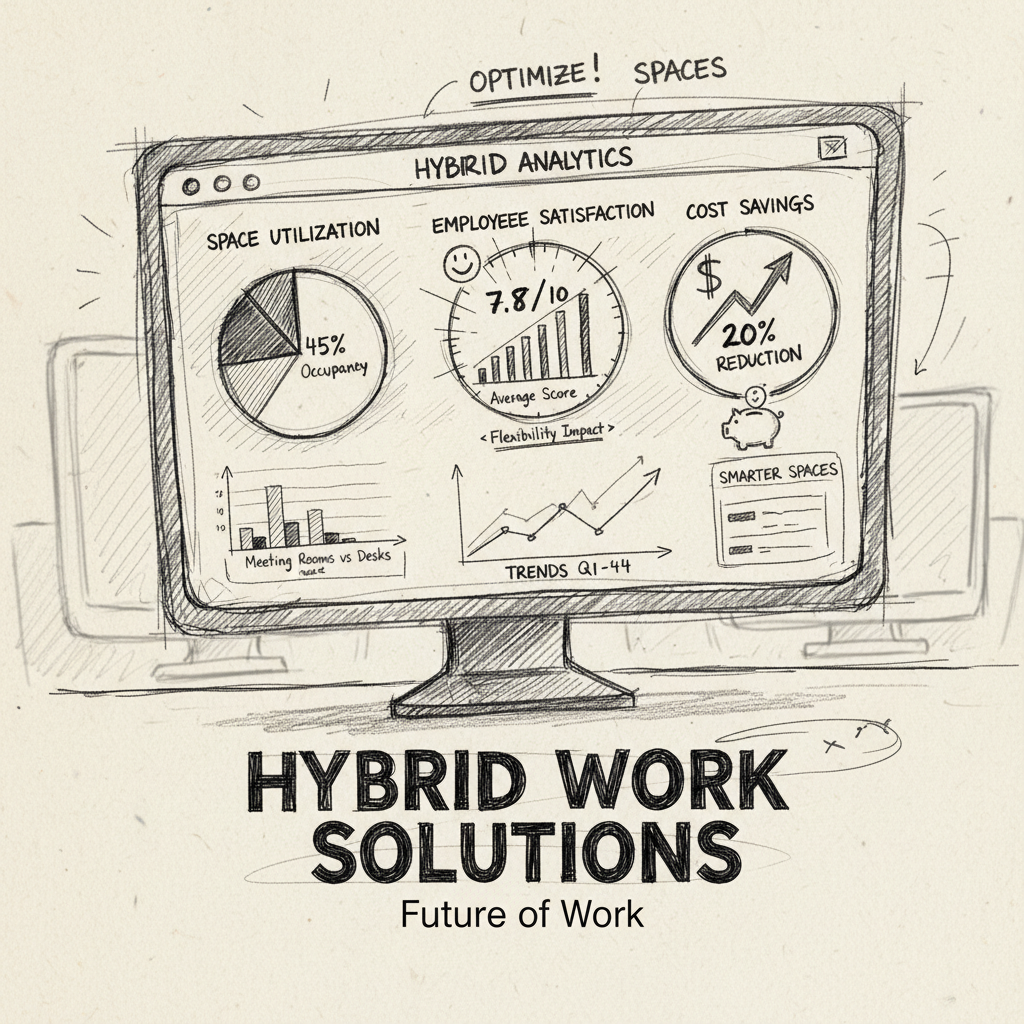
Organizations implementing intelligent space management typically achieve 60-70% space utilization rates compared to 30-40% in traditional assigned-desk environments [4].
Monitor and Adjust Utilization
Continuous monitoring ensures your flexible work systems remain effective as usage patterns evolve:
Platform adoption, feature utilization, support tickets
Monthly
Step 5: Establish Governance and Policies
Governance structures ensure flexible work systems operate fairly and consistently across the organization while maintaining compliance with employment regulations and company objectives. Clear policies reduce confusion and provide frameworks for decision-making.
Create Policy Framework
Develop comprehensive policies that address the unique challenges of hybrid work arrangements:
Define eligibility criteria for different types of remote work arrangements
Establish performance measurement standards for hybrid employees
Create equipment and technology usage policies for home offices
Document data security and confidentiality requirements for remote work
Outline expense reimbursement procedures for home office setup and utilities
As of 2026, employment law increasingly emphasizes employee choice in work arrangements, making clear policies essential for legal compliance and employee satisfaction [5].
Implement Fairness and Equity Measures
Ensure hybrid work strategies don't create disparities between remote and office-based employees:
Establish equal access to career development opportunities regardless of location
Create inclusive meeting practices that engage remote participants fully
Design performance evaluation criteria that don't favor office presence
Provide technology stipends or equipment to support effective home offices
Schedule important announcements and social events to include remote workers
Pro Tip: Regularly survey employees about their hybrid work experience to identify potential equity issues before they become significant problems.
Step 6: Monitor and Iterate
Continuous monitoring and iteration ensure flexible work systems remain effective as organizational needs evolve and new challenges emerge. Successful implementations require ongoing attention and willingness to adjust based on data and feedback.
Track Performance Metrics
Establish key performance indicators that measure the success of your hybrid work implementation:
Monitor employee satisfaction scores through regular pulse surveys
Track productivity metrics relevant to your industry and business model
Measure space utilization efficiency and cost per employee
Analyze collaboration patterns and team effectiveness indicators
Review technology adoption rates and user support requirements
Organizations that actively monitor hybrid work performance report 23% higher success rates in achieving their flexibility and cost reduction goals [6].
Conduct Regular Reviews and Updates
Schedule systematic reviews to identify improvement opportunities and address emerging challenges:
Quarterly technology performance reviews and upgrade planning
Semi-annual policy updates based on regulatory changes and employee feedback
Annual strategic reviews of space allocation and real estate optimization
Ongoing training program updates to address new tools and processes
Regular benchmark comparisons with industry best practices and competitors
Common Mistakes to Avoid
Understanding common pitfalls helps organizations implement flexible work systems more successfully and avoid costly corrections later in the process.
Technology Implementation Errors
Many organizations rush technology deployment without adequate planning or user preparation:
Implementing too many new tools simultaneously, causing user confusion and resistance
Choosing solutions that don't integrate well with existing systems
Inadequate training leading to low adoption rates and productivity drops
Overlooking mobile optimization for employees working from various locations
Insufficient bandwidth or security measures for increased remote access
Policy and Cultural Missteps
Organizational culture and policy frameworks require careful attention to avoid creating unintended consequences:
Creating policies that inadvertently favor office-based employees
Failing to address manager concerns about supervising remote workers
Implementing one-size-fits-all solutions without considering role differences
Neglecting to update performance evaluation criteria for hybrid work
Insufficient communication about changes leading to uncertainty and anxiety
In practice, organizations that involve employees in the design process experience 45% fewer implementation challenges compared to those that impose solutions top-down.
Space Management Oversights
Physical workspace transformation requires careful planning to avoid utilization and cost issues:
Reducing office space too quickly before understanding actual usage patterns
Creating booking systems that are too complex for daily use
Inadequate cleaning and maintenance protocols for shared spaces
Poor signage and wayfinding in reconfigured office layouts
Insufficient consideration of noise levels and privacy needs
Pro Tip: Start with pilot programs in specific departments or floors before rolling out comprehensive changes. This allows you to identify and resolve issues before they affect the entire organization.
Understanding hybrid work solutions is essential. The 5 C's of hybrid work are Communication, Coordination, Connection, Creativity, and Culture. These represent the core challenges organizations must address when implementing it. Communication involves establishing clear channels between remote and office workers. Coordination requires systems for scheduling and space management. Connection focuses on maintaining team relationships. Creativity addresses collaborative innovation in distributed settings. Culture encompasses maintaining organizational values across different work locations.
2. How much can organizations save with hybrid work solutions?
Organizations typically achieve 40-60% reduction in real estate costs through comprehensive this method. Additional savings come from reduced utilities, office supplies, and facilities management expenses. However, these savings must be balanced against technology investments, home office stipends, and potential productivity adjustments during transition periods.
3. What technology is essential for hybrid work solutions?
Essential technology includes cloud-based collaboration platforms, video conferencing systems, desk and room booking software, secure VPN access, and mobile device management. Advanced solutions also incorporate AI-powered attendance forecasting, space utilization analytics, and integrated communication platforms that work seamlessly across remote and office environments.
4. How do you measure hybrid work success?
Success metrics include employee satisfaction scores, space utilization rates, cost per employee, productivity indicators, and collaboration effectiveness measures. Leading organizations track attendance forecast accuracy, technology adoption rates, and real estate optimization results. Regular pulse surveys help identify areas needing improvement.
5. What are the biggest challenges in implementing hybrid work solutions?
Major challenges include technology integration complexity, manager adaptation to remote supervision, maintaining company culture across distributed teams, ensuring equity between remote and office workers, and optimizing space utilization. Change management and employee communication are critical for overcoming resistance and ensuring successful adoption.
6. How long does hybrid work implementation typically take?
Complete this strategy implementation typically requires 3-6 months for mid-size organizations and 6-12 months for large enterprises. The timeline depends on existing technology infrastructure, organizational complexity, and the scope of space reconfiguration required. Pilot programs can often launch within 4-8 weeks.
7. Can hybrid work solutions work for all types of businesses?
While this approach are most effective for knowledge workers and office-based roles, many businesses can implement partial hybrid models. Manufacturing, retail, and service industries often create hybrid arrangements for administrative functions, management roles, and support staff while maintaining on-site requirements for operational positions.
Implementing effective flexible work systems requires careful planning, the right technology, and ongoing commitment to optimization. Organizations that follow systematic approaches and remain flexible in their implementation achieve better outcomes and higher employee satisfaction.
The key to success lies in balancing employee flexibility with business needs while maintaining clear communication and equitable policies. As hybrid work continues evolving in 2026, organizations that invest in comprehensive solutions will gain competitive advantages in talent retention and operational efficiency.
Ready to transform your workplace with proven hybrid work solutions? Upflex's AI-powered platform combines office optimization with global workspace access, delivering 97% attendance forecast accuracy and 40%+ real estate cost reductions. Our comprehensive approach addresses all aspects of hybrid work implementation, from space management to employee coordination.
About the Author
Written by the SaaS experts at Upflex. Our team brings years of hands-on experience helping businesses with SaaS, delivering practical guidance grounded in real-world results.