Workplace Analytics: Complete Guide to Data-Driven Offices
Upflex team
April 7, 2026
Key Insight
Explanation
Data-Driven Decision Making
Workplace analytics transforms office management from guesswork to evidence-based strategies using real-time occupancy and usage data.
Cost Reduction Potential
Organizations achieve 30-50% reduction in real estate costs through optimized space utilization and informed downsizing decisions.
Employee Experience Enhancement
Analytics reveal usage patterns that help create better workplace experiences, improving satisfaction and productivity.
Hybrid Work Optimization
Predictive analytics enable accurate attendance forecasting and coordination, solving the complexity of hybrid work arrangements.
AI-Powered Insights
Advanced analytics platforms use machine learning to identify patterns and automate space management decisions.
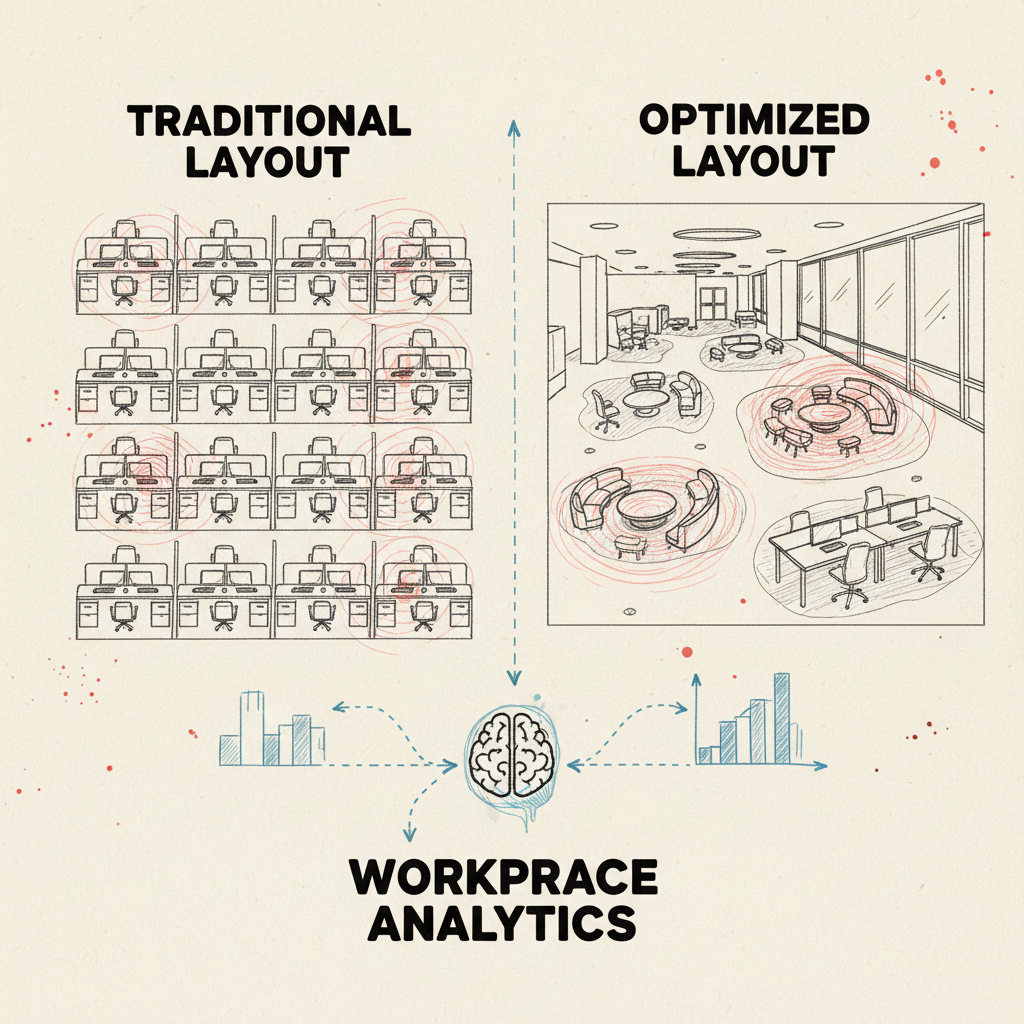
The modern workplace has become a complex ecosystem where every square foot counts and every decision impacts both employee experience and the bottom line. Workplace analytics is the systematic collection and analysis of data about how office spaces, resources, and facilities are used to optimize workplace efficiency, reduce costs, and enhance employee satisfaction. This comprehensive approach transforms traditional facility management from reactive maintenance to proactive, data-driven optimization strategies.
As organizations navigate the complexities of hybrid work models in 2026, these data-driven insights have evolved from a nice-to-have reporting tool into an essential business intelligence platform. Companies are leveraging these insights to make informed decisions about real estate portfolios, space design, and resource allocation.
What Is Workplace Analytics?
Workplace analytics encompasses the comprehensive measurement, collection, and analysis of data related to how employees interact with physical and digital workplace environments. This data-driven approach provides actionable insights into space utilization, employee behavior patterns, and operational efficiency metrics that inform strategic workplace decisions.
Core Components of Analytics Systems
Modern analytics platforms integrate multiple data sources to create a holistic view of workplace performance. The foundation typically includes:
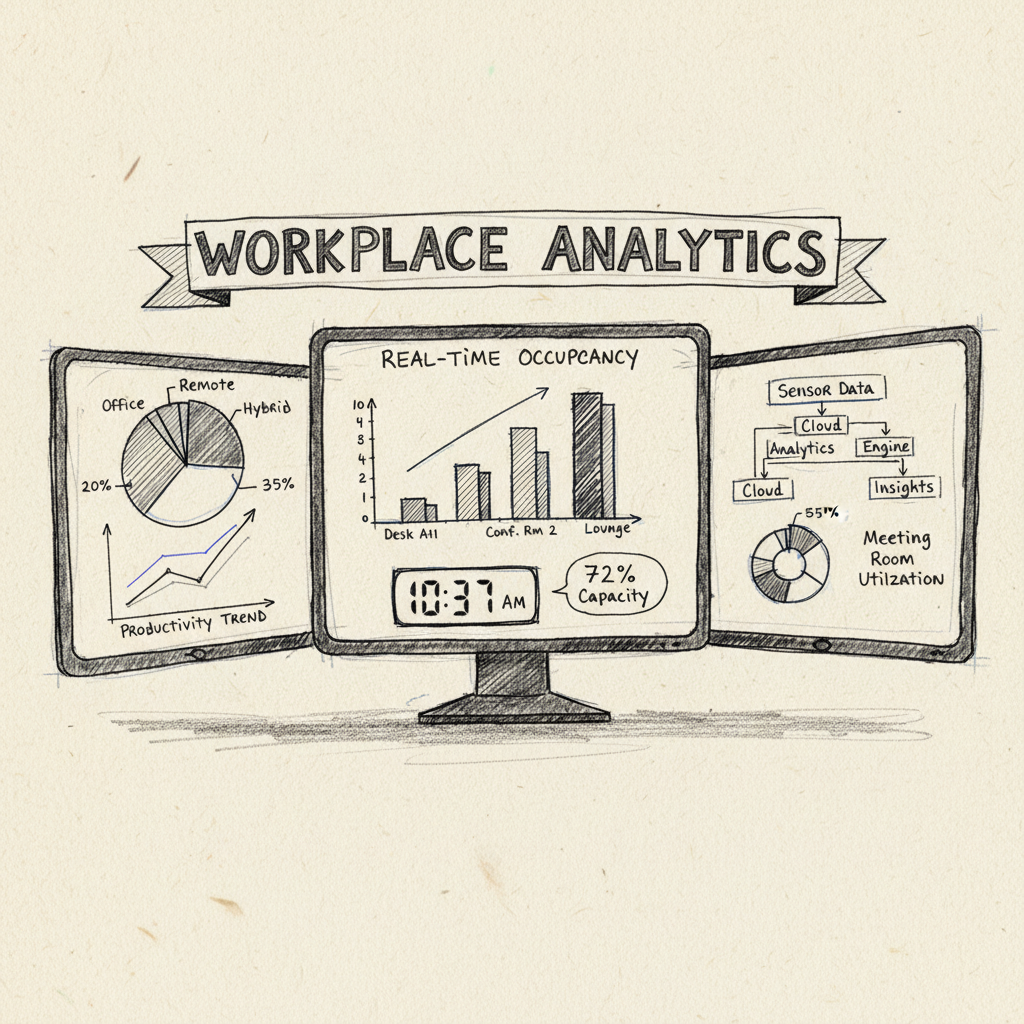
Occupancy sensors that track real-time space usage across different areas
Badge access data providing entry and exit timestamps for security-enabled areas
Wi-Fi analytics monitoring device connections and movement patterns
Desk booking systems capturing reservation and actual usage data
Environmental sensors measuring temperature, air quality, and lighting conditions
Meeting room utilization tracking scheduled versus actual usage
According to research from MIT Professional Education, data-driven workplace measurement has evolved significantly beyond simple headcount metrics [1]. Today's systems incorporate machine learning algorithms that can predict usage patterns and automatically adjust resource allocation based on historical trends and real-time conditions.
Evolution of Workplace Measurement
The discipline has transformed from basic facility management reporting to sophisticated business intelligence platforms. Early workplace measurement focused primarily on cost-per-square-foot calculations and basic occupancy rates. However, as of 2026, these systems now provide predictive insights that help organizations anticipate future space needs and optimize hybrid work arrangements.
Pro Tip: Start with clearly defined objectives before implementing data collection systems. Whether you're focused on cost reduction, employee experience, or sustainability goals, having specific targets helps you select the right metrics and measurement tools.
The integration of artificial intelligence has revolutionized how organizations interpret workplace data. Rather than simply reporting what happened, modern analytics platforms can forecast attendance patterns, recommend optimal space configurations, and automatically trigger facility adjustments based on predicted usage.
How Workplace Analytics Works
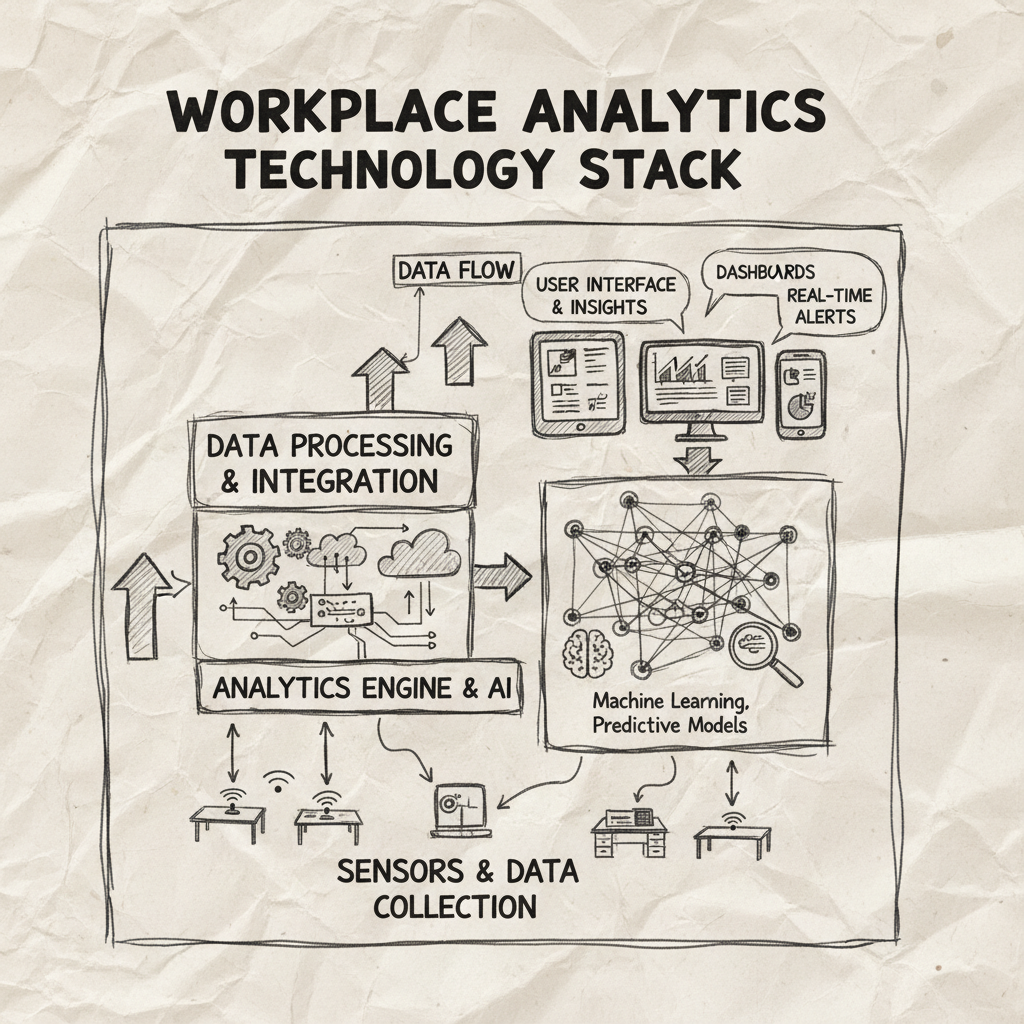
Data-driven workplace measurement operates through a systematic process of data collection, processing, analysis, and actionable reporting that transforms raw workplace information into strategic business insights.
Data Collection Methods and Technologies
The data collection process begins with strategically deployed sensors and monitoring systems throughout the workplace environment. Modern analytics platforms employ multiple collection methods to ensure comprehensive coverage:
Passive infrared sensors detect motion and presence without identifying individuals
Computer vision systems count occupants while maintaining privacy through anonymization
Bluetooth beacons track general movement patterns via mobile device interactions
Smart building integration pulls data from HVAC, lighting, and security systems
Application programming interfaces (APIs) connect with existing workplace management software
The Engage for Success research indicates that effective data collection systems typically collect data points every 15-30 seconds, creating detailed usage patterns without overwhelming storage systems [2]. This frequency provides sufficient granularity for meaningful analysis while maintaining system performance.
Processing and Analysis Pipeline
Once collected, raw data flows through sophisticated processing pipelines that clean, normalize, and analyze information to extract meaningful insights. The analysis typically involves:
Data validation to remove sensor errors and anomalies
Pattern recognition identifying regular usage trends and seasonal variations
Predictive modeling using historical data to forecast future utilization
Comparative analysis benchmarking performance against industry standards
Real-time alerting notifying facility managers of immediate issues or opportunities
At Upflex, we've found that the most valuable insights emerge from correlating multiple data streams. For example, combining occupancy data with meeting room bookings and environmental conditions reveals optimization opportunities that single-source analytics miss entirely.
Pro Tip: Implement data governance policies from day one. Establish clear protocols for data retention, privacy protection, and access controls to ensure your program maintains employee trust and regulatory compliance.
The output typically manifests through interactive dashboards, automated reports, and integration with existing business intelligence tools. These interfaces allow facility managers, real estate teams, and executives to access insights relevant to their specific roles and responsibilities.
Key Benefits of Workplace Analytics in 2026
Organizations implementing comprehensive data-driven workplace programs are experiencing significant returns on investment through cost reduction, improved employee experiences, and enhanced operational efficiency in the current business landscape.
Cost Optimization and Real Estate Efficiency
The most immediate and measurable benefit involves substantial reductions in real estate expenses through data-driven space optimization. Current industry data shows organizations achieving:
30-50% reduction in overall real estate costs through right-sizing initiatives
25-35% improvement in space utilization rates across different workplace zones
15-20% decrease in energy consumption through demand-based environmental controls
40-60% optimization of cleaning and maintenance schedules based on actual usage patterns
According to Global Workplace Analytics, companies are leveraging these insights to make informed decisions about lease renewals, space consolidation, and hybrid work policies [3]. The data eliminates guesswork from real estate planning, allowing organizations to align their physical footprint with actual usage patterns rather than traditional assumptions.
Employee Experience and Productivity Enhancement
Beyond cost savings, data-driven insights significantly improve employee satisfaction and productivity through better understanding of work patterns and preferences. Key improvements include:
Metric
Improvement Range
Key Driver
Employee Satisfaction
15-25% increase
Optimized space allocation and amenities
Meeting Room Availability
40-60% improvement
Predictive booking and usage optimization
Collaboration Effectiveness
20-30% enhancement
Strategic placement of collaborative spaces
Workplace Complaints
50-70% reduction
Proactive issue identification and resolution
Research from Harvard Business School demonstrates that data-driven workplace decisions create more equitable and efficient work environments [4]. Employees report higher satisfaction when they can easily find appropriate spaces for their work activities and when environmental conditions are optimized based on actual usage patterns.
Strategic Decision Support and Future Planning
Data-driven insights provide executive leadership with concrete data to support major business decisions regarding real estate strategy, workforce planning, and organizational development. The insights enable:
Evidence-based lease negotiations using actual space utilization data
Informed hybrid work policies based on employee attendance patterns and productivity metrics
Strategic facility investments targeted to areas with demonstrated high usage and impact
Accurate capacity planning for future growth or downsizing scenarios
Our team at Upflex has observed that organizations with mature data collection programs make faster, more confident decisions about their real estate portfolios. The data provides objective justification for changes that might otherwise face internal resistance or uncertainty.
Common Challenges and Mistakes
Despite the clear benefits, organizations frequently encounter obstacles when implementing data-driven workplace programs, often stemming from inadequate planning, privacy concerns, and unrealistic expectations about immediate results.
Implementation Pitfalls and Technical Challenges
The most common mistake involves rushing into technology deployment without establishing clear objectives and success metrics. Organizations often experience these challenges:
Sensor placement errors resulting in incomplete or inaccurate data collection
Integration failures between different systems and data sources
Data quality issues from inadequate calibration and maintenance procedures
Overwhelming data volume without proper filtering and analysis capabilities
Lack of stakeholder buy-in due to insufficient communication about program benefits
According to TechAdvisory research, approximately 60% of data-driven workplace initiatives fail to achieve their intended objectives due to inadequate change management and user adoption strategies [5]. The technology works, but organizational readiness often lags behind technical implementation.
Privacy and Compliance Concerns
Employee privacy represents a significant challenge that requires careful balance between data collection needs and individual rights. Common concerns include:
Personal tracking fears about individual monitoring and surveillance
Data security vulnerabilities in sensor networks and analytics platforms
Regulatory compliance with GDPR, CCPA, and other privacy regulations
Consent management for data collection in shared workplace environments
Data retention policies balancing analytical value with privacy protection
Pro Tip: Address privacy concerns proactively by implementing privacy-by-design principles. Use anonymized data collection methods, clearly communicate what data is collected and how it's used, and provide employees with transparency reports about findings.
Successful programs establish clear data governance frameworks from the beginning, including regular privacy audits, employee communication protocols, and technical safeguards to prevent individual identification from aggregated data.
Measurement and Interpretation Errors
Organizations frequently misinterpret workplace data, leading to poor decisions and missed opportunities. Typical errors include:
Focusing on vanity metrics like total headcount instead of meaningful utilization patterns
Ignoring seasonal variations when making long-term space planning decisions
Comparing dissimilar spaces without accounting for functional differences
Making premature conclusions based on insufficient data collection periods
Overlooking external factors that influence workplace usage patterns
One pitfall to watch for involves assuming that low utilization automatically means excess space. In practice, some areas serve critical functions despite appearing underutilized in basic metrics. Proper analysis considers peak usage requirements, functional necessity, and employee preferences rather than simple occupancy averages.
Best Practices and Expert Tips
Implementing successful data-driven workplace programs requires a strategic approach that balances technical capabilities with organizational change management, privacy protection, and clear business objectives.
Strategic Implementation Framework
The most effective programs follow a structured implementation approach that ensures alignment between technology capabilities and business objectives. Industry experts recommend this phased methodology:
Define clear objectives and success metrics before selecting technology solutions
Conduct baseline assessments to establish current state performance benchmarks
Start with pilot programs in representative areas to test and refine approaches
Establish data governance policies covering privacy, security, and access controls
Integrate with existing systems to leverage current technology investments
Plan for scalability with infrastructure that can expand across the entire organization
Research from Envoy indicates that organizations achieving the highest ROI from data-driven workplace programs spend 60% of their initial effort on planning and stakeholder alignment, with only 40% focused on technology deployment [6]. This preparation investment pays dividends through smoother implementation and faster time-to-value.
Technology Selection and Integration Criteria
Choosing the right platform requires careful evaluation of technical capabilities, integration requirements, and long-term scalability needs. Key selection criteria include:
Multi-sensor compatibility supporting diverse data collection methods
Real-time processing capabilities for immediate insights and alerts
API availability for integration with existing workplace management systems
Predictive analytics features using machine learning for forecasting
Customizable dashboards serving different stakeholder information needs
Privacy-preserving technologies ensuring employee anonymity in data collection
At Upflex, we've found that the most successful implementations prioritize platforms with strong predictive capabilities. Our UnifyAI technology delivers 97% accuracy in attendance forecasting, enabling organizations to optimize space allocation and coordination with unprecedented precision.
Organizational Change Management
Technical implementation represents only half of success. Effective change management ensures employee acceptance and maximizes program value through proper adoption and utilization.
Pro Tip: Create a cross-functional analytics committee including representatives from IT, HR, facilities, and legal teams. This group ensures comprehensive consideration of technical, privacy, and business requirements while building organizational support for the program.
Best practices for change management include:
Transparent communication about program objectives, benefits, and privacy protections
Employee education on how insights improve their workplace experience
Regular feedback collection to address concerns and improve program effectiveness
Success story sharing demonstrating tangible improvements from data-driven changes
Continuous training for facility managers and other system users
Organizations that invest in comprehensive change management typically see 40-50% higher adoption rates and achieve their ROI targets 6-8 months faster than those focusing solely on technology deployment.
Understanding workplace analytics is essential. Understanding this is essential. The seven pillars of HR analytics encompass organizational culture assessment, strategic talent management, leadership development tracking, workforce planning optimization, learning and development effectiveness, performance management insights, and employee engagement measurement. These pillars work together to provide comprehensive people analytics that inform strategic HR decisions and improve organizational outcomes through data-driven approaches.
2. How much does workplace analytics software typically cost?
Software costs vary significantly based on features, scale, and deployment model. Basic solutions start around $2-5 per employee per month, while comprehensive enterprise platforms range from $10-25 per employee monthly. Implementation costs, sensor hardware, and professional services typically add 50-100% to software licensing fees, making total first-year costs $15-50 per employee for most organizations.
3. What types of data privacy concerns should organizations address?
Key privacy concerns include employee consent for data collection, anonymization of individual tracking data, secure storage and transmission of workplace information, compliance with GDPR and local privacy regulations, clear data retention policies, and transparent communication about what data is collected and how it's used. Organizations must implement privacy-by-design principles and regular privacy audits.
4. How long does it take to see ROI from workplace analytics?
Most organizations begin seeing measurable ROI within 6-12 months of implementation, with initial insights available within 30-60 days of data collection. Quick wins like optimized cleaning schedules and meeting room allocation provide immediate value, while strategic benefits like real estate consolidation typically realize full impact within 12-18 months. Proper planning and change management accelerate time-to-value significantly.
5. Which metrics matter most for decision-making?
Critical metrics include space utilization rates by area and time, peak occupancy patterns, meeting room booking versus actual usage, employee attendance trends, environmental conditions correlation with productivity, and cost-per-square-foot optimization opportunities. Focus on metrics that directly support your strategic objectives rather than collecting data for its own sake.
6. Can workplace analytics integrate with existing building management systems?
Yes, modern platforms typically offer APIs and integrations with major building management systems, HVAC controls, security systems, and workplace management software. Integration capabilities vary by vendor, so evaluate compatibility with your existing technology stack during the selection process. Proper integration maximizes data value and reduces implementation complexity.
7. What's the difference between workplace analytics and facility management software?
Data-driven workplace measurement focuses on data collection, analysis, and insights generation about space usage and employee behavior patterns, while facility management software primarily handles operational tasks like maintenance scheduling, work orders, and asset tracking. Many modern solutions combine both capabilities, but analytics specifically emphasizes predictive insights and optimization recommendations rather than just operational management.
As organizations continue adapting to hybrid work models and economic pressures in 2026, workplace analytics has become essential for making informed decisions about real estate investments, employee experience, and operational efficiency. The data-driven insights enable companies to optimize their physical footprint while creating better workplace experiences for their teams.
The key to success lies in approaching data collection and analysis as a strategic business initiative rather than just a technology implementation. Organizations that invest in proper planning, change management, and privacy protection see the greatest returns from their programs.
Ready to transform your workplace with data-driven insights? Upflex's workplace optimization platform combines AI-powered office orchestration with comprehensive analytics to help you reduce real estate costs by up to 40% while improving employee satisfaction. Our UnifyAI technology delivers 97% accuracy in attendance forecasting, enabling smarter space allocation and coordination decisions. Contact us today to learn how workplace analytics can optimize your organization's hybrid work strategy and real estate portfolio.
About the Author
Written by the SaaS experts at Upflex. Our team brings years of hands-on experience helping businesses with workplace optimization, delivering practical guidance grounded in real-world results.