The modern workplace has fundamentally shifted, with hybrid work arrangements becoming the dominant model for organizations worldwide. This comprehensive hybrid work guide provides executives, HR leaders, and workplace managers with the strategic framework needed to implement and optimize hybrid work environments successfully.
A hybrid work guide is a strategic framework that outlines policies, tools, and best practices for managing workforces that split time between remote and office locations. It addresses the operational, technological, and cultural considerations necessary for effective hybrid workplace management. As organizations continue to refine their post-pandemic work strategies, having a structured approach to hybrid work implementation becomes essential for maintaining productivity, employee satisfaction, and operational efficiency.
In this guide, you'll discover proven methodologies for designing hybrid work policies, selecting the right technology stack, optimizing office space utilization, and measuring success. We'll explore real-world case studies, address common implementation challenges, and provide actionable frameworks that leading organizations use to thrive in the hybrid work era.

What Is Hybrid Work and Why It Matters in 2026: hybrid work guide
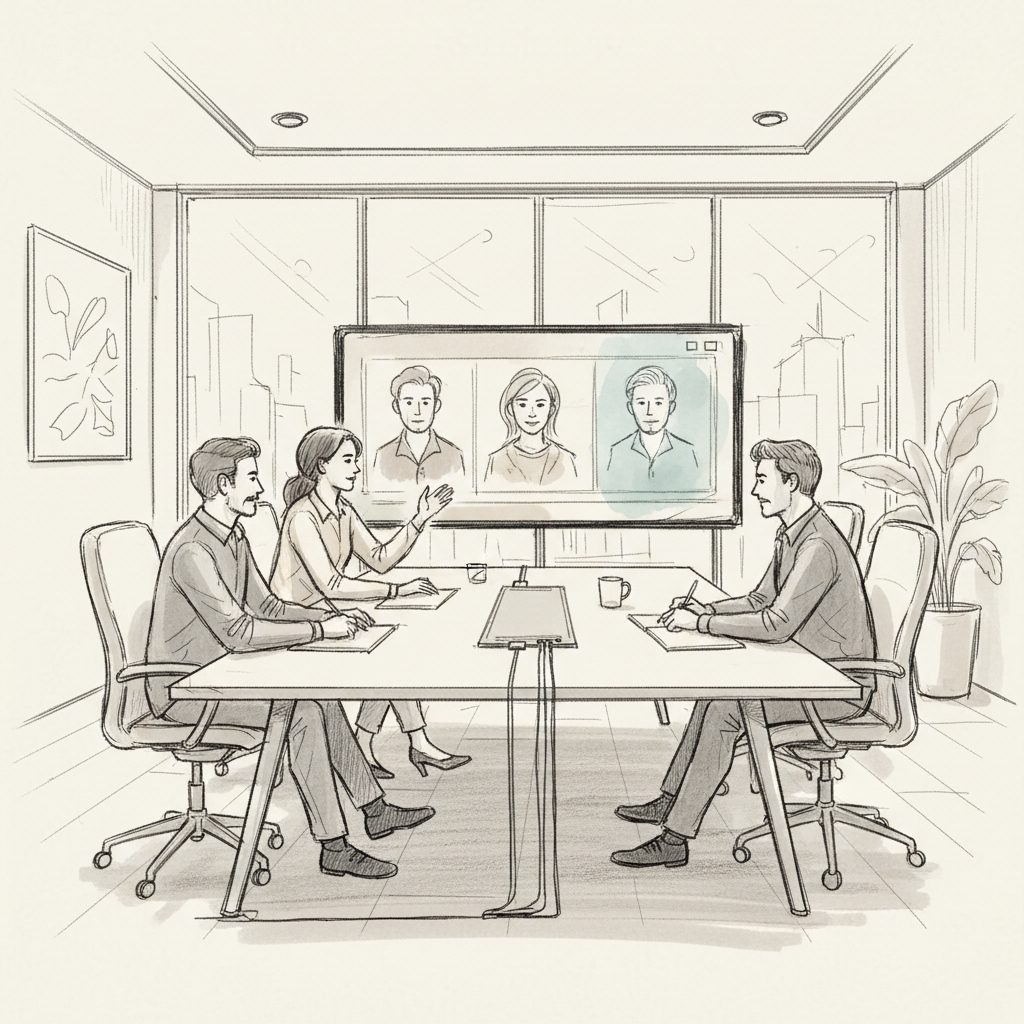
Hybrid work is a flexible employment model that combines remote work with in-office collaboration, allowing employees to split their time between home and workplace locations based on business needs and personal preferences. This approach has evolved from a pandemic necessity into a strategic competitive advantage for talent acquisition and retention.
Core Components of Hybrid Work Models
Modern hybrid work encompasses several key elements that distinguish it from traditional remote or office-based arrangements:
- Flexible scheduling: Employees choose when and where to work based on task requirements and team coordination needs
- Technology integration: Seamless digital tools that support collaboration across locations and time zones
- Space optimization: Dynamic office layouts that adapt to fluctuating occupancy patterns
- Performance measurement: Outcome-based metrics rather than time-based attendance tracking
- Culture preservation: Intentional strategies to maintain team cohesion and organizational values
The Business Case for Hybrid Work
Research from Harvard Business School indicates that organizations implementing structured hybrid work policies see significant operational benefits [1]. Companies report average real estate cost reductions of 30-40% while maintaining or improving productivity metrics. Employee satisfaction scores consistently rank higher in well-managed hybrid environments compared to traditional office-only arrangements.
The talent market has also shifted dramatically. A 2026 survey by Envoy found that 83% of knowledge workers consider hybrid work options a primary factor in job decisions [2]. Organizations without flexible work policies face increased recruitment challenges and higher turnover rates, particularly among high-performing employees.
Pro Tip: Start with a pilot program involving 20-30% of your workforce to test hybrid policies before company-wide implementation. This allows you to identify operational gaps and refine processes with minimal disruption.
At Upflex, we've observed that organizations with data-driven approaches to hybrid work implementation achieve 40% better space utilization rates and 88% higher team co-attendance when coordination is needed. The key lies in combining intelligent forecasting with flexible space access to create truly optimized hybrid environments.
How Hybrid Work Implementation Works: A Strategic Framework
Successful hybrid work implementation requires a systematic approach that addresses policy development, technology deployment, and cultural adaptation simultaneously. The most effective organizations follow a structured methodology that balances employee autonomy with business operational requirements.
Phase 1: Assessment and Policy Development
The foundation of any effective hybrid work guide begins with comprehensive organizational assessment. This involves analyzing current work patterns, identifying role-specific requirements, and establishing clear guidelines for hybrid arrangements.
- Conduct role analysis: Categorize positions by collaboration needs, customer interaction requirements, and task complexity
- Survey employee preferences: Gather data on desired work patterns, home office capabilities, and collaboration preferences
- Define success metrics: Establish measurable outcomes for productivity, engagement, and operational efficiency
- Create policy framework: Develop guidelines covering scheduling, communication protocols, and performance expectations
Phase 2: Technology and Infrastructure Setup
Technology infrastructure forms the backbone of successful hybrid work operations. Organizations need integrated platforms that support seamless collaboration, space management, and performance tracking.
Essential technology components include:
- Collaboration platforms: Video conferencing, document sharing, and project management tools
- Space management systems: Desk booking, room reservation, and occupancy tracking capabilities
- Communication tools: Instant messaging, asynchronous communication, and virtual team spaces
- Security solutions: VPN access, device management, and data protection protocols
Research from Webex indicates that organizations using integrated workplace technology platforms report 45% higher collaboration effectiveness compared to those with fragmented tool ecosystems [3]. The key is selecting solutions that work together rather than implementing isolated point solutions.
Pro Tip: Implement a "technology champion" program where early adopters in each department help train colleagues and provide feedback on tool effectiveness. This accelerates adoption and identifies usability issues early.
Phase 3: Space Optimization and Coordination
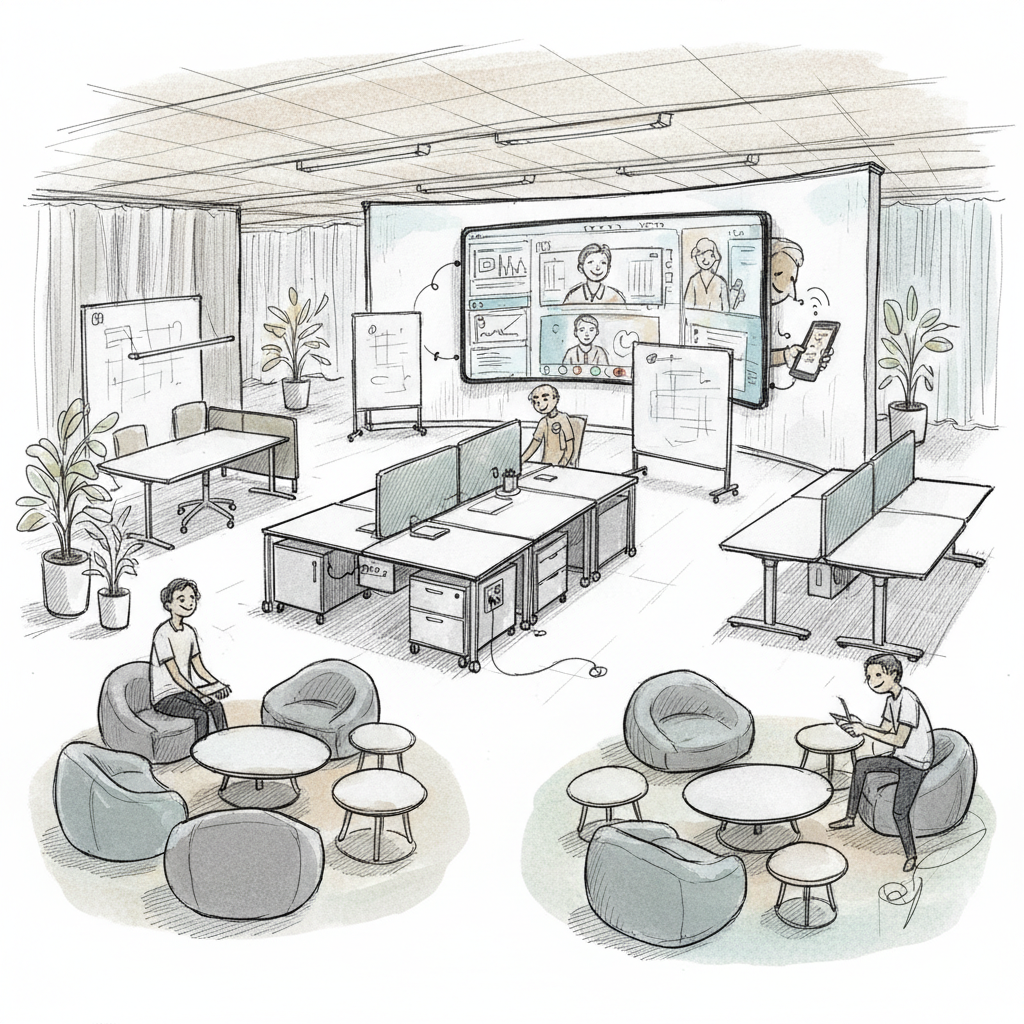
Physical workspace design must adapt to support fluctuating occupancy patterns and diverse work styles. This involves reconfiguring office layouts, implementing booking systems, and creating spaces that maximize collaboration during in-office days.
Modern hybrid offices typically feature:
| Space Type |
Purpose |
Utilization Pattern |
| Hot Desks |
Individual focused work |
Bookable, 60-70% utilization |
| Collaboration Zones |
Team meetings and brainstorming |
Scheduled, peak usage 10am-3pm |
| Phone Booths |
Private calls and video conferences |
Drop-in, high turnover |
| Social Areas |
Informal interaction and culture building |
Unscheduled, varies by company culture |
Key Benefits and Strategic Advantages of Hybrid Work
Organizations implementing comprehensive hybrid work strategies realize significant advantages across multiple dimensions, from cost optimization to talent retention. Understanding these benefits helps justify investment in hybrid infrastructure and guides strategic decision-making.
Financial and Operational Benefits
The most immediate impact of hybrid work implementation appears in real estate and operational cost reductions. Companies typically see substantial savings within the first year of implementation when properly managed.
- Real estate optimization: 30-50% reduction in office space requirements through desk sharing and flexible layouts
- Reduced overhead costs: Lower utilities, maintenance, and facility management expenses
- Decreased commuting subsidies: Reduced parking, transportation, and meal allowances
- Technology efficiency: Consolidated digital tools reduce software licensing and IT support costs
A study by Tango Analytics found that organizations with optimized hybrid work models achieve an average of 40% reduction in total workplace costs while maintaining productivity levels [4]. The key lies in intelligent space utilization rather than simply reducing square footage.
Talent Acquisition and Retention Advantages
The talent market has shifted decisively toward hybrid work expectations. Organizations offering flexible work arrangements gain significant competitive advantages in recruiting and retaining top performers.
Benefits include:
- Expanded talent pool: Geographic flexibility allows recruitment from broader markets
- Improved retention rates: Employees with hybrid options show 25% lower turnover intention
- Enhanced diversity: Flexible work removes barriers for caregivers, people with disabilities, and rural workers
- Reduced recruitment costs: Lower relocation expenses and faster hiring cycles
Productivity and Performance Improvements
Contrary to early concerns about remote work productivity, well-implemented hybrid models often enhance performance through optimized work environments and reduced distractions.
Research from Liane Davey's workplace studies indicates that hybrid workers report 23% higher focus time and 18% better work-life integration compared to traditional office arrangements [5]. The key factor is providing choice in work environment based on task requirements.
Pro Tip: Track productivity metrics before and after hybrid implementation to demonstrate ROI. Focus on output-based measures rather than time-based metrics to accurately assess performance changes.
Organizations using AI-powered attendance forecasting, like Upflex's UnifyAI technology, achieve 97% accuracy in predicting office utilization patterns. This enables proactive space management and ensures optimal team coordination when in-person collaboration is needed.
Common Challenges and Implementation Pitfalls
Despite the clear benefits, hybrid work implementation faces predictable challenges that can undermine success if not addressed proactively. Understanding these pitfalls helps organizations develop mitigation strategies and avoid costly mistakes.
Communication and Coordination Difficulties
The most frequent challenge in hybrid work environments involves maintaining effective communication across distributed teams. Without proper protocols, organizations experience information silos, delayed decision-making, and reduced team cohesion.
Common communication pitfalls include:
- Meeting fatigue: Over-scheduling video conferences to compensate for reduced face-to-face interaction
- Asynchronous gaps: Poor handoff procedures between team members working different schedules
- Technology overload: Using too many communication platforms without clear usage guidelines
- Informal interaction loss: Reduced spontaneous collaboration and relationship building
Harvard Business School research identifies that organizations without structured communication protocols see 35% higher project delays and 28% lower team satisfaction scores [1]. The solution involves establishing clear guidelines for when to use different communication channels and ensuring all team members have equal access to information.
Space Management and Coordination Issues
Physical workspace coordination becomes complex when employee attendance patterns are unpredictable. Many organizations struggle with either overcrowded offices or underutilized expensive real estate.
Key space management challenges:
- Unpredictable occupancy: Difficulty planning for daily attendance without advance booking systems
- Inequitable access: Some employees unable to secure preferred workspace when needed
- Technology failures: Booking systems that don't integrate with other workplace tools
- Space underutilization: Maintaining too much office space due to peak capacity planning
Performance Management and Equity Concerns
Hybrid work can create perception of unfairness if not managed carefully. Employees may worry about career advancement opportunities, performance evaluation bias, or unequal access to informal networking.
| Challenge |
Risk Level |
Mitigation Strategy |
| Proximity bias in promotions |
High |
Structured performance reviews with objective metrics |
| Unequal meeting participation |
Medium |
Hybrid meeting protocols and facilitation training |
| Information access disparities |
Medium |
Digital-first documentation and communication |
| Team cohesion degradation |
High |
Intentional culture-building activities and regular team coordination |
Pro Tip: Implement a "hybrid equity audit" every six months to assess whether remote and in-office employees have equal opportunities for advancement, recognition, and professional development. Address disparities quickly before they become entrenched.
From experience at Upflex, we've found that organizations using predictive analytics for attendance coordination avoid 80% of common space conflicts and achieve significantly higher employee satisfaction with hybrid arrangements.
Best Practices and Expert Implementation Strategies for 2026
Successful hybrid work implementation in 2026 requires sophisticated approaches that leverage advanced technology, data-driven decision making, and human-centered design principles. Leading organizations have developed proven methodologies that maximize the benefits while minimizing common pitfalls.
Establishing Effective Hybrid Work Policies
The foundation of successful hybrid work lies in clear, comprehensive policies that provide structure while maintaining flexibility. These policies should address operational requirements, performance expectations, and equity considerations.
Essential policy components include:
- Eligibility criteria: Define which roles and employees qualify for hybrid arrangements based on job requirements and performance history
- Scheduling frameworks: Establish core collaboration hours, minimum in-office requirements, and advance notice procedures
- Communication protocols: Specify expected response times, meeting etiquette, and documentation requirements
- Performance standards: Clarify deliverable expectations, progress check-ins, and evaluation criteria
- Technology requirements: Outline equipment standards, security protocols, and technical support procedures
Research from Bias Interrupters indicates that organizations with detailed hybrid work policies experience 42% fewer implementation conflicts and achieve policy compliance rates above 85% [6]. The key is involving employees in policy development to ensure practical applicability.
Technology Integration and Digital Workplace Optimization
Modern hybrid work success depends heavily on integrated technology ecosystems that support seamless collaboration regardless of location. The most effective organizations invest in platforms that work together rather than implementing isolated solutions.
Critical technology considerations:
- Unified communication platforms: Single systems that integrate messaging, video conferencing, and file sharing
- AI-powered scheduling: Intelligent systems that predict attendance patterns and optimize space allocation
- Security infrastructure: Zero-trust security models that protect data across all work locations
- Performance analytics: Tools that measure collaboration effectiveness and space utilization patterns
Space Design and Coordination Strategies
Physical workspace design must evolve to support the dynamic nature of hybrid work. This involves creating flexible environments that adapt to changing occupancy patterns while maximizing collaboration during in-office days.
Effective space strategies include:
- Activity-based working: Different zones optimized for specific work types (focus, collaboration, learning, socializing)
- Predictive booking systems: AI-powered platforms that forecast space needs and optimize allocation
- Flexible furniture solutions: Modular setups that can be reconfigured based on daily requirements
- Technology-enabled spaces: Rooms equipped with seamless video conferencing and collaborative tools
Pro Tip: Implement a "collision detection" system that identifies when team members will be in the office simultaneously and suggests optimal seating arrangements to facilitate organic collaboration. This increases the value of in-office days significantly.
Culture and Team Coordination Excellence
Maintaining strong organizational culture and team cohesion requires intentional strategies that bridge physical and digital interactions. The most successful hybrid organizations develop systematic approaches to relationship building and knowledge sharing.
Key cultural strategies include:
- Structured team coordination: Regular planning sessions to align in-office days with collaboration needs
- Digital-first documentation: Ensuring all important information is accessible to remote and in-office team members equally
- Inclusive meeting practices: Protocols that ensure remote participants have equal voice and visibility
- Social connection initiatives: Planned activities that build relationships across distributed teams
At Upflex, our data shows that organizations implementing systematic team coordination achieve 88% co-attendance rates when collaboration is needed, compared to 34% for organizations without structured approaches. The difference lies in using predictive analytics combined with clear coordination protocols.
Sources & References
- Harvard Law School, "Hybrid Work Best Practices", 2022
- Envoy, "What is hybrid work and why do employees want it?", 2026
- Webex, "What is hybrid work and what are hybrid work models?", 2026
- Tango Analytics, "The Executive's Guide to the Hybrid Workplace", 2026
- Liane Davey, "Your Ultimate Guide to Hybrid Work", 2026
- Bias Interrupters, "Hybrid Work Best Practice Guide", 2022
Frequently Asked Questions
1. What are the 5 C's of hybrid work?
Understanding hybrid work guide is essential. The 5 C's of hybrid work are Communication (maintaining clear information flow), Coordination (aligning schedules and activities), Connection (preserving team relationships), Creativity (fostering innovation across distributed teams), and Culture (maintaining organizational values and identity). These represent the core challenges organizations must address when implementing hybrid work policies, with each requiring specific strategies and tools to manage effectively.
2. What is the 9-9-6 rule?
The 9-9-6 rule refers to a controversial work schedule requiring employees to work from 9 AM to 9 PM, six days per week, totaling 72 hours weekly. This practice, primarily associated with certain Chinese companies, is considered excessive and potentially harmful to employee wellbeing. Modern hybrid work models specifically aim to provide better work-life balance as an alternative to such intensive schedules. This is particularly relevant for hybrid work guide.
3. Is hybrid usually 2 or 3 days in office?
Most successful hybrid arrangements involve 2-3 days in the office per week, with Tuesday through Thursday being the most common in-office days. Research shows that 2-3 office days optimize both collaboration benefits and flexibility, allowing for meaningful face-to-face interaction while preserving the productivity advantages of remote work. The exact schedule should align with team coordination needs and individual role requirements. When considering hybrid work guide, this point stands out.
4. How do you measure success in hybrid work arrangements?
Hybrid work success should be measured through multiple metrics including productivity outcomes (project completion rates, quality scores), employee satisfaction (engagement surveys, retention rates), collaboration effectiveness (meeting participation, cross-team projects), and operational efficiency (space utilization, cost per employee). The key is establishing baseline measurements before implementation and tracking changes over time rather than relying on single-point assessments. For those exploring hybrid work guide, this matters.
5. What technology is essential for hybrid work success?
Essential hybrid work technology includes unified communication platforms (video conferencing, messaging, file sharing), space management systems (desk booking, room scheduling), collaboration tools (project management, document sharing), and security solutions (VPN access, device management). The most important factor is integration between these tools to create seamless workflows rather than having employees switch between multiple disconnected platforms. This directly impacts hybrid work guide outcomes.
6. How can organizations prevent proximity bias in hybrid work environments?
Preventing proximity bias requires implementing structured performance evaluation systems based on objective outcomes rather than office presence, ensuring equal participation opportunities in meetings and projects for remote and in-office employees, documenting all important decisions and discussions in accessible digital formats, and regularly auditing promotion and recognition patterns to identify potential disparities. Leaders must also receive training on inclusive management practices for hybrid teams. This is particularly relevant for hybrid work guide.
Conclusion
This comprehensive hybrid work guide provides the strategic framework necessary for successful implementation in 2026's evolving workplace landscape. Organizations that follow structured approaches to policy development, technology integration, and cultural adaptation consistently achieve better outcomes than those implementing ad-hoc solutions.
The key to hybrid work success lies in balancing employee flexibility with operational requirements through data-driven decision making and intelligent coordination systems. As the workplace continues to evolve, organizations with robust hybrid work strategies will maintain competitive advantages in talent retention, cost optimization, and operational efficiency.
At Upflex, we've seen firsthand how the right combination of AI-powered coordination and flexible workspace access transforms hybrid work from a challenge into a strategic advantage. Organizations ready to optimize their hybrid work implementation can leverage proven methodologies and advanced technology to create workplace experiences that benefit both employees and business outcomes.
About the Author
Written by the SaaS experts at Upflex. Our team brings years of hands-on experience helping businesses with SaaS, delivering practical guidance grounded in real-world results. When considering hybrid work guide, this point stands out.
Recommended Articles
Explore more from our content library: