Smart office technology uses artificial intelligence to predict space usage with 97% accuracy, enabling proactive workplace management
Cost Reduction Potential
Organizations implementing comprehensive smart office solutions report 40%+ reduction in real estate operational costs
IoT Integration
Modern smart offices leverage interconnected sensors and devices to create responsive, data-driven workplace environments
Employee Experience
Smart technology enhances workplace satisfaction by automating routine tasks and personalizing environmental controls
Hybrid Work Support
Advanced booking systems and attendance forecasting enable seamless coordination of hybrid work arrangements
Smart office technology represents a fundamental shift in how organizations approach workplace management and employee experience. This comprehensive technology ecosystem combines Internet of Things (IoT) sensors, artificial intelligence, automation systems, and data analytics to create responsive, efficient, and employee-centric work environments. As organizations navigate hybrid work challenges in 2026, implementing these intelligent solutions has become essential for optimizing real estate spend while enhancing productivity and employee satisfaction.
The integration of these advanced systems delivers measurable benefits across multiple operational areas. Organizations report significant cost reductions, improved space utilization, and enhanced employee experiences through automated systems that adapt to real-time workplace needs.
Understanding Smart Office Technology
Intelligent workplace systems encompass interconnected digital solutions designed to automate workplace operations, enhance employee productivity, and optimize resource utilization through data-driven insights. This technology foundation includes IoT sensors, cloud-based platforms, machine learning algorithms, and automated control systems that work together to create intelligent workplace environments.
Defining the Smart Office Ecosystem
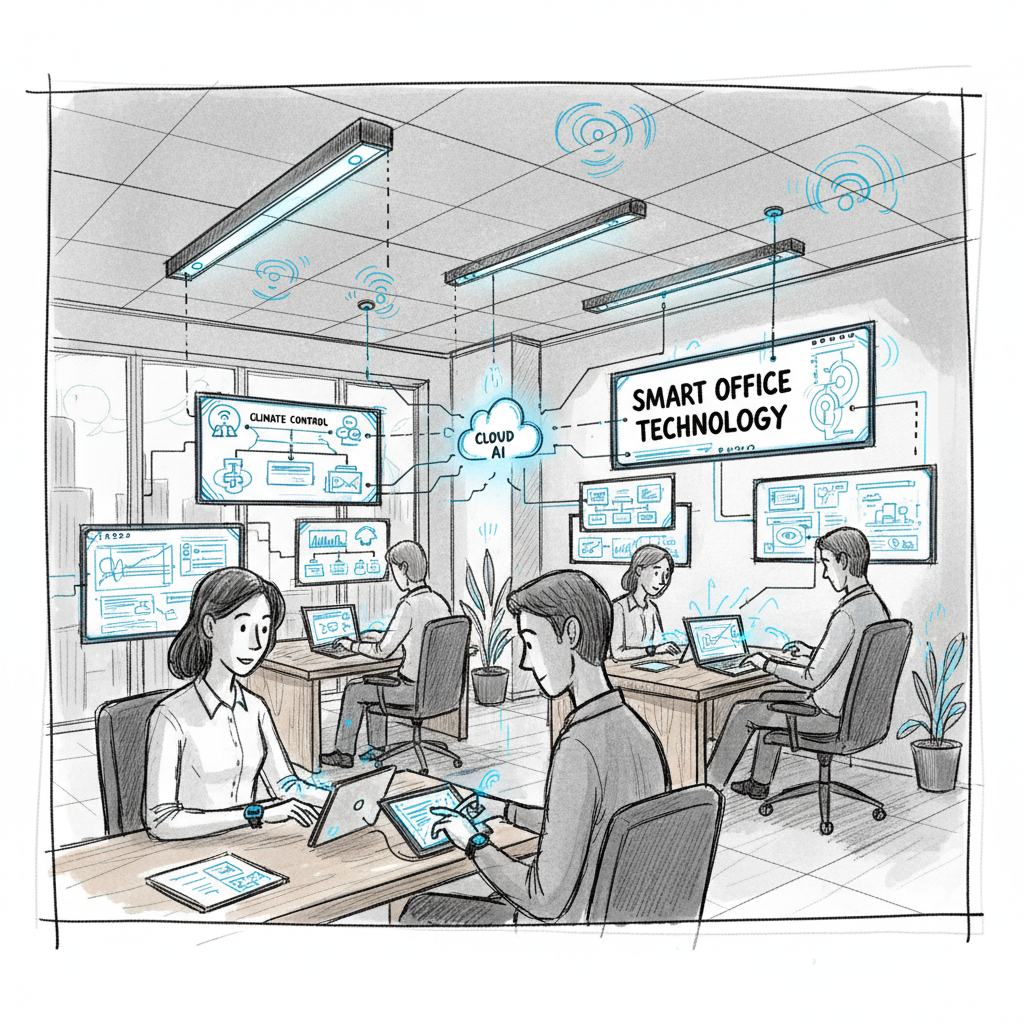
The smart office ecosystem operates on three fundamental layers that work in harmony. The sensing layer captures real-time data through various IoT devices including occupancy sensors, environmental monitors, and access control systems. The processing layer analyzes this data using artificial intelligence and machine learning algorithms to identify patterns and predict future needs. The action layer implements automated responses through connected systems like lighting controls, HVAC adjustments, and space booking platforms [1].
Research from MIT demonstrates how smart office environments can personalize workplace atmospheres based on individual employee preferences and biometric data [2]. This level of customization represents the evolution from basic automation to truly intelligent workplace management.
Technology Integration Benefits
Modern intelligent office implementations deliver quantifiable improvements across multiple operational metrics. Organizations typically experience:
Energy consumption reduction of 20-30% through intelligent HVAC and lighting management
Space utilization optimization leading to 40%+ reduction in real estate costs
Employee productivity increases of 15-25% through streamlined workflows
Maintenance cost reductions through predictive analytics and automated scheduling
Enhanced security through integrated access control and monitoring systems
The Society for Human Resource Management reports that smart technology significantly influences workplace connectivity, particularly through bring-your-own-device policies and wearable technology integration [3]. This connectivity creates seamless experiences that support both in-office and remote work arrangements.
Pro Tip: Start with pilot implementations in high-traffic areas like conference rooms and common spaces to demonstrate ROI before expanding intelligent workplace solutions across entire facilities.
Core Components and Implementation
Successful deployment of intelligent workplace systems requires careful selection and integration of core components that work together to create a cohesive ecosystem. The implementation process involves strategic planning, technology selection, and phased rollout to ensure maximum adoption and effectiveness.
Essential Hardware Components
The foundation of any intelligent office system begins with carefully selected hardware components that capture data and enable automation. Essential components include:
Occupancy sensors that detect presence and movement patterns throughout the workspace
Environmental monitoring devices that track temperature, humidity, air quality, and noise levels
Smart lighting systems with automated dimming and color temperature adjustment capabilities
Connected HVAC controls that respond to occupancy and environmental conditions
Access control systems integrated with employee identification and security protocols
Digital displays and interactive kiosks for wayfinding and information sharing
Cisco's research indicates that intelligent office integration requires careful consideration of network infrastructure to support the increased data flow from connected devices [4]. Organizations must ensure robust Wi-Fi coverage and adequate bandwidth to handle real-time data transmission from multiple IoT sensors.
Software Platform Selection
The software layer of these systems serves as the brain that processes sensor data and coordinates automated responses. Key platform requirements include:
Real-time data processing capabilities for immediate response to changing conditions
Machine learning algorithms that improve performance over time
Integration APIs that connect with existing enterprise systems
User-friendly dashboards for facility managers and employees
Mobile applications for desk booking, environmental controls, and service requests
Analytics tools that provide insights into space utilization and operational efficiency
At Upflex, we've found that organizations achieve the best results when intelligent workplace platforms include predictive analytics capabilities. Our UnifyAI technology delivers 97% attendance forecast accuracy, enabling proactive space management and resource allocation.
Technology Component
Primary Function
Implementation Timeline
IoT Sensors
Real-time data collection
2-4 weeks
Automation Systems
Environmental control
4-6 weeks
Analytics Platform
Data processing and insights
6-8 weeks
User Applications
Employee interface
3-5 weeks
Pro Tip: Implement intelligent workplace components in phases, starting with high-impact areas like meeting rooms and collaborative spaces to build user confidence and demonstrate value quickly.
Automation Systems Setup
Automation systems form the operational backbone of intelligent offices, enabling seamless responses to changing workplace conditions without manual intervention. These systems integrate multiple building functions to create responsive environments that adapt to real-time occupancy patterns and employee preferences.
Configure Environmental Controls
Environmental automation represents one of the most impactful applications of intelligent workplace systems. Modern solutions can automatically adjust lighting, temperature, and air quality based on occupancy data and individual preferences.
The configuration process begins with establishing baseline environmental parameters for different zones within the office space. Smart thermostats learn usage patterns and adjust HVAC systems to maintain optimal conditions while minimizing energy consumption. Lighting systems equipped with daylight sensors automatically adjust brightness and color temperature throughout the day to support circadian rhythms and reduce eye strain.
Advanced systems can create personalized environmental profiles for individual employees or teams. When someone books a workspace through the intelligent platform, the system can pre-condition the area according to their preferences before they arrive.
Implement Space Booking Systems
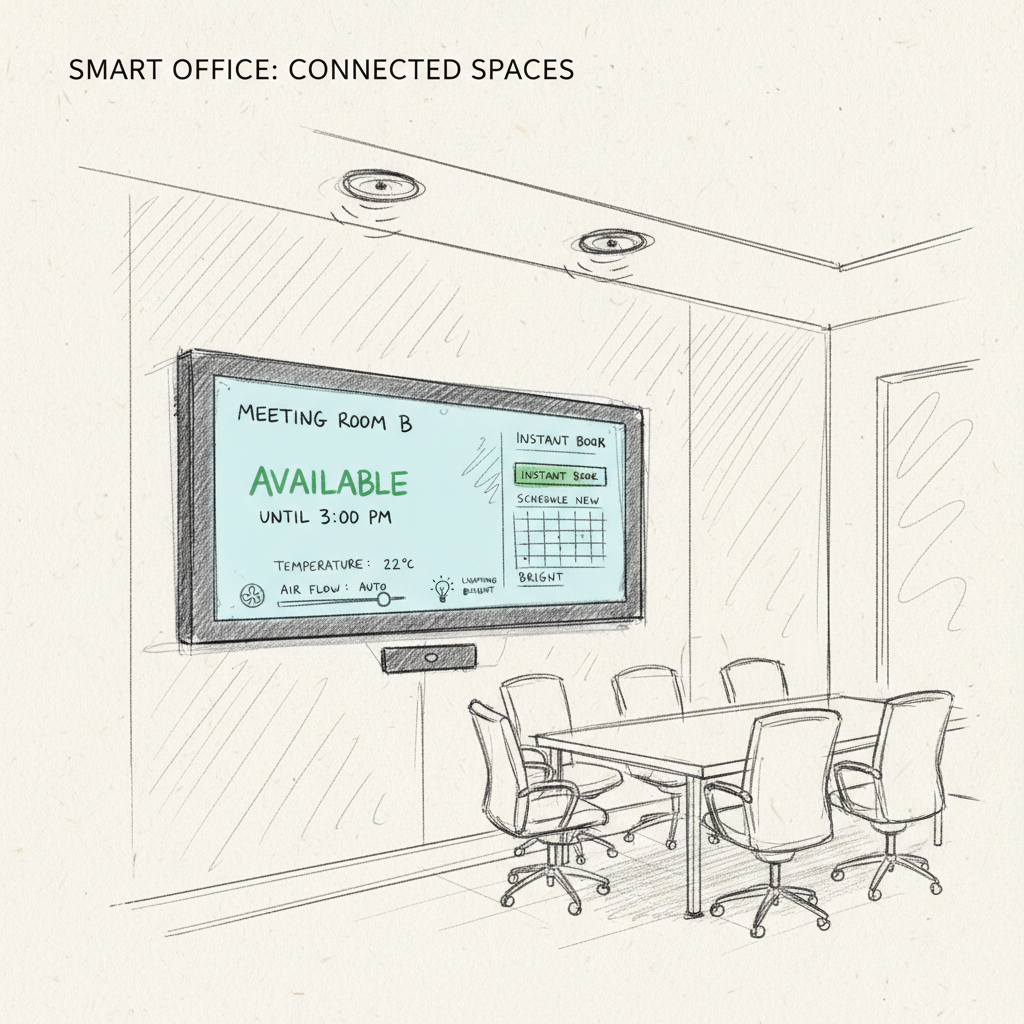
Smart space booking systems eliminate the common frustrations of meeting room conflicts and underutilized spaces. These systems integrate with calendar applications and provide real-time availability information through digital displays and mobile applications.
The implementation process involves several key steps:
Install occupancy sensors in all bookable spaces to detect actual usage versus reservations
Configure automatic release of unused bookings after a specified grace period
Set up integration with popular calendar platforms like Outlook and Google Workspace
Establish booking policies that encourage efficient space utilization
Deploy mobile applications that allow employees to find and book available spaces instantly
Avigilon's research shows that organizations implementing comprehensive automation report significant improvements in space utilization rates and employee satisfaction [5]. The key is creating systems that are intuitive and add value to daily workflows rather than creating additional complexity.
Data Analytics and Optimization
Data analytics capabilities transform raw sensor information into actionable insights that drive continuous improvement in workplace operations and employee experience. Intelligent workplace platforms collect vast amounts of data about space usage, environmental conditions, and employee behaviors that can inform strategic decisions about real estate portfolio optimization.
Establish Performance Metrics
Effective implementation requires clear metrics that align with organizational objectives. Key performance indicators include space utilization rates, energy consumption patterns, employee satisfaction scores, and operational cost reductions.
Space utilization metrics reveal which areas are overused or underutilized, enabling organizations to make informed decisions about office layout and capacity planning. Energy consumption data identifies opportunities for additional automation and efficiency improvements. Employee satisfaction metrics, gathered through integrated feedback systems, help organizations understand how intelligent systems impact daily work experiences.
Stanford University's research on smart office workflows emphasizes the importance of measuring productivity improvements alongside operational metrics [6]. Organizations should track both quantitative measures like meeting room booking efficiency and qualitative measures like employee feedback on workplace technology.
Optimize Resource Allocation
Advanced analytics enable predictive resource allocation that anticipates workplace needs before they arise. Machine learning algorithms analyze historical usage patterns, calendar data, and external factors like weather and local events to forecast space demand and optimize resource deployment.
This predictive capability allows facilities teams to:
Adjust cleaning schedules based on actual space usage rather than fixed timetables
Optimize HVAC operation by pre-conditioning spaces before peak occupancy periods
Coordinate catering and supplies delivery based on predicted attendance patterns
Schedule maintenance activities during low-occupancy periods to minimize disruption
Allocate parking spaces and transportation resources based on commuting patterns
Our team at Upflex has observed that organizations using predictive analytics for resource allocation achieve 88% co-attendance rates for hybrid teams, significantly improving collaboration and reducing coordination overhead.
Pro Tip: Establish data governance policies early in your implementation to ensure privacy compliance and build employee trust in automated systems.
Security and Compliance Considerations
Intelligent workplace implementations must address comprehensive security and compliance requirements to protect sensitive data and ensure regulatory adherence. The interconnected nature of IoT devices and cloud-based platforms creates expanded attack surfaces that require proactive security measures and ongoing monitoring.
Implement IoT Security Protocols
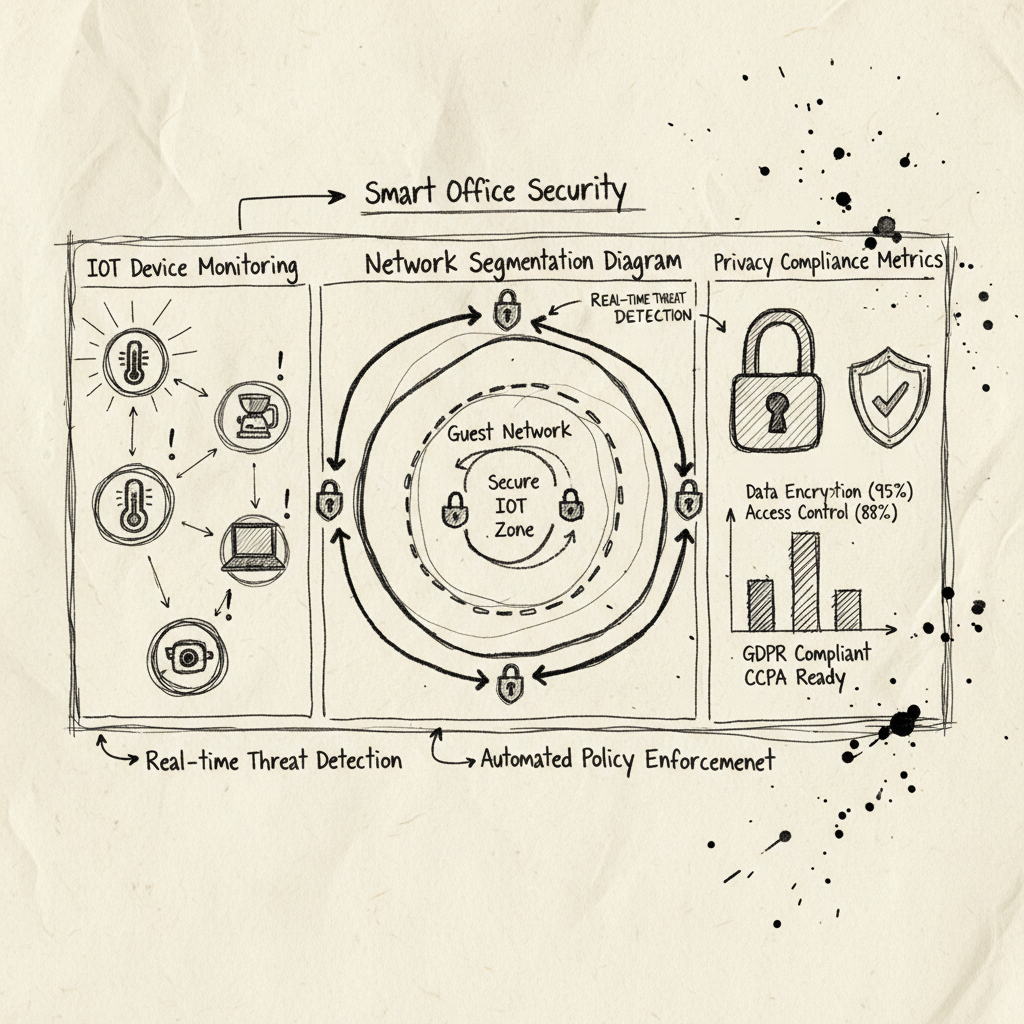
IoT security in smart office environments requires a multi-layered approach that addresses device authentication, data encryption, and network segmentation. Each connected device represents a potential entry point for cyber threats, making comprehensive security protocols essential for protecting organizational data and maintaining system integrity.
The AVIXA organization highlights that IoT security solutions must evolve alongside intelligent workplace systems to address emerging threats and vulnerabilities [7]. Security implementations should include device certificates for authentication, end-to-end encryption for data transmission, and regular security updates for all connected systems.
Network segmentation isolates IoT devices from critical business systems, limiting the potential impact of security breaches. Organizations should implement zero-trust architecture principles that verify every device and user before granting access to intelligent workplace systems.
Ensure Data Privacy Compliance
Intelligent workplace systems collect extensive data about employee behaviors, preferences, and workplace interactions. This data collection must comply with privacy regulations like GDPR, CCPA, and other applicable data protection laws.
Compliance requirements include:
Obtaining explicit consent for data collection and processing activities
Implementing data minimization principles that limit collection to necessary information
Providing transparency about data usage through clear privacy policies
Establishing data retention policies that automatically delete unnecessary information
Creating processes for employees to access, correct, or delete their personal data
Conducting regular privacy impact assessments for new features
Organizations should work with legal and compliance teams to ensure implementations meet all applicable regulatory requirements while still delivering the intended operational benefits.
Smart office technology is an integrated ecosystem of IoT sensors, AI-powered analytics, and automated systems that optimize workplace operations, enhance employee experience, and reduce operational costs. Unlike basic automation, these systems learn from usage patterns and adapt to changing workplace needs in real-time, creating responsive environments that support both productivity and employee wellbeing.
2. What tech is used in smart offices?
Smart offices integrate multiple technologies including occupancy sensors, smart lighting and HVAC systems, automated access controls, digital displays, and cloud-based analytics platforms. These components work together through IoT connectivity and machine learning algorithms to create seamless automation that responds to real-time workplace conditions and employee preferences.
3. What is an example of smart workplace technology?
A comprehensive example is an AI-powered space booking system that automatically adjusts environmental controls when someone reserves a meeting room, releases unused bookings after a grace period, and provides predictive analytics about space utilization patterns. This type of integrated system demonstrates how intelligent workplace solutions combine multiple functions to enhance both operational efficiency and user experience.
4. How much does smart office technology cost to implement?
Implementation costs vary significantly based on building size and feature complexity, typically ranging from $5-15 per square foot for basic systems to $25-50 per square foot for comprehensive installations. However, organizations often achieve ROI within 18-24 months through energy savings, improved space utilization, and reduced operational overhead.
5. What are the main benefits of smart office technology?
Key benefits include 20-30% reduction in energy costs, 40%+ improvement in space utilization efficiency, enhanced employee satisfaction through personalized environments, predictive maintenance that reduces downtime, and data-driven insights that inform strategic real estate decisions. These improvements collectively contribute to significant operational cost reductions and improved workplace experiences.
6. How does smart office technology support hybrid work?
These intelligent systems enable hybrid work through predictive attendance forecasting, automated desk and meeting room booking, real-time space availability information, and coordination tools that help teams plan in-office collaboration. Advanced systems can achieve 97% accuracy in predicting attendance patterns, enabling organizations to optimize space allocation and ensure team coordination.
7. What security considerations apply to smart office technology?
Security implementations must address device authentication, data encryption, network segmentation, and privacy compliance requirements. Organizations should implement zero-trust architecture principles, regular security updates, and comprehensive data governance policies to protect sensitive information while maintaining the operational benefits of connected workplace systems.
Smart office technology represents a transformative approach to workplace management that delivers measurable benefits across operational efficiency, employee experience, and cost optimization. Organizations implementing comprehensive intelligent office solutions in 2026 are achieving significant improvements in space utilization, energy efficiency, and employee satisfaction through integrated IoT sensors, AI-powered analytics, and automated environmental controls.
The key to successful implementation lies in taking a strategic, phased approach that prioritizes high-impact areas while building employee confidence in the technology. Organizations should focus on solutions that solve real workplace problems rather than implementing technology for its own sake. Security and compliance considerations must be addressed from the outset to ensure long-term success and regulatory adherence.
As hybrid work continues to evolve, these intelligent workplace systems become increasingly essential for coordinating teams, optimizing real estate portfolios, and creating workplace experiences that attract and retain top talent. The organizations that invest in comprehensive platforms today will be best positioned to adapt to future workplace challenges and opportunities.
Upflex combines AI-powered office orchestration with access to the world's largest on-demand workspace network, helping organizations solve hybrid work challenges while optimizing real estate spend. Our UnifyAI technology delivers the predictive insights and automation capabilities that make intelligent workplace implementations successful. Contact us to learn how we can help you transform your workplace through intelligent technology solutions.
About the Author
Written by the SaaS experts at Upflex. Our team brings years of hands-on experience helping businesses with SaaS, delivering practical guidance grounded in real-world results.