Real Estate Optimization: 12 Strategies to Maximize ROI
Upflex team
April 7, 2026
Key Insight
Explanation
AI-Powered Forecasting
Advanced algorithms can predict space utilization with 97% accuracy, enabling precise capacity planning
Cost Reduction Potential
Organizations typically achieve 30-50% reduction in real estate costs through strategic optimization
Hybrid Work Impact
70% of companies are redesigning office spaces to accommodate flexible work arrangements
Data-Driven Decisions
Real-time occupancy metrics and usage analytics drive more informed portfolio management
Technology Integration
Smart building systems and IoT sensors provide granular insights into space performance
Portfolio Flexibility
On-demand workspace networks offer scalable alternatives to traditional long-term leases
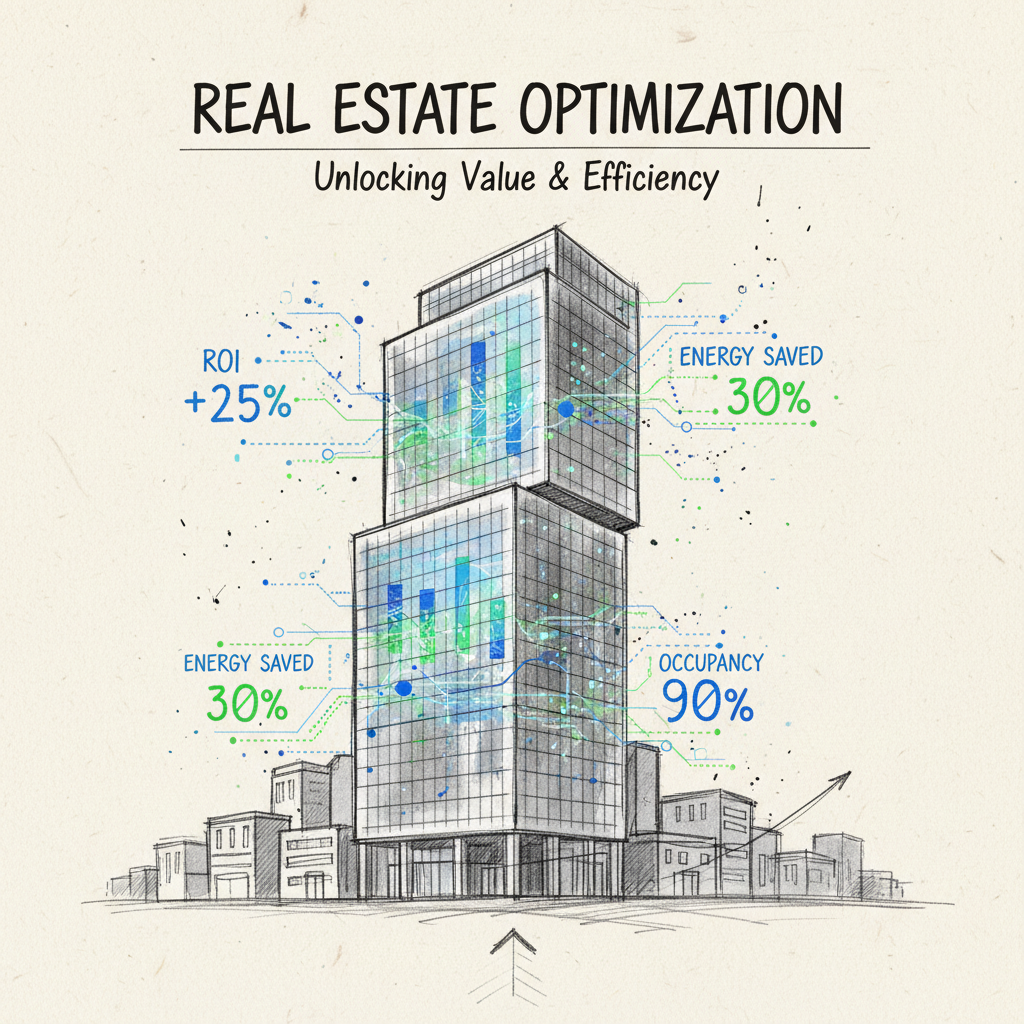
Real estate optimization has become a critical business imperative as organizations grapple with changing work patterns and rising operational costs. With hybrid work models now permanent fixtures in corporate America, companies are rethinking their approach to physical space management. The stakes couldn't be higher: real estate typically represents the second-largest expense after payroll for most organizations.
Modern real estate optimization combines advanced analytics, artificial intelligence, and strategic portfolio management to maximize value from property investments. Organizations that embrace these approaches are seeing remarkable results, with some achieving cost reductions of 40% or more while simultaneously improving employee satisfaction and productivity.
1. Data-Driven Portfolio Analysis: real estate optimization
Data-driven portfolio analysis forms the foundation of effective real estate optimization by providing objective insights into property performance and utilization patterns. This approach replaces intuition-based decisions with quantifiable metrics that reveal optimization opportunities.
Comprehensive Utilization Metrics
Modern portfolio analysis relies on multiple data streams to create a complete picture of space performance. Organizations collect information from badge swipes, Wi-Fi connections, desk booking systems, and IoT sensors to understand actual usage patterns [1].
Key metrics include:
Peak occupancy rates by day, week, and season
Average daily utilization across different zones
Meeting room booking efficiency and no-show rates
Collaboration space usage patterns
Individual workspace preferences and frequency
Financial Performance Analysis
Effective analysis extends beyond occupancy to examine financial performance across the entire portfolio. This includes cost-per-square-foot comparisons, lease terms analysis, and total cost of ownership calculations.
Pro Tip: Benchmark your portfolio performance against industry standards using metrics like cost per employee and space efficiency ratios. This reveals which properties are underperforming and need attention.
Organizations using comprehensive portfolio analysis typically identify 20-30% of their space as underutilized, creating immediate optimization opportunities. The World Economic Forum reports that companies making real estate decisions at the speed of business are more likely to achieve their strategic objectives [2].
2. AI-Powered Space Forecasting
AI-powered space forecasting represents the cutting edge of real estate optimization, using machine learning algorithms to predict future space needs with unprecedented accuracy. This technology enables proactive rather than reactive space management decisions.
Predictive Modeling Capabilities
Advanced forecasting systems analyze historical patterns, business growth projections, and external factors to predict space requirements. These models consider seasonal variations, department-specific needs, and changing work patterns to provide accurate forecasts.
The technology processes multiple variables simultaneously:
Historical occupancy data and trends
Business growth and hiring projections
Seasonal and cyclical patterns
External factors like economic conditions
Employee work preferences and behavior changes
Attendance Coordination Automation
Modern AI systems don't just predict occupancy; they actively coordinate attendance to optimize space usage. At Upflex, our UnifyAI technology delivers 97% attendance forecast accuracy while automating workplace coordination to achieve optimal space utilization.
These systems can automatically adjust desk allocations, meeting room bookings, and amenity access based on predicted attendance patterns. The result is more efficient space usage and improved employee experience through reduced conflicts and better resource availability.
Research from leading optimization firms shows that AI-powered forecasting can reduce space requirements by 25-35% while maintaining or improving employee satisfaction levels [3].
3. Hybrid Workspace Design
Hybrid workspace design optimizes physical environments to support both in-person collaboration and flexible work arrangements. This approach recognizes that office spaces must serve different purposes than traditional fixed-desk environments.
Activity-Based Working Zones
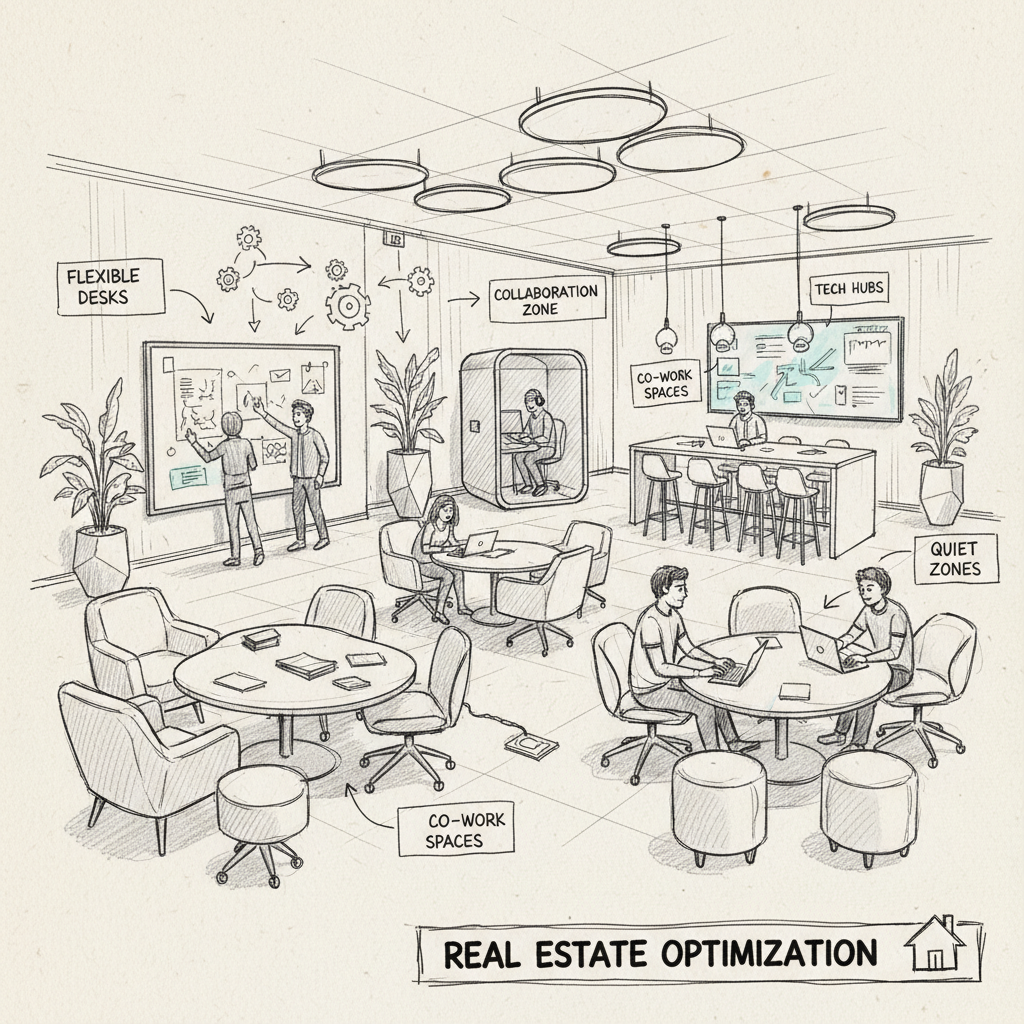
Successful hybrid designs create distinct zones optimized for specific activities rather than assigned seating. This includes focused work areas, collaboration spaces, social zones, and quiet retreat areas.
Zone allocation typically follows these ratios:
40% collaborative spaces for team activities
30% individual focus areas with varied privacy levels
20% social and informal meeting spaces
10% specialized areas like phone booths and wellness rooms
Flexible Furniture Systems
Modern hybrid workspaces use modular furniture systems that can be quickly reconfigured based on changing needs. This flexibility allows organizations to adapt spaces for different team sizes, work styles, and collaboration requirements.
The International Facility Management Association emphasizes that hybrid workplace optimization requires careful balance between flexibility and functionality [5]. Spaces must support both planned activities and spontaneous interactions while maintaining cost efficiency.
Pro Tip: Design spaces with 1.5x capacity flexibility to accommodate peak attendance days without over-investing in permanent infrastructure. Use moveable walls and modular furniture to achieve this adaptability.
4. Smart Building Technology Integration
Smart building technology integration transforms traditional real estate into intelligent, responsive environments that optimize themselves based on usage patterns and environmental conditions. This technology foundation enables real-time optimization and predictive management.
IoT Sensor Networks
Comprehensive IoT sensor networks provide granular data about space utilization, environmental conditions, and resource consumption. These sensors track movement patterns, air quality, temperature, lighting usage, and energy consumption in real-time.
Modern sensor networks monitor:
Occupancy levels in different zones and rooms
Environmental conditions like temperature, humidity, and air quality
Energy consumption patterns by area and time
Equipment usage and performance metrics
Security access patterns and anomalies
Automated Building Systems
Smart building platforms use sensor data to automatically adjust lighting, HVAC, and other systems based on actual occupancy and usage. This reduces energy waste while maintaining optimal comfort levels for occupants.
Integration with workplace management platforms enables seamless coordination between space booking, environmental controls, and facility services. For example, meeting rooms can automatically adjust lighting and temperature when bookings are made, and cleaning schedules can adapt to actual usage patterns.
Organizations implementing comprehensive smart building systems typically see 20-30% reductions in energy costs and 15-25% improvements in space utilization efficiency [6].
5. Lease Portfolio Restructuring
Lease portfolio restructuring involves strategically renegotiating, consolidating, or exiting lease agreements to better align real estate commitments with actual business needs. This approach can deliver immediate cost savings and improved portfolio flexibility.
Lease Term Optimization
Traditional long-term leases often lock organizations into space commitments that don't match evolving business needs. Strategic restructuring involves negotiating shorter terms, flexible expansion options, and break clauses that provide greater agility.
Key restructuring strategies include:
Converting long-term leases to shorter, more flexible agreements
Negotiating expansion and contraction rights based on business needs
Including subletting provisions to monetize unused space
Structuring rent escalations tied to actual utilization metrics
Adding technology and sustainability clauses for future upgrades
Portfolio Consolidation Opportunities
Many organizations discover they can consolidate multiple locations into fewer, more efficient spaces. This consolidation reduces overhead costs while potentially improving collaboration and company culture.
Cushman & Wakefield research indicates that portfolio optimization transcends cost considerations, requiring strategic goal alignment and operational efficiency improvements [9]. Successful consolidation projects typically achieve 30-40% cost reductions while maintaining or improving employee satisfaction.
Pro Tip: Conduct lease audits annually to identify early renewal opportunities, break clause options, and potential consolidation scenarios. Market conditions can change rapidly, creating optimization windows.
6. Occupancy Optimization
Occupancy optimization focuses on maximizing the productive use of existing space through better coordination, scheduling, and resource allocation. This strategy delivers immediate results without requiring capital investments or lease changes.
Desk Booking Coordination
Modern desk booking systems go beyond simple reservations to actively coordinate attendance and optimize space allocation. Advanced systems consider team collaboration needs, individual preferences, and space constraints to make intelligent assignments.
Effective coordination systems provide:
Team-based booking that keeps collaborators near each other
Preference learning that improves assignments over time
Waitlist management for high-demand areas
Integration with meeting room bookings for seamless scheduling
Real-time availability updates and alternative suggestions
Meeting Room Efficiency
Meeting rooms often represent the most expensive space per square foot but frequently suffer from poor utilization due to no-shows, early endings, and inappropriate room sizing for actual needs.
Optimization strategies include implementing check-in requirements, automatic release of unused bookings, and dynamic room suggestions based on actual attendee counts. Organizations typically see 15-25% improvements in meeting room utilization through these measures.
7. Cost-Per-Seat Analysis
Cost-per-seat analysis provides a standardized metric for evaluating real estate efficiency across different locations, building types, and market conditions. This analysis reveals optimization opportunities and supports data-driven decision making.
Comprehensive Cost Calculations
True cost-per-seat analysis includes all real estate-related expenses, not just base rent. This comprehensive approach reveals the full financial impact of different space strategies and locations.
Cost Component
Typical % of Total
Optimization Opportunities
Base Rent
45-55%
Location strategy, space efficiency
Operating Expenses
20-25%
Energy efficiency, smart systems
Utilities
8-12%
Usage-based optimization
Technology/IT
10-15%
Shared services, cloud solutions
Facilities Management
8-12%
Automation, predictive maintenance
Benchmarking and Targets
Effective cost-per-seat analysis requires industry benchmarking to establish realistic targets and identify underperforming locations. Eptura research shows that key metrics for portfolio optimization include total occupancy cost and space utilization ratios [7].
Organizations should establish cost-per-seat targets based on location, industry, and business requirements, then track performance against these benchmarks to identify optimization opportunities.
8. Flexible Workspace Networks
Flexible workspace networks provide on-demand access to professional office space without long-term lease commitments. This approach offers significant cost savings and operational flexibility for organizations with distributed teams or variable space needs.
On-Demand Space Access
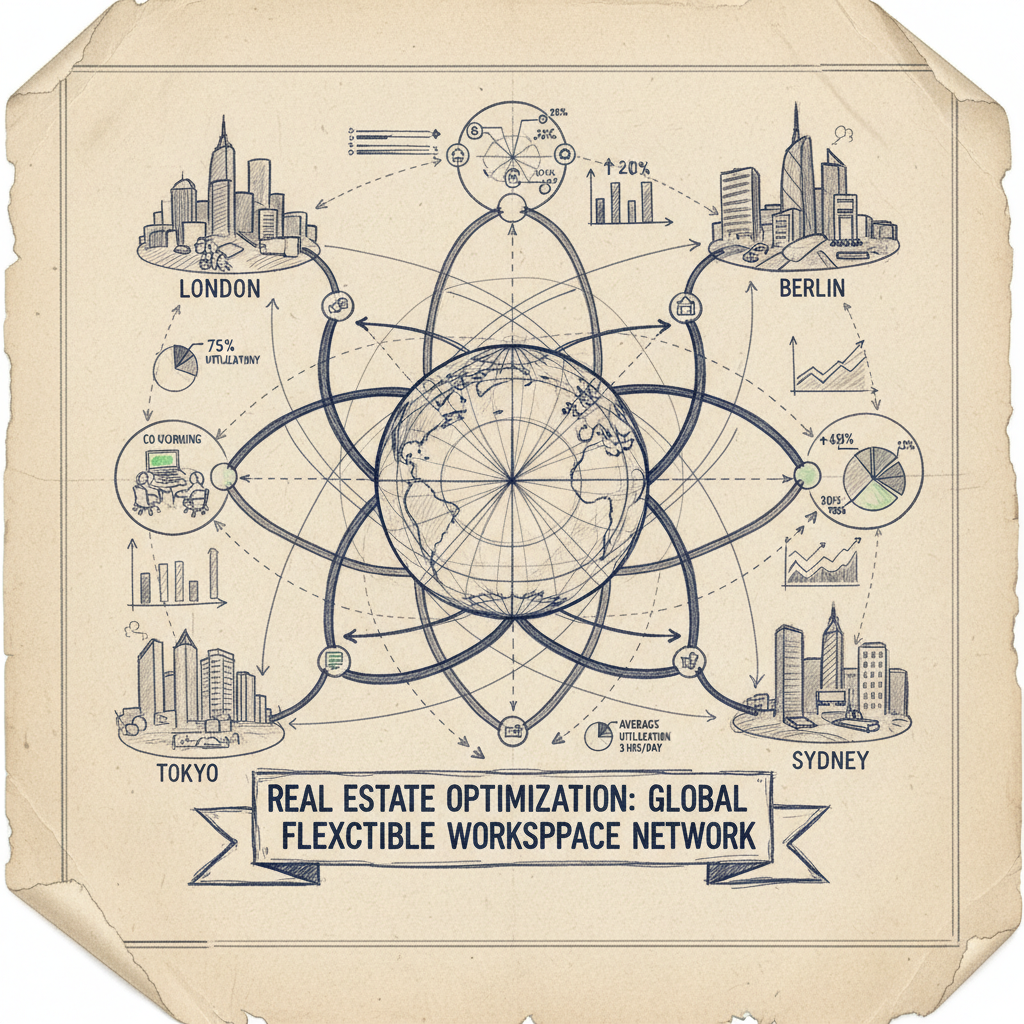
Modern flexible workspace networks provide access to thousands of locations worldwide, enabling organizations to provide professional workspace for employees wherever they're located. This eliminates the need for traditional satellite offices in many markets.
Benefits of flexible workspace networks include:
Immediate access to professional space in new markets
No long-term lease commitments or capital investments
Scalable capacity that adjusts to actual usage
Consistent workplace standards across locations
Integrated booking and billing systems
Hybrid Portfolio Strategies
Leading organizations combine traditional office space with flexible workspace networks to create optimized hybrid portfolios. This approach maintains core locations for primary operations while using flexible space for overflow capacity and distributed teams.
At Upflex, we've seen organizations achieve 40% reductions in real estate spend by combining AI-powered office optimization with access to our global workspace network. This dual approach provides both cost savings and operational flexibility.
Pro Tip: Start with a 70/30 split between traditional and flexible space, then adjust based on actual usage patterns. This provides stability while maintaining flexibility for growth or contraction.
9. Energy Efficiency Programs
Energy efficiency programs reduce operational costs while supporting sustainability objectives and improving building performance. These programs often provide immediate ROI while enhancing the overall value proposition of real estate portfolios.
Smart HVAC Optimization
HVAC systems typically account for 40-50% of commercial building energy consumption, making them prime targets for optimization. Smart systems use occupancy data, weather forecasts, and machine learning to minimize energy usage while maintaining comfort.
Advanced HVAC optimization includes:
Occupancy-based temperature and airflow adjustments
Predictive pre-cooling and heating based on weather and schedules
Zone-level control that responds to actual usage patterns
Air quality monitoring that optimizes ventilation rates
Integration with renewable energy sources and storage systems
Lighting and Power Management
Smart lighting systems automatically adjust based on occupancy, natural light levels, and time of day. These systems typically reduce lighting energy consumption by 30-50% while improving workspace quality.
Power management extends beyond lighting to include plug loads, equipment scheduling, and phantom power elimination. Comprehensive programs can reduce total building energy consumption by 20-35%.
10. Workplace Experience Metrics
Workplace experience metrics measure how effectively real estate supports employee productivity, satisfaction, and engagement. These metrics help optimize space allocation and amenity investments for maximum impact.
Employee Satisfaction Tracking
Regular employee surveys and feedback systems provide insights into how well current real estate supports work activities and preferences. This feedback guides optimization decisions and investment priorities.
Key experience metrics include:
Space satisfaction scores by location and area type
Amenity usage and satisfaction ratings
Collaboration effectiveness in different spaces
Technology performance and reliability
Commute and accessibility satisfaction
Productivity Correlation Analysis
Advanced organizations correlate workplace experience metrics with productivity indicators to identify which space investments deliver the greatest business impact. This analysis helps prioritize optimization investments.
Research shows that well-designed workspaces can improve productivity by 15-25%, making workplace experience optimization a significant business opportunity beyond cost reduction.
11. Predictive Maintenance Systems
Predictive maintenance systems use sensors and analytics to identify potential equipment failures before they occur, reducing downtime, repair costs, and tenant disruption. This approach optimizes building operations and extends asset life.
Equipment Monitoring Networks
Comprehensive monitoring systems track the performance and condition of critical building systems including HVAC, elevators, lighting, and security systems. Machine learning algorithms identify patterns that indicate potential failures.
Predictive maintenance typically reduces equipment downtime by 30-50% while extending equipment life by 20-25%. The approach also improves tenant satisfaction by preventing unexpected service disruptions.
Maintenance Cost Optimization
Predictive systems optimize maintenance scheduling and resource allocation, reducing both planned and emergency maintenance costs. This approach often reduces total maintenance costs by 15-25% while improving building performance.
12. Strategic Portfolio Consolidation
Strategic portfolio consolidation involves systematically reducing the number of locations while maintaining or improving operational effectiveness. This approach can deliver significant cost savings while simplifying operations.
Consolidation Analysis Framework
Effective consolidation requires comprehensive analysis of location performance, employee distribution, business requirements, and market conditions. The analysis should consider both quantitative metrics and qualitative factors.
Key consolidation considerations include:
Employee commute patterns and accessibility
Business function integration opportunities
Lease terms and exit costs for different scenarios
Technology requirements for consolidated operations
Cultural and collaboration impact assessments
Implementation Strategies
Successful consolidation requires careful change management, employee communication, and phased implementation to minimize disruption. Organizations should plan for temporary increases in flexible workspace usage during transitions.
Lake State Consulting research indicates that portfolio consolidation can include improving existing properties, disposing of underperforming assets, or acquiring better-positioned locations [10]. The key is aligning consolidation decisions with long-term business strategy.
How to Choose the Right Optimization Strategy
Selecting the most effective real estate optimization strategy requires careful analysis of your organization's specific situation, constraints, and objectives. The right approach depends on factors including current portfolio performance, business growth patterns, and available resources.
Assessment Framework
Begin with a comprehensive assessment of your current real estate portfolio performance, including utilization rates, cost metrics, employee satisfaction, and strategic alignment. This baseline analysis reveals the most promising optimization opportunities.
Survey employees about workspace preferences and satisfaction
Analyze business growth and contraction scenarios
Evaluate technology infrastructure and capabilities
Review lease terms and flexibility options
Strategy Prioritization
Prioritize optimization strategies based on potential impact, implementation complexity, and resource requirements. Quick wins like occupancy optimization and energy efficiency programs can provide immediate benefits while longer-term strategies like portfolio consolidation deliver greater long-term value.
Consider your organization's risk tolerance, change management capabilities, and technology readiness when selecting optimization approaches. Some strategies require significant upfront investment while others can be implemented incrementally.
1. What is real estate optimization and why is it important in 2026?
Real estate optimization is the strategic process of maximizing value from property investments through data analysis, technology integration, and portfolio management. It's crucial in 2026 as organizations face hybrid work challenges, rising costs, and need for greater operational flexibility.
2. How much can organizations save through real estate optimization?
Organizations typically achieve 30-50% reductions in real estate costs through comprehensive optimization strategies. The exact savings depend on current efficiency levels, portfolio size, and which optimization approaches are implemented.
3. What role does AI play in modern real estate optimization?
AI enables predictive space forecasting, automated attendance coordination, and intelligent resource allocation. Advanced AI systems can predict space needs with 97% accuracy and automatically optimize workplace coordination for maximum efficiency.
4. How do flexible workspace networks support real estate optimization?
Flexible workspace networks provide on-demand access to professional space without long-term commitments, enabling organizations to reduce fixed real estate costs while maintaining operational flexibility for distributed teams and variable capacity needs.
5. What metrics should organizations track for real estate optimization?
Key metrics include occupancy rates, cost per seat, space utilization efficiency, employee satisfaction scores, energy consumption, and total cost of ownership. These metrics provide insights into portfolio performance and optimization opportunities.
6. How long does it take to see results from real estate optimization initiatives?
Quick wins like occupancy optimization and energy efficiency can deliver results within 3-6 months, while comprehensive portfolio restructuring may take 12-24 months to fully implement and realize benefits.
7. What are the biggest challenges in implementing real estate optimization?
Common challenges include data collection and analysis capabilities, change management for hybrid work adoption, lease constraints, and initial technology investments. Success requires executive support and comprehensive change management.
8. How does real estate optimization support sustainability goals?
Optimization reduces energy consumption through smart building systems, decreases space requirements through better utilization, and supports sustainable commuting patterns through strategic location planning and flexible work arrangements.
Conclusion
Real estate optimization has evolved from a cost-cutting exercise to a strategic business capability that drives operational efficiency, employee satisfaction, and competitive advantage. The twelve strategies outlined in this guide provide a comprehensive framework for maximizing value from real estate investments in 2026's dynamic business environment.
The most successful organizations combine multiple optimization approaches, starting with data-driven analysis and expanding to include AI-powered forecasting, flexible workspace networks, and smart building technologies. This integrated approach delivers both immediate cost savings and long-term strategic flexibility.
At Upflex, we've helped organizations achieve remarkable results by combining our AI-powered office optimization platform with access to the world's largest on-demand workspace network. Our clients typically see 40% reductions in real estate costs while improving employee satisfaction and operational flexibility.
Ready to optimize your real estate portfolio? Contact Upflex today to learn how our workplace optimization platform can help you achieve similar results while solving your hybrid work challenges and maximizing your real estate investment.
About the Author
Written by the SaaS experts at Upflex. Our team brings years of hands-on experience helping businesses with SaaS, delivering practical guidance grounded in real-world results.