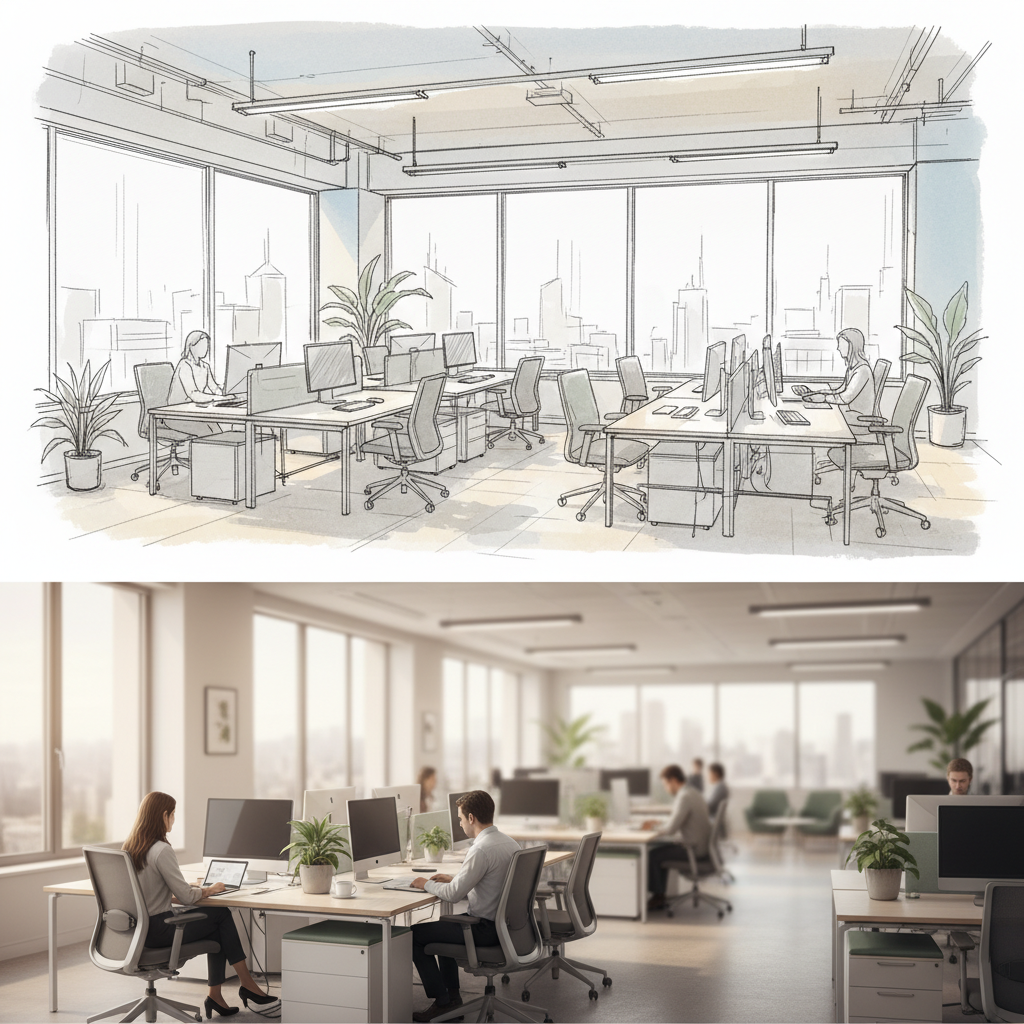
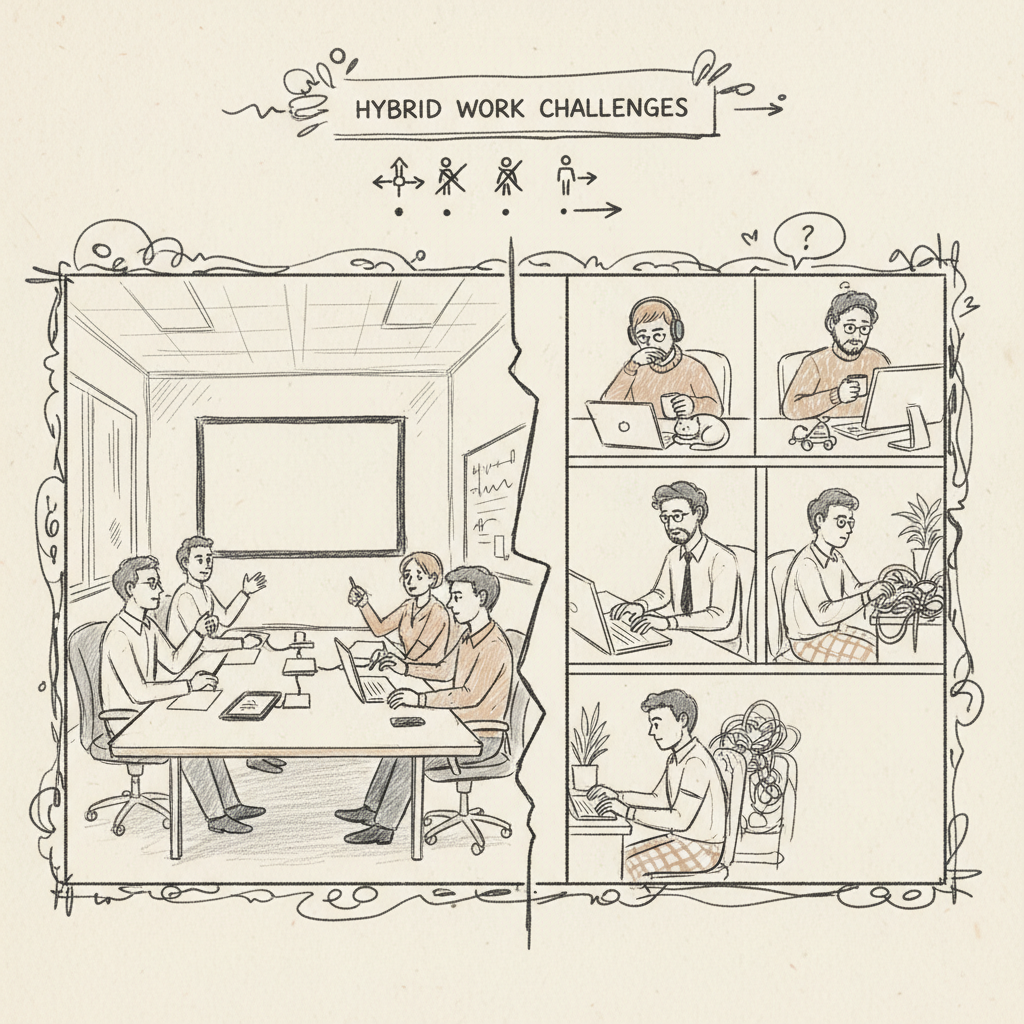
As organizations continue to navigate the complexities of distributed teams, hybrid work challenges represent one of the most significant workplace transformation issues of our time. These hybrid work challenges have evolved far beyond simple technology concerns, encompassing everything from maintaining company culture and ensuring equitable collaboration to optimizing real estate costs and managing employee wellbeing across multiple work environments.
In this comprehensive guide, you'll learn about the most pressing workplace obstacles organizations face in 2026, practical solutions that industry leaders are implementing, and expert strategies to transform these obstacles into competitive advantages. We'll explore evidence-based approaches that can help your organization thrive in the hybrid work landscape.
What Are Hybrid Work Challenges in 2026?
These workplace obstacles are the operational, cultural, and strategic difficulties organizations encounter when managing teams that split their time between remote and office-based work. These hybrid work challenges have become increasingly complex as companies move beyond emergency remote work policies to establish sustainable hybrid models.
The Evolution of Hybrid Work Obstacles
Research from Stanford's Institute for Economic Policy Research shows that hybrid work arrangements now affect over 40% of the workforce, creating unprecedented coordination complexities [1]. Unlike the early pandemic period, today's workplace obstacles center on optimization rather than survival.
The most significant shift in 2026 involves what workplace experts call "asymmetric collaboration" - the difficulty of maintaining equal participation and influence among team members regardless of their physical location. This challenge affects everything from daily meetings to long-term career development opportunities.
Core Categories of Modern Hybrid Challenges
Current workplace obstacles fall into five primary categories:
- Coordination complexity: Managing schedules, meetings, and project timelines across distributed teams
- Cultural fragmentation: Maintaining organizational identity and values when employees have limited shared experiences
- Performance visibility: Ensuring fair evaluation and recognition systems that don't favor in-office presence over actual output
- Technology integration: Creating seamless experiences across multiple work environments and platforms
- Space optimization: Balancing real estate costs with employee needs and collaboration requirements
According to Gallup's 2026 workplace research, organizations that proactively address these hybrid work challenges see 23% higher employee engagement and 18% better business outcomes compared to those that treat hybrid work as a temporary arrangement [2].
Pro Tip: Start by auditing your current workplace obstacles using employee surveys and performance data. Many organizations discover their biggest obstacles aren't where they initially expected.
How Hybrid Work Challenges Impact Organizations
Understanding how these workplace obstacles manifest in real business operations is essential for developing effective solutions. These impacts extend far beyond individual productivity concerns to affect organizational performance, culture, and competitive positioning.
Operational Performance Effects
The most immediate impact of unaddressed workplace obstacles appears in operational metrics. A comprehensive study published in Harvard Business Review found that poorly managed hybrid arrangements can reduce overall team performance by up to 15% [3]. This decline stems from coordination failures, communication gaps, and unequal access to information and opportunities.
Communication breakdowns represent the largest single factor in hybrid performance issues. When some team members attend meetings in person while others join remotely, research shows that remote participants contribute 35% fewer ideas and receive 42% less follow-up engagement from colleagues.
Cultural and Engagement Consequences
These workplace obstacles create what organizational psychologists term "proximity bias" - the unconscious tendency to favor employees who are physically present. This bias affects:
- Promotion and advancement opportunities
- Informal mentoring and knowledge transfer
- Inclusion in spontaneous decision-making conversations
- Access to high-visibility projects and assignments
MIT Sloan research indicates that organizations struggling with these hybrid work challenges experience 28% higher voluntary turnover among remote-working employees, primarily due to perceived inequities in career development opportunities [4].
Financial and Resource Implications
The financial impact of these workplace obstacles extends beyond direct productivity losses. Organizations face increased costs in several areas:
| Challenge Area |
Average Cost Impact |
Primary Drivers |
| Technology Infrastructure |
15-25% increase |
Dual office/home setups, security tools |
| Real Estate Inefficiency |
20-40% waste |
Underutilized office space, poor forecasting |
| Management Overhead |
12-18% increase |
Additional coordination, monitoring systems |
| Employee Turnover |
25-35% higher |
Inequity perceptions, isolation factors |
At Upflex, we've observed that organizations using our
workplace optimization platform typically reduce these hybrid-related costs by 40% within the first year through better space utilization and attendance forecasting.
The Most Critical Hybrid Work Challenges of 2026
As hybrid work models mature, certain challenges have emerged as particularly problematic for organizations seeking to optimize their distributed workforce strategies. These issues require immediate attention and sophisticated solutions.
Coordination and Scheduling Complexity
The single greatest workplace obstacle in 2026 involves coordinating activities across team members with different location patterns. Unlike fully remote or fully in-office teams, hybrid arrangements require constant decision-making about when, where, and how to collaborate.
This complexity manifests in several ways:
- Meeting scheduling that accommodates both remote and in-office participants effectively
- Project planning that accounts for varying availability and communication preferences
- Resource allocation for shared spaces, equipment, and support services
- Cross-team collaboration when different groups have different hybrid schedules
Research from the National Bureau of Economic Research shows that coordination overhead in hybrid teams is 34% higher than in location-consistent teams, primarily due to the cognitive load of managing multiple communication channels and scheduling constraints [5].
Equity and Inclusion Challenges
Perhaps the most insidious workplace obstacle involves maintaining fairness and inclusion across different work arrangements. Studies consistently show that hybrid environments can inadvertently create "two-tier" workforces where in-office employees receive preferential treatment.
Common equity issues include:
- Unequal participation in meetings and brainstorming sessions
- Disparate access to informal networking and mentoring opportunities
- Inconsistent performance evaluation criteria that favor visible presence over actual output
- Uneven distribution of high-profile assignments and development opportunities
Pro Tip: Implement "hybrid-first" meeting protocols where all participants join via video conference, even if some are in the same building. This creates equal participation conditions for everyone.
Technology and Infrastructure Strain
The technology challenges of hybrid work extend far beyond providing laptops and video conferencing tools. Organizations must create seamless experiences that work equally well across multiple environments while maintaining security, productivity, and collaboration standards.
Key technology-related workplace obstacles include:
- Ensuring consistent audio/video quality across different locations and devices
- Maintaining data security when employees access systems from various networks
- Providing equivalent productivity tools and resources in home and office environments
- Integrating collaboration platforms that support both synchronous and asynchronous work
Best Practices for Overcoming Hybrid Work Challenges
Successful organizations have developed sophisticated approaches to address these workplace obstacles through systematic process improvements, technology integration, and cultural adaptations. These best practices represent proven strategies that deliver measurable results.
Implementing Predictive Attendance Management
The most effective solution to coordination challenges involves using AI-powered systems to predict and optimize office attendance patterns. Organizations that implement predictive attendance management see dramatic improvements in space utilization and team coordination.
Our experience at Upflex demonstrates that UnifyAI technology can achieve 97% accuracy in attendance forecasting, enabling organizations to:
- Optimize office space allocation based on predicted occupancy patterns
- Schedule team meetings when maximum collaboration value is possible
- Coordinate cross-functional projects with better resource planning
- Reduce real estate costs while maintaining collaboration effectiveness
The key to successful attendance management lies in combining historical data analysis with real-time preference inputs from employees. This approach respects individual flexibility while enabling organizational optimization.
Establishing Hybrid-First Communication Protocols
Organizations that excel at hybrid work adopt communication standards designed specifically for mixed-location teams. These protocols ensure equity and effectiveness regardless of where team members are located.
Essential hybrid-first communication practices include:
- Default to documented communication: Important decisions and information are always captured in accessible digital formats
- Structured meeting equality: All participants use the same technology platform and have equal speaking opportunities
- Asynchronous-first planning: Projects are designed to progress without requiring simultaneous availability from all team members
- Regular check-in protocols: Formal processes ensure remote team members receive equivalent attention and support
Creating Flexible Space Solutions
The most successful hybrid organizations move beyond traditional office models to create dynamic workspace solutions that adapt to changing needs. This approach addresses both cost optimization and employee experience challenges.
| Space Strategy |
Best Use Cases |
Key Benefits |
| Hoteling Systems |
Individual focused work, client meetings |
Space efficiency, cost reduction |
| Collaboration Zones |
Team projects, brainstorming sessions |
Enhanced creativity, team building |
| On-Demand Workspaces |
Overflow capacity, special projects |
Flexibility, geographic coverage |
| Hybrid Meeting Rooms |
Mixed in-person/remote meetings |
Equal participation, technology integration |
Pro Tip: Combine your primary office space with access to on-demand workspace networks. This provides employees with consistent work environments while giving organizations flexibility to scale up or down based on actual usage patterns.
Common Mistakes in Addressing Hybrid Work Challenges
Even well-intentioned organizations often struggle with hybrid work implementation due to predictable mistakes that undermine their efforts. Understanding these pitfalls can help leaders avoid costly missteps and accelerate their path to hybrid work success.
Treating Hybrid Work as a Policy Rather Than a System
The most fundamental error organizations make involves viewing hybrid work as a simple policy decision rather than a complex operational system requiring ongoing management and optimization. This mistake leads to incomplete solutions that create new problems while failing to address underlying challenges.
Organizations that treat hybrid work as merely a policy typically:
- Establish basic rules about office attendance without considering coordination needs
- Provide minimal technology support while expecting seamless collaboration
- Maintain traditional management approaches that don't account for distributed teams
- Focus on controlling employee behavior rather than optimizing business outcomes
Research from MIT Sloan Management Review emphasizes that successful hybrid work requires treating it as a leadership capability challenge, not a policy implementation exercise [4]. Organizations that invest in developing hybrid leadership skills see 45% better outcomes than those that simply establish attendance rules.
Underestimating Technology Integration Complexity
Many organizations approach hybrid work technology needs with a "tool addition" mentality, layering new platforms onto existing systems without considering integration requirements. This approach creates friction and inefficiency that undermines hybrid work effectiveness.
Common technology integration mistakes include:
- Purchasing video conferencing tools without upgrading room acoustics and lighting
- Implementing collaboration platforms that don't integrate with existing workflow systems
- Providing home office equipment without ensuring network security and reliability
- Creating separate systems for remote and in-office employees rather than unified experiences
Ignoring Space Utilization Data
One of the costliest mistakes involves making real estate decisions based on assumptions rather than actual usage data. Organizations often maintain expensive office space that sits largely empty while employees struggle to find appropriate workspace when they do come to the office.
A common scenario we've observed involves companies that:
- Reduce office space by a fixed percentage based on hybrid work policies
- Discover that remaining space is either overcrowded or underutilized on different days
- Experience employee frustration due to inadequate booking systems or space availability
- Incur additional costs for temporary solutions or space modifications
At Upflex, we've found that organizations using data-driven space optimization typically achieve 40% better space utilization while improving employee satisfaction scores by 25%.
Expert Solutions for 2026 Hybrid Work Success
Leading organizations have developed sophisticated approaches to these hybrid work challenges that go beyond basic accommodations to create competitive advantages. These expert-level solutions represent the current state of best practice in hybrid work optimization.
AI-Powered Workplace Orchestration
The most advanced solution to these workplace obstacles involves using artificial intelligence to orchestrate workplace activities and resource allocation. This approach addresses coordination complexity while optimizing both employee experience and organizational efficiency.
AI-powered workplace orchestration systems provide:
- Predictive scheduling: Algorithms analyze team collaboration patterns to suggest optimal meeting times and locations
- Dynamic space allocation: Real-time optimization of workspace assignments based on project needs and attendance patterns
- Intelligent resource management: Automated coordination of shared equipment, meeting rooms, and support services
- Performance optimization: Data-driven insights to improve team collaboration and individual productivity
Organizations implementing AI workplace orchestration report average improvements of 35% in team coordination efficiency and 42% reduction in scheduling-related conflicts.
Integrated Workspace Networks
Rather than limiting employees to single office locations, forward-thinking organizations provide access to comprehensive workspace networks that offer consistency and flexibility across multiple locations. This approach solves both geographic constraints and capacity optimization challenges.
The benefits of integrated workspace networks include:
- Consistent work environments and technology standards across all locations
- Flexibility for employees to work closer to clients, home, or team members
- Reduced real estate commitment while maintaining professional workspace access
- Scalability to support business growth without long-term lease obligations
Outcome-Based Performance Management
The most successful hybrid organizations fundamentally restructure their performance management systems to focus on outcomes rather than activities or presence. This approach addresses equity concerns while improving overall productivity and employee satisfaction.
Key elements of outcome-based performance management include:
- Clear objective definition: Specific, measurable goals that can be achieved regardless of work location
- Regular progress tracking: Frequent check-ins focused on results and obstacle removal rather than activity monitoring
- Flexible achievement paths: Multiple ways to accomplish objectives that respect individual work styles and circumstances
- Equitable recognition systems: Reward and advancement criteria that don't favor in-office visibility
Pro Tip: Implement weekly "outcome reviews" instead of daily activity check-ins. This approach maintains accountability while giving employees autonomy over how they achieve their goals.
Sources & References
- Stanford Institute for Economic Policy Research, "Hybrid is the future of work", 2026
- Gallup, "The Advantages and Challenges of Hybrid Work", 2026
- Harvard Business Review, "Hybrid Still Isn't Working", 2025
- MIT Sloan Management Review, "Hybrid Work Is Not the Problem — Poor Leadership Is", 2026
- PMC, "Hybrid work and mental distress: a cross-sectional study", 2026
Frequently Asked Questions
1. What are the most common hybrid work challenges in 2026?
The most prevalent hybrid work challenges include coordination complexity between remote and in-office team members, maintaining equitable collaboration and career opportunities, optimizing office space utilization, managing technology integration across multiple work environments, and preserving company culture with distributed teams. These challenges require systematic solutions rather than ad-hoc policy adjustments.
2. What is the 996 work schedule and how does it relate to hybrid work?
The 996 work schedule refers to working from 9 AM to 9 PM, six days per week, totaling 72 hours weekly. While this intensive schedule is primarily associated with certain industries in Asia, it contrasts sharply with hybrid work models that emphasize flexibility and work-life balance. Hybrid work challenges often involve finding the opposite balance - ensuring adequate collaboration without overworking distributed teams.
3. What are the 5 C's of successful hybrid work management?
The 5 C's of hybrid work are Communication (clear, consistent information sharing), Collaboration (effective teamwork across locations), Culture (maintaining organizational values and identity), Connectivity (reliable technology and relationship building), and Coordination (systematic scheduling and resource management). These elements work together to address the primary workplace obstacles organizations face.
4. Is remote work disappearing in 2026?
Remote work is not disappearing but evolving into more sophisticated hybrid arrangements. Current data shows that 52% of remote-capable positions are hybrid, 26% remain fully remote, and only 21% are fully on-site. About 90% of organizations plan to maintain or expand remote work options, with only 30% requiring full five-day office attendance, indicating that hybrid work challenges will remain relevant for the foreseeable future.
5. How can organizations measure the success of their hybrid work policies?
Success metrics for hybrid work should include employee engagement scores, productivity measurements based on outcomes rather than hours worked, space utilization efficiency, collaboration effectiveness ratings, and employee retention rates. Organizations should also track coordination overhead costs and the equity of opportunities between remote and in-office employees to ensure their this strategy are being effectively addressed.
6. What role does technology play in solving hybrid work challenges?
Technology serves as the backbone for addressing these this approach through AI-powered scheduling systems, integrated collaboration platforms, predictive analytics for space optimization, and unified communication tools that create equal experiences for all team members. However, technology alone isn't sufficient - it must be combined with appropriate processes, management practices, and cultural adaptations to effectively solve these workplace obstacles.
These hybrid work challenges represent a complex but manageable set of difficulties that organizations must address to succeed in the modern workplace. The key to success lies in treating these challenges as systematic operational issues rather than simple policy decisions.
The most effective approaches combine AI-powered workplace orchestration with flexible space solutions and outcome-based performance management. Organizations that invest in comprehensive hybrid work systems, rather than piecemeal solutions, consistently achieve better results in employee satisfaction, productivity, and cost optimization.
As we move forward in 2026, the organizations that thrive will be those that view these hybrid work challenges as opportunities to create more efficient, equitable, and adaptable workplace experiences. By implementing data-driven solutions and maintaining focus on both employee needs and business outcomes, companies can transform hybrid work from a challenge into a competitive advantage.
About the Author
Written by the SaaS experts at Upflex. Our team brings years of hands-on experience helping businesses with SaaS, delivering practical guidance grounded in real-world results.
Recommended Articles
Explore more from our content library: